
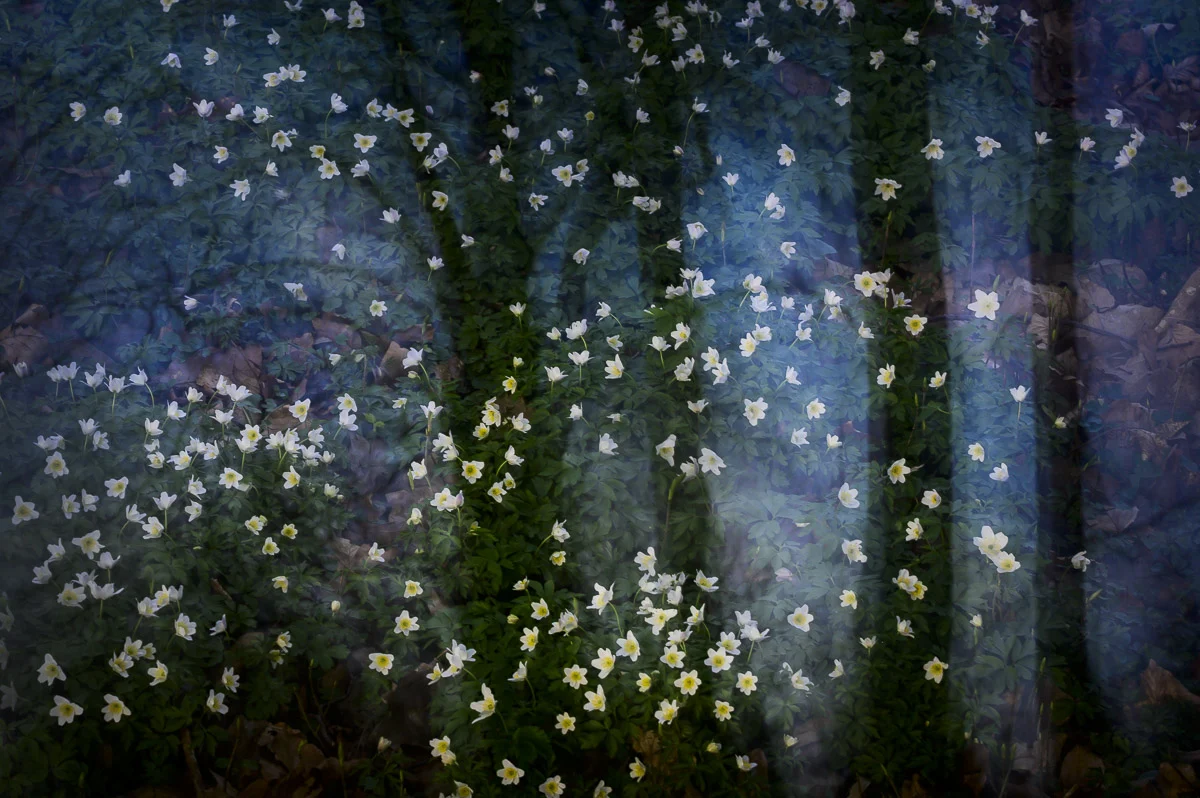
A new perspective is emerging in the world of nature photography, challenging conventional wisdom that often prioritizes a predefined outcome over the dynamic process of creation. While strong composition, pristine technique, and pleasing color are undeniable hallmarks of a good photograph, an increasing number of practitioners argue that the true artistry unfolds long before the shutter clicks, deep within the immersive experience of the moment. This approach champions responsiveness, emphasizing the photographer’s ability to adapt to unfolding conditions rather than rigidly pursuing a preconceived "target image."
This paradigm shift posits that the crucial elements of photography are less about adhering to a checklist and more about fostering a receptive state, allowing an image’s path to organically emerge from the interaction with the environment. Even seasoned photographers, armed with extensive experience and technical prowess, find their initial concepts often dissolve once on location. The interplay of unpredictable factors—shifting light, elusive wildlife, distracting elements, or changing weather—demands an agile response. Here, experience and technique serve as a toolkit, readily available but not dictating the final vision; instead, they become instruments for discovery, aiding in the exploration of what the situation itself reveals.
The Triad of Vision: Nature, Perception, and Design
At the heart of this adaptive philosophy lies an interactive triad: nature, perception, and design. Each element plays a distinct yet interconnected role, fostering a continuous feedback loop that shapes the photographic process.

Nature acts as the foundational provider, presenting the raw, unfiltered reality of a scene. It is the dynamic stage where light, form, and life converge, constantly offering new variables and unexpected moments. The unpredictable essence of nature is not a hurdle to overcome, but the very source of creative inspiration.
Perception is the photographer’s filter, determining what registers and what fades into the background. It is the active process of selective attention, where the gaze lands, what details are prioritized, and how the scene’s inherent "center of gravity" shifts. This cognitive process reduces overwhelming complexity, condensing the visual information into a manageable and meaningful narrative. Crucially, perception is not static; it is constantly re-evaluating and adjusting based on the evolving scene and the photographer’s initial attempts.
Design represents the photographer’s response to the perceived reality. This encompasses not just technical execution—like aperture, shutter speed, or lens choice—but also the artistic decisions regarding framing, perspective, and lighting. Unlike a predetermined plan, design in this context is in service of the emerging image, allowing for chance and serendipity to play a significant role. The first photograph taken is rarely the final one; instead, it becomes vital feedback, informing subsequent adjustments to perception and design, creating an iterative dance between artist and environment.
This dynamic interplay is best understood through practical examples, illustrating how genuine interactions on location lead to unique and compelling photographic outcomes. These are not staged scenarios but real-world encounters where the creative process became visibly embedded in the resulting image.

Case Study 1: The Frost Leaf – Embracing Accidental Discovery
One particularly cold night saw temperatures plummet across a local town. A photographer, driven by an instinctive pull, embarked on an unplanned visit to a park pond, renowned for its bald cypress trees. The scene was transformed; the water’s surface had succumbed to ice, creating a mosaic of frozen patterns, entangled branches, and scattered snow. Amidst this intricate detail, a solitary leaf, encased within the ice, captured the photographer’s attention.
The initial attempts focused on rendering the delicate crystal structures of the ice. However, the leaf felt isolated, disconnected from its frozen tableau. This initial feedback from the camera’s display prompted a shift in perception: the relationship between the leaf and its icy embrace needed to be explored more deeply. This marked a pivotal moment in the design phase.
A portable flash, paired with a wireless trigger, was introduced. The flash was positioned directly on the ice, aiming to bring in a low, raking sidelight that would articulate the surface textures. Small positional adjustments of the light source yielded dramatic changes in the image, with each click informing the next subtle modification. An LED light was then added to gently lift the shadows, further refining the scene’s tonal balance.
It was during these meticulous adjustments that an unforeseen event occurred: the flash inadvertently slipped, directing its beam more intensely into the ice rather than across it. This accidental shift, observed on the camera’s display, proved transformative. Suddenly, the leaf gained a new dimension, appearing to separate from the surface in an ethereal manner, while previously hidden structures beneath the ice became visible. What began as an image of "a leaf on ice" rapidly evolved into a profound exploration of leaf, ice, and light, unified within a coherent, emergent system. This incident underscores the power of chance and the importance of remaining open to unexpected visual cues.

Case Study 2: Dragonfly in Backlight – The Art of Focused Waiting
A subsequent outing took the photographer to a nearby lake, a familiar haunt for dragonflies. Initial expectations, shaped by prior successful visits, leaned towards repeating similar shots. However, the environmental conditions had shifted significantly, demanding a complete re-evaluation of the approach.
The immediate draw was the backlit reed grass, illuminated by the low-lying sun, causing the stems to glow vibrantly. The photographer’s perception narrowed, focusing on finding an angle where the background would recede into shadow, allowing the luminous reeds to dominate the frame. As this framing process unfolded, dragonflies began to dart through the scene with characteristic speed and unpredictability. The convergence of the captivating light, the fleeting motion, and the structural elegance of the reeds commanded attention, drawing the photographer into a state of intense, focused waiting.
The camera was framed with anticipation, leaving space for the insects to enter, and a very fast shutter speed was set—a crucial technical decision given the dragonflies’ erratic flight patterns. For a period, despite the meticulous preparation, no decisive moment materialized. The photographer switched to continuous shooting and, crucially, softened their gaze, moving beyond "staring" through the viewfinder to a more peripheral awareness, allowing movement to register sooner. Whenever a dart of motion was sensed, a burst of frames was captured.
Reviewing the initial bursts revealed a recurring challenge: the dragonflies were almost consistently outside the plane of focus. This feedback initiated another critical design adjustment. The photographer transitioned to manual focus and stopped down the aperture, sacrificing some background blur for a greater depth of field. This allowed for a broader zone of sharpness, encompassing both the reeds and the anticipated flight corridor of the dragonflies. More waiting, more bursts. Out of hundreds of frames, a single image finally harmonized focus, composition, and the fleeting presence of the dragonfly, a testament to persistence and adaptive technical application. This process exemplifies how a high volume of photographic attempts, coupled with real-time analysis and adjustment, can lead to a singular, impactful result.

Case Study 3: Slime Moulds – Unveiling the Microscopic World
Autumn woods, with their subdued palette and subtle textures, often demand a different kind of engagement. On one such excursion, the photographer initially found no compelling subject. Despite this, the camera remained active, capturing images of trees, leaves, and mushrooms. The constant review of the display served as a crucial feedback mechanism; while none of the early frames held significant "weight," they maintained an active dialogue between the photographer and the environment.
It was within one of these seemingly unremarkable frames that something extraordinary appeared: fine, threadlike structures on a fungus, revealing the intricate presence of slime moulds. These microscopic organisms had not been consciously observed in the moment; the camera, acting as an extension of perception, had unveiled them. This discovery immediately shifted the photographer’s focus. Moving closer, sitting on the forest floor, the intent became deliberate: to bring this tiny, hidden world into sharp focus. The earthy scent of the forest floor added another layer of sensory immersion.
As time was spent observing this miniature landscape, small swellings at the ends of the threads began to emerge as a recurring motif, providing a focal point around which attention tightened. The introduction of an LED light transformed the scene once more. Shadows danced and reformed, creating depth and drama. The interplay of light, selective blur, and the intricate structures intensified. Each frame captured, each adjustment made, drew the photographer deeper into the complex beauty of this small, often overlooked world. This instance highlights the camera’s role not just as a recording device but as an aid to seeing, capable of revealing realities invisible to the naked eye.
Broader Implications and the Evolution of Photographic Practice
These three diverse scenarios, from the grandeur of a frozen pond to the fleeting motion of an insect and the hidden world of micro-organisms, share a common underlying logic. They illustrate a photographic practice where attention is fluid, and creative decisions are a direct consequence of that shifting focus. This approach challenges the notion that successful photography is merely the faithful application of established rules. Instead, it elevates the "moment when seeing and choosing start to work together" as the ultimate driver of a compelling image.

Technical competence, in this context, becomes a facilitator rather than a dictator. The more fluent a photographer is in composition, exposure, and equipment operation, the less conscious effort is required for these mechanical aspects. This frees the mind to fully engage with the unfolding reality, allowing for genuine responsiveness to the nuances of light, subject, and environment. Rules, experience, and technique are thus viewed as essential tools—a robust foundation—but they remain subservient to the evolving image. They are deployed when they serve the creative vision and discarded when they become a constraint, allowing for improvisation and innovation.
This iterative, adaptive approach resonates with a growing number of contemporary nature photographers and aligns with principles of mindful engagement. Studies in cognitive psychology suggest that active, iterative observation enhances perception and problem-solving, skills directly transferable to this photographic methodology. By embracing uncertainty and remaining receptive to unexpected developments, photographers not only create unique images but also cultivate a deeper, more intimate connection with the natural world. This process transforms photography from a mere act of capture into a profound dialogue between the artist and nature.
Ultimately, the interactive triad of nature setting the scene, perception directing the gaze, and design responding to the emerging reality remains central to this philosophy. It underscores that while planning has its place, it is often the serendipitous moment—the accidental slip of a flash, the unexpected flight path, the camera revealing the unseen—that can shift everything, leading to images that transcend mere documentation and achieve true artistic resonance. This dynamic approach offers a compelling blueprint for aspiring and seasoned photographers alike, encouraging a practice rooted in discovery, adaptation, and an unwavering openness to the unpredictable beauty of the world.
