
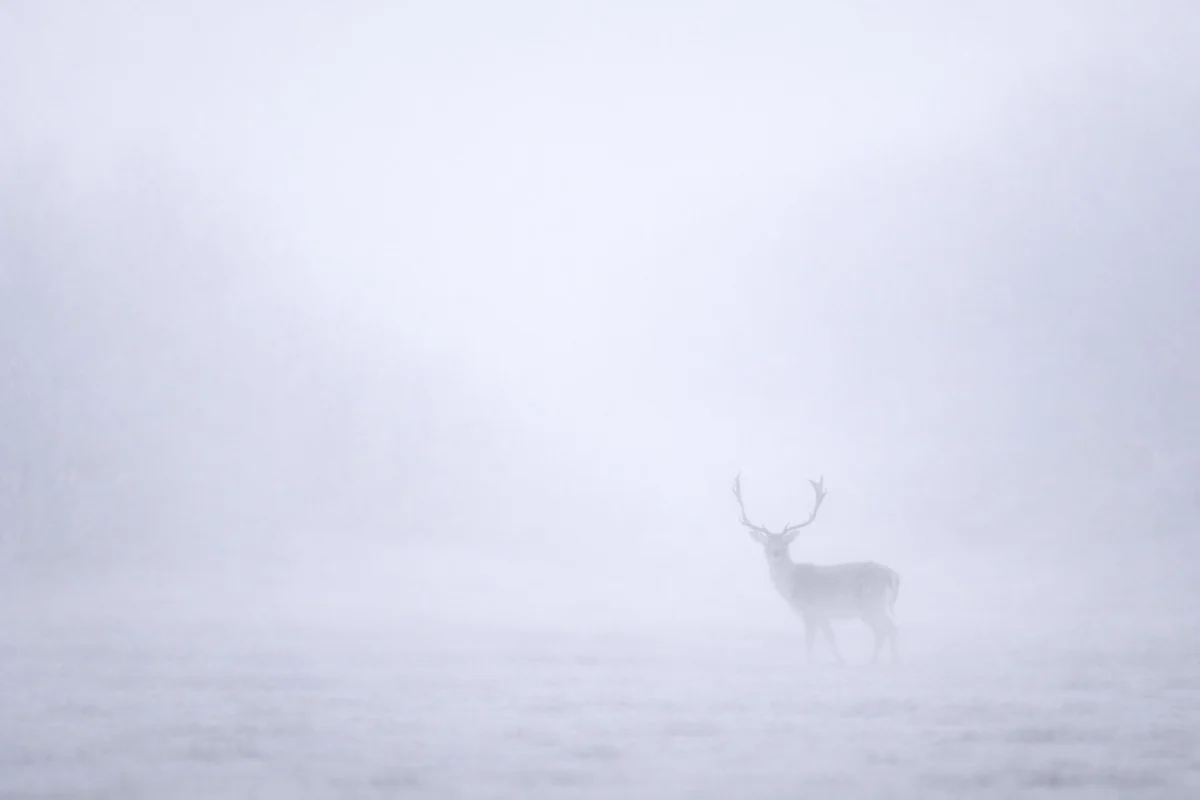
Photographer Elara Vance has garnered significant attention within the global photography community for her distinctive minimalist approach to capturing the natural world, a methodology that prioritizes emotional resonance and contemplative stillness over conventional detail or dramatic spectacle. This unique vision, which she describes as an organic evolution rather than a conscious decision, has positioned her as a leading voice in the burgeoning movement of "slow photography," challenging viewers to engage with nature on a deeper, more introspective level. Her work, recently highlighted across various digital platforms, including the Nature Photographers Network, offers a compelling counter-narrative to the often frenetic pace of contemporary visual culture, inviting a profound pause and a re-evaluation of what constitutes a powerful image.

The Genesis of a Contemplative Vision
Vance’s journey into this nuanced photographic style was not marked by a singular moment of revelation but rather an intuitive gravitation towards simplicity and emotional depth. From the outset of her photographic endeavors, which began with the fundamental mastery of her camera and the development of her observational skills, she found herself consistently stepping back, allowing subjects to recede, and consciously inviting space into the frame. This nascent tendency was, in retrospect, an unconscious search for quietude in a visually noisy world. Early in her artistic development, Vance reported an intrinsic pull towards uncluttered compositions, a preference rooted in a personal susceptibility to feeling overwhelmed by visual complexity. The discovery of high-key and low-key photography, rather than being a learned technique, resonated deeply with her innate sensibilities, feeling more like a recognition of an already existing internal aesthetic than an acquisition of new knowledge. This early predilection for calm backgrounds and a sense of "air" in her images laid the groundwork for the sophisticated minimalist aesthetic that defines her work today.
Nature as Sanctuary: The Emotional Core
For Vance, environments characterized by fog or snowfall are not merely settings but catalysts for a profound internal shift. These atmospheric conditions, which naturally soften harsh lines and obscure extraneous details, induce a state of decelerated thought and a gentle softening of perception. She describes these moments as experiences of deep, non-expressive happiness, often accompanied by unexpected waves of gratitude and a powerful sense of belonging. In these solitary encounters with nature, Vance expresses a unique form of communion, feeling "understood" by the natural world without the need for explanation or performance. This profound personal connection underscores the emotional authenticity embedded within her photographic philosophy. It is in these moments of quiet immersion that she finds a necessary balance for her intensely experienced inner world, which she characterizes as layered, complex, and constantly in motion. The expansive openness of natural landscapes provides a crucial counterpoint, fostering an internal spaciousness that allows her to process and find equilibrium.

The Philosophy of Stillness: A Challenge to Modern Pace
Vance’s photographic process stands in stark contrast to the rapid consumption and constant movement prevalent in modern life. She observes how people often rush through natural environments, rarely pausing long enough for the subtle intricacies of the landscape to reveal themselves. Her methodology advocates for a deliberate deceleration, a sustained presence within a chosen location, devoid of urgency or predefined expectations. This sustained stillness, she contends, alters perception. Light imperceptibly shifts, peripheral movements emerge into focus, and previously invisible details gradually become apparent. This transformation, she argues, is not due to a sudden appearance of new elements but rather a conscious allowance of oneself to truly see. This "way of looking" fundamentally invites slowness, attention, and presence, creating an experience that, once felt, renders a return to hurried observation profoundly challenging.
In this context, minimalism transcends mere aesthetic choice; it becomes a fundamental necessity. The deliberate emptiness often observed in her compositions is a direct reflection of a deep-seated need for calm. What might appear starkly minimal on the surface is, for Vance, imbued with profound depth. Silence, far from being empty, is presented as a space pregnant with meaning. The strategic use of white space acts as "breathing room," while darkness offers "rest." High-key and low-key techniques are employed not to strip away meaning, but to soften the world until only its essential truths remain, thereby creating an expansive canvas for deeper interpretation and emotional engagement. This foundational principle, she asserts, is no longer a question of preference but an established direction, a core tenet of her artistic practice. She deliberately chooses simplicity to preserve the authentic feeling of the moment, distance to grant space to both subject and observer, and restraint to maintain the openness and interpretive potential of the image. For Vance, minimalism is not a post-production technique but an intrinsic element of the creative act, beginning with the duration of her presence in a location and the extent to which she leaves the scene untouched.

Authenticity Over Acclaim: The Artist’s Integrity
Vance’s commitment to her artistic integrity is unwavering. Her photography is not driven by external validation, audience expectations, or prevailing trends. She exclusively shares images that resonate deeply within her own physical and emotional being. Any image, regardless of its technical perfection, that fails to evoke a profound personal connection remains private. This uncompromising dedication to internal authenticity means her work is guided by feeling, with technical knowledge serving as a quiet, supportive foundation rather than a dominant force. She describes an almost instantaneous, physical recognition of whether an image holds intrinsic value, trusting this visceral response even when it deviates from established photographic conventions. This approach allows her to engage in photography as a sanctuary, a space where she can fully express herself without the pressures of performance or explanation, where pure feeling is sufficient.
When questioned about the subject matter of her photographs, Vance often finds a clear answer elusive. Her work, she explains, is not primarily about animals, landscapes, or even minimalism as a theoretical construct. Instead, it is fundamentally about presence – being fully immersed in a moment that demands nothing in return.

Distance as Narrative: Fragile Encounters
Encounters with wildlife in her work, such as a fallow deer enveloped in mist or a fox poised in a snowy field, are often brief, almost ethereal. These moments, characterized by their fragility and weightlessness, are treated with profound respect. Vance intentionally steps back, maintaining distance, allowing the subject ample space. This spatial separation becomes an integral part of the narrative, emphasizing the delicate, often fleeting nature of these interactions. Her primary focus is not merely the encounter itself, but the lingering emotional resonance it imparts. An iconic image featuring a lone swan gliding through dark water, surrounded by profound stillness, exemplifies this principle, highlighting the subject as an integral, yet small, part of a larger, contemplative tableau. Another notable work, "Fox dissolving into snowfall," masterfully blends the subject into a vast white expanse, further underscoring the ephemeral quality of these natural moments.
The Broader Impact: An Invitation to Introspection
Vance’s work stands as a testament to the power of stillness and the strength inherent in softness. She champions the value of restraint, advocating for "less instead of more." While minimalism is frequently misinterpreted as emptiness, Vance reframes it as an open invitation. Her images create a spacious environment where viewers are encouraged to pause, to bring their own experiences and interpretations, unburdened by the need for explicit explanations or resolutions. This approach aligns with a growing global interest in mindfulness and contemplative practices, where finding solace and meaning in simplicity is increasingly valued.

In a photographic landscape often saturated with hyper-detailed, action-packed imagery, Vance’s quiet aesthetic offers a refreshing alternative. Her work resonates particularly with audiences seeking respite from visual overload and a deeper, more personal connection to the natural world. Photography critics and art commentators have lauded her for her ability to evoke profound emotion through seemingly sparse compositions, often comparing her work to haiku in its succinctness and depth. Dr. Anya Sharma, a renowned art historian specializing in contemporary photography, recently commented, "Vance’s work transcends mere documentation; it’s an invitation to a meditative state. In an era dominated by instant gratification and constant stimulation, her images provide a vital counterpoint, reminding us of the profound beauty found in quiet observation and emotional authenticity."
The implications of Vance’s artistic direction extend beyond the realm of aesthetics. By emphasizing presence and feeling, her work subtly encourages environmental consciousness, fostering a deeper appreciation for the delicate balance of ecosystems. When viewers are invited to slow down and truly see, they are more likely to develop a respectful and protective relationship with the natural world. This "slow art" movement, of which Vance is a prominent figure, implicitly challenges the consumerist tendencies within nature tourism and photography, advocating for a more respectful, less intrusive engagement with wildlife and landscapes.

Ultimately, if Vance’s photographs succeed in creating even a brief moment of pause for the viewer, she considers her artistic purpose fulfilled. Her ambition is not to impress but to invite – into quietude, into spaciousness, into a moment where the pressures of interpretation or resolution dissipate. Her motivation for photography is not merely to depict nature’s appearance, but to share the profound feeling that arises "when silence is enough." This enduring philosophy marks her as a significant voice, pushing the boundaries of nature photography into a realm of deep introspection and emotional resonance.
