
The groundbreaking research, published on November 17 in the prestigious Journal of Applied Ecology, introduces an innovative metric termed "overlap intensity." This new tool moves beyond simply identifying areas where penguins and fishing vessels coexist, instead quantifying the precise number of individual penguins affected by these interactions. By providing a more granular understanding of the ecological footprint of commercial fishing, the study offers critical insights for conservationists and policymakers grappling with the complex challenges of marine resource management.
A Species on the Brink: The Plight of the African Penguin
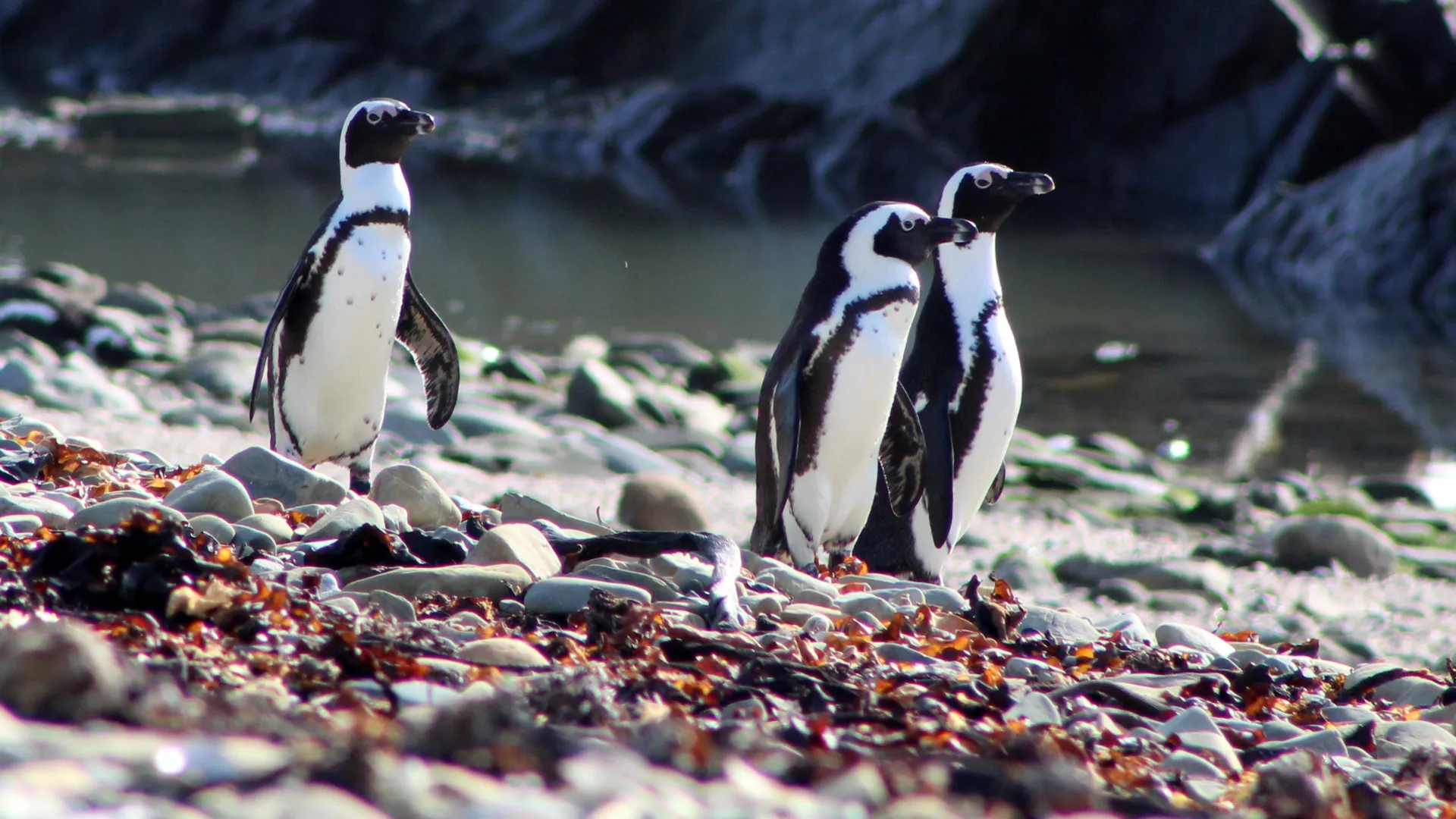
The African penguin, an iconic species endemic to the coasts of Southern Africa, has experienced a catastrophic population crash, with numbers plummeting by nearly 80% over the past three decades. From an estimated several million individuals at the turn of the 20th century, the population has dwindled to fewer than 10,000 breeding pairs today, earning it a "Critically Endangered" listing on the IUCN Red List. This precipitous decline is attributed to a confluence of factors, including habitat loss, oil spills, disease outbreaks, and crucially, competition with commercial fisheries for their primary food sources: sardines and anchovies.
These small pelagic fish constitute the cornerstone of the African penguin’s diet, providing the essential energy required for breeding, chick-rearing, and survival. The rapid depletion of these fish stocks, exacerbated by both environmental fluctuations and intensive fishing pressure, has placed immense strain on penguin colonies, forcing birds to expend more energy searching for food, often at great distances from their nests. This energetic deficit directly impacts reproductive success, leading to reduced chick survival and a perpetuation of the species’ decline.
The Mechanics of Competition: Purse-Seine Fisheries
The commercial fisheries operating in South African waters primarily target sardines (Sardinops sagax) and anchovies (Engraulis encrasicolus) using purse-seine nets. This highly efficient fishing method involves encircling entire schools of fish with a large wall of netting, which is then drawn closed at the bottom (like a drawstring purse) to capture the catch. While effective for harvesting schooling fish, this method can lead to significant localized depletion, directly competing with marine predators such as penguins, seals, and seabirds that rely on the same prey.
The South African small pelagic fishery is a vital economic sector, contributing significantly to the national economy through employment in fishing, processing, and related industries. This economic importance often creates a complex socio-economic dilemma, pitting conservation imperatives against the livelihoods of coastal communities. Understanding the dynamics of overlap between fishing vessels and foraging penguins is therefore not just an ecological concern but also a socio-economic one, requiring carefully balanced management strategies.
Dr. Jacqueline Glencross, lead author of the study and a researcher at the Scottish Oceans Institute at the University of St Andrews, articulated the core motivation behind the research. "We recognized the limitations of simply mapping areas of overlap," she stated. "Our goal was to develop a more robust methodology that could quantitatively assess how many individual penguins are potentially impacted when fisheries operate within their foraging ranges. This allows for a more direct measure of the ecological risk."
Unveiling the Overlap: Tracking Data Reveals Critical Patterns
The research team meticulously analyzed tracking data collected from African penguins nesting on two crucial breeding islands: Robben Island and Dassen Island. These islands, located off the coast of Cape Town, host significant penguin colonies and are central to conservation efforts. The study involved a collaborative effort with scientists from the University of Exeter, the South African Department of Forestry, Fisheries and the Environment (DFFE), and BirdLife South Africa, pooling expertise and resources to gather comprehensive ecological data.
Their sophisticated analysis revealed a stark and concerning trend: a dramatic increase in overlap intensity during years characterized by low fish biomass. For instance, in 2016, a year widely documented for its scarcity of sardine and anchovy stocks, approximately 20% of the tracked penguins were observed actively foraging in the same marine regions as commercial fishing vessels. This figure represents a five-fold increase compared to years with more robust fish stocks, where the overlap intensity dropped significantly to around 4%.
These findings unequivocally demonstrate that competition between penguins and fisheries intensifies precisely when prey resources are most limited. Such conditions pose an existential threat to penguins, particularly during critical life stages like chick-rearing. Adult penguins, burdened with the responsibility of feeding hungry chicks, must locate food quickly and efficiently. Increased foraging effort due to scarcity or competition leads to longer foraging trips, reduced provisioning rates for chicks, and ultimately, lower breeding success and increased mortality rates among both adults and juveniles. The additional energy expenditure can also weaken adult birds, making them more susceptible to disease and other environmental stressors.
A New Metric for Ecosystem-Based Fishery Management
The "overlap intensity" metric developed by Dr. Glencross and her team represents a significant advancement in marine conservation tools. By quantifying the extent of individual penguin exposure to fishing activities, it provides a powerful indicator of ecological risk. This tool is specifically designed to inform and enhance ecosystem-based fishery management (EBFM), a holistic approach that considers the entire ecosystem, including predators, prey, and habitat, rather than focusing solely on target fish stocks.
EBFM aims to balance human needs with the health of marine ecosystems, fostering sustainable resource use. The new metric provides fishery managers with empirical data to make more informed decisions about fishing quotas, spatial closures, and temporal restrictions. Furthermore, the findings strongly advocate for the development and implementation of dynamic marine protected areas (MPAs). Unlike static MPAs with fixed boundaries, dynamic MPAs can adapt their boundaries and regulations in real-time, responding to shifts in fish distribution, penguin foraging patterns, and environmental conditions. This adaptive approach would allow for more flexible and effective protection of critical foraging grounds when and where they are most needed, minimizing conflict and maximizing conservation impact.
Legal Battles and the Reinstatement of Closures
The precarious situation of the African penguin has not gone unnoticed by legal and policy frameworks. The species recently became the focus of a landmark South African court case that critically examined the adequacy of existing fishing restrictions near penguin breeding sites. Conservation organizations, driven by scientific evidence of intense competition and population decline, argued that the government’s previous measures were insufficient to protect the birds.
Earlier this year, a significant breakthrough was achieved when conservation organizations and representatives from the fishing industry reached a high court agreement. This accord formally acknowledged the urgent need for more effective fishery closures around key penguin colonies. Following this pivotal decision, the South African government acted decisively, reinstating more biologically meaningful no-fishing zones near Robben Island, one of the primary colonies investigated in the St Andrews study, and other critical breeding grounds.
Dr. Glencross emphasized the immediate relevance of their research to these policy changes. "This research provides robust scientific evidence that clarifies why those closures are absolutely necessary," she asserted. "Our data indicated that previously unprotected areas, which were experiencing high overlap intensity, were precisely where the penguins were most at risk of direct competition and starvation. The new closures are a critical step towards mitigating this immediate threat."
Voices from the Frontline: Perspectives on the Future
The study’s release has been met with varied reactions from stakeholders. Conservation groups, such as BirdLife South Africa, have hailed the research as a vital contribution to understanding and addressing the crisis. "This study validates years of our advocacy for stronger protections," commented a representative from BirdLife South Africa, who wished to remain anonymous due to ongoing policy discussions. "It provides the quantitative evidence needed to push for adaptive management strategies, ensuring that our Critically Endangered penguins have a fighting chance."
From the perspective of the South African Department of Forestry, Fisheries and the Environment (DFFE), the research offers valuable guidance for implementing their mandate to balance conservation with sustainable resource use. A DFFE spokesperson, speaking on background, indicated that the government is committed to an evidence-based approach. "We acknowledge the scientific findings and the critical role of robust data in informing our management decisions. The reinstatement of fishing closures reflects our commitment to safeguarding biodiversity while also considering the socio-economic implications for our fishing communities. The ‘overlap intensity’ metric will be a valuable tool in our ongoing efforts to refine ecosystem-based management."
Representatives from the fishing industry, while recognizing the ecological concerns, also emphasize the economic realities. "We understand the pressure on penguin populations," stated a spokesperson for a leading fishing association. "Our industry is committed to sustainable practices. The challenge lies in finding solutions that protect marine life without jeopardizing the livelihoods of thousands of people who depend on these fisheries. Collaboration and scientific data, like that presented in this study, are crucial for finding that balance."
Broader Implications and the Path Forward
The findings from the University of St Andrews study resonate far beyond the waters of Southern Africa. The conflict between human resource extraction and marine wildlife is a global challenge, from seabirds competing with fisheries in the North Atlantic to marine mammals entangled in gear in the Pacific. The "overlap intensity" metric offers a transferable framework that could be applied to other species and regions, providing a standardized way to assess and mitigate human-wildlife conflict in marine environments.
The study underscores the urgent need for a paradigm shift in how marine resources are managed. Traditional single-species management, focused solely on fish stocks, is proving inadequate in the face of complex ecological pressures and climate change. The move towards ecosystem-based approaches and dynamic conservation tools, as highlighted by this research, is not merely beneficial but essential for the long-term health of our oceans and the myriad species that call them home.
Future research will likely focus on refining the overlap intensity metric, integrating real-time environmental data (such as ocean temperature and upwelling events that influence fish distribution), and exploring the effectiveness of dynamic closures over longer timeframes. Continued monitoring of penguin populations and fish stocks will be paramount to assess the impact of the newly implemented measures and to adapt management strategies as environmental conditions evolve. The fate of the African penguin serves as a poignant reminder of the delicate balance within marine ecosystems and the profound responsibility humanity bears in protecting them.
