
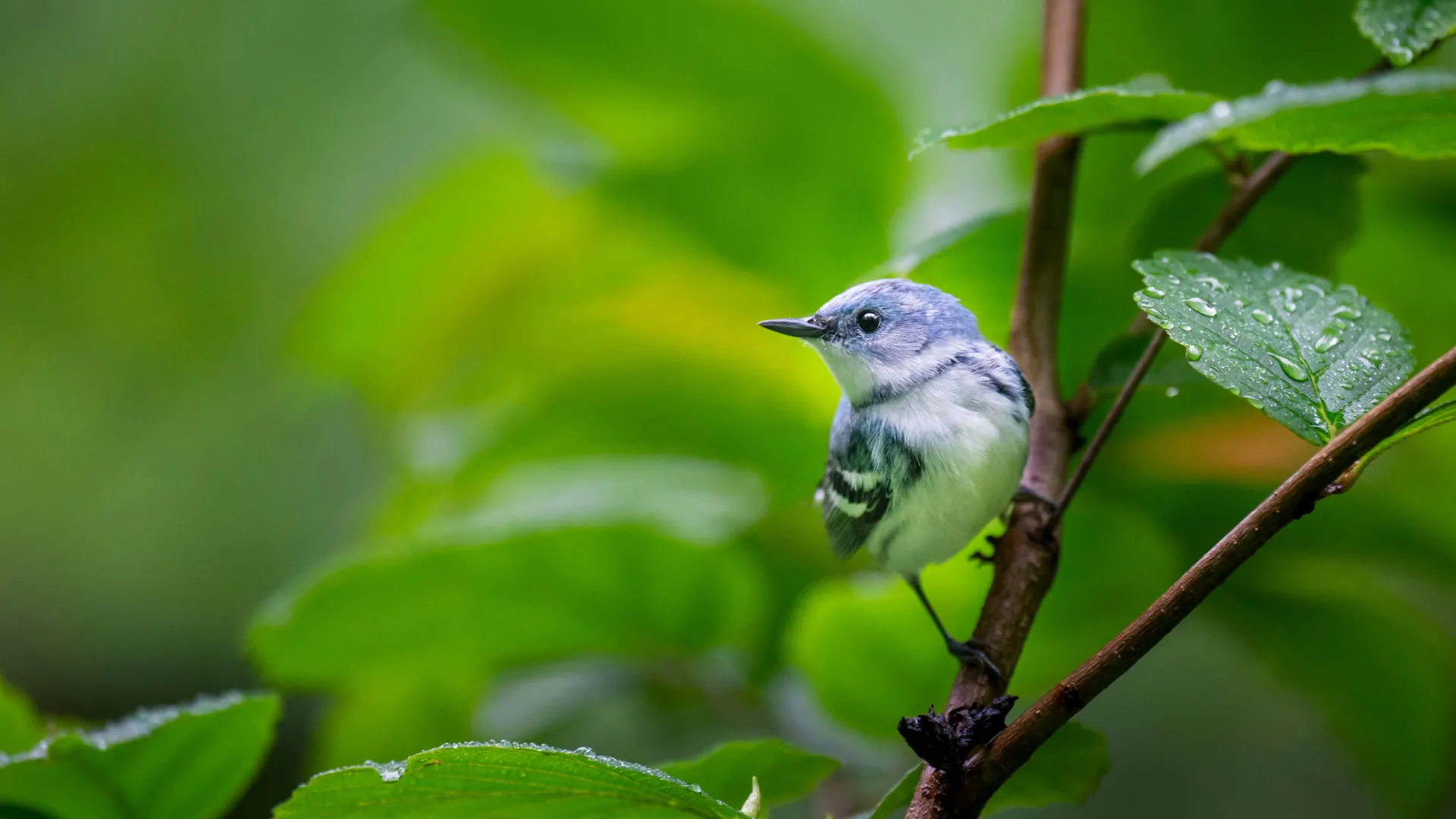
Every spring, the familiar songs of Wood Thrushes and warblers drift back into parks and neighborhoods across eastern North America, signaling the renewal of life. What few people realize is that these vibrant avian visitors spend the vast majority of their lives much farther south, relying on the lush, often remote, and biologically rich forests of Central America to survive the rest of the year. This critical intercontinental connection, vital for the ecological health of two hemispheres, has been brought into sharp focus by a recent landmark study.
A collaborative effort between the Wildlife Conservation Society (WCS) and the Cornell Lab of Ornithology, published in the esteemed journal Biological Conservation, underscores the irreplaceable role of the Five Great Forests of Central America. These expansive, interconnected forest systems, stretching geographically from southern Mexico through Guatemala, Belize, Honduras, Nicaragua, Costa Rica, Panama, and into northern Colombia, are not merely tropical wildernesses but rather the indispensable wintering and stopover habitats for a multitude of migratory bird species that link the North and South American continents. The study’s findings illuminate the profound responsibility that conservation efforts in Central America hold for the future of North America’s avian biodiversity.
Unveiling the Hemispheric Connection: Key Study Findings
The research leveraged an unprecedented volume of data, made possible by millions of citizen science sightings submitted to the Cornell Lab’s global eBird platform. This detailed information on weekly bird distribution allowed scientists to precisely map the movements and concentrations of migratory species across their annual cycles. The revelations were stark: these five forest strongholds collectively provide critical habitat for between one-tenth and nearly one-half of the global populations of 40 distinct migratory species. Alarmingly, many of these species are already facing significant population declines in North America, highlighting the acute vulnerability of their wintering grounds.
Anna Lello-Smith, lead author of the study and a conservation scientist at WCS, emphasized the direct link between these distant ecosystems. "What happens in Central America directly affects the birds we love in the United States and Canada," she stated. "These forests aren’t just tropical wilderness – they’re at the heart of migration, sustaining many of our birds for more than half the year. They provide the food and shelter that allow Wood Thrushes, Magnolia Warblers, and so many others to return north to fill our spring with song and color." Her words underscore the deep, often unseen, interdependence between diverse ecosystems spanning thousands of miles.
A Lifeline for North America’s Beloved Songbirds
The Five Great Forests – comprising the Selva Maya, Moskitia, Indio Maíz-Tortuguero, La Amistad, and Darién – together form a continuous ecological corridor roughly the size of the U.S. state of Virginia, approximately 42,000 square miles (over 100,000 square kilometers). This vast expanse of unbroken or largely intact forest is not only a haven for migratory songbirds but also a critical sanctuary for iconic megafauna such as jaguars, Baird’s tapirs, and vibrant scarlet macaws, many of which are themselves endangered. For birds undertaking arduous journeys of thousands of miles each year, these forests serve as essential resting, refueling, and wintering grounds, offering vital resources like insects, fruits, and safe roosting sites.
Viviana Ruiz-Gutierrez, director of Conservation Science at the Cornell Lab of Ornithology and a co-author of the study, highlighted the sheer scale of avian life concentrated within these areas. "Every fall, billions of birds pour south through the narrow land bridge of Central America," she explained. "The density of migratory warblers, flycatchers, and vireos crowded into these five forests is astounding, and means that each hectare protected there safeguards a disproportionate number of birds." This extreme concentration means that habitat loss in even a small area can have catastrophic impacts on entire species populations. Species like the Scarlet Tanager, Kentucky Warbler, Golden-winged Warbler, and Broad-winged Hawk, cherished sights in North American forests during breeding season, rely implicitly on the health of these tropical counterparts.
The Unseen Threat: Alarming Rates of Deforestation
Despite their critical ecological importance, these invaluable forests are disappearing at an alarming and accelerating pace. The primary driver of this destruction is illegal cattle ranching, which has already claimed millions of acres, converting biodiverse forestland into pastures. In the Moskitia region, a vital component of the Five Great Forests straddling Honduras and Nicaragua, the situation is particularly dire: almost one-third of the forest has vanished in only 20 years. This rapid deforestation not only eliminates crucial habitat but also contributes significantly to climate change by releasing stored carbon and reducing the planet’s capacity to absorb CO2. The clearing often involves slash-and-burn techniques, further degrading soil quality and exacerbating fire risks.
Jeremy Radachowsky, Regional Director for WCS’s Mesoamerica Program, issued a stark warning regarding the implications of this environmental crisis. "If we lose the last great forests of Central America – and we are – we lose the birds that define our eastern forests in North America," he cautioned. This statement underscores the direct and irreversible consequences for ecosystems far beyond Central America’s borders. The destruction is often fueled by complex socio-economic factors, including poverty, lack of land tenure security, weak governance, and demand for agricultural products, creating a challenging environment for conservation efforts.
Indigenous Communities: Guardians of the Forests
Amidst the grim statistics, a beacon of hope emerges from the efforts of Indigenous and local communities across Central America. These communities, often the traditional stewards of these lands for centuries, are at the forefront of conservation, working tirelessly to restore damaged lands, implement preventative measures against forest fires, and revive traditional, bird-friendly livelihoods. Their initiatives include sustainable agroforestry practices such as the production of allspice and cacao, which provide economic stability without resorting to destructive land use. These efforts are not without significant peril; environmental defenders in Central America frequently face serious risks, including violence and intimidation, for their dedication to protecting natural resources. Yet, their commitment remains absolutely essential for safeguarding the remaining forest habitat and its biodiversity.
Ruiz-Gutierrez highlighted the potential for expanding these local successes through broader collaboration. "Imagine the possibility of linking with those efforts," she mused, "so that we can work together across the Americas to bring back our shared migratory birds." This vision emphasizes the necessity of international support and cooperation to empower these frontline conservationists and scale up their impactful work.
Bridging Continents: Mapping Sister Landscapes
For too long, effective international cooperation in migratory bird conservation has been hampered by a lack of clear, data-driven information about precisely how migratory birds connect different habitats and communities throughout their annual cycle. To overcome this hurdle and foster more effective cross-border conservation strategies, researchers employed a sophisticated framework developed by Partners in Flight and the Cornell Lab. This framework allowed them to map "stewardship connections," identifying specific regions in North America where species dependent on the Five Great Forests gather to breed.
These groundbreaking findings reveal that the Five Great Forests are intimately tied to diverse forest regions across North America, including the ancient Appalachian Mountains, the fertile Mississippi Delta, the expansive Great Lakes region, the historic woodlands of New England, and the vital green spaces surrounding major metropolitan areas like New York City. Researchers have aptly termed these geographically disparate yet ecologically linked regions "sister landscapes." This concept highlights that they are connected by the same bird species at different, but equally critical, points in their annual life cycle. For instance, a Wood Thrush that breeds in the forests of New York’s Catskills may spend its non-breeding season foraging in the Moskitia. The fate of one landscape directly influences the other, creating a shared ecological destiny.
A Call to Action: Protecting Shared Migratory Heritage
In many profound ways, the Five Great Forests of Central America serve as tropical mirror images, or counterparts, to North America’s eastern forests. They shelter the exact same suite of forest-loving birds, including the aforementioned Scarlet Tanagers, Kentucky Warblers, Golden-winged Warblers, and Broad-winged Hawks, during the crucial months when these species are far from their breeding territories. These tropical forests provide not only food and shelter but also crucial social cues and learning opportunities for young birds, ensuring their survival and successful return migration. Safeguarding these vital wintering and stopover habitats is, therefore, not merely an act of regional conservation but an indispensable component of ensuring that these birds continue their age-old migrations and return north each spring to enrich North American ecosystems.
The implications of this study are far-reaching, extending beyond avian conservation to encompass broader ecological and socio-economic well-being. "Every hectare we protect in Central America has ripple effects for birds and people across the hemisphere," Lello-Smith concluded. "The forests that sustain thrushes and warblers also support communities. If you love watching your birds come back each spring, we invite you to discover the tropical forests they call home for most of the year – and help protect them." This final appeal underscores the interconnectedness of nature and humanity, urging a collective, hemispheric effort to preserve these invaluable ecosystems. International collaboration, robust funding for local conservation initiatives, and a concerted effort to address the root causes of deforestation are paramount to ensuring the continued survival of these shared migratory treasures and the vibrant spring songs they bring to North American landscapes.
