
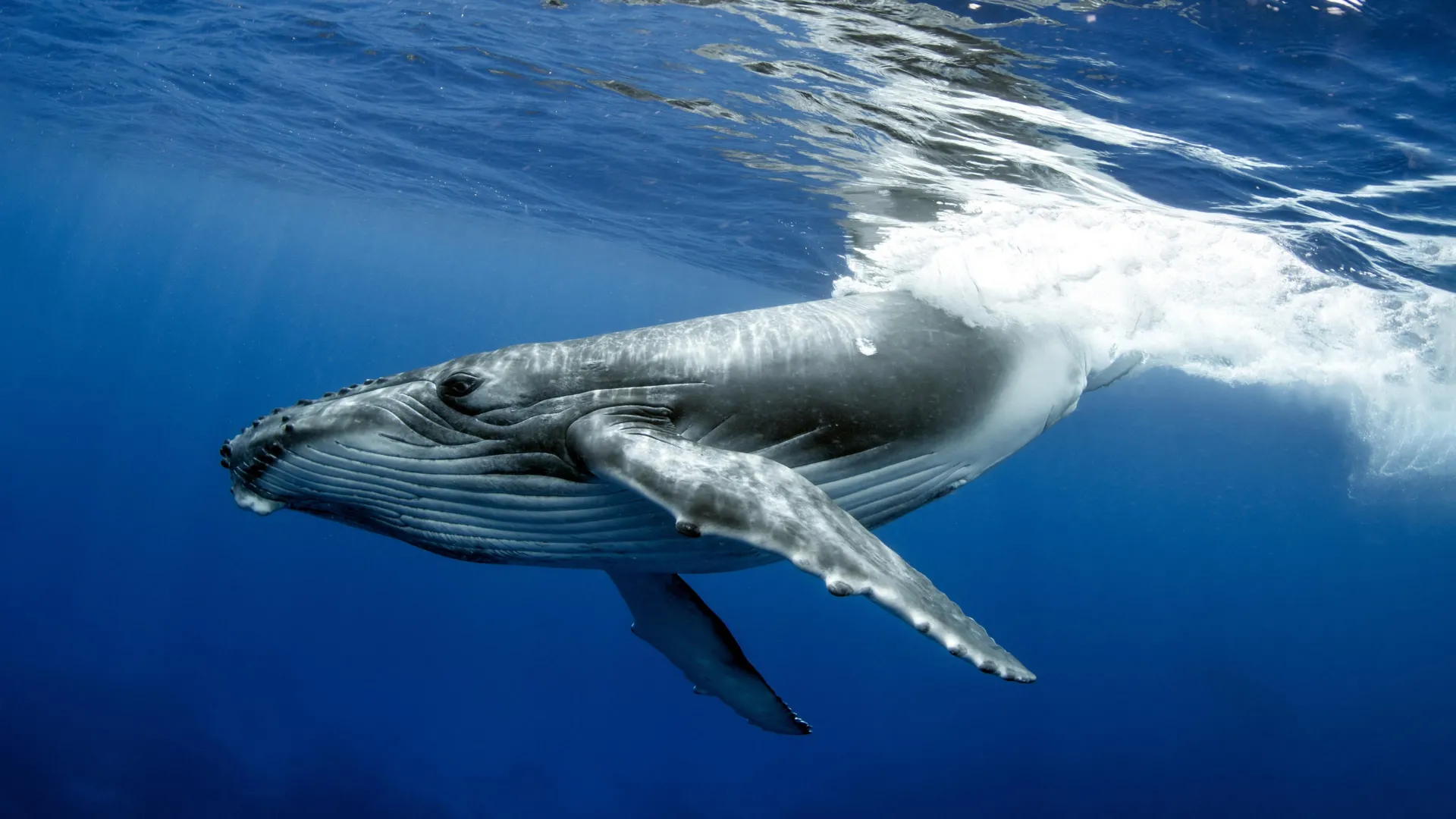
This groundbreaking discovery establishes the greatest confirmed distance ever recorded between sightings of individual humpback whales anywhere in the world, rewriting previous understandings of their migratory capabilities and the interconnectedness of their global populations. The monumental achievement, detailed in a recent publication, underscores the power of multi-decadal research programs, advanced photographic identification techniques, and a burgeoning global network of citizen scientists.
The Unprecedented Journeys: A Tale of Two Whales
The core of this revelation lies in the documented travels of two specific humpback whales, identified through their unique tail fluke patterns – the distinct markings on the underside of a whale’s tail, akin to human fingerprints. Researchers meticulously compared tens of thousands of high-quality photographs, a process that ultimately connected individuals sighted thousands of kilometers apart across two different oceans.
The first whale, a resilient traveler, was initially photographed in Hervey Bay, Queensland, Australia, in 2007. Hervey Bay is renowned as a crucial resting and calving ground for humpback whales along Australia’s eastern coast, attracting thousands of tourists annually eager to witness these majestic creatures. This whale was subsequently sighted again in the same Australian waters in 2013, confirming its regular return to its known breeding habitat. However, the scientific community was stunned when the identical whale reappeared near São Paulo, Brazil, in 2019. The minimum straight-line distance between Hervey Bay and São Paulo is approximately 14,200 kilometers, a staggering journey roughly equivalent to traversing the globe from Sydney to London. Scientists noted that this represents only the recorded start and end points of the journey, implying the whale likely traveled an even greater distance along an unknown, circuitous route across the vast expanse of the Pacific and Atlantic Oceans.
Even more remarkable was the journey of a second whale, which established a new record for the longest known movement of an individual humpback. This whale was first documented in 2003 at Brazil’s Abrolhos Bank, off the coast of Bahia. Abrolhos Bank is a vital nursery and breeding area for the South Atlantic humpback whale population, characterized by its extensive coral reefs and nutrient-rich waters. At the time of its initial sighting, the whale was observed as part of a lively group of nine adult whales, a common social dynamic during the breeding season. An astonishing twenty-two years later, in September 2025, the same whale was spotted alone in Hervey Bay, Australia. The documented distance between these two sightings — Abrolhos Bank to Hervey Bay — measured an astounding 15,100 kilometers, setting an unprecedented benchmark for individual whale migration. This journey not only eclipsed the previous record but also provided definitive evidence of bidirectional exchange between these geographically distant breeding populations.
Decades of Dedication: The Power of Photo-Identification and Citizen Science
Discoveries of this magnitude are not born overnight but are the culmination of decades of painstaking effort and technological innovation. "Discoveries like this are only possible because of investment into long-term multi-decadal research programs and international collaboration," explained Stephanie Stack, a PhD Candidate at Griffith University and a co-author of the study. "These whales were photographed decades apart, by different people, in opposite parts of the world, separated by two different oceans, and yet we can connect their journey."
The study relied on an immense dataset comprising 19,283 high-quality fluke photographs, collected between 1984 and 2025. This extensive photographic library was meticulously built through the contributions of both professional marine researchers and a dedicated network of citizen scientists. The global whale tracking platform, Happywhale, played an indispensable role, serving as a central repository for these images and facilitating their analysis. Citizen science, where members of the public contribute to scientific research, has become increasingly vital in ecological studies, particularly for wide-ranging species like whales. Every photograph submitted by a whale watcher, tourist, or amateur photographer, when of sufficient quality, adds another piece to the complex puzzle of whale movements and population dynamics.
To manage and analyze such a vast collection of images, scientists leveraged automated image recognition software. This advanced technology efficiently sifted through the thousands of photographs, identifying potential matches based on the intricate patterns of nicks, scars, and pigmentation on each whale’s fluke. Following the automated screening, every possible match was then manually checked and verified by experienced researchers to ensure accuracy and confirm the individual identities. This hybrid approach, combining cutting-edge artificial intelligence with expert human verification, proved instrumental in making these groundbreaking connections.
Dr. Cristina Castro, lead researcher from the Pacific Whale Foundation, emphasized the profound impact of this collaborative model: "This kind of research highlights the value of citizen science. Every photo contributes to our understanding of whale biology and, in this case, helped uncover one of the most extreme movements ever recorded." The ability to cross-reference images from disparate geographical locations and time periods underscores the critical role of open data sharing and international scientific cooperation in modern ecological research.
Challenging Conventional Wisdom: The Rarity and Significance of Trans-Oceanic Crossings
Humpback whales ( Megaptera novaeangliae) are renowned for undertaking some of the longest migrations of any mammal, typically traveling from nutrient-rich polar feeding grounds to warmer, tropical or subtropical breeding grounds. Historically, these migrations were understood to be largely latitudinal, with distinct populations generally adhering to specific migratory corridors along continental shelves, returning to the same breeding and feeding areas year after year. For instance, the eastern Australian population typically feeds in Antarctic waters off East Antarctica and breeds along Australia’s eastern coast, while the Brazilian population feeds in the South Atlantic and breeds off Brazil. The idea of an individual whale crossing vast oceanic basins between these distinct breeding grounds was largely theoretical, or at best, considered an extremely rare anomaly.
Despite the stunning distances involved in these newly documented journeys, researchers emphasized how uncommon these trans-oceanic migrations appear to be. Across more than four decades of data, covering nearly 20,000 identified humpback whales from both eastern Australia and Latin America, only two individuals were found to have traveled between the two breeding regions. This represents an infinitesimally small fraction — just 0.01 percent — of the whales included in the records. This extreme rarity makes the discovery even more compelling, as it challenges established paradigms while simultaneously highlighting the exceptional nature of these specific individuals.
However, scientists stress that even these rare movements hold significant implications for the long-term health and adaptability of whale populations. Ms. Stack elaborated on this crucial point: "Despite their rarity, these exchanges matter for the long-term health of whale populations. Occasional individuals moving between distant breeding grounds can help maintain genetic diversity across populations and may even carry new song styles from one region to another — humpback whale songs are known to spread culturally across ocean basins, much like music trends in human populations."
Unpacking the ‘Southern Ocean Exchange’ Hypothesis
These findings lend strong support to what researchers refer to as the "Southern Ocean Exchange" hypothesis. This compelling idea posits that humpback whales from different breeding populations, typically geographically separated during their reproductive phases, may occasionally converge and interact in shared Antarctic feeding areas. The Southern Ocean, with its incredibly rich abundance of krill, serves as a crucial summer feeding ground for multiple distinct humpback populations from across the Southern Hemisphere.
According to the hypothesis, after a period of intense feeding in these common Antarctic waters, some whales might then return along a different migratory route than their original trajectory. This deviation could lead them to eventually settle in a completely new breeding region, effectively "exchanging" populations. The documented journeys of these two whales provide the first empirical evidence supporting this theoretical exchange mechanism, demonstrating a tangible connection between previously thought to be isolated breeding stocks. This suggests a more dynamic and interconnected global population structure than previously assumed, even if such exchanges are infrequent.
Humpback Whales: A Story of Recovery and Resilience
The context of this discovery is deeply rooted in the broader history of humpback whales. These magnificent marine mammals, typically growing up to 16 meters long and weighing around 40 metric tons, faced near-extinction during the era of commercial whaling in the 19th and 20th centuries. Their global population plummeted dramatically, with some stocks reduced by over 90%. However, thanks to international protection measures implemented in the 1960s, humpbacks have staged one of the most remarkable conservation success stories, with many populations now recovering robustly.
The Eastern Australian humpback population, for example, has rebounded significantly from a few hundred individuals to over 40,000, leading to its removal from the endangered species list in 2022. Similarly, the Western South Atlantic population, which breeds off Brazil, has also shown strong signs of recovery. Understanding the intricacies of their migration, population dynamics, and potential for inter-population exchange is crucial for ensuring the continued health and resilience of these recovering giants. This new research adds another layer of complexity to that understanding, suggesting that even populations considered distinct might have occasional, critical genetic and cultural links.
The Looming Shadow of Climate Change
Researchers also believe that climate change could play a significant role in making these rare trans-oceanic crossings more common in the future. The delicate balance of the Antarctic ecosystem, which forms the foundation of the humpback whale’s food chain, is under increasing pressure from global warming. Shifts in Antarctic sea ice dynamics and changes in the distribution and abundance of Antarctic krill — the whales’ primary food source — may be altering whale migration patterns over time.
As their preferred feeding grounds or routes become less predictable or productive due to climate change, whales may be compelled to explore new areas, potentially increasing the likelihood of encountering and settling into different breeding populations. This environmental forcing could lead to more frequent instances of the Southern Ocean Exchange, accelerating genetic mixing and cultural transfer between populations. While the immediate implications are still being studied, it highlights another critical dimension of climate change’s impact on marine biodiversity and the adaptive capacity of long-lived species.
Broader Implications for Conservation and Research
This unprecedented discovery carries profound implications for marine conservation, scientific research, and the management of global whale populations. Firstly, it underscores the need for a more integrated, international approach to whale conservation. If populations are not entirely isolated, then conservation strategies developed in one region must consider potential impacts or influences from distant populations. This could affect everything from marine protected area design to shipping lane regulations and fishing gear restrictions.
Secondly, the findings reinforce the immense value of long-term ecological datasets and the collaborative spirit of scientific inquiry. The ability to track individuals over decades and across continents, enabled by both dedicated researchers and enthusiastic citizen scientists, demonstrates the power of sustained effort and collective observation. Platforms like Happywhale serve as powerful tools for democratizing science and engaging the public in critical conservation efforts.
Finally, the study opens new avenues for genetic research. Future studies will likely focus on analyzing genetic samples from these populations to identify whether there is indeed a detectable genetic flow that correlates with these observed physical movements. Such genetic evidence would further solidify the concept of an interconnected global humpback population and provide deeper insights into their evolutionary history and adaptive potential.
The study, "First evidence of bidirectional exchange between distant humpback whale breeding populations in eastern Australia and Brazil," was published in the esteemed journal Royal Society Open Science, cementing its place as a landmark contribution to marine biology. As humanity grapples with the challenges of a changing planet, understanding the intricate lives and movements of creatures like the humpback whale becomes ever more critical for safeguarding the health of our oceans and the biodiversity they sustain.
