

Velddrif, Western Cape, South Africa – April 13, 2026 – In a significant stride for avian research and conservation in Southern Africa, BirdLife South Africa has launched an ambitious initiative to track the epic journeys of migratory shorebirds. This pioneering project, the first of its kind in the nation, will deploy advanced tracking devices on species such as the Curlew Sandpiper (Calidris ferruginea) and Grey Plover (Pluvialis squatarola), aiming to illuminate their previously enigmatic migratory pathways.
The initiative is centred on tagging, colour-ringing, and meticulous monitoring of these species at critical coastal locales, with the Berg River estuary in Velddrif serving as a key study site. While it is generally understood that these birds undertake extensive migrations from South Africa to the high Arctic mainland, this project seeks to provide unprecedented detail on their movements along the vast Africa-Eurasian Flyway. A primary objective is to identify crucial habitats essential for their survival and to inform robust, international conservation strategies. Both the Curlew Sandpiper and the Grey Plover are currently listed as globally Vulnerable on the IUCN Red List, underscoring the urgency and importance of this research.
This endeavour represents a pivotal moment for ornithological understanding in Southern Africa. Although tracking studies have been conducted extensively along other sections of the flyway, very few tagged birds originating from further north have reached South Africa. Consequently, the precise migratory routes, critical stopover sites, and breeding grounds utilized by populations wintering in South Africa have remained largely obscure. This project marks the first instance where long-distance Palearctic migratory shorebirds, specifically the Curlew Sandpiper and Grey Plover, have been fitted with tracking devices within South Africa.
A Collaborative Effort for Global Conservation
The success of this groundbreaking research hinges on a robust network of international collaboration. Key partners involved in this initiative include the Department of Ornithology at the prestigious Max Planck Institute for Biological Intelligence in Germany, Wetlands International, a globally recognized organization dedicated to wetland conservation based in the Netherlands, the FitzPatrick Institute of African Ornithology at the University of Cape Town, and Conserve Eden, an environmental conservation organization located in Plettenberg Bay.

Financial support for this vital project has been generously provided by the Royal Society for the Protection of Birds (RSPB) in the United Kingdom and the Ecological Restoration Fund, also based in the UK. This international backing highlights the global significance of understanding and protecting migratory bird populations that traverse continents.
Building on a Legacy of Research
The current fieldwork in the Western Cape builds upon BirdLife South Africa’s prior research, notably the monitoring of European Rollers in the Kruger National Park. That earlier project already underscored the diverse range of habitats utilized by migratory birds within South Africa. The logistical challenges of accessing remote field sites have been significantly mitigated by a long-term loan of a 2025 Subaru Forester from Subaru Southern Africa, demonstrating the broad support this initiative is garnering.
Unveiling the Invisible Threads of Migration
By integrating cutting-edge satellite tracking technology with intensive on-the-ground monitoring efforts, the project is poised to generate high-resolution data on bird movements. This data will provide invaluable insights into their migration routes, identify critical refuelling stations – often overlooked but vital stopover sites – and reveal previously unknown ecological connections spanning vast geographical distances. Such comprehensive understanding is indispensable for developing and implementing effective conservation strategies that operate on a flyway-wide scale, acknowledging that the fate of these birds is intrinsically linked across multiple nations.
Jessica Wilmot, Flyway & Migrants Project Manager at BirdLife South Africa, emphasized the project’s significance: "BirdLife South Africa has a long-standing history of working along the West Coast, and this project is a natural extension of that foundational work. It not only illuminates how landscapes are interconnected within South Africa but also demonstrates how shorebirds act as vital links, connecting us to critical wetlands across the entire continent. In the wake of the recent Ramsar Conference of the Parties 15 held in Victoria Falls, this research serves as a timely reminder of the indispensable role these ecosystems play in global biodiversity and climate regulation."
Early Insights: A Glimpse into Avian Adventures
Even in its nascent stages, the satellite tracking data has begun to reveal remarkably diverse and intriguing migratory patterns. Initial observations indicate that while some tracked individuals have commenced an eastward movement, others have embarked on a consistent northward trajectory, hugging the western coastline of Africa.

The immediate findings are particularly striking: two Curlew Sandpipers have already reached the vast Sudd wetlands in South Sudan, a critical ecological zone in East Africa, with another individual closely following in the eastern Central African Republic. Two other birds have established temporary residences in Angola, a crucial staging area for many migratory species. Furthermore, three individuals have been recorded in the Makgadigadi Pans Key Biodiversity Areas in Botswana, a significant wetland system in Southern Africa.
These early movements underscore the varied and adaptable migration strategies employed by these shorebird populations. They also present an exciting opportunity for both the general public and the conservation community to follow the birds’ journeys in near real-time, fostering a deeper connection with these incredible long-distance travellers.
The Technical Backbone: Tagging and Data Collection
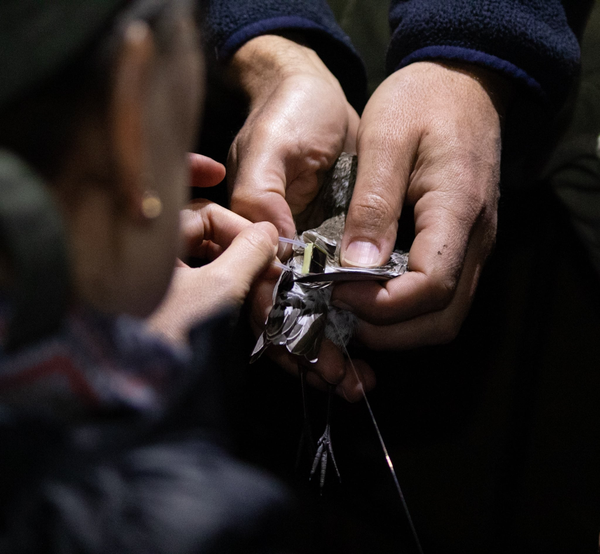
The process of fitting these miniature tracking devices is a delicate operation, carried out by highly qualified bird handlers. The tags, designed to be as unobtrusive as possible, transmit location data via satellite. This allows researchers to plot the birds’ movements with remarkable accuracy, revealing their flight paths, altitudes, and the duration of their stays at different locations.
The data collected will be analyzed to understand:
- Migration Routes: Precise pathways taken between breeding and wintering grounds.
- Stopover Sites: Identification of critical wetlands and coastal areas where birds rest and refuel.
- Habitat Use: Understanding the types of habitats utilized during different phases of their migration and wintering period.
- Timing of Migration: Detailed information on departure and arrival dates, and the duration of migratory flights.
- Connectivity: Establishing links between breeding grounds, migratory routes, and wintering areas across multiple countries.
This detailed information will be crucial for identifying threats at various points along the flyway and for implementing coordinated conservation actions.
Broader Implications and the Future of Conservation
The implications of this research extend far beyond academic interest. The data gathered will directly inform conservation policies and practices at national and international levels. By pinpointing the most critical habitats and understanding the pressures these birds face, governments and conservation organizations can prioritize conservation efforts and allocate resources more effectively.
This project aligns with broader international conservation goals, including those outlined by the Convention on Migratory Species (CMS) and Ramsar Convention on Wetlands. The focus on the Africa-Eurasian Flyway highlights the interconnectedness of ecosystems and the need for transboundary cooperation.
The success of this initiative will likely pave the way for similar tracking studies on other migratory species in South Africa, further enhancing the country’s contribution to global avian research and conservation. The project also serves as an educational tool, raising public awareness about the challenges faced by migratory birds and the importance of wetland conservation.
Supporting the Cause
BirdLife South Africa is actively seeking support to sustain and expand this vital research. Individuals and organizations interested in contributing to the future of shorebird tracking efforts and the conservation of these vulnerable species are encouraged to visit: https://www.birdlife.org.za/shorebirdtracking for donation and engagement opportunities.
This groundbreaking project, born from a collaboration of international expertise and local dedication, promises to rewrite our understanding of migratory shorebirds and strengthen the resolve to protect them for generations to come. The tiny transmitters attached to these remarkable birds are sending signals of hope for their future, and for the health of the planet’s vital wetland ecosystems.
