
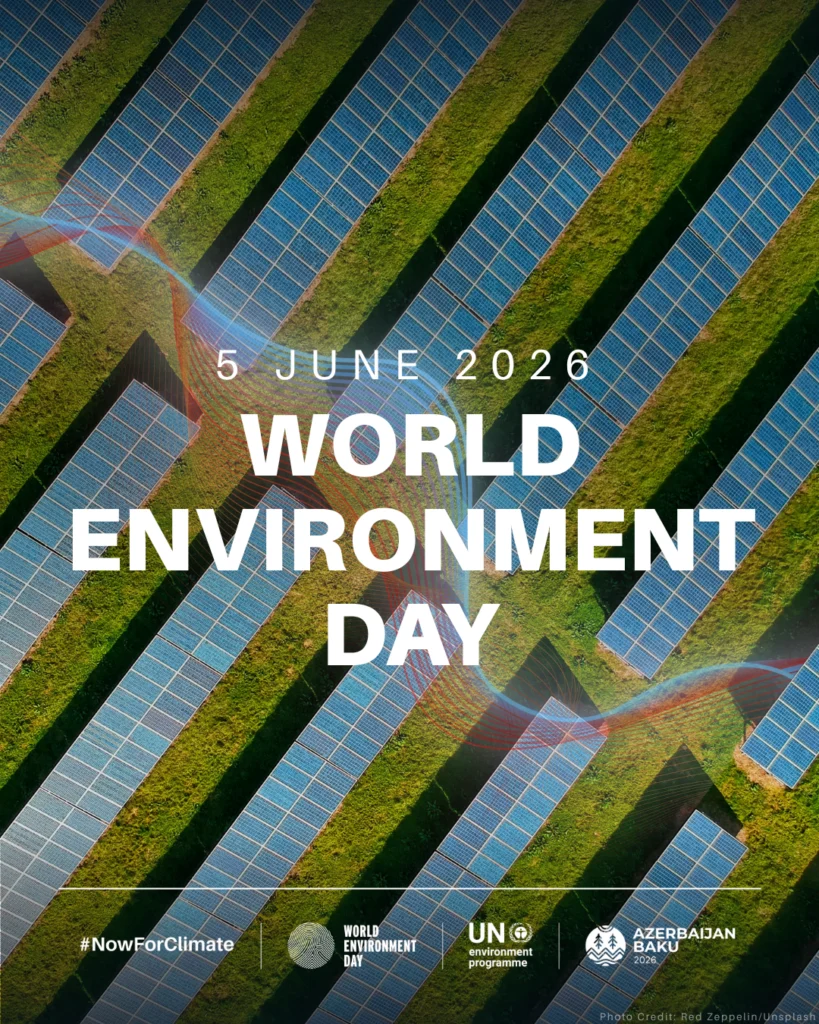
June 1, 2026 – As the world prepares to observe World Environment Day on June 5th, the United Nations Environment Programme (UNEP) has underscored the urgent need to recognize and protect the planet’s vital wetland ecosystems. This year’s observance arrives at a critical juncture, with scientific consensus confirming that global temperatures are steadily exceeding the critical 1.5°C limit, a threshold long identified as a key benchmark for averting the most catastrophic impacts of climate change. The stark reality of rising seas, intensifying wildfires, unprecedented heatwaves, and rapidly melting glaciers serves as undeniable evidence that the planet is sending increasingly urgent signals.
For decades, the narrative surrounding climate change has been a complex tapestry of warnings, ambitious targets, and distant deadlines. However, the response has frequently been mired in a cacophony of delay, distraction, and outright denial. Yet, beneath this pervasive noise, a more hopeful signal is gradually gaining momentum. Across the globe, renewable energy solutions are visibly taking root, from solar panels adorning rooftops to wind turbines gracing horizons. Cities are being reimagined with a focus on human well-being and sustainable transit, while reforestation efforts are actively underway in numerous regions. These burgeoning climate solutions, though often overshadowed, represent a tangible shift towards proactive environmental stewardship.
Within this evolving landscape, wetlands have emerged as indispensable allies in the global struggle against climate change. UNEP’s latest messaging highlights the intrinsic link between climate change and water cycles, noting that rising global temperatures are directly contributing to erratic rainfall patterns, exacerbating both floods and droughts, and fueling more frequent and intense wildfires.
Wetlands, encompassing a diverse array of ecosystems such as rivers, lakes, and peatlands, are the primary custodians of nearly all the world’s freshwater resources. Their multifaceted roles in water purification, storage, flood mitigation, and groundwater replenishment are foundational to terrestrial life. The stark reality is that a planet devoid of wetlands would signify a world facing an insurmountable freshwater crisis. Despite their crucial importance, human activities have historically led to the extensive degradation of these vital ecosystems. Rivers have been dammed, peatlands drained, lakes polluted, and mangrove forests cleared at an alarming rate.
The consequences of this widespread wetland loss are increasingly evident. The past year alone has witnessed a series of climate-related disasters that can be directly linked to wetland degradation. Record droughts have plagued Iran, while India and the United Kingdom have grappled with severe flooding events. Concurrently, increased carbon emissions have been observed in China and Canada, with studies indicating that the draining of wetlands in regions like the Canadian Prairies significantly contributes to these emissions.
Wetlands: A Nexus of Climate Solutions
Despite the challenges, wetlands possess unique ecological properties that position them as powerful, irreplaceable solutions for mitigating and adapting to climate change. Their capacity to store vast amounts of carbon makes them essential in efforts to halt and reverse global warming.
Wetlands for Mitigation: Carbon Sequestration Powerhouses
Wetlands are among the most efficient natural carbon sinks on Earth. Peatlands, for instance, store more carbon than all the world’s forests combined, estimated at approximately 550 gigatons of carbon. When healthy, they absorb atmospheric carbon dioxide at a rate significantly higher than terrestrial forests. The degradation and drainage of peatlands, however, release this stored carbon back into the atmosphere, contributing substantially to greenhouse gas emissions. Similarly, mangrove forests, often referred to as "blue carbon" ecosystems, sequester carbon at rates up to five times higher than tropical rainforests. Protecting and restoring these ecosystems is therefore a critical strategy for drawing down atmospheric carbon and achieving global climate targets.
Wetlands for Adaptation: Natural Buffers Against Climate Extremes
Beyond mitigation, wetlands play a crucial role in helping communities adapt to the escalating impacts of climate change. Their natural hydrological functions act as vital buffers against the increasing frequency and intensity of extreme weather events. For example, coastal wetlands like mangroves and salt marshes act as natural barriers, absorbing storm surges and reducing the impact of tsunamis and coastal erosion. Inland wetlands, such as floodplains and marshes, absorb excess rainfall, thereby mitigating downstream flooding. Conversely, during droughts, they release stored water, maintaining water availability and supporting agriculture and ecosystems. The economic benefits of these natural protective services are substantial. For instance, coastal wetlands provide billions of dollars in flood protection annually.
Wetlands for Resilience: Foundations of Civilizations and Economies
Wetlands have historically served as the bedrock of human civilization and continue to underpin the resilience of societies worldwide. The emergence of the world’s first great civilizations, from the Nile in Egypt to the Indus in South Asia and the Tigris and Euphrates in the Middle East, was inextricably linked to the fertile floodplains of riverine wetlands. Today, many of the planet’s largest and most influential cities, including London, Kolkata, and Chicago, are situated along riverbanks, underscoring the enduring importance of wetland proximity for economic prosperity and human settlement.
These ecosystems provide essential services: clean drinking water, fertile soils for agriculture, and habitats for an astonishing diversity of plant and animal life, which in turn support livelihoods through fishing, tourism, and resource harvesting. The economic value of water and freshwater ecosystems is staggering. A 2023 report estimated the annual value of water and freshwater ecosystems at an astounding US$58 trillion, equivalent to 60% of global Gross Domestic Product (GDP). This figure highlights the profound economic interdependence between human well-being and the health of wetlands.
A Global Call to Action: Who Needs to Do What?
Recognizing the pivotal role of wetlands, organizations like Wetlands International are actively engaged in restoration and conservation efforts across the globe. Their work spans diverse initiatives, including the restoration of degraded peatlands in Mongolia and Peru, community-based ecological mangrove restoration in Guinea-Bissau, Kenya, Senegal, the Philippines, and Indonesia, and enhancing water security in Ethiopia, Brazil, Argentina, and across Europe.
However, the scale of the climate crisis necessitates a collaborative and amplified response. Wetlands International emphasizes that no single organization can achieve the necessary transformation alone. Synergies and partnerships are crucial for scaling impact. Certain sectors, by virtue of their influence and resources, bear significant responsibility and possess immense power to effect change.
Governments: Policy Frameworks and Investment
National governments hold a critical position in shaping the future of wetlands. The integration of wetland conservation and restoration into Nationally Determined Contributions (NDCs) under the Paris Agreement and into National Adaptation Plans (NAPs) is paramount. Wetlands International provides specific policy guidance, such as briefs on the inclusion of mangroves in NDCs, to facilitate this integration.
Furthermore, high-level initiatives like the Mangrove Breakthrough, the Freshwater Challenge, and the forthcoming Peatland Breakthrough offer vital pathways for countries to commit to and implement ambitious wetland action. These governmental commitments are essential for redirecting finance towards nature-based solutions for climate change and away from harmful subsidies that often exacerbate environmental degradation. A recent report by UNEP on "State of Finance for Nature 2026" indicates a significant but insufficient flow of finance into nature-based solutions, highlighting the need for greater public and private investment.
Businesses: Transforming Practices for a Wetland-Positive Economy
The private sector has historically been a significant driver of wetland degradation, particularly through industries such as agriculture, mining, dredging, palm oil cultivation, and infrastructure development. However, businesses also possess the capacity to innovate and drive economic growth in sustainable ways. The transition towards a "wetland-positive economy" is a key objective, encouraging businesses to adopt practices that not only minimize their environmental footprint but actively contribute to wetland health and restoration. This involves moving beyond mere compliance to proactive stewardship, recognizing that healthy wetlands can underpin long-term business resilience and profitability.
Financiers: Mobilizing Capital for Restoration and Conservation
The financial sector, particularly entities with substantial capital and long-term investment horizons such as pension funds and insurance companies, is critical for funding the necessary wetland restoration and conservation initiatives. Mobilizing this private capital is essential to complement governmental and philanthropic efforts. Shifting investment strategies to prioritize sustainable projects and divest from environmentally damaging activities will be a significant step. The growing awareness of climate-related financial risks and opportunities is already prompting some investors to re-evaluate their portfolios, creating a potential surge in funding for nature-based solutions.
As World Environment Day 2026 approaches, the message from the scientific community and environmental organizations is clear: the planet’s signals are growing louder, and the time for incremental change has passed. The interconnectedness of climate, water, and wetlands demands urgent, collective action. The question posed to those with the power, the resources, and the foresight to make a difference is profound: are you ready to act for wetlands, #NowForClimate? The answer will shape not only the future of these vital ecosystems but the very habitability of our planet for generations to come.
