
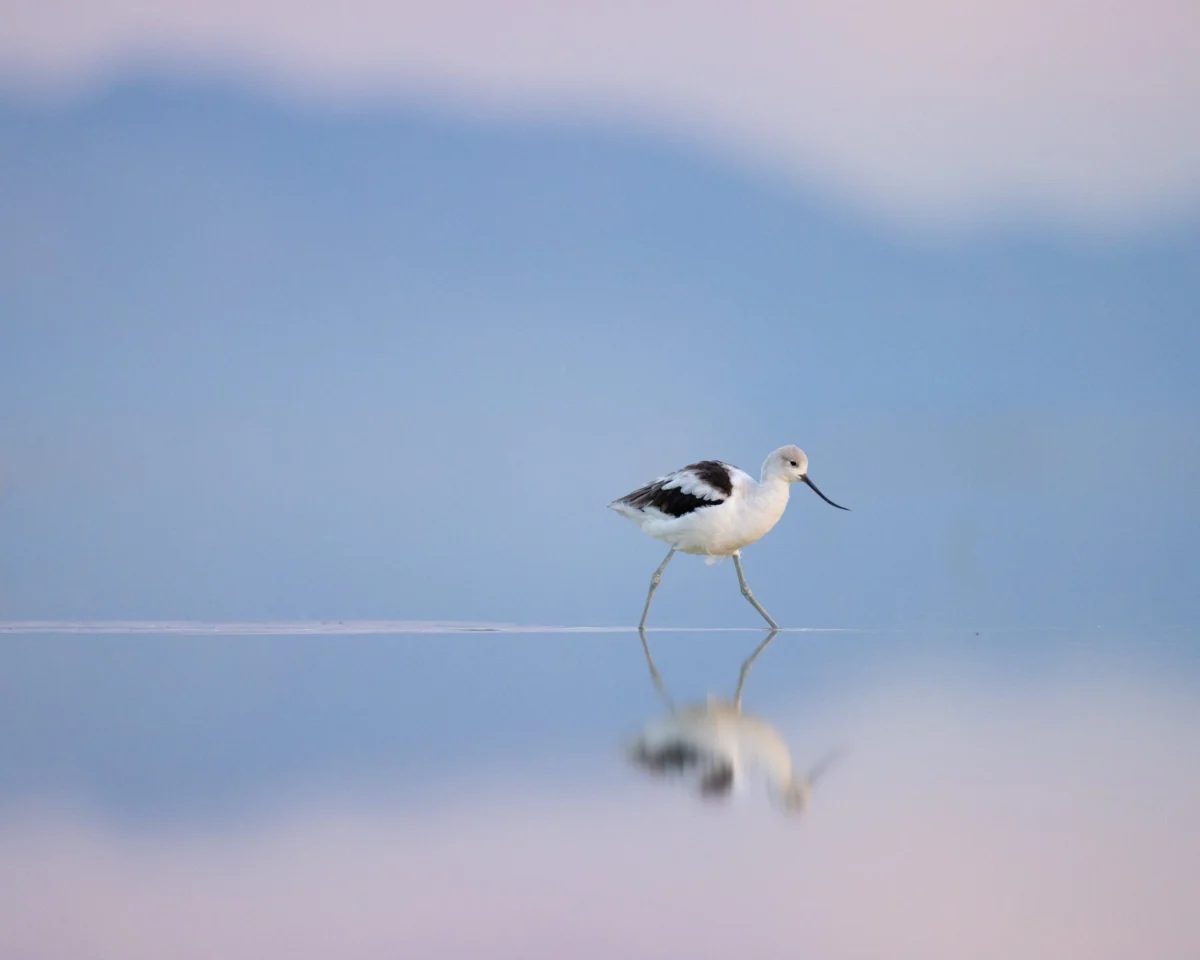
As the ecological crisis gripping the Great Salt Lake continues to escalate, capturing both local and national attention, the National Audubon Society has emerged as a prominent voice, advocating for a substantial federal investment of $1 billion to safeguard the lake’s precarious future. This urgent call comes in the wake of a critical roundtable discussion hosted by Utah Governor Spencer Cox, where Audubon representatives underscored the necessity of robust federal financial support to complement existing state and private conservation endeavors. With over three decades of dedicated engagement in the region, Audubon reaffirms its long-standing commitment to the preservation and restoration of the Great Salt Lake and its indispensable wetland ecosystems, positioning itself at the forefront of a collaborative effort to avert an environmental catastrophe with far-reaching consequences.
The Crisis Unfolds: A Hemispheric Imperative
The Great Salt Lake, the largest saline lake in the Western Hemisphere, is teetering on the brink of an environmental collapse. Its water levels have plummeted to historic lows in recent years, a consequence of a confluence of factors including prolonged drought, increasing upstream water diversions for agriculture and municipal use, and the exacerbating effects of climate change. From its historical average surface area of approximately 1,700 square miles, the lake has shrunk dramatically, at one point losing nearly two-thirds of its volume and exposing vast stretches of its lakebed. This desiccation poses an existential threat to an ecosystem that is not merely a regional marvel but a globally critical stopover for millions of migratory birds.
Annually, an estimated 12 million migratory birds depend on the lake and its surrounding wetlands for crucial breeding, feeding, and resting habitat. This includes some of the world’s largest congregations of species such as the Eared Grebe and Wilson’s Phalarope, whose survival hinges directly on the lake’s health. Beyond its avian inhabitants, the lake supports a unique brine shrimp industry, a multi-million dollar enterprise vital to the global aquaculture market. The receding waters, however, lead to increased salinity, threatening the brine shrimp population, which forms the base of the lake’s food web.
The environmental degradation extends far beyond biodiversity loss. The exposed lakebed, laden with heavy metals like arsenic, lead, and mercury, along with fine particulate matter, presents a severe public health crisis. As winds sweep across the dry lakebed, they loft these toxic dust particles into the air, contributing to dangerously poor air quality in the Wasatch Front region, home to over 2.5 million people. This dust pollution exacerbates respiratory illnesses, poses long-term health risks, and impacts the quality of life for millions. Economically, the lake’s decline threatens the mineral extraction industry, tourism, and property values, underscoring its multifaceted importance to Utah’s prosperity and well-being.
A Decades-Long Commitment: Audubon’s Role
The National Audubon Society’s involvement with the Great Salt Lake dates back more than 30 years, establishing it as a recognized leader in the long-term conservation and restoration efforts for this unique ecosystem. Their approach has consistently been rooted in science-based conservation, policy leadership, and the forging of collaborative partnerships to advance durable, watershed-scale solutions. Audubon’s work focuses on improving water security, protecting vital habitats, and strengthening the overall resilience of the lake and its interconnected wetlands.
Marshall Johnson, Chief Conservation Officer at the National Audubon Society, articulated the organization’s dedication: "We are grateful for the leadership of Utah’s congressional delegation, Governor Cox, and other federal and state leaders in recognizing the importance of sustained federal investment as a key step toward addressing the challenges facing Great Salt Lake. Building on decades of conservation and restoration work at Great Salt Lake, Audubon is ready to help turn this commitment into lasting progress through science, partnerships, and on-the-ground action that benefits birds, communities, water resources, and Utah’s economy." This statement reflects Audubon’s comprehensive vision, which extends beyond ecological preservation to encompass the broader societal and economic health of the region.
Throughout its tenure, Audubon has actively engaged with a diverse array of stakeholders, including federal and state agencies, Tribal nations, local communities, agricultural partners, and other environmental organizations. This collaborative framework is crucial for implementing innovative and practical solutions designed to stabilize and recover the Great Salt Lake ecosystem. Their work encompasses advocating for policy changes, conducting scientific research to inform conservation strategies, and directly participating in on-the-ground restoration projects.
Calls for Federal Action: The $1 Billion Request
The recent roundtable hosted by Governor Spencer Cox served as a pivotal platform for Audubon to articulate its strong support for significant federal investment. The organization explicitly backed the request for $1 billion in federal funding, specifically earmarked for the protection and restoration of the Great Salt Lake and its expansive watershed. This level of investment, Audubon contends, is not merely aspirational but absolutely essential to accelerate critical conservation strategies and bring about a tangible, positive shift in the lake’s trajectory.
The proposed federal funding would serve as a catalyst, amplifying the impact of existing state and private sector contributions. It is envisioned to support a broad spectrum of initiatives, including voluntary water transactions – where water rights holders are compensated for allowing their water to flow to the lake rather than being diverted – and investments in natural infrastructure, such as wetland restoration and enhancement projects that improve water quality and habitat. Furthermore, the funds would bolster habitat restoration efforts, provide crucial protection for species and wetlands, enable enhanced scientific monitoring to track progress and adapt strategies, and foster community-based partnerships vital for local engagement and long-term stewardship.
Governor Cox and Utah’s congressional delegation have consistently highlighted the severity of the crisis, urging federal partners to recognize the national significance of the Great Salt Lake. Their appeals have emphasized that the lake’s health is not solely a state issue but a matter of national environmental security and economic stability. The proposed $1 billion federal investment would symbolize a shared commitment across governmental levels to tackle this complex challenge with the resources it demands.
Leveraging State and Private Efforts
Utah has not been idle in the face of this crisis. Over recent legislative sessions, the state has made substantial investments, allocating hundreds of millions of dollars toward conservation and water-saving initiatives aimed at shoring up the Great Salt Lake. These state-level commitments include funding for agricultural optimization programs, which encourage more efficient water use in farming, and incentives for municipal water conservation. Furthermore, the state has invested in infrastructure projects designed to improve water delivery and reduce waste.
The private sector, too, has stepped up, with various organizations and philanthropic groups contributing financially and through in-kind support. These private contributions are crucial for funding innovative pilot projects, engaging local communities, and providing flexible capital for rapid response efforts.
Audubon’s advocacy for federal funding is not intended to supplant these state and private efforts but rather to supercharge them. The $1 billion federal request is framed as a leveraging mechanism, designed to unlock greater potential and expand the scale of interventions. By combining federal resources with existing state and private investments, a more comprehensive, resilient, and enduring solution can be forged. This collaborative funding model acknowledges the magnitude of the problem, which far exceeds the capacity of any single entity to address alone.
The Great Salt Lake Watershed Enhancement Trust: A Model for Collaboration
A prime example of effective collaboration, championed by Audubon, is the Great Salt Lake Watershed Enhancement Trust (the Trust). Co-led by Audubon and The Nature Conservancy, the Trust has rapidly become a leading model for collaborative water stewardship and habitat restoration. Its primary mechanism involves securing new and existing water flows to the Great Salt Lake through voluntary water transactions. This innovative approach allows the Trust to work directly with water rights holders, providing financial incentives for them to temporarily or permanently dedicate their water to the lake, benefiting both the ecosystem and surrounding communities.
The Trust’s impact report showcases its success in bringing measurable volumes of water back to the lake, demonstrating a practical, market-based solution to water scarcity. By facilitating these transactions, the Trust addresses the immediate need for more water while also fostering a culture of conservation and efficient water management within the watershed. Its collaborative governance structure, involving a broad range of stakeholders, ensures that decisions are well-informed and reflective of diverse interests, thereby enhancing the durability and acceptance of its initiatives. The Trust embodies the type of innovative, partnership-driven approach that Audubon believes is essential for the long-term health of the Great Salt Lake.
Broader Implications: Ecology, Economy, and Public Health
The stakes involved in the Great Salt Lake crisis are immense, extending across ecological, economic, and public health domains. Ecologically, the continued desiccation threatens not just migratory birds but the entire delicate balance of a hypersaline ecosystem. The loss of brine shrimp and brine flies, crucial food sources, would trigger a cascade effect, decimating bird populations and fundamentally altering the lake’s unique biodiversity. The increasing salinity also impacts the microbial mats and other foundational organisms, potentially leading to an irreversible collapse of the ecosystem.
Economically, the implications are dire. The brine shrimp industry, which relies on the lake’s specific salinity levels, could vanish, leading to significant job losses and a disruption in the global aquaculture supply chain. The mineral extraction industry, which harvests magnesium, potassium sulfate, and other salts, also faces existential threats as brine concentrations change and access to processing facilities becomes challenging. Tourism, particularly birdwatching and nature-based recreation, would suffer immensely, impacting local businesses and economies. Property values in communities downwind of the lake could also decline due to persistent air quality issues.
From a public health perspective, the exposed lakebed is a ticking time bomb. Studies have identified high concentrations of arsenic, lead, and other heavy metals in the lakebed sediments. When these are aerosolized by winds, they contribute to the already poor air quality in the Wasatch Front, which frequently ranks among the worst in the nation for particulate matter pollution. Exposure to these fine dust particles and heavy metals is linked to increased rates of respiratory diseases, cardiovascular problems, and neurological disorders, particularly in vulnerable populations such as children and the elderly. Addressing the lake’s crisis is therefore a critical public health intervention.
The Path Forward: Strategies for Restoration
Audubon’s proposed strategies for restoration are multifaceted and aim for durable, watershed-scale solutions. Key among these are voluntary water transactions, which offer a flexible and economically viable mechanism to reallocate water to the lake. These transactions empower farmers and other water users to become active participants in conservation, recognizing the economic value of water in situ.
Investments in natural infrastructure, such as the restoration of degraded wetlands, play a dual role. They not only provide critical habitat for birds and other wildlife but also act as natural filters, improving water quality before it reaches the lake. Wetlands also help retain water, slowing evaporation and supporting local hydrology.
Habitat restoration efforts focus on re-establishing native plant communities and creating diverse microhabitats within the lake’s peripheral areas, enhancing its overall ecological value. Species and wetland protection initiatives are designed to safeguard particularly vulnerable areas and species through targeted conservation actions and policy advocacy.
Crucially, robust scientific monitoring is essential to track the effectiveness of these interventions, allowing for adaptive management and ensuring that resources are deployed efficiently. This data-driven approach informs future strategies and helps to measure progress against conservation goals. Finally, community-based partnerships are integral, fostering local ownership and engagement in conservation efforts, ensuring that solutions are tailored to local contexts and have sustained support.
A Race Against Time: The 2034 Winter Olympics Goal
The urgency of the Great Salt Lake crisis is underscored by a symbolic, yet significant, deadline: the 2034 Winter Olympics. Utah is bidding to host the games, and securing a healthy Great Salt Lake by this date has become a rallying cry for conservationists and political leaders alike. Protecting the lake is not only a regional priority but a hemispheric imperative, and the visibility of the Olympics provides a powerful incentive to accelerate action.
Achieving a sustainable future for this irreplaceable ecosystem by 2034 requires bold and immediate federal action, coupled with continued state and private investment. It necessitates a coordinated, comprehensive effort to implement the conservation strategies outlined by Audubon and its partners. The timeframe emphasizes the need for swift policy changes, rapid deployment of funds, and a sustained commitment to long-term solutions. The success or failure in restoring the Great Salt Lake will be a testament to humanity’s ability to address complex environmental challenges in the face of climate change and increasing resource demands.
In conclusion, the National Audubon Society’s persistent advocacy for substantial federal funding for the Great Salt Lake highlights a critical moment for environmental conservation in the Western United States. The proposed $1 billion investment is seen not as an expenditure, but as an essential investment in the ecological health, economic stability, and public well-being of a region facing unprecedented environmental challenges. Through science, partnerships, and unwavering commitment, Audubon and its collaborators are striving to secure a vibrant future for the Great Salt Lake, ensuring its continued role as a vital natural wonder for generations to come.
