
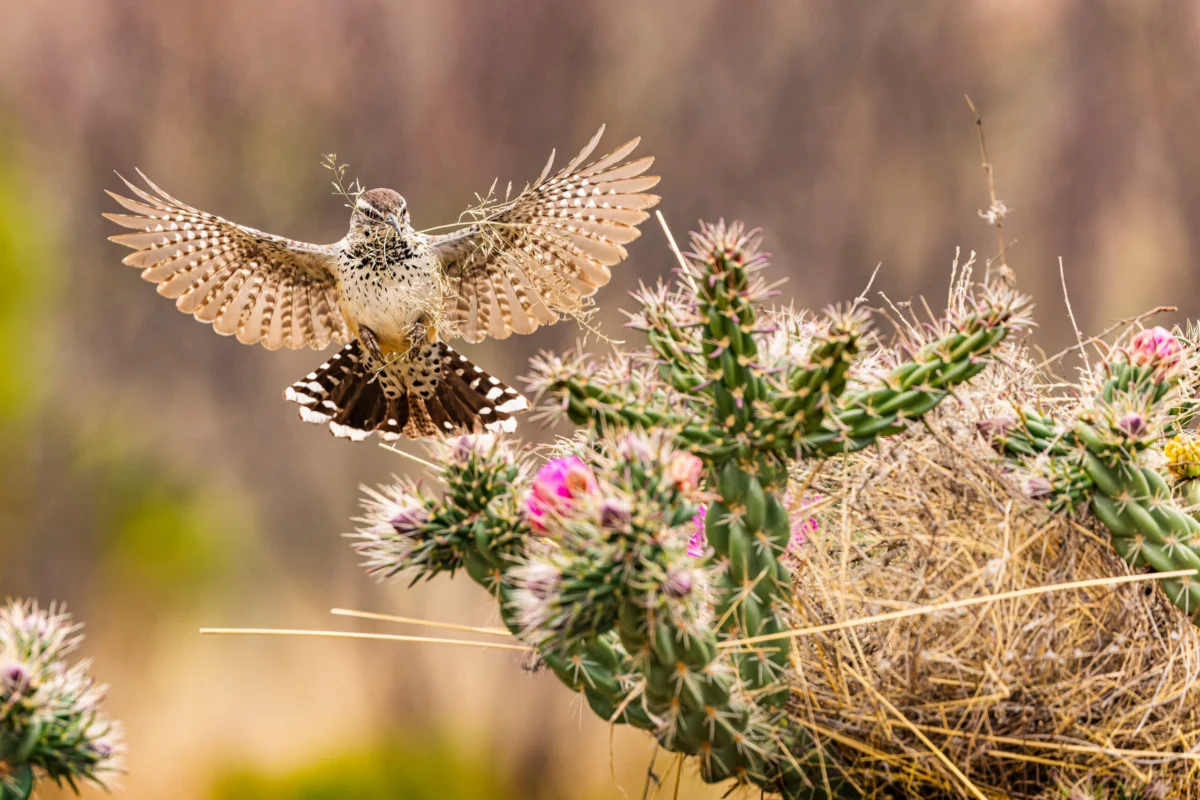
Across diverse landscapes, from arid deserts to verdant wetlands, a fundamental truth underpins the survival of avian species: their inextricable link to native plant life. Whether it is a Wood Duck foraging for acorns, a migratory warbler seeking refuge and sustenance in sagebrush, or a resilient wren crafting its home within the formidable embrace of a cactus, native flora provides the essential scaffolding for birds’ entire life cycles and perpetuates their generations. Through their seeds, berries, nectar, and structural support, these plants offer vital food sources and crucial shelter for birds of every conceivable shape and size, from the towering Great Blue Heron to the diminutive Anna’s Hummingbird. This profound symbiotic relationship is not merely a matter of convenience; it forms the bedrock of healthy, resilient ecosystems.
The critical importance of this ecological partnership is vividly brought to light through the captivating entries of the 2025 Audubon Photography Awards, particularly within the dedicated "Plants for Birds" category. This prestigious competition consistently showcases the deep, often unseen, connections between avian survival and the presence of indigenous plant species, underscoring how these interactions collectively bolster the health and stability of entire ecosystems. The collection of photographs serves as a compelling visual narrative, inviting viewers to delve into the intricate roles native plants fulfill in the lives of local bird populations. Beyond the "Plants for Birds" focus, the broader 2025 photo contest winners and the top 100 images further illuminate the majesty and fragility of avian life. For those inspired to contribute to bird conservation directly, Audubon’s native plant finder tool offers tailored guidance on selecting species best suited for specific regions, empowering individuals to transform their backyards into vital avian havens.
The Intertwined Fate of Flora and Fauna: A Background
The National Audubon Society, a leading non-profit environmental organization dedicated to bird conservation, established its photography awards to celebrate the beauty of birds and raise awareness about the threats they face. The "Plants for Birds" category, introduced in recent years, specifically aims to highlight the ecological dependencies that are often overlooked in broader discussions about habitat preservation. This initiative aligns with Audubon’s broader conservation strategy, which increasingly emphasizes native plant advocacy as a cornerstone of effective bird protection. Scientific consensus, supported by decades of research, confirms that native plants are superior to non-native species in supporting local wildlife. They have co-evolved with native insects, which form the base of the food web for many bird species, especially during breeding season when protein-rich caterpillars are essential for chick development. Non-native plants, while sometimes aesthetically pleasing, often fail to provide this critical insect food source, effectively creating "green deserts" that offer little nutritional value to native birds.
The 2025 awards, therefore, are more than just a showcase of stunning photography; they represent a strategic effort to educate the public and galvanize action. By presenting tangible, visually striking examples of bird-plant interactions, Audubon seeks to foster a deeper understanding of ecosystem dynamics and inspire individuals to make choices that support biodiversity, starting in their own communities. The selected photographs offer a chronological journey through a bird’s life—from nest building and feeding to sheltering and breeding—all facilitated by specific native plant species.
Featured Avian-Botanical Symbioses: A Gallery of Life
Cactus Wren on Cholla: Desert Resilience
In the rugged landscapes of the American Southwest, where life finds a way amidst challenging conditions, the Cholla cactus (Cylindropuntia species) stands as a formidable yet vital component of the ecosystem. Its characteristic spines, notorious for their tenacious grip, offer an unexpected sanctuary. For the Cactus Wren (Campylorhynchus brunneicapillus), North America’s largest wren, these thorny fortresses are not a deterrent but a welcoming home. Often observed perched atop a cholla, scanning the vast horizon for insects or predators, the wren also ingeniously constructs its nest within the dense, barbed limbs. Photographer Michael Madding’s observation in Texas captured such a moment, detailing a wren meticulously gathering small branches before disappearing into the cholla’s protective tangle. Here, it crafted a round, football-sized nest, perfectly camouflaged and insulated, providing an unparalleled defense against predators during the critical breeding season. The cholla’s structure provides both physical protection and thermal regulation, essential for eggs and hatchlings in the desert’s extreme temperatures.
American Robin on American Holly: Winter Sustenance
The American Holly (Ilex opaca), with its iconic glossy, spiky leaves and brilliant red berries, is a beacon of life in the colder months. Photographer Tamara Berman Ishee deliberately planted this evergreen in her North Carolina backyard, recognizing its value as a crucial winter food source for birds. The holly’s vibrant fruits ripen around the first frost in fall, coinciding perfectly with the American Robin’s (Turdus migratorius) need for energy-rich sustenance to endure plummeting temperatures. Robins, known for their adaptable diets, readily consume these berries, which provide essential fats and carbohydrates. This interaction exemplifies a classic mutualistic relationship: the holly nourishes the robin, and in turn, the robin plays a critical role in seed dispersal, ensuring the propagation of the tree across the landscape. The American Holly also provides evergreen cover, offering shelter from harsh winter winds and snow.
Gilded Flicker on Saguaro: Iconic Desert Dwellings
An enduring emblem of the Sonoran Desert, the towering Saguaro cactus (Carnegiea gigantea) is far more than a striking botanical feature; it is a keystone species supporting a vast array of desert life. These magnificent succulents, capable of reaching heights of over 40 feet and living for more than 150 years, offer a multi-faceted resource. Their tall, branched arms provide elevated vantage points for hunting and observation. Their delicate white flowers, blooming at night, and subsequent red fruits offer sweet treats for numerous species, including nectar-feeding bats and birds. Most importantly, the saguaro’s sturdy stalks serve as vital shelter and nesting sites. The Gilded Flicker (Colaptes chrysoides), a specialized desert woodpecker, almost exclusively nests in cavities excavated within the saguaro. Sean McEntee’s photograph from Arizona captures two female flickers engaged in a territorial dispute above a saguaro, highlighting the intense competition for these prime nesting locations. The "saguaro boot," the hardened callus formed by the cactus around the flicker’s excavated nest hole, provides a durable, insulated chamber that protects young from predators and the desert’s extreme heat.
Anna’s Hummingbird with Arroyo Willow: Nests of Softness
Across the western United States, late spring brings a delicate snowfall of cottony seeds shed by the Arroyo Willow (Salix lasiolepis). For the tiny Anna’s Hummingbird (Calypte anna), these fluffy white puffs are a precious commodity – an ideal material for constructing their minuscule, cup-shaped nests. James Nelson’s image from Arizona beautifully captures this behavior, showing a female hummingbird meticulously gathering the soft down. Female hummingbirds are architectural marvels, weaving together fine plant fibers, binding them with sticky spider webs for elasticity and strength, and then meticulously lining the cup with soft materials like willow fluff or down feathers for insulation. They often adorn the exterior with lichens or moss, expertly camouflaging the nest to blend seamlessly with its surroundings, a crucial defense against predation. The arroyo willow, often found along waterways, also supports a rich insect population, providing additional food sources for the hummingbirds.
Acorn Woodpecker with Oak: Nature’s Granaries
The Oak tree (Quercus species), a symbol of strength and longevity, provides an invaluable resource in the form of its acorns. Lee Greengrass’s photograph from California features a leucistic male Acorn Woodpecker (Melanerpes formicivorus), its striking white plumage a result of reduced pigment. Despite its unique appearance, this bird demonstrates exceptional food-gathering prowess. Greengrass observed the woodpecker diligently tending to its "granary tree"—a tree riddled with thousands of precisely drilled holes, each meticulously filled with a single acorn. This remarkable behavior allows Acorn Woodpeckers to create substantial stockpiles of nuts, ensuring a consistent food supply for their family groups throughout the winter months. This communal caching strategy is unique among North American woodpeckers and highlights the oak’s critical role in sustaining these highly social birds. The abundance of acorns from native oak species is a cornerstone of forest ecosystems, supporting a wide range of wildlife.
Red-winged Blackbird on Cattail: Wetland Nurseries and Pantries
The familiar, towering structures of Cattails (Typha species) are synonymous with marshes and wetlands, forming dense stands along shorelines. These robust aquatic plants are far more than just aesthetic features; they are indispensable for wetland bird species. Hiding within the cattail’s distinctive "corndog-like" flower head are, on average, a staggering 220,000 seeds, each equipped with silky hairs that aid wind dispersal. This abundant fluffy material is highly prized by birds for nest construction, providing soft, insulating lining. The seeds themselves offer a vital food source, particularly for overwintering birds like the female Red-winged Blackbird (Agelaius phoeniceus), as captured by Julie Davis in Virginia. Cattails also provide dense cover, protecting nests and young from predators, and their stalks serve as perches and foraging sites for insects.
Wood Duck on California Live Oak: Forest Feast
In many regions of North America, acorns constitute a significant portion of the Wood Duck’s (Aix sponsa) diet. Benjamin Martin Mortimer’s photograph captures a male Wood Duck in California enthusiastically consuming the acorns of the California Live Oak (Quercus agrifolia). Mortimer observed the duck devouring more than 15 acorns in a single sitting, underscoring their importance. Also known as coast oaks, these extraordinary trees, with their recognizable gnarled canopies, form the foundational structure of the oak woodlands prevalent along California’s shorelines. These ancient trees, capable of living for over 250 years, are biodiversity hotspots, supporting a vast array of species beyond the Wood Duck, including numerous insects, mammals, and other birds that rely on their acorns, leaves, and structural complexity.
Black-capped Chickadee on American Red Pine: Conifer Cuisine
The American Red Pine (Pinus resinosa), characterized by its rufous bark and long needles, is a familiar evergreen tree found across much of northeastern North America. Its dense cones protect a bounty of nutritious seeds, a favorite food source for many seed-eating birds, including various finches, crossbills, and chickadees. Linda Scher’s photograph from South Dakota perfectly illustrates this, showing a Black-capped Chickadee (Poecile atricapillus) relishing pine seeds. Chickadees are renowned for their acrobatic foraging skills, often hanging upside down from branches to access hard-to-reach seeds, a testament to their adaptability and efficiency in extracting nourishment from conifer cones. The dense needles also provide crucial winter shelter and nesting sites for these hardy birds.
Northern Harrier with Cattail: A Wetland Mystery
Northern Harriers (Circus hudsonius) are frequently observed soaring gracefully over cattail meadows, utilizing their acute hearing and distinctive owl-like facial disk to pinpoint prey hidden within the dense vegetation. Photographer Eileen de la Cruz initially believed she was witnessing this characteristic hunting behavior when she observed a female Northern Harrier dive-bombing the ground in Washington State. However, to her surprise, the raptor emerged with talons full of cattail fluff, rather than prey. The exact purpose of this action remains somewhat enigmatic, as the photograph was taken in October, well outside the typical breeding season. While Northern Harriers do construct ground nests, they usually favor cattail stalks or other sturdy grasses, making the collection of fluff a curious deviation. This unique observation highlights the multifaceted ways birds interact with their environment, sometimes in unexpected behaviors that continue to intrigue ornithologists.
Northern Yellow Warbler on Sagebrush: Migratory Oasis
Sagebrush (Artemisia tridentata) stands as one of the most ecologically significant plants of the American West. This spiny, aromatic shrub forms the cornerstone of the sagebrush steppe, a unique and irreplaceable ecosystem found nowhere else globally. It provides critical habitat for iconic species such as the Greater Sage-Grouse and pronghorn antelope. Crucially, sagebrush also serves as a vital resource for numerous migratory birds traversing these arid regions between their breeding and wintering grounds. Joanie Christian’s photograph from Wyoming captures a Northern Yellow Warbler (Setophaga petechia) amidst sagebrush, showcasing how the plant offers essential shelter, shade, and, perhaps most importantly, harbors a rich population of insects that these warblers depend on for refueling during their arduous journeys. The loss of sagebrush habitat due to development and invasive species poses a significant threat to these migratory pathways.
American Goldfinch on Sunflower: A Seed Banquet
For many songbirds, the drying and drooping heads of sunflowers (Helianthus annuus) are not a sign of decay but a promise of a delicious feast. As the plant’s seeds ripen, they become an irresistible magnet for various avian species. Photographer Joanie Christian, whose work is featured twice in this collection, observed a flock of American Goldfinches (Spinus tristis) descending upon the sunflowers on her property in eastern Washington. These vibrant birds are almost exclusively granivorous, meaning their diet consists primarily of seeds. Goldfinches are masters at extracting and dissecting the nutrient-rich seeds from messy sunflower heads, their specialized beaks perfectly adapted for the task. Sunflowers, when allowed to mature and dry naturally, provide an abundant and accessible food source that can sustain bird populations well into the fall and winter months.
Great Blue Heron on Longleaf Pine: Aerial Nurseries
Great Blue Herons (Ardea herodias) frequently establish their nesting colonies, known as rookeries, in the sturdy branches of large evergreen trees. A stand of Longleaf Pines (Pinus palustris) in Florida provided the perfect foundation for an active heron colony, as observed by photographer Mahmud Mohamed. Mohamed documented 12 herons in this grove, witnessing the intense courtship rituals as birds vied for mates in preparation for the breeding season. One male, despite missing a part of his leg, successfully captured a female’s attention by presenting her with branches—a classic nuptial gift. The pair subsequently collaborated to construct their massive platform nest high among the pine’s supportive limbs, offering safety from ground predators and a commanding view of their foraging grounds. Longleaf pine ecosystems, once widespread, are now significantly diminished, making their preservation crucial for species like the Great Blue Heron.
Red-winged Blackbird on Cattail: Winter Foraging
The Red-winged Blackbird’s life cycle is intrinsically linked to cattails. These ubiquitous wetland plants provide essential nesting sites, particularly in dense stands that offer camouflage and support. Furthermore, the blackbirds forage on insect larvae found on the plants, especially during the breeding season. In winter, however, the cattails themselves transform into a critical food source. Elyse Jankowski’s photograph from Florida captures a female Red-winged Blackbird diligently pecking at a single cattail seed head until it bursts open, revealing its fluffy contents. The bird then meticulously pulls loose and feeds on the nutrient-dense seeds, a vital snack that helps sustain the blackbird through the colder months when other food sources are scarce. This demonstrates the year-round utility of native plants for avian survival.
Pied-billed Grebe with Eelgrass: Floating Foundations
Along the shores of Michigan’s Lake Erie, photographer Craig Bamm captured a Pied-billed Grebe (Podilymbus podiceps) holding a bundle of freshwater Eelgrass, or Wild Celery (Vallisneria americana). This aquatic plant holds immense ecological significance in the Great Lakes, forming extensive, flowing meadows beneath the water’s surface. These underwater "prairies" provide crucial habitat for young fish, offering both shelter and foraging opportunities. Eelgrass is also a primary food source for various diving ducks, such as scaup. However, in this instance, the grebe was not consuming the eelgrass. Instead, it was skillfully using the gathered vegetation to construct its distinctive floating nest platform, a critical adaptation for nesting in fluctuating water levels. This ensures the eggs and young remain safe and buoyant, highlighting another creative way birds utilize native plants for reproduction.
Broader Implications and a Call to Action
These compelling photographic narratives from the 2025 Audubon Photography Awards collectively underscore a profound ecological truth: the health and resilience of bird populations are directly tied to the presence and abundance of native plants. The decline of native plant communities due to habitat destruction, urbanization, and the proliferation of invasive species poses a direct and existential threat to birds, disrupting their food sources, nesting sites, and migratory pathways. This crisis extends beyond birds, impacting entire ecosystems, from insect populations to soil health and water quality.
Audubon and other conservation organizations emphasize that restoring native plant habitats is one of the most impactful actions individuals can take to support biodiversity. By choosing native species for gardens, parks, and public spaces, communities can collectively create a mosaic of interconnected habitats that provide vital resources for birds and other wildlife. These efforts contribute to broader conservation goals, mitigating the effects of climate change, enhancing ecosystem services, and fostering a deeper connection between people and the natural world. The work of photographers like those featured in the 2025 awards not only celebrates the beauty of these interactions but also serves as a powerful call to action, reminding us that every native plant planted is a step towards a healthier, more vibrant future for birds and for all.
