
In 1982, cartoonist Gary Larson immortalized a widely held assumption about animal intelligence—or the perceived lack thereof—with his iconic Far Side comic, Cow Tools. The illustration, depicting a cow standing proudly beside a collection of crudely fashioned, seemingly useless objects labeled as "tools," humorously underscored the notion that cattle lack the cognitive capacity for such sophisticated behaviors. For decades, this cultural touchstone reinforced a narrative of livestock as creatures primarily driven by instinct, with limited intellectual prowess. However, this long-standing assumption is now undergoing a significant re-evaluation, thanks to a remarkable Swiss Brown cow named Veronika, whose documented ability to use tools flexibly and purposefully is compelling scientists to rethink the cognitive landscape of farm animals.
A groundbreaking study recently published in the esteemed scientific journal Current Biology presents the first scientifically documented case of flexible tool use in a pet cow. This revelation not only challenges established paradigms but also suggests that the cognitive capabilities of cattle may be far more advanced and nuanced than previously imagined. The findings have ignited considerable interest within the fields of ethology and comparative cognition, prompting calls for renewed attention to the observational biases that may have historically obscured the true intellectual potential of species like Bos taurus.
A Paradigm Shift: Beyond the Farmyard Stereotype
"The findings highlight how assumptions about livestock intelligence may reflect gaps in observation rather than genuine cognitive limits," states Alice Auersperg, a distinguished cognitive biologist at the University of Veterinary Medicine, Vienna, and a lead author of the study. Her sentiment encapsulates the core implication of Veronika’s story: much of what humanity "knows" about animal intelligence is often derived from observations within constrained, often impoverished, environments. When given the opportunity for exploration, problem-solving, and interaction, animals frequently surprise researchers with their latent abilities.
The traditional view of livestock, particularly cows, has largely been shaped by their role in agricultural production. Bred for specific traits like milk yield or meat production, their cognitive faculties have rarely been the subject of intensive scientific scrutiny outside of contexts directly related to productivity or welfare in confinement. This narrow focus has inadvertently created a vast blind spot in our understanding of bovine intelligence, leading to an underestimation of their complex behavioral repertoires.
Meet Veronika: A Companion Animal with a Hidden Talent
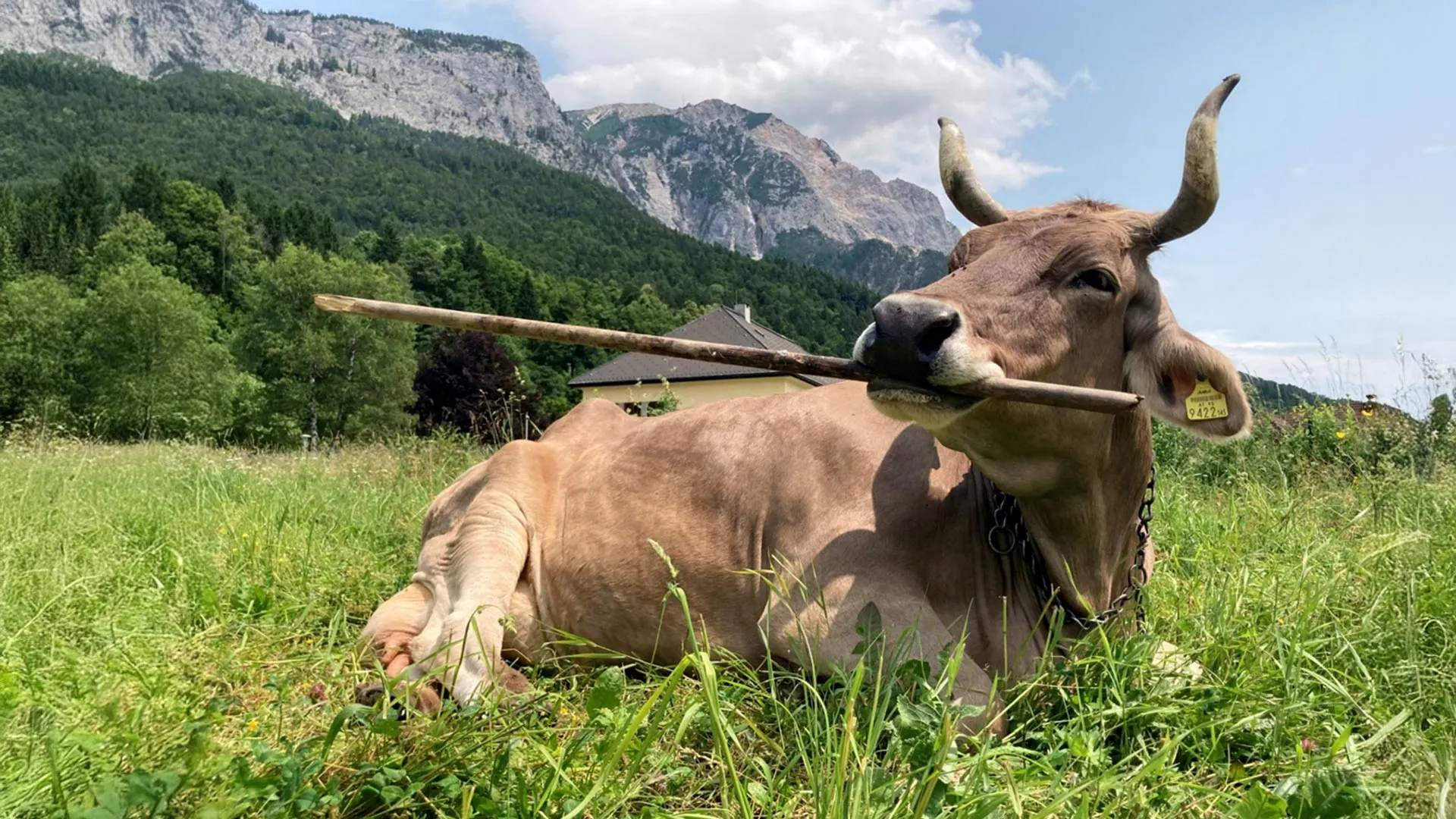
Veronika, a Swiss Brown cow, stands apart from her agricultural counterparts not by breed, but by circumstance. She lives not as a production animal, but as a cherished companion within the family of Witgar Wiegele, an organic farmer and baker residing in Austria. This unique living arrangement, characterized by extensive human interaction, environmental enrichment, and a lifespan far exceeding that of typical farm animals, is believed to be a crucial factor in the development and observation of her extraordinary behavior.
More than a decade ago, Wiegele began noticing an unusual and persistent habit: Veronika would consistently pick up sticks or other objects and use them to scratch inaccessible areas of her body. This behavior, initially a curiosity, eventually piqued scientific interest when Wiegele recorded it on video and shared the footage with researchers. The initial observations were compelling enough to warrant a dedicated scientific investigation.
"When I saw the footage, it was immediately clear that this was not accidental," Auersperg recounts, emphasizing the deliberate nature of Veronika’s actions. "This was a meaningful example of tool use in a species that is rarely considered from a cognitive perspective." The video evidence provided a critical starting point for a more rigorous examination of Veronika’s abilities, moving the observations from anecdotal evidence to a scientific hypothesis.
The Chronology of Discovery and Documentation
- Early 2010s: Witgar Wiegele first observes Veronika using sticks to scratch herself. This behavior becomes a consistent part of her routine.
- Late 2010s: Wiegele begins to document this behavior more systematically, eventually capturing video footage.
- Early 2020s: Wiegele shares the video evidence with researchers at the University of Veterinary Medicine, Vienna, including cognitive biologist Alice Auersperg.
- 2022-2023: A research team, including Auersperg and Antonio Osuna-Mascaró, conducts structured experimental tests with Veronika to formally assess her tool-using capabilities.
- Late 2023 / Early 2024: The study, detailing Veronika’s flexible tool use, is peer-reviewed and subsequently published in Current Biology, marking a significant milestone in animal cognition research.
Rigorous Testing: Unveiling Flexible, Multi-Purpose Tool Use
To transition from anecdotal observation to scientific validation, researchers designed and conducted a series of structured experiments with Veronika. The primary "tool" provided for these tests was a standard deck brush, chosen for its varied textures and forms. The brush was placed in different orientations and positions, and Veronika’s interactions with it were meticulously observed and recorded.
Across multiple trials, Veronika demonstrated remarkable consistency and adaptability. She did not merely use the brush randomly. Instead, her selections of specific parts of the brush and her subsequent manipulations were directly correlated with the area of her body she intended to scratch. This indicated a level of cognitive decision-making far beyond simple stimulus-response.
"We show that a cow can engage in genuinely flexible tool use," explains Antonio Osuna-Mascaró, another key researcher involved in the study. "Veronika is not just using an object to scratch herself. She uses different parts of the same tool for different purposes, and she applies different techniques depending on the function of the tool and the body region." This distinction is crucial in the scientific definition of tool use. Simple object manipulation, such as a bird pecking at a stick, differs from purposeful tool use, which involves an external object being manipulated to alter the form, position, or condition of another object, organism, or the user itself. Flexible, multi-purpose tool use, as Veronika demonstrated, signifies an even higher cognitive function, involving the understanding that different features of a single tool can serve varied objectives.
The Nuances of Veronika’s Dexterity
The researchers observed distinct patterns in Veronika’s tool-use strategies:
- Strategic Selection: For larger, firmer areas of her body, such as her back or flanks, she consistently opted for the bristled side of the deck brush, applying firm pressure.
- Refined Adaptation: When addressing more sensitive regions, particularly on her lower body or areas requiring a gentler touch, she would precisely switch to using the smoother, less abrasive handle of the brush.
- Adjusted Movements: Her motor actions also varied. Scratching her upper body involved broader, more vigorous motions, indicative of a need for wider coverage and deeper pressure. Conversely, movements directed at lower or more delicate areas were noticeably slower, more precise, and controlled, demonstrating fine motor skill despite the limitations of oral manipulation.
This sophisticated behavior meets the stringent scientific definition of tool use: "the use of an external object as a means to extend the body to achieve a goal through physical interaction." Furthermore, Veronika’s actions transcend this basic definition, qualifying as "flexible, multi-purpose tool use." This advanced form of cognitive behavior, where different features of the same object are employed for distinct outcomes, is exceedingly rare in the animal kingdom. Prior to this study, such complex tool use had been clearly documented primarily in chimpanzees among non-human species, with some evidence in other primates, certain bird species (like New Caledonian crows), and sea otters. The inclusion of a cow in this exclusive club marks a significant expansion of our understanding of cognitive evolution.
Overcoming Physical Limitations: The Challenge of Egocentric Tool Use
Veronika’s tool use is directed at her own body, a category known as egocentric tool use. While this form is often considered less complex than allocentric tool use (using a tool on an external object), it still presents unique challenges. For an animal like a cow, which lacks prehensile hands or highly dexterous limbs, manipulating objects with the mouth and head requires considerable skill and coordination.
Despite this anatomical limitation, Veronika exhibited remarkable control. She adjusted her grip on the brush, her head position, and the force of her movements with apparent anticipation of the desired effect. This suggests a strong understanding of cause and effect, and an ability to mentally model the interaction between the tool, her body, and the environment. Her actions indicate not just learned behavior, but a flexible application of that learning to novel situations and varying needs.
Why Veronika? The Role of Environment and Enrichment
The researchers posit that Veronika’s unique living conditions played a critical role in the development and observation of her tool-using abilities. Unlike the vast majority of cattle, who are raised in environments often optimized for production efficiency rather than cognitive stimulation, Veronika has lived a long, enriched life as a companion animal.
Her environment offers:
- Longevity: A lifespan far exceeding that of most cattle, allowing more time for learning and behavioral development.
- Complexity: Access to a varied and stimulating environment with diverse objects and textures.
- Social Interaction: Daily, high-quality interactions with humans, potentially fostering observational learning and a sense of agency.
- Reduced Stress: A low-stress environment, conducive to exploratory behaviors and problem-solving.
These factors likely provided Veronika with unparalleled opportunities for exploration, innovation, and the practice of novel behaviors that would be uncommon for cows in typical agricultural settings. It underscores the idea that many animals’ true cognitive potentials may be masked by the limitations of their captive environments. "[Veronika] did not fashion tools like the cow in Gary Larson’s cartoon, but she selected, adjusted, and used one with notable dexterity and flexibility," the researchers conclude in their paper. "Perhaps the real absurdity lies not in imagining a tool-using cow, but in assuming such a thing could never exist."
Broader Implications: Rethinking Animal Intelligence and Welfare
This discovery is more than an isolated curiosity; it represents a significant milestone in animal cognition research and carries profound implications across several domains:
- Expanding the Known Range of Tool-Using Species: Veronika’s case adds cattle to an elite list of species capable of complex tool use, forcing a reassessment of evolutionary pathways for intelligence and problem-solving. It challenges phylogenetic assumptions, suggesting that cognitive complexity might emerge in unexpected lineages.
- Challenging Observational Biases: The study highlights how human-centric biases and limited observational contexts can profoundly skew our understanding of animal capabilities. It suggests that many sophisticated behaviors may be occurring unnoticed in species we deem "unintelligent."
- Animal Welfare and Ethics: If cows are capable of such complex cognitive functions, it raises critical questions about their welfare in industrial farming systems. Recognizing their potential for problem-solving, learning, and purposeful action necessitates a re-evaluation of the environmental enrichment provided to livestock. This research could fuel discussions on ethical treatment, potentially leading to demands for more stimulating and less restrictive living conditions for farm animals.
- Future Research Directions: The research team is now actively exploring the specific environmental and social conditions that foster such complex behaviors. They are also advocating for a more open-minded approach to animal observation and are encouraging farmers, veterinarians, and the public to report similar observations. "Because we suspect this ability may be more widespread than currently documented," Osuna-Mascaró states, "we invite readers who have observed cows or bulls using sticks or other handheld objects for purposeful actions to contact us." This open call for data could lead to a rapid expansion of our understanding of bovine cognition.
- Public Perception: Veronika’s story has the potential to profoundly shift public perception of cattle. Moving beyond the image of passive, unthinking grazers, it could foster greater empathy and respect for these animals, influencing consumer choices and advocacy efforts.
The saga of Veronika, the tool-using cow, is a powerful reminder that the natural world holds countless surprises. It serves as a scientific imperative to remain open to the unexpected, to question long-held assumptions, and to continually strive for a deeper, more nuanced understanding of the rich tapestry of intelligence that exists across the animal kingdom. In doing so, humanity not only learns more about other species but also gains valuable insights into the very nature of cognition itself.
