
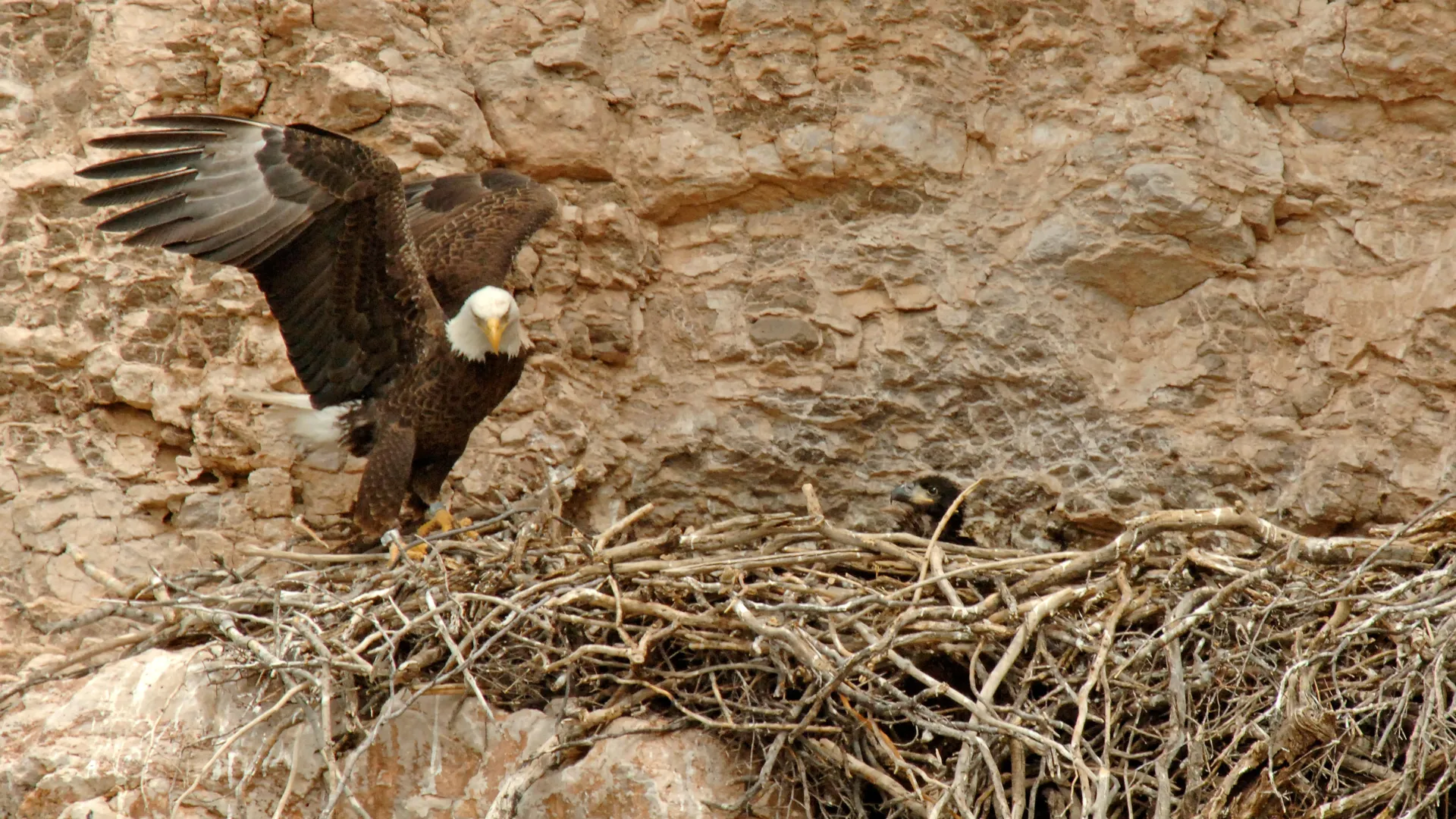
Despite the common adage, birds of a feather do not always flock together, nor do they always adhere to conventional migratory routes. A groundbreaking new study, published in the Journal of Raptor Research, reveals an unexpected pattern among Bald Eagles (Haliaeetus leucocephalus) originating from Arizona. These iconic raptors are undertaking unusual northward journeys during their non-breeding season, a significant departure from the typical southward migration observed in most temperate migratory bird species. The research, titled "Northward Migrations of Nonbreeding Bald Eagles from Arizona, USA," also documents a rare instance of an eagle from the study population emigrating and establishing itself in California, a finding that profoundly challenges existing assumptions about the dispersal rates of these majestic birds from their home populations. The scientists involved in the study conclude that southwestern Bald Eagles exhibit a high degree of exploratory behavior, a trait likely honed to locate ephemeral and spatially unpredictable food sources. In an era marked by rapid climate and landscape transformation, such research, which meticulously documents the adaptive movements of wildlife, is absolutely vital for the design of effective, future-proof conservation strategies and for safeguarding crucial travel corridors for species facing increasing vulnerability.
The Unconventional Compass: Arizona’s Unique Bald Eagle Migration
The traditional narrative of avian migration across North America typically describes a southward movement during the colder months, driven by the search for milder climates and more dependable food resources. However, the Bald Eagles of Arizona present a compelling counter-narrative. Unlike their northern counterparts, Arizona’s breeding Bald Eagles commence their nesting activities in the winter, meaning their non-breeding season predominantly spans the warmer months of summer and autumn. It is during this period that the study observed their remarkable northward expeditions. This unusual timing of seasonal movement immediately piqued the interest of lead author Dr. Caroline D. Cappello, who notes that such "northward migratory behavior raises interesting questions about the recent and historical pressures that shape these movement strategies." This finding underscores the complex interplay of ecological factors, evolutionary pressures, and individual adaptability that dictate avian movement.
The Bald Eagle, a species synonymous with American wildlife, has experienced a remarkable recovery from the brink of extinction. Once severely threatened by habitat loss, hunting, and the widespread use of the pesticide DDT, its population rebounded significantly following the ban on DDT in 1972 and the protections afforded by the Endangered Species Act. While federally delisted in 2007, Bald Eagles remain protected under the Migratory Bird Treaty Act and the Bald and Golden Eagle Protection Act. Arizona’s Bald Eagle population, often referred to as "desert nesting eagles," represents a unique subspecies or distinct population segment adapted to riparian corridors within an arid environment. Their recovery in the state has been a testament to dedicated conservation efforts by agencies like the Arizona Game and Fish Department, making the study of their nuanced behaviors even more critical for sustained management.
Decades of Dedication: Unveiling Movement Through Technology
To unravel the mysteries of these eagles’ movements, an Arizona-based research team embarked on a comprehensive seven-year study, spanning from 2017 to 2023. Their methodology centered on the deployment of state-of-the-art satellite transmitters, affixed to 24 newly fledged Bald Eagles and two nonbreeding adults. These sophisticated devices allowed researchers to meticulously map the birds’ intricate journeys, both within the confines of Arizona and far beyond its borders. While the movements of breeding Bald Eagles in Arizona are relatively well-understood, with most believed to remain close to their nesting territories for much of the year, information regarding the behavior of nonbreeding individuals has historically been scarce. This knowledge gap is significant because survival rates can vary considerably across different life stages. By meticulously comparing the movement patterns and survival rates of nonbreeding eagles with those that are actively breeding, scientists gain a far more holistic understanding of the species’ overall health across its expansive range and how various population-level processes are influenced.
The researchers demonstrated remarkable patience and persistence, tracking individual eagles for as long as their high-tech devices remained operational, in some cases for up to four years within the study’s seven-year timeframe. This long-term tracking capability provided unprecedented detail into individual life histories and migratory choices, allowing for the observation of evolving patterns as birds matured. The insights garnered from such studies are invaluable, not only for understanding species-specific behaviors but also for contributing to the broader scientific discourse on avian migration ecology and the effects of environmental change on wildlife dispersal.
A Historical Echo: Enduring Habitats Along the Intermountain Flyway
One of the study’s compelling revelations was the confirmation of the enduring importance of specific stopover sites. The tracked eagles frequently paused at many of the same lakes and rivers that a seminal study conducted in the 1980s had already identified as crucial gathering points for Bald Eagles. This remarkable overlap across generations strongly reinforces the notion that these particular habitats have maintained their ecological significance as vital waypoints along migratory routes, serving as consistent havens for feeding and resting for multiple cohorts of eagles over decades.
Beyond confirming a strong and consistent reliance on the Intermountain Flyway—a less publicized but no less critical migratory corridor connecting interior western North America—and a profound dependence on the network of lakes and rivers strung along their routes, the study also demonstrated that eagles of varying ages undertook migrations into the northern United States and southern Canada. Coauthor Dr. Javan M. Bauder, a USGS researcher, Assistant Unit Leader at the Arizona Cooperative Fish and Wildlife Research Unit, and Assistant Professor at the University of Arizona, underscored the profound significance of this particular finding. He emphasized that "managing and conserving wildlife populations requires that we understand the movement of patterns of individuals of all age classes within those populations." This highlights the necessity of comprehensive data, moving beyond just breeding adults, to truly grasp the dynamics of a species. The research team also observed a fascinating developmental trend: as the eagles matured and grew older, their migration pathways appeared to become notably more precise and refined, suggesting a learning process or an increasing efficiency in resource location. Most birds tracked for at least two years consistently returned to Arizona in the autumn of their hatch year, after having spent their summer months roaming farther north. The researchers postulate that these young, exploratory eagles could be capitalizing on seasonal "food bonanzas" that become available in northern latitudes during the summer, such as abundant spawning salmon runs, nesting waterfowl populations, or the carrion from large mammals. Verifying this hypothesis, however, will necessitate additional, targeted research.
The Emigrant’s Tale: A Journey to California and a Tragic End
Bald Eagles, like many other large raptors, are compelled to navigate an intricate and often perilous landscape in a world increasingly dominated by human activity. The study brought to light a particularly poignant case: one female eagle embarked on an extraordinary odyssey during her early life, traversing ten U.S. states and four Canadian provinces. After this extensive period of exploration, she ultimately appeared to settle in northern California, where she seemed poised to establish her own breeding territory. This eagle’s journey provided invaluable, albeit rare, insight into the phenomenon of emigration, a notoriously challenging aspect of population dynamics to accurately measure. Her apparent decision to live and potentially breed in California would have offered a unique window into how frequently Bald Eagles hatched in Arizona disperse to and establish themselves in other distinct regions.
Tragically, at the tender age of four years old, this remarkable eagle met an untimely demise through electrocution. This form of death is an all too common and devastating reality for many large birds of prey, whose expansive wingspans make them susceptible to contact with power lines and transformer equipment when perching or taking flight. Dr. Cappello expressed that her loss was especially troubling, not only because it "underscored the ongoing risks these birds face" but also due to the inherent difficulty in quantifying emigration within population studies. The data from this single individual offered a glimpse into a rarely observed process, making her loss even more impactful for understanding the full scope of Bald Eagle population dynamics. It served as a stark reminder that even recovered species face pervasive, human-induced threats.
Perilous Skies: Ongoing Threats to Recovering Raptors
The electrocution of the California-bound eagle casts a spotlight on a broader array of persistent threats confronting young raptors. Beyond the immediate danger of power lines, these magnificent birds face perils such as poisoning from lead, often ingested when feeding on carrion shot with lead ammunition, and secondary poisoning from rodenticides used to control pest populations. Collisions with rapidly rotating wind turbine blades, habitat loss and fragmentation due to development, and the overarching uncertainties associated with a rapidly changing climate further compound their challenges.
Despite the Bald Eagle’s remarkable recovery since the 1970s, these anthropogenic threats continue to exert significant pressure on their populations, particularly on younger, more exploratory individuals. The exploratory phase of a young raptor’s life, as demonstrated by this study, is a period of heightened vulnerability. By diligently studying raptors across every stage of their life cycle, including the wide-ranging and often risky journeys of juvenile birds, scientists are empowered to make evidence-based recommendations for conservation. Such recommendations include identifying and prioritizing the protection of the most crucial stopover sites, which act as vital refueling points along migratory routes. Furthermore, this research provides the impetus for advocating for modifications to critical infrastructure, such as redesigning electrical systems with bird-safe components, to drastically improve survival rates for Bald Eagles and other large raptors. This proactive approach to conservation moves beyond simple protection to active mitigation of identified risks.
Navigating a Changing Climate: Implications for Conservation
The findings of this study carry profound implications for conservation planning, especially within the context of global climate change. As climatic zones shift and traditional landscapes are altered, understanding how wildlife adjusts its movements becomes paramount. The Bald Eagles’ northward migration during their summer non-breeding season could be an adaptive response to changing environmental conditions, allowing them to exploit seasonal resource availability that might be less predictable or robust further south. This flexibility in movement strategy may be a key factor in species resilience in the face of environmental flux.
The study underscores the necessity of a broader, more integrated approach to conservation that transcends political and geographical boundaries. A species like the Bald Eagle, with individuals traversing multiple states and even international borders, requires collaborative management efforts across jurisdictions. Conservation strategies must account for these extensive travel corridors and critical habitats spanning thousands of miles, ensuring that protection in one area isn’t undermined by neglect in another. The concept of "connectivity" – maintaining links between different habitats – is central to ensuring the long-term viability of such mobile populations.
Charting the Future: Research Priorities for a Vulnerable Icon
Looking ahead, the research team has outlined several critical areas for future investigation. They specifically recommend further work on route fidelity—the consistency with which individuals use the same migratory pathways year after year. As Dr. Cappello astutely observes, "if consistent patterns exist it could help focus conservation efforts on specific, high-use areas along their migratory route." Pinpointing these predictable routes and stopovers would allow conservationists to allocate resources more efficiently and effectively.
Additionally, the team highlights the importance of comparative studies, advocating for the comparison of these Arizona Bald Eagles with other wildlife populations that also exhibit northward migration from the southern edge of their respective ranges. Such comparative analyses could provide deeper insights into the evolutionary tradeoffs, the inherent costs, and the ultimate benefits associated with this particular northward migration strategy. Understanding the ecological drivers behind such an unusual pattern could reveal broader principles of adaptive behavior in a changing world.
In conclusion, the Journal of Raptor Research study offers a compelling and nuanced understanding of Bald Eagle ecology, challenging long-held assumptions about avian migration and highlighting the species’ remarkable adaptability. It serves as a powerful reminder that while the Bald Eagle’s recovery is a conservation success story, vigilance and proactive, evidence-based management are continuously required to safeguard this iconic raptor against the persistent and emerging threats in a rapidly evolving world. The exploration of young eagles, even with its inherent risks, provides vital clues to how species might cope with future environmental challenges, making every journey, every stopover, and every individual life a valuable lesson for conservation science.
