
For nearly a decade, Phyllis Hall has been a beacon of inspiration, consistently motivating the next generation of conservationists to take decisive action on behalf of birds and people across Florida. Her profound commitment and multifaceted contributions have now culminated in her recognition as Volunteer of the Year by both the Audubon Center for Birds of Prey and Audubon Florida, underscoring her extraordinary impact on the state’s environmental landscape. Hall’s work spans direct avian rescue, strategic chapter leadership, and an unparalleled dedication to mentoring aspiring conservationists, solidifying her reputation as a pivotal figure in the Audubon community.
A Day in the Life: Calm Amidst the Calls
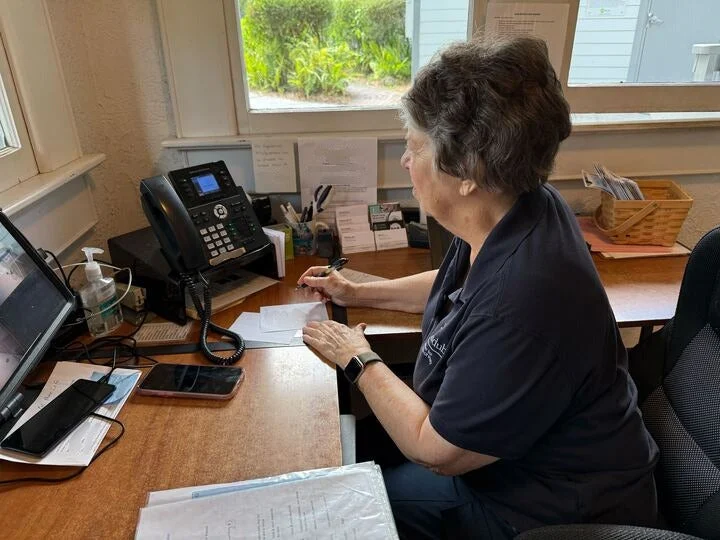
The scene at the Audubon Center for Birds of Prey on a recent Friday morning encapsulates the essence of Phyllis Hall’s unwavering dedication. As the phone rings at the guest relations desk, Hall, a veteran volunteer, answers with a voice that is both calming and authoritative. She guides a caller through the delicate process of rescuing an injured American Kestrel found in their backyard, meticulously advising, "Don’t give it any water, no food of any kind." Her swift notes, scribbled for the rescue volunteers, reflect years of experience and a deep understanding of avian care protocols. This particular call is but one of several that morning, each met with Hall’s welcoming voice and reassuring counsel. Simultaneously, she manages a bustling ticket window, a testament to the center’s popularity even on a weekday, and dedicates time to training a new volunteer in the intricate operations of the facility. This demanding array of responsibilities, handled with a serene demeanor that never falters, vividly illustrates why Hall has earned such high accolades within the Audubon network. Her ability to multitask with such grace and efficiency is not merely admirable; it is a critical asset to an organization that relies heavily on volunteer dedication.
The Audubon Center for Birds of Prey, located in Maitland, Florida, serves as a crucial hub for avian rehabilitation, education, and conservation. Established in 1979, the center treats thousands of injured, orphaned, or sick birds of prey annually, with a mission to release them back into the wild. Its educational programs reach tens of thousands of visitors each year, fostering a deeper appreciation for raptors and their ecosystems. Volunteers like Hall are the backbone of such operations, contributing an estimated 60,000 hours annually across Audubon Florida’s various initiatives, a contribution valued in the millions of dollars. The American Kestrel, a small but vibrant falcon, is a common patient at such centers, often falling victim to collisions with vehicles or habitat encroachment, highlighting the urgent need for dedicated rescuers and educators like Hall.
A Legacy of Leadership: From Chapter President to State Mentor
Phyllis Hall’s journey with Audubon predates her visible role at the Center for Birds of Prey, tracing back to a profound commitment to grassroots conservation. Long before she began volunteering at the Center in late 2021, Hall was actively involved with the Orange Audubon Society, serving on its conservation committee. Her dedication to local environmental issues led her to transition to the Seminole Audubon Society, a chapter geographically closer to her home, where her leadership qualities quickly became evident. In 2020, Hall ascended to the presidency of the Seminole Audubon Society, a role she continues to hold, providing strategic direction and fostering community engagement. Under her stewardship, the chapter has become a vibrant force for conservation, organizing numerous local initiatives and educational programs.
Her chapter involvement naturally paved the way for her significant role in Audubon Florida’s Conservation Leadership Initiative (CLI). Launched in 2014, the CLI program is designed to cultivate the next generation of conservation leaders by pairing undergraduate students with seasoned conservation professionals for a year-long mentorship. Since 2017, Hall has served as a mentor to seven different mentees, guiding them through the complexities of environmental advocacy, research, and community outreach. This commitment to nurturing emerging talent reflects her deep-seated belief in succession planning for the conservation movement. The CLI program itself is a critical component of Audubon Florida’s strategy to infuse fresh ideas and enthusiasm into its network of 46 chapters across the state, ensuring a continuous pipeline of dedicated environmental stewards.
Nurturing the Next Generation: The Conservation Leadership Initiative
It is within her capacity as a mentor that Hall’s unique talents truly shine. A retired professional, Hall dedicated much of her career to adult education and hospital training, accumulating decades of invaluable experience in teaching, mentoring, and supporting learners. Her academic background, including a master’s degree in training and education, provides a robust foundation for her empathetic yet effective mentorship style. This professional expertise, now generously applied to the conservation sector, enables her to connect deeply with her mentees, offering guidance that is both practical and inspiring.
Hall articulates her passion for this role with genuine enthusiasm: "I enjoy being around young people and learn so much from them. My role is to listen and encourage, which is rewarding for me." This statement underscores a reciprocal relationship, where Hall gains as much insight from her mentees as she imparts, fostering a dynamic learning environment. The CLI program, through mentors like Hall, addresses a critical need for skilled professionals in the environmental field. A 2022 report by the National Association of Environmental Professionals indicated a growing demand for conservation scientists and specialists, projecting an employment growth of 7% over the next decade. Programs like CLI are vital in preparing students for these roles, equipping them with not just theoretical knowledge but also practical skills and professional networks.
The Power of Mentorship: Experience Applied
While Hall has recently scaled back her direct CLI mentoring responsibilities this year, her commitment to developing others remains undiminished. She has seamlessly transitioned her extensive experience into mentoring other volunteers at the Audubon Center for Birds of Prey. In this new capacity, she has taken the initiative to create detailed training manuals, an invaluable resource that has significantly enhanced the center’s ability to cross-train volunteers. These manuals ensure consistency in procedures and facilitate a smoother integration for new recruits, thereby amplifying the center’s operational capacity and effectiveness.
Hall’s impact extends far beyond the formal mentorship period. She maintains active communication with her past CLI mentees, consistently offering support and advice. Her willingness to write letters of recommendation for several of them has been instrumental in their academic and professional advancements. A testament to the profound influence she wields, two of her former mentees have gone on to serve on the Seminole Audubon board of directors, working directly alongside her as president. This continuity of engagement demonstrates the lasting bonds she forms and the practical pathways she helps create for future leaders. A particularly poignant moment of pride for Hall came when she attended the induction ceremony of her 2021-22 mentee into the University of Central Florida’s prestigious Pegasus Society, a clear validation of her mentorship’s enduring success and impact on individual lives. This long-term engagement model, where mentees not only succeed but also contribute back to the organization, exemplifies the ripple effect of dedicated mentorship.
Grassroots Impact: Seminole Audubon’s Outreach and Advocacy
Audubon’s overarching mission is to maximize its collective impact by cultivating a diverse community of bird and nature enthusiasts, mobilizing them to drive positive change. The CLI program serves as a prime example of this strategy, injecting fresh perspectives and energy into local chapters. However, sustaining the engagement of CLI students beyond their initial year of mentorship presents inherent challenges, as Hall readily acknowledges. College students, by their nature, are often transient, moving on to graduate studies or careers, frequently in distant locations. Early career professionals also face significant time constraints, making extensive volunteer commitments difficult, especially when compared to retirees like Hall who can dedicate more hours.
To effectively reach younger generations and foster long-term engagement, Hall advocates for proactive outreach at local elementary, middle, and high schools. This strategy aims to instill an appreciation for nature and conservation at an early age, creating a foundational interest that can blossom into lifelong commitment. Demonstrating this proactive approach, earlier this year, Seminole Audubon delivered an engaging seminar at a private school in Oviedo. The presentation provided students with a comprehensive overview of the organization’s rich history and current initiatives, followed by an interactive "bio-bingo" walk, designed to make learning about local ecosystems fun and accessible. Further solidifying their commitment to youth education, the chapter also spearheaded an event for Earth Week at an Oviedo elementary school in April, directly engaging young minds with the principles of environmental stewardship. These initiatives align with broader educational goals, as studies show that early exposure to nature education significantly increases environmental literacy and a propensity for conservation action later in life.
Addressing the Challenges of Youth Engagement
Engaging children through chapter programs is less about immediate recruitment and more about sharing the intrinsic joy of birds and the critical importance of conservation. It is an investment in the future, nurturing the generations who will eventually inherit the responsibility of carrying on this vital work. Hall’s infectious appreciation for nature is a powerful tool in this endeavor, as she passionately shares her knowledge with the public through chapter programs and in her role as a guest relations volunteer at the Center for Birds of Prey. She emphasizes that her own learning journey is continuous in this role.
"I love seeing that ‘a-ha’ moment when I tell guests something they didn’t know," Hall states, highlighting the reciprocal nature of her interactions. "I learn something new every time I am at the Center, either from staff or other volunteers." This continuous learning environment, where knowledge is both imparted and absorbed, exemplifies the dynamic and enriching experience of volunteerism in conservation. It reinforces the idea that environmental education is a lifelong pursuit, benefiting both the educator and the learner. The National Audubon Society’s broader educational outreach programs, reaching millions through various platforms, depend heavily on the frontline efforts of volunteers like Hall, who translate complex ecological concepts into relatable, inspiring messages for the public.
A Broader Scope: Local Conservation Advocacy
While Hall has strategically reduced some of her direct mentorship roles, her commitment to conservation has taken on new dimensions, particularly at the local government level. She has actively engaged with various government committees, channeling her calm, unwavering voice to advocate for the protection of Central Florida’s delicate ecosystems from the pervasive threat of unchecked development. This shift reflects a deepening engagement with policy and advocacy, recognizing that direct action must be complemented by systemic change.
Central Florida’s rapid population growth has placed immense pressure on its natural habitats, including critical wetlands, pine flatwoods, and scrub ecosystems, which are home to numerous endemic and imperiled species. Hall’s involvement in local committees signifies a crucial form of citizen advocacy, where experienced and knowledgeable individuals provide vital input to policymakers. Her efforts aim to influence zoning decisions, land-use planning, and environmental regulations, ensuring that development proceeds in a manner that is sustainable and respectful of natural resources. This work is yet another manifestation of her comprehensive approach to conservation, demonstrating that speaking up for birds and the places they need requires action on multiple fronts, from rescuing an individual kestrel to safeguarding entire habitats through policy intervention. Her dedication serves as a powerful reminder of the profound impact that sustained volunteer effort, guided by expertise and passion, can have on the future of our natural world.
The Enduring Value of Volunteerism
Phyllis Hall’s journey from a chapter conservation committee member to a highly decorated Volunteer of the Year, president of Seminole Audubon, and a revered mentor underscores the indispensable role of volunteerism in the broader conservation movement. Her calm demeanor, extensive experience in education, and profound dedication have not only directly saved countless birds but have also cultivated a new generation of environmental leaders. Her pivot from direct mentorship to volunteer training and local advocacy demonstrates a strategic evolution in her contributions, always seeking the most impactful ways to serve the mission.
Hall’s story is a compelling case study in the power of sustained engagement and the multiplier effect of effective mentorship. Through her efforts, the Audubon Center for Birds of Prey gains efficiency, the Seminole Audubon Society thrives as a community hub, and the Conservation Leadership Initiative continues to build a robust pipeline of future environmental stewards. In an era where environmental challenges are increasingly complex and urgent, the unwavering dedication of individuals like Phyllis Hall provides not just practical support but also an enduring source of inspiration, demonstrating that a single, committed voice can indeed speak volumes for the voiceless. Her legacy is one of proactive leadership, empathetic guidance, and a relentless pursuit of a healthier, more vibrant future for Florida’s birds and the diverse ecosystems they inhabit.
