
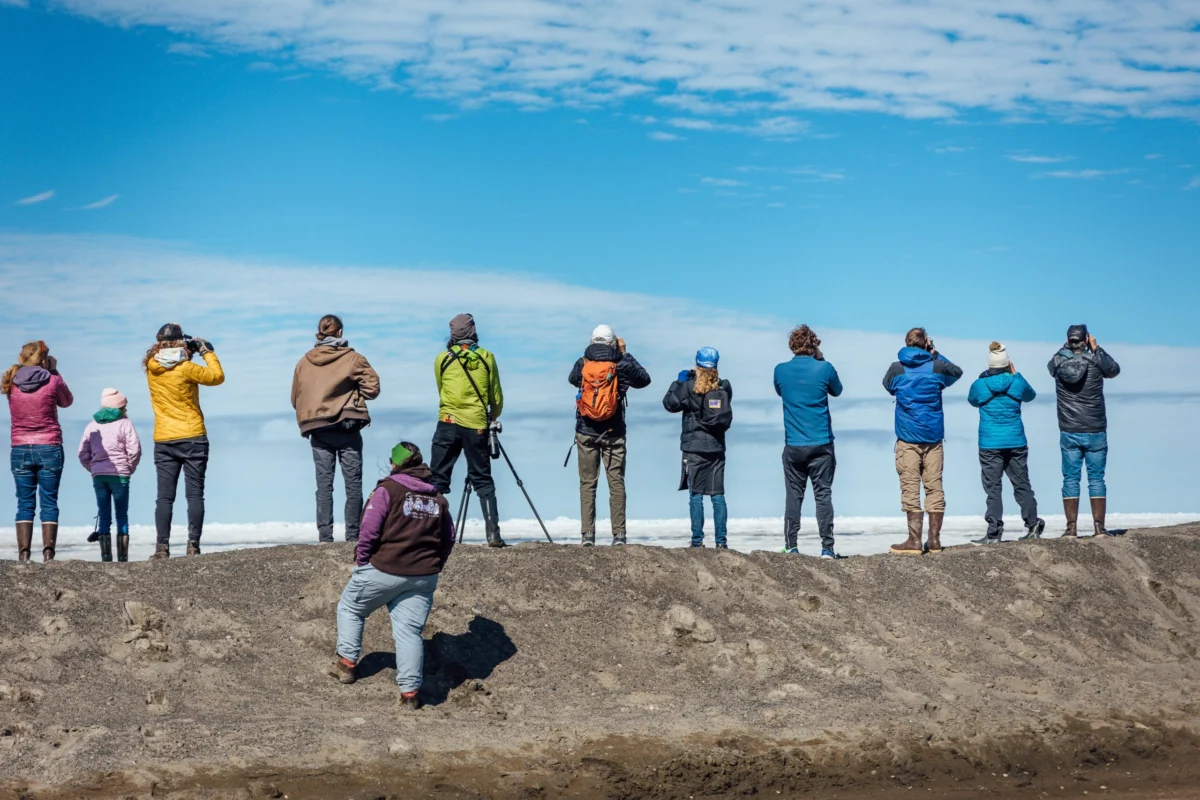
UTQIAĠVIK, Alaska – The community of Utqiaġvik, the northernmost settlement in the United States, is preparing to host the fourth annual Utqiaġvik Migratory Bird Festival from June 12 to 14, 2026. This esteemed event, a collaborative effort between Audubon Alaska, the U.S. Fish and Wildlife Service (USFWS), and a consortium of local and regional organizations, will transform Fred Ipalook Elementary School and various birding hotspots across the area into vibrant centers for education and appreciation of the Arctic’s remarkable avian inhabitants. The festival underscores the critical ecological role of the region as a breeding ground for millions of migratory birds and highlights the deep-rooted Inupiat traditions connected to these natural resources.
The festival, an integral component of the U.S. Fish and Wildlife Service Directorate Fellows Program initiative, is designed to offer attendees an engaging and educational experience centered on migratory and shorebirds. As registration officially opens, organizers are calling upon both local residents and visitors from afar to partake in this unique celebration. The event not only aims to foster a greater understanding of the extraordinary biodiversity of the Arctic but also to underscore the pressing conservation challenges faced by these species in a rapidly changing environment.
A Legacy of Conservation and Community Engagement
The Utqiaġvik Migratory Bird Festival has steadily grown in prominence since its inception, building on a foundation of scientific inquiry, cultural appreciation, and community involvement. Previous festivals have successfully drawn attention to the North Slope of Alaska as a vital nursery for a vast array of bird species that undertake epic journeys spanning continents. Max Nootbaar, the festival organizer for 2026, articulated the event’s dual mission: "Our festival primarily aims to highlight the value of, and threats faced by, migratory birds nesting in the high Arctic and celebrate Inupiat tradition and connection to the natural resources of the region." This statement encapsulates the profound interweaving of ecological science with Indigenous knowledge systems that defines the festival’s core philosophy.
The Arctic, often perceived as a barren expanse, teems with life during its brief but intense summer. Millions of birds, from tiny sandpipers to majestic waterfowl, converge on the tundra to breed and raise their young, capitalizing on the long daylight hours and abundant insect life. Species such as the Arctic Tern, which boasts the longest migratory route of any animal, traveling pole-to-pole, and various species of loons, eiders, and shorebirds, depend on the pristine habitats of the North Slope. The festival serves as a critical platform to educate the public about these incredible journeys and the fragile ecosystems that support them.
Festival Activities and Unique Offerings
For the 2026 iteration, a robust program of activities is planned, all of which are free and open to the entire community. Attendees can anticipate a return of popular features such as trivia nights, which blend entertainment with ornithological knowledge, and drawing workshops that encourage artistic interpretations of the local birdlife. Science talks, led by experts in ornithology, ecology, and conservation, will delve into topics ranging from bird migration patterns and climate change impacts to local research initiatives.
A cornerstone of the festival remains the guided birding tours. These excursions will take participants to prime birding hotspots throughout Utqiaġvik, offering unparalleled opportunities for birdwatching under the guidance of experienced naturalists and local experts. These tours provide firsthand encounters with species like the King Eider (Qinalik in Iñupiaq), Spectacled Eider, various phalaropes, plovers, and numerous species of gulls and terns that grace the Arctic coastline and inland tundra during the breeding season. The chance to observe these birds in their natural breeding habitat is a rare privilege that draws bird enthusiasts from around the globe.
Beyond the educational and experiential offerings, the festival also provides an opportunity to support its mission through merchandise. The 2026 festival logo, prominently featuring the magnificent King Eider (Qinalik), was designed by Utqiaġvik-based artist Alaina Bankston. This artistic representation not only celebrates one of the Arctic’s iconic birds but also highlights the vibrant local arts community. Merchandise sales, available through platforms like Bonfire, contribute directly to the sustainability and growth of the festival, ensuring its continued impact on conservation awareness and community engagement.
The Utqiaġvik Birding Trail: A Lasting Legacy
The Utqiaġvik Migratory Bird Festival has inspired and catalyzed significant long-term initiatives, most notably the creation of the Utqiaġvik Birding Trail. This innovative project is a testament to the power of collaboration, bringing together the USFWS, the Alaska Department of Fish and Game, Ilisaġvik College, the Iñupiat Heritage Center, the North Slope Borough Department of Wildlife Management, UIC Science, Tuzzy Consortium Library, and Audubon Alaska. The trail’s development was further enriched by the invaluable input of previous festival organizers, Lindsay Hermanns and Aaron Yappert, whose foresight helped lay the groundwork for this enduring community asset. Crucially, the trail also benefited from Iñupiat language resources, such as Iñupiatun Uqaluit Taniktun Sivuniġit, the official website of the North Slope Borough, and the expertise of Indigenous Knowledge Liaison Robin Monáoyak, ensuring cultural relevance and accuracy.
The Utqiaġvik Birding Trail meticulously details 10 distinct sites across the town, transforming Utqiaġvik into an accessible outdoor classroom and a prime destination for bird tourism. Notable locations include the Stevenson Street Beachfront, offering views of various sea ducks and shorebirds; Freshwater Lake at the end of Imaiqsaun Road, a haven for waterfowl; and the Nunavaaq Gravel Pit, which attracts a diverse array of species to its unique microhabitats. Each site description provides essential information, including driving directions, special travel notes concerning local conditions and etiquette, and a comprehensive list of possible bird species sightings, catering to both seasoned birders and curious local residents.
This initiative serves multiple critical purposes. Economically, it is designed to bolster Alaska’s burgeoning bird tourism sector. Birdwatching has emerged as a significant segment of ecotourism globally, with millions of enthusiasts traveling to observe avian diversity. In Alaska, bird tourism contributes millions of dollars annually to the state’s economy, supporting local businesses, guides, and hospitality services. By establishing Utqiaġvik as a premier birding destination, the trail aims to attract a steady stream of visitors, providing sustainable economic opportunities for the North Slope Borough, which serves as the economic, transportation, and administrative hub of the region. Educationally, the trail acts as a permanent resource, offering self-guided learning opportunities about the local avifauna and their ecological significance, extending the festival’s educational impact throughout the year.
The Broader Context: Arctic Ecology and Global Migration
The Arctic region, despite its remote location, is inextricably linked to global ecological systems through the phenomenon of migratory birds. These species act as biological indicators, their health and populations reflecting the overall well-being of the ecosystems they traverse from their wintering grounds in temperate and tropical zones to their Arctic breeding sites. The North Slope of Alaska, with its vast expanses of tundra, wetlands, and coastline, provides crucial nesting grounds, abundant food resources, and relative safety from predators during the vulnerable breeding season.
However, these vital ecosystems are facing unprecedented threats. Climate change is profoundly altering the Arctic environment, leading to permafrost thaw, changes in ice regimes, and shifts in vegetation patterns. These alterations directly impact bird breeding success, food availability, and migration timing. Pollution, particularly plastic pollution in marine environments, and habitat degradation along migratory routes further compound these challenges. The Utqiaġvik Migratory Bird Festival, therefore, is not merely a celebration but a crucial advocacy platform, raising awareness about these threats and promoting conservation actions.
The festival’s emphasis on Inupiat tradition is particularly salient in this context. Indigenous peoples of the Arctic have millennia of accumulated knowledge about their environment, including the intricate lives of migratory birds. This Traditional Ecological Knowledge (TEK) offers invaluable insights into long-term ecological changes, bird behavior, and sustainable resource management. By integrating TEK with Western scientific approaches, the festival fosters a holistic understanding of Arctic ecosystems and strengthens community-led conservation efforts. The collaboration with the Iñupiat Heritage Center and the reliance on Iñupiat language resources exemplify this commitment to cultural preservation and respect for Indigenous ways of knowing.
A Collaborative Endeavor for a Shared Future
The success of the Utqiaġvik Migratory Bird Festival and the Utqiaġvik Birding Trail is a testament to the power of multi-organizational collaboration. Audubon Alaska, a leading conservation organization, brings its extensive expertise in bird conservation, advocacy, and public engagement. The USFWS, with its mandate for wildlife protection and management, provides critical scientific support and regulatory oversight. Local entities like Ilisaġvik College, the Iñupiat Heritage Center, the North Slope Borough Department of Wildlife Management, UIC Science, and Tuzzy Consortium Library contribute local knowledge, educational infrastructure, and community outreach capabilities. This diverse partnership ensures that the festival’s message resonates deeply within the local community while also reaching a broader national and international audience.
The festival’s role as an initiative under the U.S. Fish and Wildlife Service Directorate Fellows Program also highlights its commitment to fostering the next generation of conservation leaders. By engaging young professionals and providing them with hands-on experience in wildlife management, community outreach, and scientific research, the program ensures a sustained legacy of conservation efforts in the Arctic and beyond.
As the 2026 Utqiaġvik Migratory Bird Festival approaches, the excitement in the community builds. It is more than just an event; it is a reaffirmation of the profound connection between people and nature, a celebration of the incredible resilience of migratory birds, and a concerted effort to protect the irreplaceable Arctic wilderness for future generations. Individuals interested in participating in this unique Arctic experience are encouraged to register promptly via the provided Eventbrite link. Further details, including the full schedule of events and information on how to support the festival, can be found on the Utqiaġvik Migratory Bird Festival Facebook page and the Audubon Alaska website. For media inquiries, Lauren Cusimano, Audubon Alaska Communications Manager, can be reached at [email protected] or 907-433-5300.
