
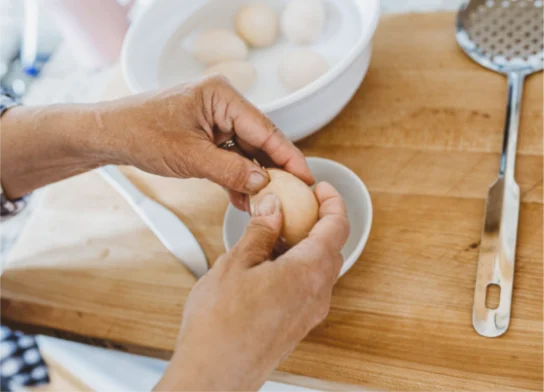
The culinary challenge of preparing perfectly peeled hard-cooked eggs has long been a point of contention for both home cooks and professional chefs, particularly when dealing with farm-fresh specimens. While conventional wisdom has historically suggested that eggs must be aged for several weeks to ensure the shell separates cleanly from the albumen, new insights into the physics of heat transfer suggest that the method of cooking—specifically steaming rather than boiling—is the definitive solution to this age-old problem. By utilizing steam, cooks can bypass the traditional "aging" process, allowing for the immediate use of eggs laid only hours prior without the risk of structural damage during peeling.

The Scientific Impediment: Why Fresh Eggs Adhere to the Shell
To understand why steaming is superior, one must first examine the biological and chemical composition of a fresh egg. A newly laid egg possesses a relatively low pH level in the white, or albumen. In this state, the albumen proteins are more likely to bind strongly to the inner shell membrane during the cooking process. As an egg ages, carbon dioxide escapes through the thousands of microscopic pores in the calcium carbonate shell, causing the pH of the albumen to rise from approximately 7.6 to as high as 9.2. This increase in alkalinity weakens the bond between the membrane and the white, which is why older, "supermarket-style" eggs are notoriously easier to peel than those sourced directly from a farm.

Furthermore, fresh eggs lack the prominent air cell found in older eggs. As moisture evaporates over time, an air pocket forms at the blunt end of the egg. This pocket provides a starting point for peeling. In a farm-fresh egg, the lack of this air space, combined with the low-pH protein adhesion, often results in the "pitting" of the egg white, where large chunks of the protein are torn away along with the shell, resulting in an aesthetically unpleasing and wasteful product.

A Chronology of Culinary Experimentation
The transition toward steaming as a preferred method follows decades of trial-and-error involving various additives and temperature controls. Culinary historians and home economics experts have documented a wide array of attempted solutions, most of which have yielded inconsistent results when applied to fresh eggs.

- Water Additives: For years, it was suggested that adding salt, white vinegar, or baking soda to the boiling water would facilitate easier peeling. Scientific analysis has since debunked many of these claims. While salt may help the egg white coagulate faster if a shell cracks, it does little to affect the membrane bond. Vinegar can slightly soften the calcium carbonate of the shell but does not penetrate deeply enough to assist in the release of the membrane. Baking soda, intended to raise the pH of the water, rarely affects the internal pH of the egg within the short cooking window.
- Mechanical Intervention: Techniques such as piercing the blunt end of the egg with a sterilized pin (to artificially create an air pocket) were popularized in the mid-20th century. However, this method increases the risk of the shell cracking prematurely and does not address the fundamental protein adhesion across the rest of the egg’s surface.
- Temperature Variations: The debate between "cold-start" boiling (placing eggs in cold water and bringing them to a boil) and "hot-start" boiling (dropping eggs into already boiling water) has persisted for generations. While hot-starting creates a "thermal shock" that can help shrink the internal proteins away from the shell, it often leads to cracked shells due to the rapid expansion of internal gases.
The discovery of steaming as the "middle ground" provides the thermal shock of a hot-start method with the gentler, more even heat distribution required to maintain shell integrity.

The Methodology of Steaming: A Step-by-Step Analysis
The transition from boiling to steaming requires a shift in equipment and timing but remains accessible to the average kitchen. The process relies on the properties of water vapor, which carries more latent heat than liquid water at the same temperature, allowing for an efficient and rapid cook.

Required Apparatus
To implement this method, the following tools are necessary:

- A large pot with a tight-fitting lid.
- A steaming insert (such as a stainless steel basket, a bamboo steamer, or a heat-safe colander).
- Tongs for safe handling.
- An "ice bath" (a bowl filled with a mixture of cold water and ice).
The Steaming Protocol
The procedure begins by bringing approximately one to two inches of water to a vigorous boil in the base of the pot. Once the water is producing steady steam, the steamer basket containing a single layer of fresh eggs is placed inside. The pot is then covered immediately to trap the vapor.

The duration of the steam determines the final texture of the yolk:

- Soft-cooked (runny yolk): Approximately 6 to 7 minutes.
- Medium-cooked (custard-like yolk): Approximately 8 to 9 minutes.
- Hard-cooked (solid but creamy yolk): Approximately 12 minutes.
The Critical Role of the Ice Bath
Upon completion of the steaming cycle, the eggs must be immediately transferred into an ice bath. This serves two vital functions. First, it halts the cooking process instantly, preventing the overcoagulation of proteins. Second, the rapid cooling causes the egg’s internal structure to contract slightly within the shell, further loosening the bond between the membrane and the albumen. Eggs should remain in the ice bath for a minimum of five to ten minutes before peeling is attempted.

Nutritional and Aesthetic Advantages: Eliminating the Green Ring
A significant secondary benefit of the steaming and rapid-cooling method is the prevention of the "green-gray ring" often found around the yolks of hard-boiled eggs. This discoloration is not a sign of spoilage but is the result of a chemical reaction between iron and sulfur.

When an egg is heated for an excessive duration or cooled too slowly, the sulfur in the egg white proteins breaks down and forms hydrogen sulfide gas. This gas reacts with the iron naturally present in the yolk to create iron sulfide. By using the controlled heat of steam and the immediate intervention of an ice bath, the temperature of the egg never reaches the threshold where this reaction becomes prominent. The result is a vibrant, golden-yellow yolk that is more visually appealing for applications such as deviled eggs or salad garnishes.

Professional Perspectives and Industry Impact
The shift toward steaming has gained significant traction in professional catering and restaurant environments where consistency and speed are paramount. In high-volume kitchens, the "pitting" of eggs represents a loss of food cost and labor time.

Furthermore, the rise of programmable multi-cookers, such as the Instant Pot, has introduced many consumers to the benefits of "pressure steaming." These devices utilize a similar principle—using a small amount of water to create a high-pressure steam environment. While the pressure adds another variable, the underlying success of these devices in producing easy-to-peel eggs reinforces the theory that steam, rather than submersion in water, is the key catalyst for membrane release.

Culinary experts note that this method also preserves the natural shape of the egg. Because the eggs are not being tossed about by the turbulence of boiling water, they are less likely to develop the flat spots or "weird dips" caused by large air sacs or structural compression. This ensures a perfect oval shape, which is the industry standard for gourmet presentation.

Broader Implications for Home Cooking and Food Waste
The adoption of steaming as the standard for egg preparation has broader implications for food waste reduction. When eggs are difficult to peel, a significant percentage of the edible protein is often discarded with the shell. For small-scale farmers and families who keep backyard chickens, the ability to consume their harvest immediately—rather than waiting weeks for eggs to "age"—enhances the value of the farm-to-table experience.

As the culinary community continues to move toward evidence-based techniques, the traditional boiling of eggs appears to be a practice in decline. The steaming method offers a rare combination of scientific soundness, ease of execution, and superior results. Whether for a simple breakfast or an elaborate platter of deviled eggs, the transition to steam ensures that the integrity of the farm-fresh egg is maintained from the coop to the plate.

In conclusion, the evidence suggests that the physical properties of steam provide the necessary thermal environment to overcome the biological defenses of a fresh egg shell. By abandoning the boiling pot in favor of the steamer basket, cooks can guarantee a perfectly peeled, aesthetically flawless, and nutritionally optimal egg every time, regardless of how recently the egg was laid.
