
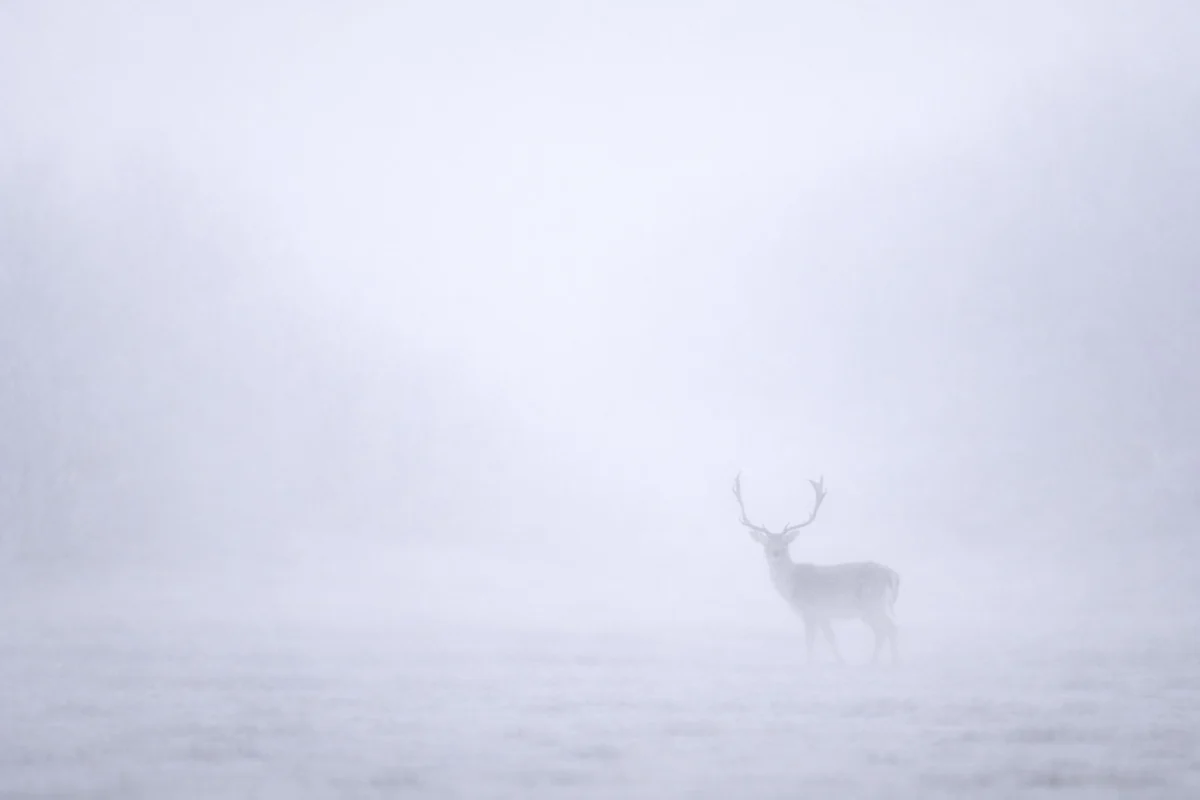
A distinctive approach to nature photography has emerged, characterized by an unwavering commitment to minimalism, intentional distance, and a profound emphasis on stillness and emotional resonance. This photographic philosophy prioritizes the subtle over the spectacular, inviting viewers into moments of quiet contemplation rather than overwhelming them with detail. The creator behind this unique vision, whose work is gaining recognition in artistic circles, articulates a journey of discovery that was less a conscious decision and more an intuitive alignment with an intrinsic need for calm and simplicity.
The genesis of this distinctive vision was not marked by a singular moment of revelation or a deliberate choice to adopt a specific style. Instead, it unfolded organically from the initial stages of learning photography. Early on, the artist found themselves instinctively stepping back, allowing subjects to occupy smaller portions of the frame and embracing the expansive quality of negative space. This nascent inclination was, in retrospect, a subconscious search for quietude in a medium often celebrated for its ability to capture vibrant detail and dramatic action. This gradual evolution highlights a common thread in artistic development, where an individual’s unique voice emerges not through rigid adherence to convention but through an authentic response to their inner landscape.

Central to this evolving aesthetic was an immediate attraction to simplicity. The photographer gravitated towards calm backgrounds and a pervasive sense of airiness within the composition. This was not driven by a desire to strip subjects bare, but rather by an innate aversion to visual clutter, which was perceived as overwhelming. The subsequent discovery of high-key and low-key photographic techniques felt less like acquiring a new skill and more like a recognition of an already existing internal framework. These techniques, which involve manipulating light to create predominantly bright or dark images, allowed for a softening of the world, distilling scenes to their essential elements and fostering a sense of serene focus. Art historians often note that such intuitive connections to established techniques are characteristic of artists whose work is deeply rooted in personal expression, where the method becomes an extension of an inner vision. The late 20th and early 21st centuries have seen a resurgence of interest in minimalist art forms across various media, with critics often pointing to a societal yearning for simplicity amidst increasing complexity.
The profound connection between the artist’s photographic style and specific natural phenomena, such as fog and snowfall, is particularly striking. These conditions, which naturally obscure detail and soften contours, are described as moments of deep happiness and internal slowing. In such environments, thoughts soften, and the world adopts a gentle quality, fostering a sense of quiet gratitude and belonging. This experience resonates with contemporary psychological research on the benefits of nature immersion, often referred to as "forest bathing" or "ecotherapy." Studies, such as those published in Environmental Science & Technology and Psychological Science, consistently demonstrate that spending time in natural settings can reduce stress, improve mood, and enhance cognitive function. The artist’s solitary, yet never lonely, experiences in these atmospheric conditions underscore a therapeutic relationship with nature, where the absence of external demands allows for profound self-acceptance and a feeling of being understood by the natural world.

The intensity with which the artist experiences the world – noting intricate details, subtle moods, and shifts in light and energy – finds its necessary balance in nature. An inner world described as layered and complex, beautiful yet potentially overwhelming, achieves equilibrium through the openness of natural environments. This external spaciousness mirrors and creates internal space, providing a crucial counterpoint to an otherwise bustling internal landscape. This dynamic relationship between inner experience and outer environment is a recurring theme in art, where creation often serves as a means of processing and balancing personal realities.
A critical observation from the artist concerns the fast pace of modern life, even within natural settings. People are often seen moving quickly, passing through natural spaces without pause, rarely stopping long enough for deeper observation. This haste, the artist notes, prevents the subtle revelations that nature offers to those who linger. The assertion is that nature responds differently to stillness. When one remains in a single location without urgency or expectation, minute shifts begin to manifest: light imperceptibly changes, subtle movements appear at the periphery of vision, and what was initially invisible slowly becomes apparent. This transformation is not due to sudden arrival but to the observer’s sustained presence and willingness to truly see. This concept aligns with mindfulness practices, which emphasize sustained attention to the present moment, and studies on "attentional restoration theory," suggesting that natural environments can help restore directed attention capacities exhausted by urban life.

This intentional way of looking, which invites slowness, attention, and presence, is presented as transformative. Once experienced, returning to a state of hurried perception becomes challenging. In this context, minimalism transcends mere aesthetic preference; it becomes a fundamental necessity. The apparent emptiness in these images is not a void but a deliberate reflection of a need for calm, holding a depth beneath its surface. Silence, in this photographic philosophy, is never truly empty. It is a canvas for feeling, where white space provides breathing room and darkness offers rest. High-key and low-key techniques are employed to soften the world, allowing only what truly matters to remain, not to strip meaning but to create ample space for it to emerge.
The commitment to this approach is unwavering, described not as a fleeting phase but as a definitive direction. The choices are clear: simplicity is chosen to preserve the feeling of the moment; distance is embraced to provide space for both the subject and the observer; and restraint is applied to maintain the image’s openness and interpretive potential. Minimalism, therefore, is not an afterthought or a post-processing technique; it is an intrinsic part of the photographic act, beginning with the photographer’s presence in the environment, the duration of their stay, and the conscious decision of how much to leave untouched. This profound integration of philosophy and practice distinguishes the work, positioning it beyond a mere stylistic choice to a deeply embedded artistic ethos.

The motivation behind this work diverges significantly from commercial or trend-driven photography. The artist explicitly states that the images are not created to please an audience or chase expectations. Only photographs that evoke a tangible, felt story within the body are shared; images that do not resonate personally remain private, regardless of their technical perfection. This internal barometer for authenticity underscores a commitment to artistic integrity and personal truth. The process is guided by feeling rather than rigid rules, with technical knowledge serving as a quiet foundation rather than a leading force. The decisive factor in capturing an image is an instantaneous, physical response to the moment’s truth, leading to the release of anything that doesn’t feel authentic, even if it breaks conventional photographic norms.
For the artist, photography serves as a unique sanctuary – a space where one can "disappear without losing oneself," free from the pressure to perform or explain, where feeling alone is sufficient. When asked about the subject matter of the photographs, the artist offers a nuanced response: they are not merely about animals, landscapes, or minimalism as an abstract concept. Fundamentally, they are about presence – about being fully immersed in a moment that demands nothing in return. This aligns with philosophical tenets of existentialism and mindfulness, where being fully present in experience is considered a path to deeper meaning.

Encounters with wildlife in snow or mist are often brief and ephemeral, such as a fox standing silently or a deer appearing and disappearing. These moments are described as fragile and weightless, prompting the artist to maintain distance and give space, allowing the distance itself to become an integral part of the narrative. The true draw is not the encounter itself, but the lingering feeling it imprints. This perspective challenges conventional wildlife photography, which often seeks close-up, dramatic encounters, instead highlighting the emotional and atmospheric resonance of a distant, fleeting presence.
The artist expresses a firm belief in the inherent voice of stillness, the strength embedded in softness, and the profound value of restraint – choosing less over more. Minimalism, in this context, is actively reframed from a perceived emptiness to an invitation. It is an open space designed to allow viewers to pause, bringing their own experiences and interpretations to the image, without the need for explanation or resolution. This approach empowers the viewer, transforming them from a passive recipient into an active participant in the artistic experience. Art critics and curators have increasingly recognized the power of such "invitational" art, which fosters deeper engagement and personal connection.

Ultimately, the success of an image is measured by its capacity to evoke a pause, however brief, in the viewer. The intention is not to impress but to invite – into quiet, into space, into a moment where nothing needs to be solved. This defines the core purpose of the artist’s photography: not to merely document what nature looks like, but to share the profound feeling that arises when silence, in its deepest sense, is recognized as enough. This philosophy offers a potent counter-narrative to the prevailing culture of constant stimulation, advocating for a return to contemplation and genuine connection, both with nature and with oneself.
