
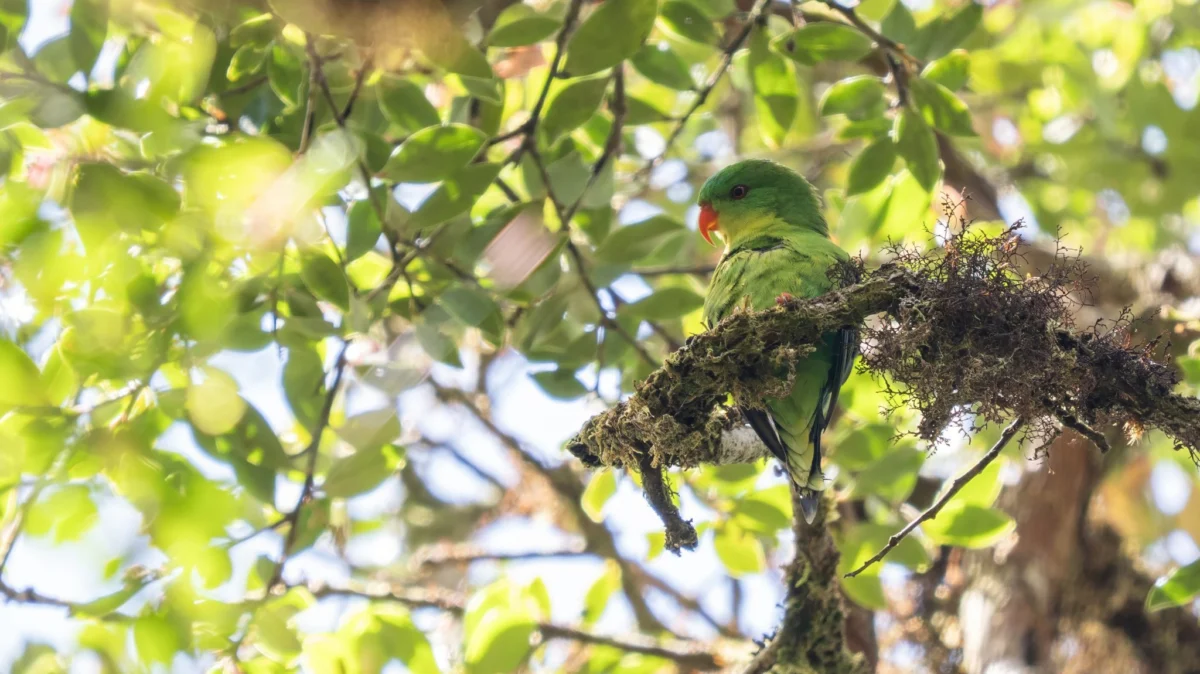
The remarkable re-emergence of the Blue-fronted Lorikeet (Charmosyna toxopei) marks a pivotal moment in ornithological history, confirming the persistence of a species long thought to be on the brink of extinction or potentially already lost. Hidden within the formidable terrain of Mount Kapalatmada, this small, emerald-feathered parrot, endemic solely to the Indonesian island of Buru, has once again graced the scientific record, providing tangible proof that dedicated exploration and collaboration can yield extraordinary results in the quest to protect Earth’s dwindling biodiversity. Its rediscovery, more than a decade after its last documented sighting and nearly a century since its initial description, reignites hope for numerous other "lost" species that may yet persist in unexplored pockets of our planet.
The Elusive Jewel of Buru: A Species Defined by Rarity
The Blue-fronted Lorikeet is a captivating, diminutive parrot, typically characterized by its striking lime-green plumage, accented by an distinctive orange bill, a vivid blue hindcrown, and a elegantly pointed tail. These features, combined with its swift, acrobatic flight, make it a truly spectacular sight for those fortunate enough to witness it. First formally described in the 1920s from a series of seven specimens, the species quickly retreated into obscurity, becoming one of ornithology’s most enduring mysteries. Its scientific name, Charmosyna toxopei, likely honors L.J. Toxopeus, a Dutch entomologist and collector active in Indonesia during that period, who may have been instrumental in its initial discovery.
For nearly a century, despite extensive surveys conducted across the lowland and mid-elevation forests of Buru—habitats initially associated with the original specimens—the Blue-fronted Lorikeet vanished from scientific observation. This prolonged absence cemented its status as one of the world’s most enigmatic birds, leading to considerable concern about its continued existence. Its specialized diet, typical of lorikeets, primarily consists of nectar, pollen, and soft fruits, suggesting a dependence on specific flowering plants found within its forest habitat. Understanding these ecological requirements is crucial for future conservation efforts, as any disruption to these resources could severely impact the species.

A Storied History of Disappearance and Fleeting Sightings
The chronology of the Blue-fronted Lorikeet’s encounters with humanity is sparse, punctuated by long periods of silence, highlighting the extreme challenges associated with studying species in remote, biodiverse regions.
- 1920s: The species is first formally described based on seven collected specimens, likely by researchers associated with the initial expeditions to Buru. These specimens become the sole basis for scientific understanding of the lorikeet for decades.
- 1926 – 2013: For nearly ninety years, the Blue-fronted Lorikeet remains entirely undetected by scientists or birdwatchers. This prolonged absence fuels fears of its extinction, leading to its unofficial designation as a "lost species." The inaccessibility of Buru’s interior, coupled with limited survey efforts in its hypothesized high-altitude refuge, contributes significantly to this enduring mystery.
- 2014: A glimmer of hope emerges when renowned birder Craig Robson, leading a Birdquest birding tour, captures the first photographic evidence of the species in over a decade. This brief encounter, though unconfirmed by further sustained observations, proves the lorikeet’s continued existence, albeit in extremely low numbers or highly restricted areas.
- 2024: The Blue-fronted Lorikeet is officially listed as "Data Deficient" on the IUCN Red List. This classification, a shift from a previous "Critically Endangered" assumption, reflects the lack of comprehensive current data on its population size, distribution, and ecological needs. Simultaneously, it is formally recognized as a "lost species" by the Search for Lost Birds initiative, a global collaborative effort by the American Bird Conservancy (ABC), Re:wild, and BirdLife International, aimed at locating species missing for a decade or more. The "Data Deficient" status underscores the critical need for further research rather than implying a healthy population; it simply means not enough is known to assess its true threat level accurately.
- Late 2025/Early 2026: Local climbers, pioneers from the Indonesian mountaineering group Kanal Buru, successfully map and open a new, previously uncharted route to the summit of Mount Kapalatmada, Buru’s highest peak, standing at approximately 8,900 feet (around 2,713 meters). This breakthrough in accessibility paves the way for deeper exploration of the island’s montane forests.
- April 2026: The historic expedition, building on the newly established route, commences its 14-day trek into the remote highlands, culminating in the unequivocal rediscovery and comprehensive documentation of the Blue-fronted Lorikeet.
The Expedition into Buru’s Untamed Heart
The recent expedition, a testament to the power of collaboration and perseverance, was meticulously planned and executed. Led by the experienced Indonesian mountaineer Handoko of Kanal Buru, the team comprised a diverse group of experts from leading conservation organizations: American Bird Conservancy (ABC), Birdtour Asia, and Yayasan Planet Indonesia. Their collective goal was to penetrate the previously impenetrable montane forests of Mount Kapalatmada, guided by the long-held hypothesis that the lorikeet might persist at higher, more inaccessible elevations, far from human disturbance.
The 14-day trek was an arduous undertaking, pushing the limits of physical endurance and navigational skill. For the first six days, the landscape was unforgiving—jagged limestone karsts, densely covered in thorny plants and teeming with insects, posed constant challenges. As the team ascended higher, however, the environment underwent a dramatic transformation. The harsh, rocky terrain gave way to a breathtaking mossy cloud forest, a mystical realm where ancient trees were draped in epiphytes and a constant mist permeated the air. This "park-like clearing," as described by team members, was unexpectedly vibrant with birdsong, signaling a rich and relatively undisturbed ecosystem.
It was in this verdant sanctuary that the first unconfirmed sighting occurred. John Mittermeier, Director of the Search for Lost Birds at ABC, recounted the exhilarating moment: "We noticed two small birds fly into a nearby tree so I picked up my binoculars to see what one of them was. I short-circuited with excitement when I realised it was a Blue-fronted Lorikeet." Despite the initial thrill, the birds swiftly departed before photographs could be taken, leaving the team with a mix of elation and longing for concrete evidence.

Two days later, however, patience and persistence paid off. While the group gathered for breakfast, another lorikeet appeared, its bright green feathers glistening unmistakably in the morning sun. Without hesitation, the team rushed to capture the moment, securing the first clear photographs of the species in over a decade. The emotional impact on the ground was profound. Sumaraja, a guide and tour leader from Birdtour Asia, expressed the depth of his feelings: "When we saw the Blue-fronted Lorikeet, I couldn’t hold back my tears. Every day, I almost cried with joy at seeing that these birds still exist."
The expedition culminated in further successes. On their final morning in the highlands, the team observed two more lorikeets darting between flowering trees. This time, they not only captured additional photographic evidence but also successfully made the first-ever sound recordings of the lorikeet’s distinct, high-pitched calls. These recordings are invaluable, providing crucial data for future identification and monitoring efforts.
Unveiling Buru’s Hidden Biodiversity
The rediscovery of the Blue-fronted Lorikeet was not the expedition’s only significant finding. The team also encountered and documented other remarkable species, underscoring the extraordinary biodiversity of Buru’s highlands. Among these were a Madanga (Madanga ruficollis), one of the region’s most unusual songbirds, itself a Buru endemic and a species of conservation concern. Furthermore, the expedition recorded a potential new taxon of Island Thrush (Turdus poliocephalus), suggesting that the isolation of Mount Kapalatmada’s montane forests may have fostered unique evolutionary divergence. The Island Thrush complex is known for its numerous subspecies across islands, making any new variant a significant scientific discovery. These additional findings highlight Buru’s status within the Wallacea biogeographical region, a zone renowned for its exceptionally high levels of endemism due to its geological history of island isolation.
The success of the expedition strongly supports the hypothesis that the Blue-fronted Lorikeet is indeed restricted to Buru’s high-elevation habitats. This ecological specialization, while making the species difficult to find, has also inadvertently served as its greatest protection against the pervasive threats facing lowland forests.

Conservation Status and Looming Threats
While the rediscovery brings immense joy, it simultaneously casts a spotlight on the precarious future of the Blue-fronted Lorikeet and its unique habitat. As Benny A. Siregar, Maluku Coordinator at Burung Indonesia (BirdLife International’s partner in the country), observed, "Rare sighting records suggest a highly restricted habitat use. The primary challenge facing the Blue-fronted Lorikeet is that they are facing threats that remain largely unknown. This bird inhabits areas under continuous pressure from deforestation, with a population estimated to be exceedingly small and vulnerable."
The "Data Deficient" status on the IUCN Red List underscores the urgent need for comprehensive research. While the inaccessibility of Mount Kapalatmada’s highlands has historically shielded the lorikeet, this protection is not absolute and may be eroding. Buru Island, like many parts of Indonesia, is under increasing pressure from human activities. Major threats include:
- Deforestation: Driven by illegal logging, expansion of agricultural lands (including palm oil plantations), and infrastructure development, deforestation fragments and degrades the vital forest habitat that endemic species rely upon. While the lorikeet’s high-altitude refuge might be less directly impacted than lowlands, changes in climate or increased accessibility could bring these threats closer.
- Mining: The island faces continuous pressure from mining companies seeking valuable resources. These operations often involve extensive land clearing, road construction, and pollution, devastating pristine ecosystems.
- Hunting and Trade: Surveys conducted by Konservasi Kakatua Indonesia (KKI) from 2023 to early 2025 documented potential threats from hunting for both consumption and the illegal pet trade. Even small, seemingly insignificant levels of hunting can have catastrophic impacts on species with already tiny and vulnerable populations.
- Climate Change: High-altitude specialists are particularly vulnerable to climate change. As temperatures rise, their preferred climatic zones may shift upwards, potentially shrinking their available habitat on mountaintops, leading to what is known as "mountaintop extinction."
Dwi Agustina, Conservation Program Coordinator for KKI, emphasized the broader implications: "Buru is home to many endemic birds, and the logging and mining companies that have acquired much of the island’s forest represent a major threat to their survival and wildlife." She stressed the imperative for "a collective approach and action from all stakeholders to protect the remaining habitat of this incredible bird."
Voices from the Frontlines of Conservation
The success of the expedition is a testament to the collaborative spirit among various conservation entities and the invaluable contributions of local expertise. Sumaraja’s emotional reaction encapsulates the deep connection conservationists feel towards these rare creatures, while John Mittermeier’s recounting of the initial sighting highlights the sheer thrill of discovery that drives such expeditions.

Benny A. Siregar’s observations from Burung Indonesia provide a critical assessment of the species’ precarious situation, emphasizing the unknown threats and the vulnerability of its small population. His insights highlight the need for scientific rigor in conservation planning. Dwi Agustina’s statement from KKI further underscores the systemic pressures on Buru’s biodiversity, linking the lorikeet’s survival to the broader fight against habitat destruction from logging and mining. KKI’s local surveys are crucial for understanding the on-the-ground realities and identifying specific threats.
Handoko, the expedition leader from Kanal Buru, articulated the profound impact of the journey on the local community: "This expedition helped me and the members of Kanal Buru gain new perspectives and knowledge about Mount Kapalatmada, especially about the birds and the ecosystems there. I hope to share these experiences to empower people in Buru to protect this unique area." This statement is particularly significant, as local engagement and empowerment are considered cornerstones of sustainable conservation. Sumaraja echoed this sentiment, expressing hope that "more people will be able to see and learn more about these birds," and crucially, that "more people will care about and participate in preserving the remaining forests on Buru Island."
Broader Implications: A Beacon of Hope for Lost Species
The rediscovery of the Blue-fronted Lorikeet transcends the boundaries of Buru Island; it serves as a powerful beacon of hope for the global conservation movement, particularly for the "Search for Lost Birds" initiative. This collaborative project between ABC, Re:wild, and BirdLife International aims to locate species that have not been documented for over a decade, recognizing that "lost" does not necessarily mean "extinct." The lorikeet’s re-emergence validates the fundamental premise of this initiative: that many species, though absent from scientific records, may persist in unexplored or overlooked habitats.
This success offers a tangible template for future searches, especially for other lorikeet species feared to be on the brink of extinction. Two prime examples are the New Caledonian Lorikeet (Charmosyna diadema) and the Red-throated Lorikeet (Charmosyna amabilis), both of which are considered critically endangered or possibly extinct, having not been seen for many decades. The Buru expedition demonstrates that difficult terrain and high-altitude refuges might harbor these seemingly vanished species, urging conservationists to focus resources on exploring similarly challenging landscapes.

The implication is clear: scientific attention must be directed towards under-surveyed regions and high-elevation ecosystems, which often act as natural fortresses for endemic and specialized species. The inaccessibility that historically shielded the Blue-fronted Lorikeet is a double-edged sword; while it has protected the species, it has also hampered efforts to study and conserve it. Now, with a newly mapped route to Buru’s summit, the future of this unique habitat hinges on thoughtful stewardship and genuine collaboration with the local communities who possess invaluable traditional knowledge of the mountain.
The rediscovery is a potent reminder that extinction is not always a foregone conclusion. It reinforces the urgent need for baseline data on the lorikeet’s population size, distribution, and ecological requirements. This information is vital for developing effective, long-term conservation strategies that go beyond mere observation to active protection and habitat management. The journey to secure the future of the Blue-fronted Lorikeet has just begun, transformed from a search for a ghost into a concrete mission to safeguard a living, breathing testament to Buru’s extraordinary natural heritage.
