
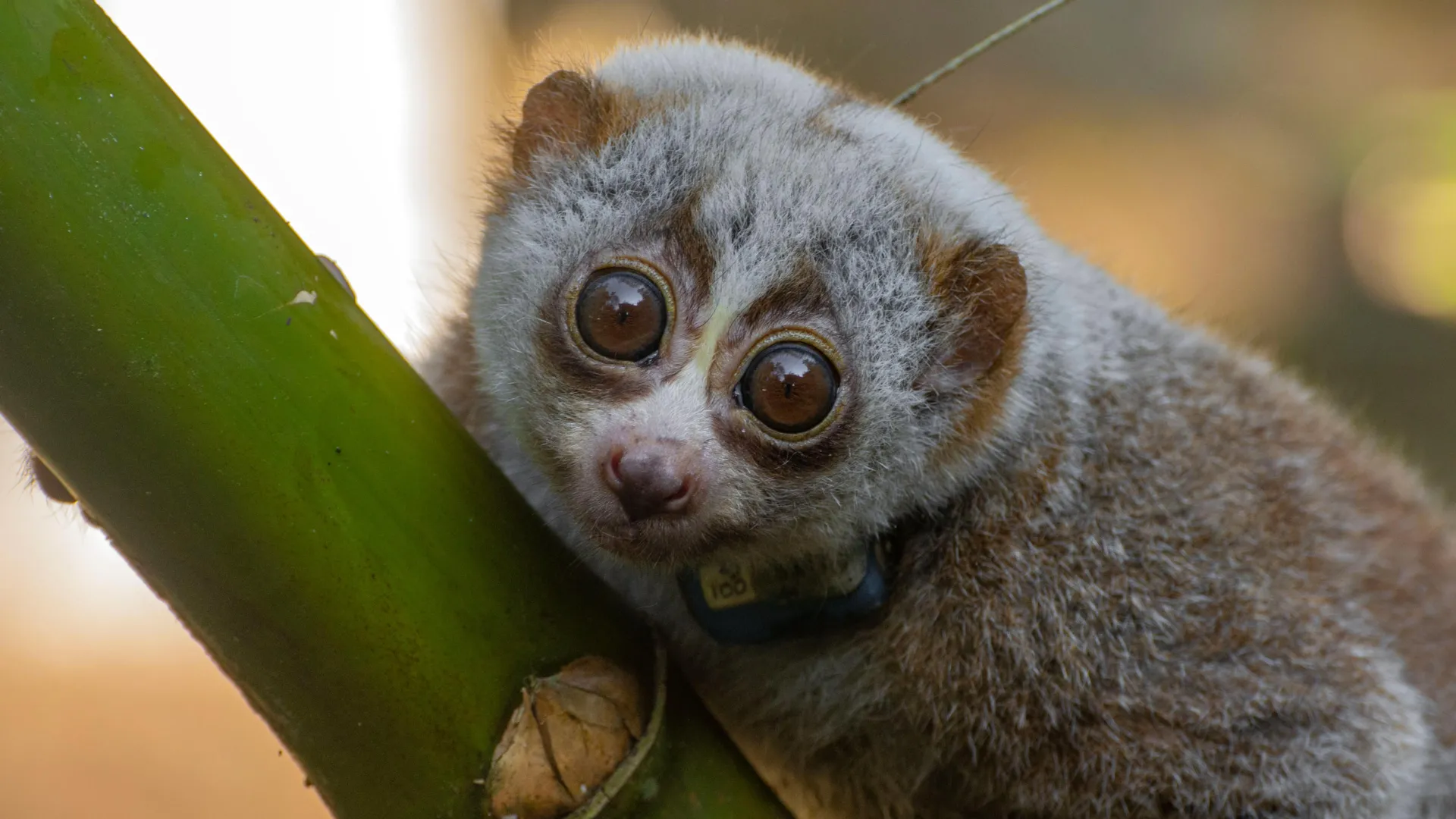
In some situations, animals released after time in captivity face serious risks, and the wild can become what researchers describe as a "death trap." This alarming conclusion stems from a recent investigation into the fate of Bengal slow lorises in Bangladesh, revealing critical flaws in current wildlife release protocols and highlighting the urgent need for a re-evaluation of conservation strategies for certain species.
The detailed findings, published in the esteemed journal Global Ecology and Conservation, present a stark picture of the challenges faced by rescued primates. The research, a collaborative effort spearheaded by primatologist Professor Anna Nekaris OBE of Anglia Ruskin University, alongside partners from the conservation group Plumploris e.V. and the University of Western Australia, meticulously tracked Bengal slow lorises (scientific name: Nycticebus bengalensis) following their release into designated natural habitats in Bangladesh. Their work casts a critical light on the often-unmonitored outcomes of wildlife reintroduction, particularly for species whose complex social structures and territorial behaviors are not fully accounted for.
The Perilous Journey Back: Tracking Slow Loris Survival
The study focused on a group of nine Bengal slow lorises, each fitted with advanced radio collars to enable precise tracking of their movements and survival rates after being released into a national park in northeastern Bangladesh. This particular park had historically been utilized for similar wildlife release initiatives, making it an ideal, albeit ultimately tragic, site for assessing the efficacy of such programs.
The results were profoundly disturbing, painting a grim reality for the released animals. Out of the nine lorises, a mere two survived their return to the forest environment. The mortality rate was shockingly rapid for many; three individuals perished within a mere 10 days of their release, while an additional four succumbed within six months. Researchers were able to recover four of the seven deceased animals, and the post-mortem examinations revealed a consistent and alarming cause of death: evidence of fatal encounters with other slow lorises. The findings unequivocally pointed towards violent territorial conflicts as the primary cause of death for the majority of the released individuals.
Slow Lorises: Endangered Charms and Deadly Defenses
Slow lorises, renowned for their distinctive large eyes and seemingly gentle facial expressions, possess a captivating allure that has, paradoxically, become their undoing. These very features have made them highly coveted in the illegal wildlife trade, driving them to rank among the most heavily trafficked primates globally. The demand for these nocturnal creatures as exotic pets, coupled with their exploitation in traditional medicine and for tourist photo opportunities, fuels a pervasive black market that spans across Southeast Asia and beyond.
All slow loris species are currently listed under varying degrees of threat by the International Union for Conservation of Nature (IUCN), ranging from Critically Endangered to Endangered or Vulnerable. This precarious status means they are frequently subjects of rescue operations from illegal trade, followed by subsequent release into natural habitats as part of broader conservation efforts aimed at bolstering dwindling wild populations. However, the new research profoundly questions the uncritical application of such "rescue and release" programs, especially without a comprehensive understanding of the species’ intrinsic biology and the ecological dynamics of the release sites.
Understanding the Slow Loris: Territoriality and Venom
The inherent biology and behavior of slow lorises play a crucial role in understanding the study’s tragic outcomes. These primates are not merely gentle creatures; they are fiercely territorial animals. Each loris typically maintains a distinct home range, which they actively defend against intruders. This territoriality is particularly pronounced in areas with high population densities or limited resources.
Adding another layer of complexity to their defense mechanisms, slow lorises hold the unique distinction of being the only venomous primates in the world. Their venom is produced by a gland on their arm and is activated when mixed with saliva. This toxic cocktail is then delivered through specialized comb-like teeth, capable of inflicting a painful and often debilitating bite. The venom can cause anaphylactic shock in humans and is potent enough to deter predators and, as the study tragically demonstrated, incapacitate or kill rival lorises. The recovered bodies of the deceased animals in the study bore unmistakable bite wounds on the head, face, and digits – classic indicators of deadly territorial clashes, underscoring the lethal potential of conspecific aggression.
The Impact of Captivity and Release Dynamics
The research further elucidated a critical correlation: animals held in captivity for longer durations exhibited significantly reduced survival times post-release. This suggests that prolonged periods in human care may diminish their natural survival instincts, territorial awareness, or ability to navigate complex social interactions in the wild. Moreover, the released lorises were observed to move more extensively and display heightened alertness compared to their wild counterparts. While increased movement might initially seem beneficial for exploration, in this context, it likely indicated a struggle to find suitable, undefended territories. The two surviving lorises, notably, traversed larger areas than those that perished, a pattern suggesting that their survival hinged on their capacity to successfully abandon established territories and thereby evade potentially fatal confrontations with resident loris populations. This highlights the critical need for pre-release acclimatization and assessment of an individual animal’s readiness for wild conditions.
The Broader Context of Wildlife Reintroduction
Wildlife reintroduction is a cornerstone of modern conservation, aimed at restoring populations of threatened species to their native ranges. Programs involving large, charismatic animals, such as big cats or rhinos, typically receive substantial funding and intensive post-release monitoring, often involving satellite tracking and dedicated field teams. This meticulous oversight allows researchers to learn from each release, adjust strategies, and intervene if necessary.
However, the reality for many smaller, less charismatic species is vastly different. Such animals often receive minimal or no post-release monitoring due to resource constraints or a prevailing assumption that their release is inherently successful. This critical gap in knowledge means that the actual outcomes of countless release programs for smaller species remain largely unknown, masking potential failures and preventing the refinement of crucial conservation techniques. The slow loris study serves as a potent reminder that "release" does not automatically equate to "success," particularly when vital ecological and behavioral factors are overlooked.
Expert Perspectives and Calls for a Paradigm Shift
Professor Anna Nekaris OBE, Senior Author of the study and Professor of Ecology, Conservation and Environment at Anglia Ruskin University, as well as the head of the Little Fireface Project, articulated the gravity of the findings. "It’s assumed that returning confiscated or rescued animals to the wild is always a positive conservation story," Professor Nekaris stated. "Our research shows that for highly territorial species like slow lorises, releasing them into areas that are already densely populated can be a death trap."
She further elaborated on the societal pressures influencing these practices: "Many rescued endangered species are often released because the public expects it, but for animals such as the Bengal slow loris, this is not always the best course of action. Without fully understanding the animal’s behaviour, its time spent in captivity and the density of resident populations at the release site, reintroductions may do more harm than good." Her comments underscore the ethical dilemma faced by conservationists: balancing public expectations with the welfare and survival prospects of individual animals and the overall health of wild populations.
Hassan Al-Razi, the lead author of the study and team leader of Plumploris e.V. Bangladesh, highlighted the regional context of the problem. "Rescue and release have become an increasingly common practice in Bangladesh. Many wild animals, including slow lorises, are rescued and subsequently released back into the wild," Al-Razi explained. "However, in many cases, these releases are conducted inappropriately. For forest-dwelling species, release sites are often selected based on logistical convenience rather than ecological suitability. As a result, certain forests have effectively become dumping grounds for rescued animals and are no longer appropriate release sites." Al-Razi’s observations point to systemic issues in how release sites are chosen, often prioritizing ease of access over rigorous ecological assessment, leading to oversaturation and increased inter-species conflict. He warned, "Although our research has focused on the Bengal slow loris and demonstrated the consequences of such practices, we believe similar patterns likely affect many other species."
Implications for Global Conservation Policy and Practice
The findings of this study carry profound implications for global wildlife conservation, particularly concerning the estimated tens of thousands of animals confiscated annually from the illegal wildlife trade. It urges a critical re-evaluation of standard operating procedures for rescue and release programs worldwide.
Key areas for reform include:
- Pre-release Assessment: Detailed habitat assessments are paramount. This involves not only evaluating food availability and predator presence but, crucially, assessing the existing density of resident populations of the same species. Releasing animals into already saturated territories is an almost guaranteed recipe for conflict and failure.
- Individual Animal Suitability: The physical and behavioral condition of each animal must be thoroughly evaluated. Animals held in captivity for extended periods may require specialized rehabilitation to re-acquire essential survival skills, including foraging, predator avoidance, and navigating social hierarchies. This might involve gradual acclimatization to natural environments in large enclosures before full release.
- Tailored Rehabilitation Guidelines: "One-size-fits-all" approaches to rehabilitation are insufficient. Species-specific guidelines, developed through rigorous research into their ecology, behavior, and social structures, are essential. For highly territorial species like slow lorises, this might mean identifying suitable, low-density release sites or even considering alternative long-term care solutions if truly appropriate wild habitats are unavailable.
- Long-Term Monitoring: The study underscores the critical need for sustained post-release monitoring, even for smaller species. While radio collars might be expensive, the data they provide is invaluable for understanding survival rates, dispersal patterns, and causes of mortality. Without this data, conservation efforts risk operating in a vacuum, making costly mistakes repeatedly. Investing in monitoring technologies and trained personnel is not an accessory but a necessity.
- Policy and Funding: Governments and international conservation bodies need to revise policies to mandate comprehensive pre-release assessments and post-release monitoring. Funding mechanisms must be adjusted to support these critical stages of reintroduction programs, acknowledging that the act of release is merely one step in a much longer and more complex process.
- Public Education: Public perception and pressure often drive release efforts. Education campaigns are vital to inform the public about the complexities and potential pitfalls of reintroduction, fostering a more nuanced understanding of conservation challenges and encouraging support for scientifically sound, albeit sometimes less emotionally satisfying, strategies.
The Bengal slow loris study serves as a powerful, albeit somber, case study highlighting the ethical and practical challenges of wildlife reintroduction. It is a clarion call for the conservation community to move beyond good intentions and embrace a more scientifically rigorous, data-driven approach to returning rescued animals to the wild. Only through careful planning, meticulous assessment, and dedicated long-term monitoring can we truly ensure that our efforts to save endangered species do not inadvertently lead them into a "death trap." The fate of countless other species, from various primates to pangolins and exotic birds, all frequently caught in the illegal wildlife trade and subsequently released, may well hinge on how effectively these lessons are learned and applied.
