
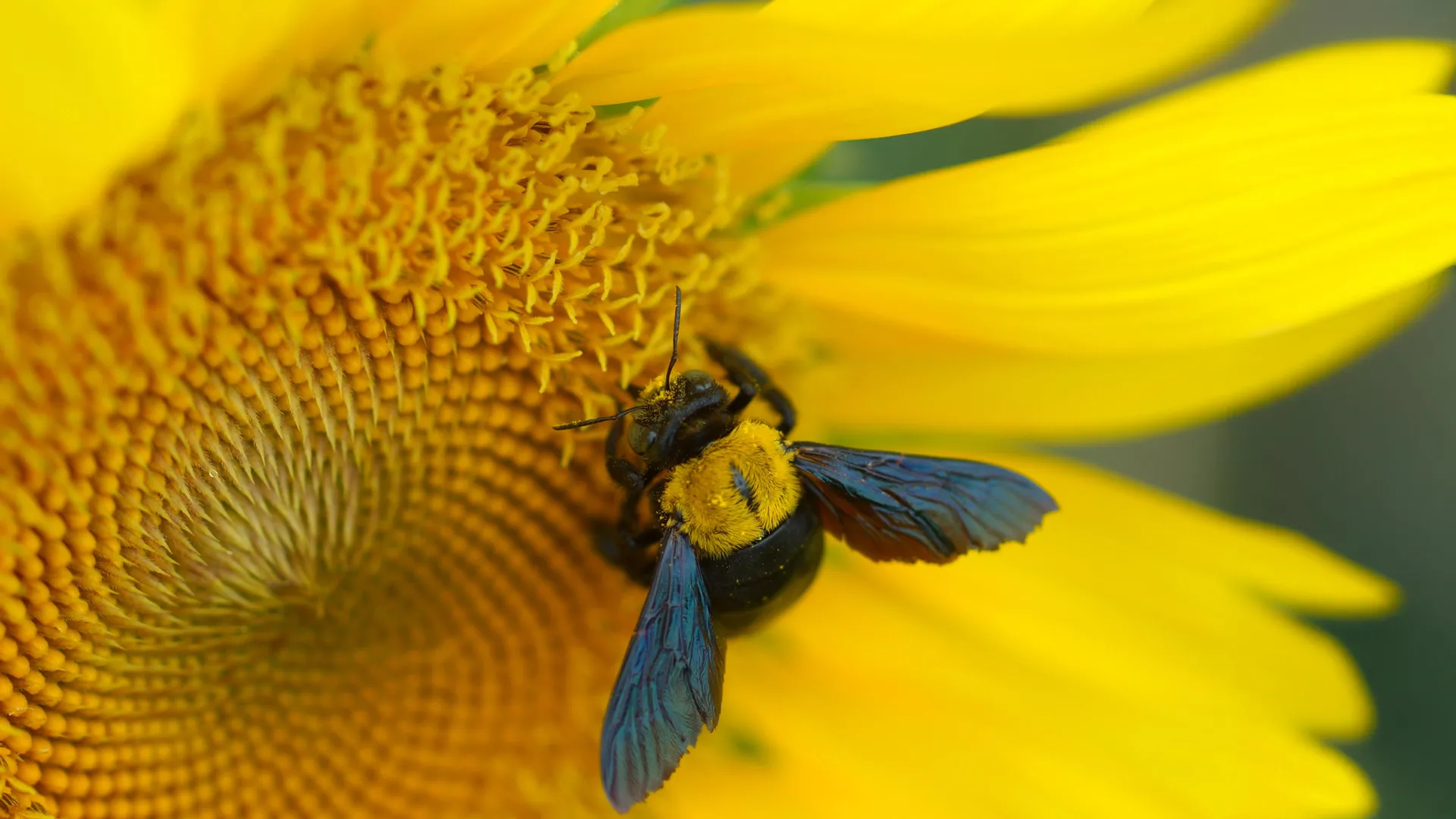
New research published in Nature Communications has cast a critical spotlight on the varied vulnerabilities of Australia’s diverse native bee populations to the escalating impacts of climate change, specifically rising temperatures. The landmark study suggests that native bee species constructing their nests within plant stems are confronting the most immediate and significant threat from increasing heat, a direct consequence of global warming. In stark contrast, their counterparts that burrow underground appear to possess a markedly superior capacity to evade dangerously high temperatures, positioning them as better equipped to navigate a warming planet. This finding underscores the complex and often nuanced ways in which climate change can differentially impact biodiversity, even within closely related groups of organisms, hinging critically on their specific ecological traits and behaviours.
The collaborative investigation, spearheaded by a consortium of leading Australian academic institutions including Macquarie University, The University of Sydney, La Trobe University, Flinders University, the University of Wollongong, Adelaide University, and The University of Queensland, meticulously examined the heat tolerance across 95 distinct native bee species. The geographical scope of the study was extensive, encompassing eastern mainland Australia from its tropical northern reaches down to its cooler southern climes, thereby capturing a broad spectrum of climatic zones and associated bee adaptations. This comprehensive approach allowed researchers to not only map the evolutionary trajectory of heat tolerance among different bee species but also to deliver a robust assessment of their relative susceptibility to a future characterised by increasingly higher ambient temperatures. The study’s findings provide crucial insights for conservation efforts, highlighting the urgent need for targeted strategies to protect the most vulnerable pollinator groups.
The Unfolding Climate Crisis and Its Impact on Pollinators
The Earth’s climate system is undergoing profound changes, with global average temperatures already having risen by approximately 1.1 to 1.2 degrees Celsius above pre-industrial levels. This warming trend, predominantly driven by anthropogenic greenhouse gas emissions, is manifesting in more frequent and intense heatwaves, altered rainfall patterns, and other extreme weather events. For ectothermic organisms like insects, whose body temperatures are largely dictated by their external environment, even slight shifts in temperature can have profound physiological consequences. Bees, as vital components of both natural and agricultural ecosystems, are particularly sensitive to these changes. Their life cycles, from foraging activity and reproduction to larval development and overwintering, are intricately linked to temperature cues. Disruptions to these thermal regimes can lead to reduced foraging efficiency, impaired reproduction, altered emergence patterns, and increased mortality, ultimately threatening population viability.
Globally, insect populations are facing significant declines, a phenomenon often referred to as the "insect apocalypse," driven by a confluence of factors including habitat loss, pesticide use, disease, and climate change. Among insects, pollinators like bees are of paramount concern due given their indispensable role in maintaining biodiversity and supporting food security. Australia, a continent already known for its extreme climate variability, is projected to experience even more pronounced warming and an increase in the frequency and intensity of heatwaves in the coming decades, according to reports from the Intergovernmental Panel on Climate Change (IPCC) and national scientific bodies like the CSIRO. These projections lend an urgent context to the current study’s findings, underscoring the immediate relevance of understanding how native bees will cope with these unprecedented environmental shifts.
Nesting Habits: A Decisive Factor in Heat Exposure
Australia boasts an extraordinary diversity of approximately 1,700 native bee species, each with unique ecological niches and behaviours. A fundamental aspect of their life history is their nesting strategy, which broadly categorises them into three main groups. A significant proportion of native bees, such as various species within the Lasioglossum or Amegilla genera (commonly known as mining bees or blue-banded bees), construct intricate burrows deep within the ground. Another group utilises pre-existing cavities in wood, ranging from hollows in standing trees and fallen branches to abandoned beetle galleries. Finally, a substantial number of species, including some resin bees (Megachile) and leafcutter bees (Megachile), exhibit a preference for nesting inside the hollowed-out stems of plants or small, pre-existing holes in twigs. This study rigorously demonstrated that these distinct nesting choices are not merely incidental preferences but are, in fact, critical determinants of a bee’s thermal environment and, consequently, its ability to withstand escalating heat.
Dr. Carmen da Silva, lead author of the study and a Research Fellow in the Pollinator Futures Research Centre at Macquarie University in Sydney, articulated the core distinction: "Bees that nest underground can hide from extreme heat – as a result, they don’t experience temperatures as high as those that live above ground, particularly species that live in thin plant stems that offer very little insulation from the heat outside." Her remarks highlight the crucial role of thermal buffering provided by subterranean environments. Soil acts as an excellent insulator, maintaining more stable temperatures below the surface compared to the fluctuating and often extreme temperatures experienced above ground. Underground nests can thus offer a refuge from the scorching surface heat, allowing larvae and pupae to develop in a more benign microclimate.
Conversely, Dr. da Silva emphasised the precarious position of stem-nesting species. "Stem-nesting species appear to have the lowest capacity to escape unfavourable environmental temperatures and are likely to be the most impacted by anthropogenic climate change in the near term." The slender nature of plant stems provides minimal insulation against intense solar radiation and high ambient air temperatures. These narrow, often exposed cavities can quickly heat up, effectively becoming miniature ovens that trap heat, exposing developing bees to potentially lethal conditions. Unlike ground-nesting bees, which can burrow deeper to escape heat, or wood-cavity nesters that might benefit from the greater thermal mass of larger wooden structures, stem-nesting bees have limited options for thermoregulation within their chosen abodes. This intrinsic lack of thermal refuge directly translates into a heightened vulnerability to the hotter, more frequent heatwaves that are becoming characteristic of Australia’s climate. The findings thus unequivocally indicate that a bee’s nesting location is not just a habit but a fundamental determinant of its resilience to a warming climate, serving as a critical indicator for predicting species vulnerability.
Tropical Bees: On the Edge of Thermal Tolerance
Beyond nesting habits, the research also uncovered a significant geographical pattern in bee vulnerability, specifically linking it to proximity to the equator. Bee species inhabiting regions closer to the equator, particularly those in Australia’s tropical north, were identified as facing the highest overall risk from climate change. This finding might seem counterintuitive at first glance, given that tropical species are often perceived as being inherently more heat-adapted. However, as the study elucidates, the issue is not merely about absolute heat tolerance but about the margin of safety that species possess relative to their existing environmental conditions.
Dr. Vanessa Kellermann, a Senior Lecturer in the Department of Ecology, Plant and Animal Sciences at La Trobe University and a senior author of the study, underscored this complexity. "Predicting which species will be vulnerable to climate change is one of the biggest challenges in ecology," she stated. Dr. Kellermann elaborated, "We found bee species with the highest heat tolerance were not necessarily the safest from warming, because many of them already live in extremely hot environments." This crucial insight points to the concept of "thermal safety margins." Tropical bees, while capable of withstanding high temperatures, are often already operating at or very near their physiological thermal limits. In other words, their environment is already so hot that even a marginal increase in temperature, such as the 1-2 degree Celsius rise projected for many tropical regions, can push them beyond their capacity to cope.
For these species, there is very little "wiggle room" left to adapt to additional warming. This makes them exceptionally susceptible to even slight temperature increases and more frequent heatwaves, potentially leading to reduced reproductive success, localised population declines, or even extinctions. The implication is that a seemingly robust adaptation to heat in tropical environments can, paradoxically, become a liability in the face of rapid, anthropogenic climate change, leaving these species with fewer avenues for physiological or behavioural adjustment. This geographical vulnerability adds another layer of complexity to conservation planning, suggesting that blanket strategies may not be effective and that region-specific approaches are essential.
Why Bee Survival Matters: Ecological and Economic Imperatives
The implications of these findings extend far beyond the academic realm, resonating deeply with critical ecological and economic concerns. As Dr. da Silva eloquently put it, "Bees are critical in ecosystems all over the world because of their role as pollinators, and they’re under threat from warming and drying climates." Their decline is not merely an aesthetic loss but a direct threat to the intricate web of life that sustains our planet. In natural ecosystems, bees are indispensable for the reproduction of countless native plant species, many of which form the foundational elements of entire habitats. By facilitating the pollination of these plants, bees ensure seed production, genetic diversity, and the overall health and resilience of natural flora. This, in turn, supports a vast array of other organisms, from herbivores that feed on the plants to predators that consume the herbivores, demonstrating their fundamental role in maintaining food webs and biodiversity.
The economic importance of bees is equally profound, particularly in the agricultural sector. Globally, an estimated 75% of leading food crops depend, at least in part, on animal pollination, contributing billions of dollars annually to the global economy. In Australia, native bees play a crucial, often underestimated, role in crop production, complementing and sometimes even surpassing the contributions of the introduced European honeybee (Apis mellifera), especially in specific native agricultural systems. Dr. da Silva highlighted their critical contribution: "Bees sustain native ecosystems and play a crucial role in agricultural crop production – tropical native bees are vital pollinators for crops like macadamia nuts, avocados, mangos, and lychees." For many Australian native crops, indigenous bee species are the most efficient and sometimes the sole pollinators. For instance, some macadamia varieties rely heavily on native stingless bees (Tetragonula) and other native bee species for optimal fruit set. The potential decline of these species due to climate change could therefore have severe repercussions for Australia’s agricultural output, impacting farmer livelihoods, export markets, and domestic food security. The economic value of native bee pollination services in Australia alone is estimated to be in the hundreds of millions of dollars annually, underscoring the tangible financial risks associated with their vulnerability.
Unravelling the Mysteries of Native Bee Behaviour: A Call for Further Research
Despite Australia’s rich native bee diversity, the researchers acknowledge that significant gaps in knowledge persist regarding the behaviour, ecology, and distribution of many species. This lack of fundamental understanding complicates conservation efforts and makes studies like the one published in Nature Communications even more vital. Dr. Ros Gloag, a co-senior author and Senior Lecturer in Evolutionary Biology in the School of Life and Environmental Sciences at the University of Sydney, emphasised this point: "We still know so little about most of Australia’s amazing native bees." She added, "This study helps us recognise that having a better understanding of native bee behaviour is key to identifying the greatest threats to their wild populations."
Understanding the nuances of nesting site selection, foraging preferences, reproductive cycles, and thermal physiology for each bee group is paramount. This foundational knowledge allows scientists to accurately predict how different species will respond to environmental stressors and to design effective, species-specific conservation interventions. Without it, conservation efforts risk being broad-brush and potentially ineffective for the most vulnerable species. The study serves as a powerful call to action for increased investment in basic research on Australia’s native pollinators, advocating for more detailed ecological surveys, behavioural observations, and physiological studies.
Broader Implications and Pathways for Conservation
The findings of this multi-institutional study carry significant implications for conservation policy and land management practices, particularly in the face of accelerating climate change. Recognising the heightened vulnerability of stem-nesting bees and tropical species necessitates a re-evaluation of current conservation strategies.
Firstly, habitat preservation and restoration must be prioritised, with a specific focus on maintaining and enhancing the availability of suitable nesting substrates. For stem-nesting bees, this means protecting areas rich in pithy-stemmed plants, dead wood, and other vegetation that provides hollow or easily excavated stems. Land managers might consider leaving certain types of plant debris or creating "bee hotels" with appropriate stem diameters, though these must be carefully managed to avoid disease transmission. For ground-nesting bees, undisturbed patches of bare soil or sparsely vegetated areas are crucial.
Secondly, the concept of creating "thermal refugia" becomes increasingly important. This involves identifying and protecting microhabitats that offer cooler conditions during heatwaves. This could include areas with dense canopy cover, north-facing slopes, or patches of vegetation that provide shade and reduce ground temperatures. Such refugia could be critical for bees to survive extreme heat events, allowing them to retreat from high temperatures and re-emerge when conditions are more favourable.
Thirdly, reducing other anthropogenic stressors is paramount. The synergistic effects of habitat loss, pesticide use, and climate change can amplify the negative impacts on bee populations. Implementing integrated pest management strategies that minimise pesticide exposure, particularly neonicotinoids, and protecting natural habitats from urbanisation and agricultural expansion will bolster bee resilience against climate-induced stresses.
Fourthly, the insights regarding tropical bees highlight the urgent need for climate change mitigation efforts. Reducing global greenhouse gas emissions is the overarching solution to stabilising temperatures and preventing these already heat-stressed populations from being pushed beyond their limits. Adaptation strategies alone may not suffice for species living at the very edge of their thermal tolerance.
Finally, public awareness and citizen science initiatives can play a crucial role. Educating the public about the diversity and importance of native bees, and encouraging practices like planting native flowers, avoiding pesticides, and providing nesting resources in gardens, can contribute to local conservation efforts. Citizen science projects can also help researchers gather valuable data on bee distribution and phenology, filling critical knowledge gaps.
The study by Dr. da Silva, Dr. Kellermann, Dr. Gloag, and their colleagues provides a stark warning but also a clear directive. By understanding the intricate connections between nesting behaviour, geographical location, and thermal tolerance, scientists and policymakers can develop more effective, targeted conservation strategies to safeguard Australia’s invaluable native bee populations. The future of natural ecosystems and agricultural productivity in a warming world hinges significantly on our collective ability to respond to these urgent scientific insights. The clock is ticking, and the immediate future of countless native bee species depends on swift and informed action.
