
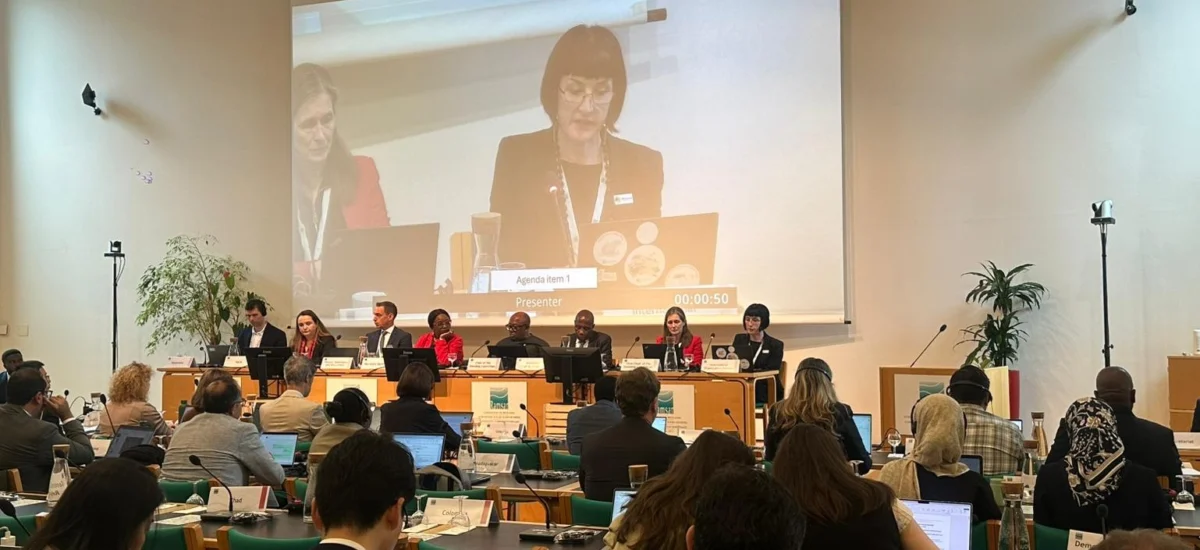
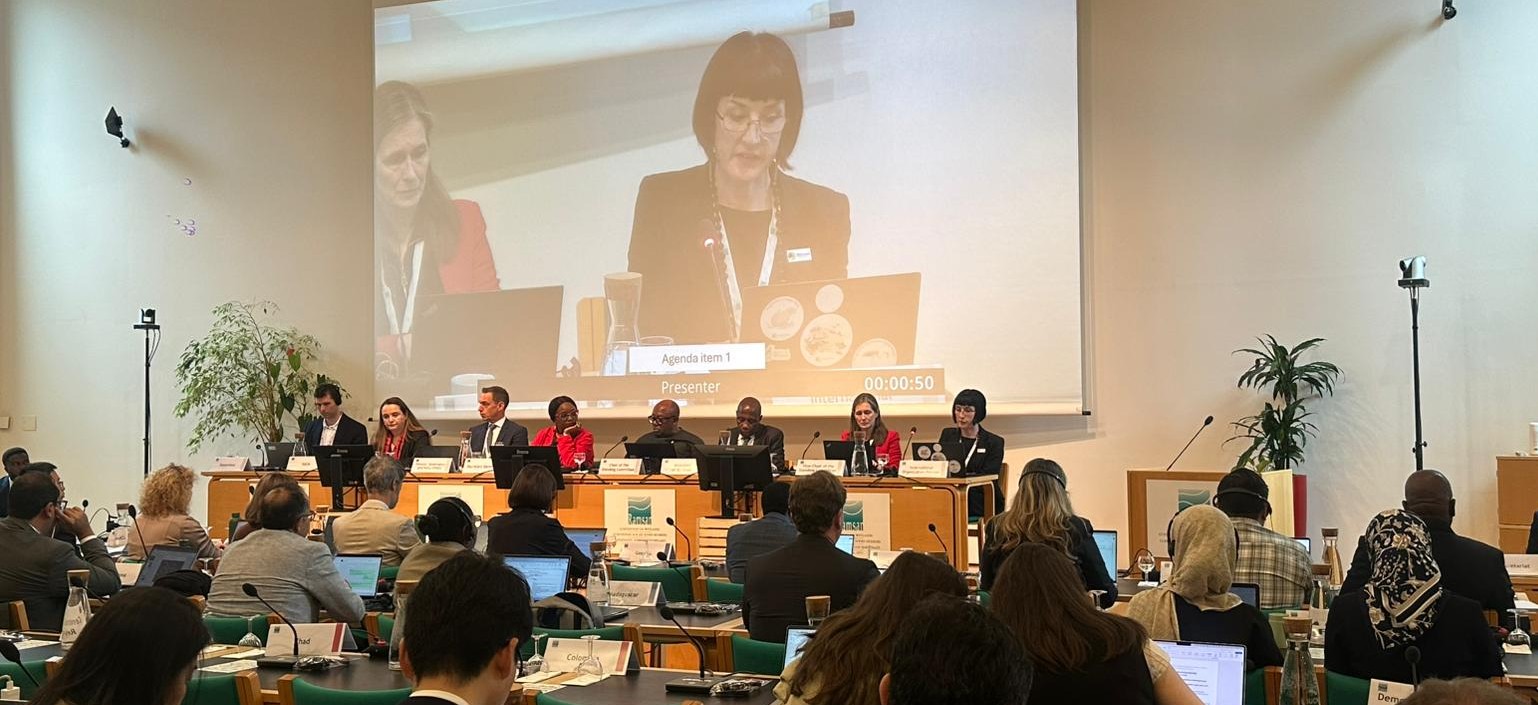
The 67th meeting of the Standing Committee of the Convention on Wetlands (Ramsar Convention) commenced on May 5, 2026, with a powerful opening statement delivered by Laura MacKenzie, Senior Advocacy Officer for Wetlands International, representing the six International Organisation Partners: Birdlife International, IUCN, IWMI, Wetlands International, WWF, and WWT. The statement underscored the critical juncture at which global wetland conservation stands, emphasizing the need for accelerated action following the success of COP15 in Victoria Falls and looking ahead to COP16 in Panama. The focus for the coming triennium, as articulated by MacKenzie, is on the robust implementation of the Convention’s newly adopted 5th Strategic Plan, with a particular emphasis on three overarching priorities: addressing the root causes of wetland loss, reconfiguring human-wetland relationships, and integrating wetlands into the frameworks of other Multilateral Environmental Agreements (MEAs).
A New Era for Wetlands: Building on COP15 Success
The recent COP15, held in Victoria Falls, Zimbabwe, marked a significant turning point for global wetland conservation. The adoption of the 5th Strategic Plan, alongside numerous resolutions covering critical areas such as flyways, freshwater ecosystems, Other Effective Area-based Conservation Measures (OECMs), and crucial finance mechanisms, has set an ambitious agenda. The Standing Committee meeting serves as a vital platform to translate these commitments into tangible actions on the ground.
Wetlands International, through its extensive global network, highlighted that the momentum generated by COP15 must now be channeled into effective implementation. The organization, representing a formidable coalition of conservation bodies, expressed gratitude to Zimbabwe for its leadership as COP president and extended congratulations to Panama, the designated host of COP16, signaling a continued global commitment to the Ramsar Convention’s objectives.
Priority One: Tackling the Financial Drivers of Wetland Degradation
The most pressing concern raised by the International Organisation Partners is the urgent need to address the fundamental drivers of wetland loss and degradation, particularly within financial and economic decision-making processes. MacKenzie’s statement drew attention to the alarming trend highlighted in the Global Wetland Outlook, which indicates a concerning increase in nature-negative public and private financial flows. This assertion is starkly supported by the UNEP State of Finance for Nature report, which revealed a staggering imbalance: for every dollar invested in nature protection, thirty dollars are spent on its destruction.
This financial disparity represents a critical barrier to achieving wetland conservation goals. The International Organisation Partners emphasized that the current triennium demands a concentrated effort on reducing and redirecting subsidies and financial flows that actively harm wetlands. This includes scrutinizing government spending, private sector investments, and international development aid to ensure they are not inadvertently contributing to wetland decline.
The IPBES assessment on business and biodiversity serves as a crucial reminder of the indispensable role governments play in shaping these financial landscapes. Policy, legal, and regulatory frameworks are powerful instruments that can either incentivize or penalize actions impacting wetlands. Fiscal policies, such as taxation and subsidies, can be strategically aligned with biodiversity objectives, encouraging sustainable practices and penalizing environmentally damaging ones.
Furthermore, the statement stressed the imperative of rapidly incorporating the true economic value of wetlands into mainstream economic policy. The concept of "ecosystem services," which quantifies the benefits nature provides to humanity, remains underutilized in many economic models. Wetlands, with their multifaceted contributions to water purification, flood control, carbon sequestration, and biodiversity support, offer substantial economic value that is often overlooked. The current practice of undermining wetland safeguards in the name of development, often driven by short-term economic gains, is economically shortsighted and ecologically devastating.
Illustrative examples were provided to underscore this point. The recent weakening of a law designed to protect glacier areas, a move that could exacerbate the threats posed by lithium mining to high-altitude wetlands and water security in the High Andes, was cited as a case in point. Similarly, the proposed dilution of the EU Water Framework Directive has raised profound concerns among environmental stakeholders, highlighting the vulnerability of vital freshwater ecosystems to regulatory rollbacks. These instances demonstrate how policy decisions, often perceived as narrowly focused on specific economic sectors, can have far-reaching negative consequences for wetland health and the services they provide.
Priority Two: Redefining Humanity’s Relationship with Wetlands
The second critical priority identified is the imperative to reconfigure human-wetland relationships. This entails a fundamental shift in how societies perceive, interact with, and value these vital ecosystems. The statement welcomed the adoption of several IUCN resolutions concerning the rights of nature, including the rights of rivers, which were adopted in October by governments, Indigenous Peoples’ Organizations, and NGOs.
The International Organisation Partners expressed keen interest in exploring how "rights of wetlands" approaches can catalyze transformative change. This concept, which recognizes the inherent value and right to exist of wetlands, is gaining traction as a powerful tool for conservation. The IPBES framework has identified transformative change as essential for achieving global sustainability goals, and the Ramsar Strategic Plan itself references this notion. By empowering wetlands with legal standing or recognizing their intrinsic rights, it becomes more challenging to justify their destruction or degradation, fostering a more respectful and sustainable coexistence.
This reorientation of human-wetland relationships is not merely an abstract ideal but a practical necessity. It requires fostering a deeper understanding of wetland functions and values among the general public, policymakers, and economic actors. Educational initiatives, community engagement programs, and the integration of indigenous knowledge are all crucial components in building a new paradigm where wetlands are not viewed as mere obstacles to development but as indispensable partners in human well-being and ecological resilience.
Priority Three: Wetlands as Essential Connectors Across Global Agendas
The third key priority emphasizes the vital role of wetlands in delivering the objectives of other MEAs and their positioning as critical watery connectors across various international environmental agendas. This includes their central role in the outcomes of the three Rio Conventions (Convention on Biological Diversity, United Nations Framework Convention on Climate Change, and United Nations Convention to Combat Desertification), as well as the UN Water Conference. This integration is further supported by Resolution XV.4 on synergies.
The UN SDG 6 Synthesis Report, which highlights water as a "Super Connector" across all Sustainable Development Goals (SDGs) and international conventions, underscores the pivotal position of wetlands. As fundamental components of the global water cycle, wetlands are intrinsically linked to water security, climate regulation, food production, and human health. Recognizing and leveraging these connections is essential for achieving broader sustainability objectives.
The year 2026 has already witnessed positive developments. Parties to the Convention on Migratory Species (CMS) adopted decisions pertaining to flyways, connectivity, and migratory wetland species, acknowledging the transboundary nature of these ecosystems and the species they support. The Pantanal Declaration, a significant regional initiative, championed the central role of wetlands not only for biodiversity but also for climate regulation, water security, and the livelihoods of local communities. These examples powerfully illustrate the importance of cross-border cooperation and decisive political leadership in safeguarding shared wetland resources.
Strengthening Monitoring and Reporting for Enhanced Action
Looking ahead, the International Organisation Partners stressed the critical need for strengthening coherence in monitoring and reporting systems. Accurate and consistent data are indispensable for tracking progress, identifying challenges, and informing adaptive management strategies. In this regard, the proposed indicator framework for the 5th Strategic Plan was warmly welcomed, and the Standing Committee was urged to adopt it. A robust framework will enable Contracting Parties to effectively measure their contributions to global wetland conservation targets.

Opportunities for Integrated Action Across Conventions
The upcoming COPs of other major environmental conventions present significant opportunities to advance wetland conservation. The UN Convention to Combat Desertification (UNCCD) COP17 in Mongolia offers a platform to accelerate action on freshwater ecosystems and peatlands, particularly by building on the incorporation of wetlands into land degradation neutrality targets and drought resilience plans.
At the Convention on Biological Diversity (CBD) COP17 in Armenia, there is a crucial opportunity to showcase how reversing wetland loss and degradation is fundamental to achieving the 2030 biodiversity targets. A global review highlighting the success stories and ongoing challenges in wetland conservation can inspire greater ambition and action.
The UNFCCC COP31 and the UN Water Conference are pivotal forums where discussions on water security, climate resilience, and mitigation must lead to a significant shift in investment priorities. The call is for a major reallocation of resources from "grey" infrastructure (e.g., concrete dams, canals) to "green and blue" infrastructure, which leverages natural systems like wetlands for climate adaptation and mitigation benefits.
The Power of Voluntary Initiatives and Scientific Outputs
Beyond governmental commitments, the International Organisation Partners highlighted the significant role of "whole of society" voluntary initiatives. Programs such as the Freshwater Challenge, as featured in Resolution XV.15, the Mangrove Breakthrough, and the Peatland Breakthrough, are crucial for mobilizing collective action and fostering innovation. Contracting Parties were warmly encouraged to participate in and support these initiatives, recognizing their potential to drive significant on-the-ground impact.
Finally, the exceptional value and importance of the Scientific and Technical Review Panel (STRP) outputs to the conservation and wise use of wetlands were acknowledged. The International Organisation Partners expressed their pleasure in contributing to many priority STRP tasks, including those related to GEOwetlands (earth observation for wetlands), the water cycle, transformative change pathways, and the upcoming Global Wetland Outlook focusing on cities. The STRP’s scientific rigor and technical guidance are instrumental in informing policy and practice, ensuring that conservation efforts are evidence-based and effective.
The statement concluded with an optimistic outlook, expressing the collective eagerness of the International Organisation Partners to collaborate with Contracting Parties, the Ramsar Secretariat, and a wide array of stakeholders. The shared commitment to advancing wetland conservation and wise use promises a productive week of deliberations and continued efforts towards achieving global wetland goals. The discussions at the Standing Committee meeting are anticipated to lay the groundwork for a more integrated, financially robust, and ecologically conscious approach to safeguarding these indispensable ecosystems for generations to come.
