
Sterling Hollman’s dedication to the natural world, particularly birds, began as a youthful curiosity and has blossomed into a significant commitment at the Rowe Sanctuary, a vital nexus for avian conservation along Nebraska’s Platte River. His journey, marked by an initial search for community service hours, has since transformed into a sustained engagement with birding, photography, and public education, illustrating the powerful impact of individual volunteerism on environmental stewardship. Hollman, now an integral part of the sanctuary’s volunteer team, guides visitors through the awe-inspiring spectacle of the Sandhill Crane migration, sharing his deep knowledge and enthusiasm for the natural world.
A Passion Takes Flight: Sterling Hollman’s Avian Odyssey
Sterling Hollman’s connection to birds traces back to a pivotal moment in his eighth-grade science class, where a module on Nebraska’s diverse avian population ignited an intense fascination. This foundational experience propelled him into an immersive study of ornithology, far beyond the confines of his classroom. His initial foray involved poring over the 752-page National Geographic Complete Birds of North America, a comprehensive tome that deepened his understanding and appreciation for the continent’s feathered inhabitants. This self-directed learning was swiftly followed by practical application, as he acquired a camera that same year, embarking on a photographic quest to document the birds he encountered in his everyday surroundings. This early period established the dual pillars of his passion: scientific understanding and visual appreciation.
Throughout high school, academic demands and athletic commitments necessitated a temporary reduction in his dedicated birding time. While his interest remained, active participation in birdwatching largely became an activity reserved for family vacations. This hiatus, however, proved to be merely a pause, not an end. His senior year marked a significant turning point, characterized by two concurrent developments that reignited his avian pursuits with renewed vigor. The first was his enrollment in a biology course at a local university, taught by an ornithology professor whose expertise and passion proved infectious. This academic exposure provided a structured framework for his existing knowledge and offered new avenues for exploration. Simultaneously, his search for consistent community service hours, a requirement for the National Honor Society, led him to the Iain Nicolson Audubon Center at Rowe Sanctuary. This convergence of academic stimulation and practical volunteer opportunity created a fertile ground for his passion to flourish once more.
The Rowe Sanctuary Connection: From Requirement to Lifelong Calling
Sterling Hollman’s initial contact with Rowe Sanctuary was purely pragmatic: a need to fulfill high school community service requirements. Dual-enrolled at a local university, he received a list of volunteer opportunities from its honors program, and Rowe Sanctuary, with its renowned birding focus, immediately caught his eye. Given his nascent love for birds and wildlife, he initiated contact. What began as a mandatory obligation swiftly transcended its original purpose. After accumulating the necessary hours, Hollman found himself unwilling to disengage. The unique environment of Rowe, coupled with the profound experience of witnessing one of the world’s most spectacular avian migrations, solidified his commitment. He continued to volunteer, transforming a temporary requirement into a sustained, heartfelt dedication.
The Iain Nicolson Audubon Center at Rowe Sanctuary, located near Kearney, Nebraska, plays a critical role in the conservation of the Platte River’s ecosystems, particularly as a vital stopover point for migratory birds. Established in 1974, the sanctuary is managed by Audubon Nebraska and encompasses over 2,000 acres of riverine habitat, wet meadows, and croplands. Its primary mission is to protect and restore the braided Platte River, which is indispensable for several species, most notably the Sandhill Crane. The sanctuary operates extensive public education programs, offering guided tours and educational experiences during the peak migration season. Volunteers like Sterling Hollman are the backbone of these efforts, facilitating visitor engagement and ensuring the smooth operation of educational programs.
The Grand Spectacle of the Platte River: Sandhill Cranes and Ecological Significance
The Platte River Valley in central Nebraska hosts one of the greatest wildlife spectacles on Earth: the annual spring migration of Sandhill Cranes. Each year, from late February to early April, an estimated 500,000 to 600,000 Sandhill Cranes—approximately 80% of the world’s population—converge along an 80-mile stretch of the river. These magnificent birds, undertaking an arduous journey from their wintering grounds in Texas, New Mexico, and northern Mexico to their breeding territories in Canada, Alaska, and Siberia, find the Platte River to be an irreplaceable refueling station. The river’s unique characteristics, specifically its wide, shallow, and braided channels, provide safe roosting sites that protect them from predators. Furthermore, the surrounding wet meadows and agricultural fields, particularly those with waste corn, offer an abundant and energy-rich food source crucial for building up fat reserves needed to complete their migratory flights and prepare for nesting.
The ecological significance of this migration cannot be overstated. The Sandhill Cranes’ presence supports a broader ecosystem, and their health is an indicator of the overall environmental well-being of the flyway. Beyond the cranes, the Platte River also supports millions of ducks and geese, as well as endangered species such as the Whooping Crane, Piping Plover, and Interior Least Tern. The conservation efforts at Rowe Sanctuary and other organizations along the Platte are therefore critical for the survival of a vast array of North American migratory birds. The event also holds significant cultural and economic importance for Nebraska, drawing tens of thousands of ecotourists, birdwatchers, and photographers from around the globe annually. These visitors contribute substantially to local economies through lodging, dining, and other services, highlighting the tangible benefits of preserving natural wonders.
Capturing Avian Beauty: The Art of Bird Photography
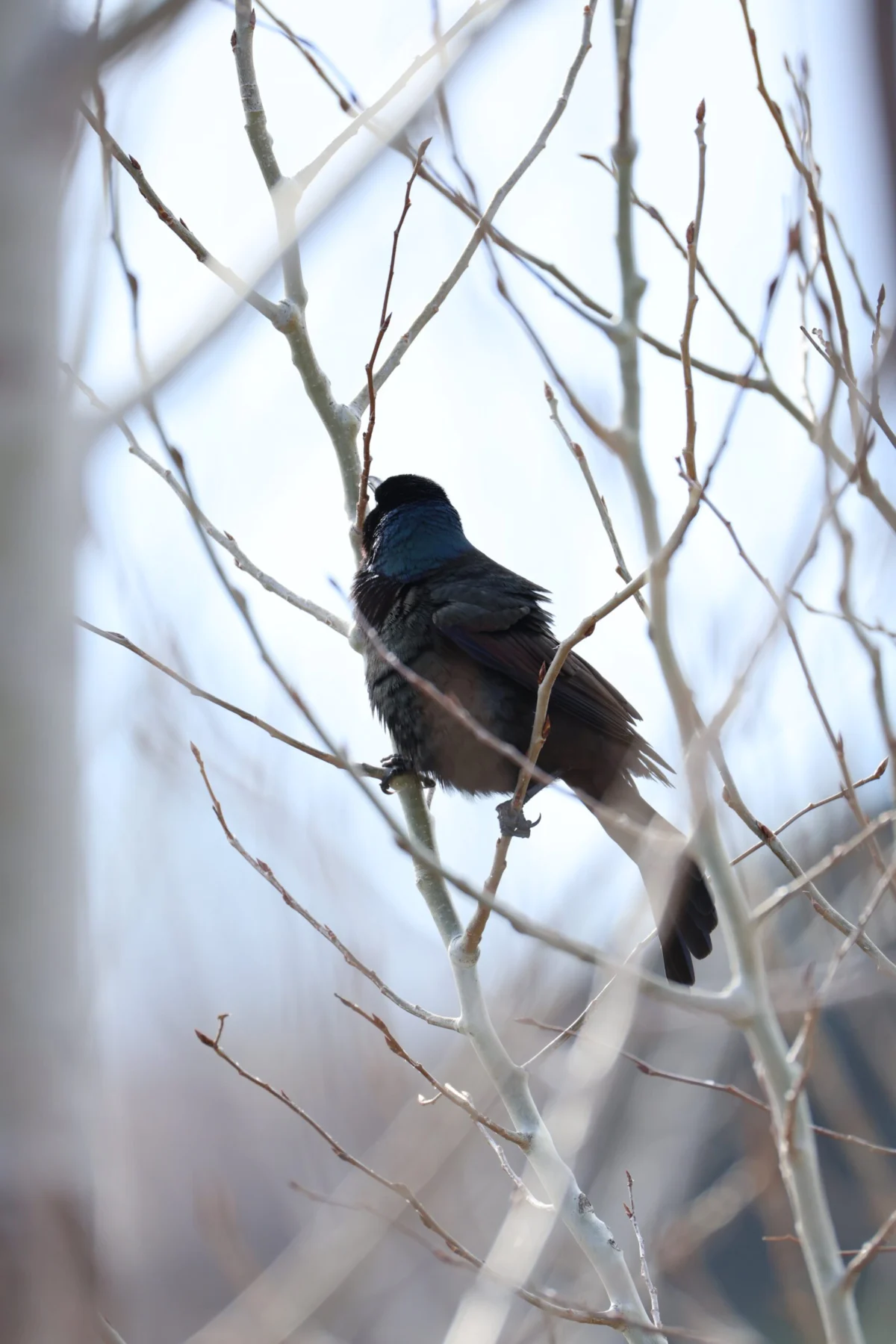
Sterling Hollman’s passion for birds extends deeply into the realm of photography, a medium through which he captures and shares the intricate beauty of avian life. With an extensive digital album containing over 1,200 bird photographs, selecting a single favorite image proves to be a formidable challenge. However, a recent experience provided a standout moment. Through an opportunity extended by his university’s ornithology professor, Hollman gained access to a high-quality camera. On a spontaneous impulse, he photographed a Common Grackle in his backyard. Upon reviewing the image, he was struck by the unexpected beauty revealed by the advanced optics and his photographic skill.
The photograph, far from being a mere record, illuminated the simple yet extraordinary features of a bird often overlooked or even dismissed as a nuisance species. The camera’s ability to render fine details and iridescent plumage brought forth a new appreciation for the grackle’s aesthetic qualities. This experience underscores a fundamental principle of bird photography: it not only documents species but also fosters a deeper connection and appreciation for the natural world, even for the most ubiquitous creatures. By pausing to observe and capture the essence of a common bird, Hollman found profound beauty, transforming a routine encounter into a moment of artistic revelation and renewed respect for biodiversity. This ability to find wonder in the ordinary is a hallmark of dedicated naturalists and photographers.
Community and Competition: The Nebraska Birding Bowl
Sterling Hollman’s engagement with the birding community extends beyond individual observation and photography to collaborative endeavors, notably his participation in the Nebraska Birding Bowl. This annual event, organized by the Nebraska Game and Parks Commission, promotes birdwatching as a recreational activity, fosters conservation awareness, and encourages citizen science through competitive bird identification. Teams traverse designated areas within Nebraska, striving to identify and record as many bird species as possible within a specified timeframe, typically 24 hours. The Birding Bowl serves as a platform for both seasoned experts and emerging enthusiasts to hone their skills, share knowledge, and contribute to valuable bird population data.
Hollman’s decision to join a team with Rowe Sanctuary Volunteer Coordinator Katie Moore, Rowe staff member Anne, and fellow volunteer Brian, was driven by a desire to experience birding through diverse perspectives. He articulated a clear appreciation for the varied strengths of his teammates: Brian’s extensive experience offered a learning opportunity, while Anne and Katie’s enthusiasm created an enjoyable and motivating environment. For Hollman, the Birding Bowl was more than just a competition; it was an invaluable chance to expand his knowledge, engage with fellow birders, and spend more time immersed in the field. Such events underscore the social dimension of birding, fostering camaraderie and a shared commitment to avian conservation, while also generating public interest in Nebraska’s rich birdlife.
Sharing the Wonder: Guiding Family Through the Migration
A particularly poignant moment in Sterling Hollman’s journey occurred during the most recent crane season, when he had the unique opportunity to guide his own family on a crane tour—on his birthday, no less. This personal milestone underscored his evolution from a curious student to a knowledgeable educator. His family, residing near the Platte River, shared a common local sentiment: an underappreciation for the monumental avian migration occurring in their own backyard. The sheer scale and wonder of the Sandhill Crane migration often go unnoticed by those who live in close proximity, accustomed to the seasonal presence of the birds without fully grasping the ecological significance or visual grandeur of the event.
Initially, Hollman’s family approached the invitation with a degree of amusement, perhaps viewing it as an indulgent interest of his. However, by the conclusion of the guided tour, their initial skepticism had dissolved into profound amazement. Witnessing hundreds of thousands of cranes descending upon the river, hearing their ancient calls echo across the landscape, and understanding the incredible distances they travel transformed their perception. They recognized, for the first time, the truly extraordinary nature of the migration and the privilege of living near such a global phenomenon. This experience highlights the critical role of local engagement and education in fostering appreciation for natural wonders, demonstrating how personal connections can bridge the gap between casual observation and deep understanding, turning local residents into advocates for conservation.
Looking Ahead: Continued Commitment to Conservation
As Sterling Hollman prepares for his next academic chapter, matriculating at the University of Lincoln, his commitment to conservation and Rowe Sanctuary remains unwavering. While his relocation will physically distance him from the sanctuary during future crane seasons, he has articulated clear intentions to return and contribute whenever feasible. This dedication underscores the profound impact that early volunteer experiences can have on shaping an individual’s long-term environmental ethos. His plans reflect a broader trend of young conservationists who, even amidst academic pursuits, seek ways to remain actively involved in causes they care deeply about.
Officials at Rowe Sanctuary and similar conservation organizations frequently emphasize the critical role of dedicated volunteers like Hollman. Their enthusiasm, willingness to learn, and direct engagement with the public are indispensable for fulfilling the sanctuary’s mission of conservation, education, and public outreach. Volunteers not only provide essential operational support but also act as crucial ambassadors, inspiring visitors and fostering a new generation of environmental stewards. Hollman’s journey—from a high school requirement to a guiding passion—serves as a compelling testament to the power of hands-on experience in cultivating lifelong commitment to the natural world. His future contributions, whether during peak crane season or other times, will undoubtedly continue to enrich the sanctuary’s efforts and inspire others to engage with the magnificent avian life of the Platte River Valley.
