
The intricate world of avian life, often glimpsed only superficially, is revealing deeper complexities through a convergence of traditional field observation, advanced technology, and renewed appreciation for cultural perspectives. From the focused hunt of a migratory raptor to the subtle shifts in species distribution driven by climate change, understanding birds in new ways is becoming an imperative for conservation in an era of escalating environmental challenges. This evolving approach to ornithology is not merely academic; it provides critical insights that inform conservation strategies, shape policy, and deepen humanity’s connection with the natural world.
The Osprey: A Case Study in Focused Observation
For many, the sight of an Osprey ( Pandion haliaetus ) is a familiar one, a majestic raptor soaring above coastlines, rivers, and lakes across six continents. Aptly nicknamed "fish hawks," these birds are master anglers, their presence a common thread in aquatic ecosystems worldwide. Yet, truly seeing an Osprey—understanding the profound ecological forces that shape its existence—requires a level of observation that transcends casual admiration.
Beyond the Surface: Mark Smith’s Lens on Migration
Mark Smith’s arresting cover photo for the Summer 2026 issue of Audubon magazine encapsulates this deeper vision, capturing an Osprey in spectacular detail, a testament to its aquatic specialization. Smith, positioned on a Florida pier, witnessed a dramatic moment: a school of menhaden, a crucial forage fish, moving in with the tide. A southbound migratory Osprey, acutely attuned to this opportunity, executed a precision dive within 30 feet of the observer, striking its target with unerring accuracy. "For a bird with a thousand miles still ahead," Smith recounted, "that fish was everything."
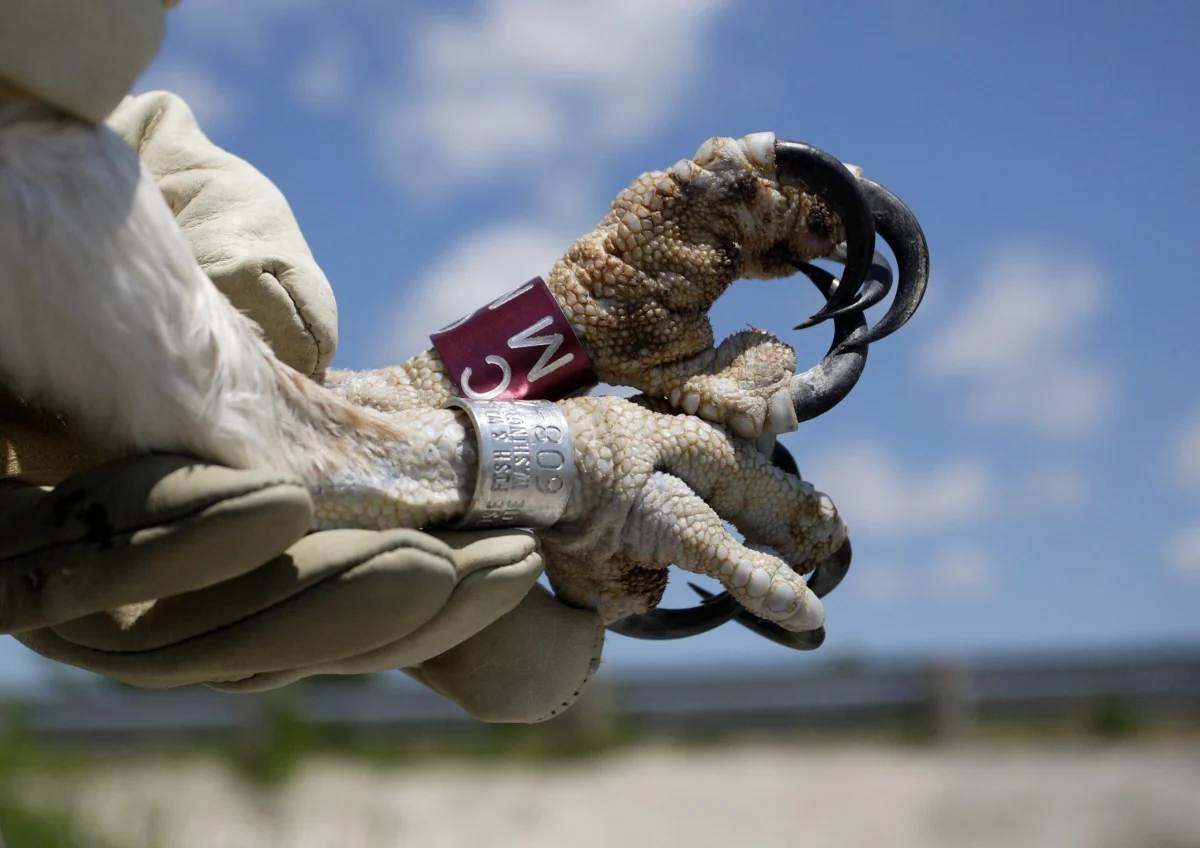
This singular image speaks volumes about the Osprey’s biology and the challenges of its migratory life. Ospreys are unique among raptors for their diet, which consists almost exclusively of fish, making up 99% of their intake. Their physical adaptations are finely tuned for this specialization: reversible outer toes, barbed talons, and a keen eyesight that allows them to spot fish from considerable heights. A typical Osprey dive involves plummeting feet-first into the water, often fully submerging, to snatch prey with its powerful talons. Their global distribution—found on every continent except Antarctica—is a testament to their adaptability, yet their reliance on healthy fish populations makes them sensitive indicators of aquatic ecosystem health. The energy demands of migration, which can span thousands of miles from northern breeding grounds to southern wintering areas, underscore the critical importance of successful hunts like the one Smith observed. A single, well-timed meal can be the difference between survival and starvation on such epic journeys.
The Unseen Struggle: Bryan Watts and Menhaden Dynamics
The importance of that "everything" fish resonates deeply with biologists like Bryan Watts, who has dedicated years to the meticulous study of Ospreys in the Chesapeake Bay. Watts, a research professor and director of the Center for Conservation Biology at the College of William & Mary, employs a unique method, peering into elevated nests with a mirror mounted on a long pole, providing intimate glimpses into the private lives of these raptors. His work, often highlighted in publications like Audubon, provides critical data on reproductive success and the ecological factors influencing it.
One such photograph, featured in David Gessner’s piece “Hunger Pangs,” shows an Osprey feeding a chick. The seemingly idyllic scene, however, conceals a stark reality. Just out of frame, a second chick, significantly smaller, struggled for sustenance, and a third had already succumbed to starvation. These Ospreys were part of a long-term study examining the indispensable role of menhaden in fueling successful reproduction. The findings are unequivocal: menhaden are not just important; they are critically important.
Menhaden ( Brevoortia tyrannus for Atlantic menhaden), small, oily filter feeders, are a keystone species in the Atlantic coastal ecosystem, particularly in the Chesapeake Bay. They occupy a pivotal position in the food web, consuming phytoplankton and zooplankton and, in turn, serving as a primary food source for a vast array of predators, including Ospreys, striped bass, bluefish, and marine mammals. Their high fat content makes them an exceptionally energy-rich food source, vital for growth and reproduction in high-energy-demand species like Ospreys. Historically, menhaden populations have faced intense pressure from commercial fishing, particularly for reduction to fishmeal and oil. The health of the menhaden stock directly correlates with the reproductive output and overall vitality of Osprey populations. Watts’s research, spanning decades, has provided compelling evidence that fluctuations in menhaden availability directly impact Osprey chick survival rates. When menhaden are scarce or of poor quality, Ospreys struggle to provision their young, leading to higher mortality, especially among the smallest chicks. This ongoing monitoring effort, often involving hundreds of nests across the Chesapeake Bay, provides invaluable long-term data series that reveal the intricate linkages within the ecosystem and underscore the profound impact of human activities on wildlife.
Expanding the Field of Vision: Diverse Approaches to Avian Study
The Osprey studies exemplify how deep, focused observation can unveil critical ecological truths. However, understanding the full spectrum of avian life and its relationship with a changing world requires an even broader toolkit, encompassing cognitive science, citizen engagement, ancient wisdom, and cutting-edge technology.
The Social Complexity of Crows: Beyond Perception
Elizabeth Preston’s exploration of crows challenges human preconceptions, delving into the enduring question: "Are these birds really our friends?" This inquiry transcends simple anthropomorphism, pushing into the realm of ethology and cognitive science. Crows, particularly species like the American Crow ( Corvus brachyrhynchos ) and the Common Raven ( Corvus corax ), are renowned for their remarkable intelligence, often considered among the smartest animals on the planet.
Their cognitive abilities are well-documented: they use tools, solve complex multi-step problems, remember human faces (both friendly and threatening) for years, engage in sophisticated social learning, and even hold "funerals" for their dead. Studies have shown crows can understand cause and effect, plan for the future, and demonstrate self-awareness. Their social structures are highly complex, involving tight-knit family groups, cooperative breeding, and intricate communication systems. These capacities allow them to thrive in diverse environments, including urban landscapes, where they often interact closely with humans. Preston’s work encourages a shift from anecdotal observation to scientific inquiry into these interactions, exploring how mutual learning and adaptation shape the human-crow relationship. Understanding their intelligence and social dynamics is crucial for fostering coexistence and appreciating the rich cognitive landscapes present in the avian world.
Citizen Science on the Front Lines: Climate Watch
The urgency of climate change demands a global, collaborative effort, and in the realm of ornithology, community scientists are playing an increasingly vital role. Audubon’s Climate Watch program is a prime example, mobilizing thousands of volunteers across the country to track "where birds go in a changing climate." This initiative leverages the power of distributed observation, collecting data on a scale that would be impossible for professional researchers alone.
Climate Watch volunteers monitor specific bird species—such as the Eastern Bluebird, White-breasted Nuthatch, or Western Meadowlark—during winter and summer survey periods. They visit designated locations, often within a 10-mile by 10-mile square, and record observations of target species. This systematic data collection helps scientists understand how bird populations are responding to rising temperatures, altered precipitation patterns, and habitat shifts. For instance, data collected over a decade has shown discernible shifts in species ranges, with some birds moving northward or to higher elevations as their traditional habitats become less suitable. Others, like the Brown-headed Nuthatch, may face increasing habitat fragmentation as suitable pine forests shrink.
The implications of these observed shifts are profound. Birds are excellent bioindicators; their movements and population trends often signal broader ecological changes. Climate change affects birds in myriad ways: altering migration timing, disrupting breeding cycles, impacting food availability, and increasing vulnerability to extreme weather events. The data gathered by Climate Watch volunteers provides crucial, real-time insights into these processes, helping scientists predict future impacts, identify vulnerable species and regions, and develop targeted conservation strategies. This "big data" approach, fueled by passionate citizen scientists, is indispensable for understanding and responding to one of the most significant threats to avian biodiversity.
Echoes of the Past: Indigenous Wisdom and Bioacoustics
Observation extends beyond the purely visual or statistical. Esteban Valdivia, an ethnomusicologist and anthropologist, offers a unique auditory perspective, playing ancient instruments to experience birdsong through the ears of Indigenous cultures. His work bridges ethno-ornithology—the study of human-bird relationships across cultures—with an appreciation for traditional ecological knowledge (TEK).
For many Indigenous cultures, birds are not merely animals; they are spiritual guides, cultural symbols, and integral parts of a holistic worldview. Birds and their songs are deeply embedded in origin stories, ceremonies, and daily life, carrying centuries of accumulated observation and understanding. Valdivia’s approach seeks to reconnect with these ancient ways of listening and interpreting the natural world. By recreating and playing instruments inspired by or used in conjunction with bird calls, he explores how different cultures have historically mimicked, understood, and communicated with birds. This process illuminates how Indigenous peoples developed sophisticated knowledge of bird behavior, habitats, and ecological roles long before modern scientific methods emerged. This cultural lens offers invaluable insights into patterns of birdsong, communication, and the intricate ways birds interact with their environment, enriching our contemporary understanding by integrating diverse epistemologies.
The Digital Frontier: AI and Automated Monitoring
Complementing these diverse observational methods is the rapidly evolving field of bioacoustics, particularly when paired with artificial intelligence (AI). Scientists can now deploy autonomous audio recorders in remote or sensitive habitats, collecting vast amounts of sound data over extended periods. AI algorithms then process this data, identifying individual bird species by their unique calls and songs with remarkable accuracy and efficiency.
This technological leap represents a paradigm shift in ecological monitoring. Traditionally, bird surveys relied on human observers, which are labor-intensive, time-consuming, and limited by human auditory range, endurance, and geographical access. AI-powered bioacoustics overcomes these limitations, offering:
- Efficiency: Rapid analysis of hundreds or thousands of hours of recordings, identifying species presence and abundance far faster than human analysis.
- Non-invasiveness: Minimizes disturbance to sensitive wildlife and habitats, as recorders can operate passively.
- Scale: Enables monitoring across vast, inaccessible landscapes, providing comprehensive data for landscape-level conservation planning.
- Detection of Cryptic Species: Can identify elusive or nocturnal species that are difficult to detect visually or by human ear.
- Baseline Data: Establishes long-term acoustic baselines for habitats, allowing for the detection of subtle changes over time, indicative of environmental shifts or anthropogenic impacts.
Applications are wide-ranging. In the Amazon, AI helps identify illegal logging by detecting chainsaw sounds alongside species calls, providing early warnings for intervention. In marine environments, AI analyzes underwater sounds to track vocalizing species like whales and dolphins, and to monitor the impacts of shipping noise. For bird conservation, it is being used to:
- Assess biodiversity in newly designated protected areas.
- Monitor the effectiveness of habitat restoration projects.
- Track the recovery of endangered species populations.
- Detect invasive species early.
- Understand the impacts of noise pollution on avian communication.
The integration of AI with bioacoustics provides an unprecedented ability to "tune in" to the natural world, transforming how we gather, process, and interpret ecological data, thereby empowering more effective and data-driven conservation efforts.
Implications for Conservation in a Changing World
The stories of Ospreys, crows, climate-tracking citizens, and the fusion of ancient wisdom with modern AI collectively underscore a singular truth: understanding the avian world—and by extension, the health of our planet—demands an integrated, multi-faceted approach to observation. As environmental challenges mount, from accelerating climate change and rampant habitat loss to pervasive pollution and invasive species, the stakes for biodiversity have never been higher.
Birds, occupying diverse ecological niches and responding rapidly to environmental shifts, serve as crucial indicators of ecosystem health. Their fates are inextricably linked to our own. The insights gained from meticulous observation—whether through a biologist’s mirror pole, a community scientist’s careful count, an ethnomusicologist’s ancient flute, or an AI algorithm’s spectral analysis—are not merely academic curiosities. They are foundational data points that inform conservation policy, guide land management decisions, and inspire public engagement.
The opportunity before us is immense: to leverage all available powers of observation and every tool at our disposal to deepen our understanding of birds and what they are telling us. This means supporting long-term ecological studies, empowering citizen science initiatives, respecting and integrating Indigenous ecological knowledge, and embracing technological innovations. By collectively "laser-focusing" on the avian world, we can develop more robust, adaptive, and culturally resonant strategies to protect biodiversity and ensure a healthier future for all life on Earth. The journey of observation is ongoing, and its findings are becoming increasingly critical for humanity’s capacity to respond to the urgent environmental imperative of our time.
This piece originally ran in the Summer 2026 issue of Audubon Magazine. To receive our print magazine and support vital bird conservation efforts, consider becoming a member by making a donation today.
