
A groundbreaking new study, spearheaded by a researcher at the University of Hawaiʻi at Mānoa, has unveiled a critical and pervasive threat to the archipelago’s unique avian biodiversity: nearly every forest bird species in Hawaiʻi possesses the capacity to transmit avian malaria. This startling revelation regarding the widespread ability of both native and introduced birds to spread infection provides a profound explanation for the disease’s omnipresence across virtually all mosquito-inhabited regions of the islands, underscoring the severe and escalating challenge faced by conservationists. The findings, published February 10 in the prestigious journal Nature Communications, represent a pivotal moment in understanding the relentless march of avian malaria and the urgent need for comprehensive intervention.
The Silent Spreaders: Unveiling Widespread Transmission Across Avian Species
The research, meticulously conducted across the Hawaiian Islands, detected the debilitating avian malaria parasite at an alarming 63 out of 64 locations tested statewide. These sites encompassed a diverse array of forest ecosystems, featuring vastly different compositions of bird species, yet the disease’s presence was almost universal. The illness itself is instigated by the generalist parasite Plasmodium relictum, an insidious pathogen that has been identified as a central driver in the catastrophic declines and numerous extinctions of Hawaiʻi’s iconic native honeycreepers.
Dr. Christa M. Seidl, the mosquito research and control coordinator for the Maui Forest Bird Recovery Project, led this comprehensive investigation as part of her doctoral research at the University of California, Santa Cruz. Her insights illuminate the gravity of the situation. "Avian malaria has taken a devastating toll on Hawaiʻi’s native forest birds, and this study unequivocally shows why the disease has been so extraordinarily difficult to contain," Seidl stated, emphasizing the profound implications of her team’s work. "When such a vast number of bird species can quietly sustain transmission, often without overt signs of severe illness, it drastically narrows the viable options for protecting our irreplaceable native birds. This reality makes broad-scale mosquito control not merely helpful or supplementary, but absolutely essential to their survival."
The study’s meticulous methodology involved the examination of blood samples from over 4,000 individual birds, collected across the islands of Kauaʻi, Oʻahu, Maui, and Hawaiʻi Island. These extensive field data were then rigorously paired with controlled laboratory experiments designed to quantify how readily mosquitoes became infected after feeding on different bird species. The results were stark: both native and introduced birds frequently exhibited similar levels of infectiousness, meaning that both groups contribute significantly to the ongoing and pervasive spread of the parasite. Furthermore, the researchers made a critical discovery: even birds carrying extremely low, almost undetectable, amounts of the parasite were still capable of infecting mosquitoes. This key finding means that a remarkably wide spectrum of bird communities, regardless of their species composition or apparent health, can sustain and perpetuate ongoing transmission of avian malaria throughout the ecosystem.
A Legacy of Decline: The Devastating Toll on Native Honeycreepers
Hawaiʻi’s native honeycreepers (family Fringillidae, subfamily Carduelinae) represent one of the most spectacular examples of adaptive radiation on Earth, having diversified from a single ancestral species into over 50 distinct forms, each uniquely adapted to specific ecological niches across the islands. These birds, with their diverse bill shapes, vibrant plumage, and unique songs, are not just biological marvels but also cultural touchstones, deeply interwoven with Hawaiian tradition and identity. However, their evolutionary isolation in a disease-free environment left them tragically vulnerable. Unlike mainland bird species that co-evolved with malaria parasites and developed some degree of immunity, Hawaiian honeycreepers possess "naive" immune systems utterly unprepared for Plasmodium relictum.
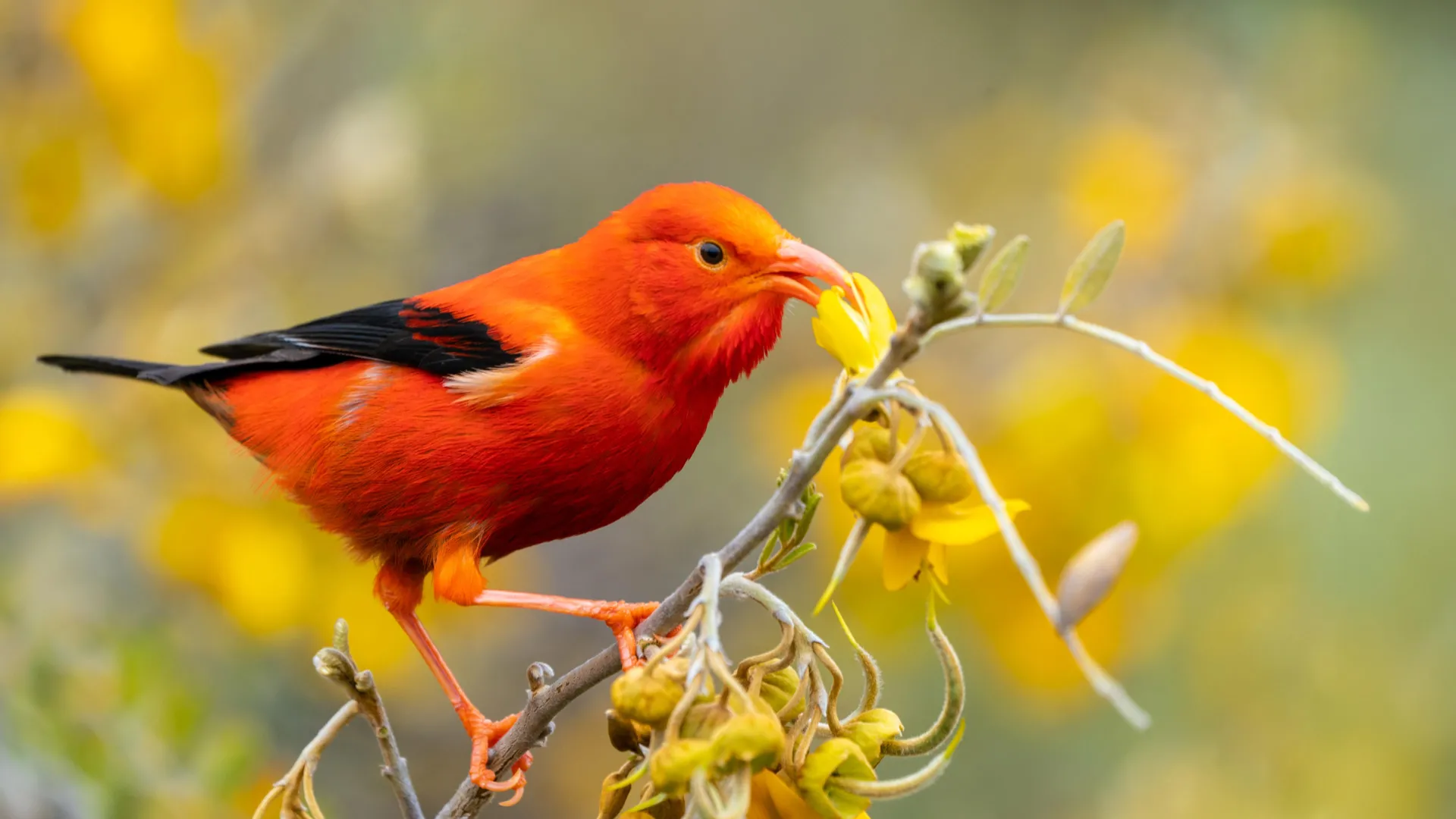
The consequences of this immunological naiveté have been catastrophic. Avian malaria relentlessly attacks red blood cells, leading to severe anemia, systemic organ failure, drastically lower survival rates, and, in many species, rapid death. For Hawaiʻi’s iconic birds, the statistics are grim indicators of an unfolding tragedy. Studies have shown that the ‘I’iwi (Drepanis coccinea), also known as the scarlet honeycreeper, a bird celebrated for its brilliant crimson plumage and curved beak, faces a staggering mortality rate of approximately 90 percent if infected with Plasmodium relictum. The ‘Akikiki (Oreomystis bairdi), a small, critically endangered honeycreeper endemic to Kauaʻi, is now tragically considered extinct in the wild, a direct casualty of the disease’s relentless assault on its dwindling population. Of the original ~50 honeycreeper species, only 17 or so remain, with many teetering on the brink of extinction. This study solidifies the understanding that the pervasive nature of malaria transmission is a primary force driving these extinctions.
The Vector and the Invaders: A Chronology of Ecological Disruption
The story of avian malaria in Hawaiʻi is intrinsically linked to the history of invasive species introductions. For millennia, Hawaiʻi was largely free from mosquito-borne diseases. This changed dramatically with the arrival of the Southern House Mosquito (Culex quinquefasciatus). This invasive mosquito species is believed to have first arrived in Hawaiʻi around 1826, likely aboard whaling ships from Mexico or other regions, finding ideal breeding grounds in the islands’ warm, moist climate and rapidly establishing widespread populations.
The arrival of the vector was soon followed by the pathogen. Plasmodium relictum is thought to have been introduced to Hawaiʻi much later, primarily by non-native avian species, particularly songbirds such as common mynahs (Acridotheres tristis) and Japanese white-eyes (Zosterops japonicus), which were brought to the islands in the late 19th and early 20th centuries. These introduced birds, often carriers of the parasite from their native ranges, acted as reservoirs for the disease, facilitating its establishment and spread. Unlike native Hawaiian birds, these introduced species often exhibit some level of resistance or tolerance to Plasmodium relictum, allowing them to survive infection and serve as chronic carriers, continuously infecting mosquitoes that then transmit the disease to the highly susceptible native honeycreepers.
This chronology of invasion—first the vector, then the pathogen, perpetuated by introduced hosts—created a perfect storm for native Hawaiian birds. The first significant declines in native forest bird populations were observed in the early 20th century, correlating with the establishment of Plasmodium relictum in lower elevation areas where mosquitoes thrived. Over decades, as mosquito populations expanded and the parasite became endemic, the disease systematically pushed native birds out of their historical lowland ranges, forcing them into ever-shrinking high-elevation refugia.
Chronic Infections: Fueling the Endemic Threat
A crucial insight from Dr. Seidl’s research highlights that many infectious diseases rely on a limited number of "super-spreader" species to maintain their transmission cycles. However, avian malaria in Hawaiʻi operates differently. The study compellingly demonstrates that most forest birds, whether native or introduced, are at least moderately capable of infecting southern house mosquitoes, the disease’s primary vector. Even birds harboring very small, almost imperceptible, amounts of the parasite were found to be competent in infecting mosquitoes. This means that a vast array of bird communities, irrespective of their specific species mix or apparent health, can effectively maintain ongoing transmission of the disease.
The research also revealed the insidious nature of chronic infections. Birds were found to carry these infections for extended periods—months, or even years. During this prolonged phase, when birds may outwardly appear only mildly infected or even asymptomatic, they remain fully capable of transmitting the parasite to mosquitoes. The researchers estimate that this long-lasting, low to moderate infectious stage accounts for the majority of avian malaria transmission statewide. This finding is particularly concerning because it means that focusing solely on visibly sick birds or high-density parasite carriers would be insufficient to control the disease. The sheer number of mildly infected, chronically carrying birds acts as a pervasive, low-level engine for the parasite’s spread, making the eradication of the vector—the mosquito—the most potent strategy.
"We often understandably think first of the birds when we consider avian malaria, focusing on their suffering and decline," Seidl commented, "but the parasite absolutely needs mosquitoes to reproduce and complete its life cycle. Our work unequivocally highlights just how incredibly adept Plasmodium relictum has become at infecting these mosquitoes through a remarkably wide array of different bird species. This adaptability is key to its pervasive success in Hawaiʻi."
Climate Change: Erasing the Last Refuges
Adding another layer of urgency to an already dire situation is the escalating threat of climate change. For decades, the higher elevations of Hawaiʻi’s mountains—cooler, wetter environments—served as natural refuges for vulnerable native birds. These areas were historically too cold for the Culex quinquefasciatus mosquito to thrive, thereby limiting the spread of avian malaria. However, this critical ecological buffer is rapidly diminishing.
The parasite’s ability to infect numerous bird species, as illuminated by Seidl’s study, is a primary reason why avian malaria is so widespread across Hawaiʻi. The findings unequivocally suggest that very few mosquito-infested habitats now remain free of transmission risk. Conditions are becoming even more challenging as rising global temperatures, manifesting as warmer average temperatures in Hawaiʻi, allow mosquitoes and, consequently, avian malaria, to expand their ranges into these previously untouched higher elevation areas. Projections indicate that Hawaiʻi’s average temperatures could rise by several degrees Celsius by the end of the century, pushing the "mosquito zone" higher up the mountain slopes. This upward creep of the vector is systematically shrinking the remaining safe havens for critically endangered species like the ‘Akekee and Kauaʻi ‘Amakihi on Kauaʻi, and the Kiwikiu and ‘Akohekohe on Maui, compressing their populations into ever-smaller, isolated pockets where they face an even greater risk of extinction.
The Intergovernmental Panel on Climate Change (IPCC) and local Hawaiian climate reports consistently predict increased temperatures, altered rainfall patterns, and more frequent extreme weather events for the Hawaiian Islands. These changes directly impact mosquito breeding cycles and the developmental rates of the malaria parasite within the mosquito, further accelerating the spread of the disease into previously protected areas. The compounding effect of climate change on an ecosystem already reeling from invasive species and disease presents an existential crisis for Hawaiʻi’s unique avifauna.
Strategic Imperative: The Call for Aggressive Mosquito Control
The comprehensive nature of Seidl’s study has solidified the scientific consensus: the survival of Hawaiʻi’s remaining native forest birds hinges on aggressive, landscape-scale mosquito control. The traditional conservation approaches, while valuable, such as habitat restoration or captive breeding programs, are increasingly insufficient in the face of such pervasive disease transmission. The disease effectively negates the benefits of these efforts by decimating bird populations even in restored habitats or after reintroduction.
This stark reality underpins the mission of "Birds, Not Mosquitoes," a crucial collaboration of academic institutions, state and federal agencies, non-profit organizations, and industry partners. The initiative is dedicated to advancing and implementing cutting-edge mosquito control technologies in support of Hawaiian bird conservation. At the forefront of their strategy is the Incompatible Insect Technique (IIT), utilizing naturally occurring Wolbachia bacteria.
The IIT involves releasing male mosquitoes that have been infected with a specific strain of Wolbachia that is "incompatible" with the Wolbachia strain present in the wild female mosquitoes. When these incompatible males mate with wild females, the eggs fail to hatch, effectively reducing the wild mosquito population over time. This technique is highly species-specific, targeting only Culex quinquefasciatus, and does not involve genetically modified organisms or pesticides harmful to other wildlife or humans. The scale of the problem demands an intervention of this magnitude, targeting the very vector that perpetuates the disease across the landscape. The findings from Seidl’s study provide powerful scientific validation for the urgency and necessity of accelerating the deployment of IIT across critical forest bird habitats.
Voices from the Frontlines: Reactions and Commitments
The publication of this study has resonated deeply within the conservation community and among government agencies dedicated to protecting Hawaiʻi’s natural heritage.
Dr. David E. Smith, Dean of the College of Natural Sciences at the University of Hawaiʻi at Mānoa, commented on the significance of the research: "Dr. Seidl’s work, conducted through the Pacific Cooperative Studies Unit, exemplifies the critical role of scientific inquiry in addressing our most pressing environmental challenges. This study provides an undeniable scientific foundation for the comprehensive, proactive measures now required to save our native birds. It underscores the urgency of interdisciplinary collaboration between researchers, conservation practitioners, and government bodies."
Hana McEvoy, a spokesperson for the "Birds, Not Mosquitoes" initiative, echoed the sentiments of urgency. "This research is a game-changer. It confirms what we have long suspected – that avian malaria is an ecosystem-wide threat, with almost every bird species acting as a potential link in the transmission chain. This reinforces our conviction that broad-scale mosquito control, specifically through the Wolbachia technique, is not just one option among many, but the most viable and indeed, essential, path forward to prevent further extinctions. We are redoubling our efforts, knowing that time is running out for these irreplaceable birds."
From the policy perspective, a representative from the Hawaiʻi Department of Land and Natural Resources (DLNR) emphasized the study’s implications for resource allocation and collaborative governance. "The findings from Dr. Seidl’s team provide critical data that will inform our conservation strategies and resource allocation for years to come. The widespread nature of avian malaria transmission means we must adopt equally widespread solutions. DLNR is committed to working closely with partners like ‘Birds, Not Mosquitoes’ and the University of Hawaiʻi to implement effective mosquito control measures and safeguard Hawaiʻi’s unique biodiversity for future generations."
Broader Implications and a Glimmer of Hope
The implications of this study extend beyond the shores of Hawaiʻi. It offers a stark lesson for conservation efforts globally, particularly in isolated ecosystems or those facing similar threats from invasive disease vectors. The revelation that a generalist parasite can maintain widespread transmission through a diverse array of host species, even at low infection levels, highlights a significant challenge for biodiversity conservation worldwide. It underscores that focusing solely on "endangered species" or "hotspots" might overlook the broader ecological dynamics driving disease prevalence.
For Hawaiʻi, the study illuminates a clear, albeit challenging, path forward. The window for intervention is narrow, but not yet closed. While the situation is dire, the scientific clarity provided by this research offers a renewed sense of purpose and direction. The urgency now lies in the swift and effective implementation of landscape-scale mosquito control. With sustained funding, strong political will, continued scientific innovation, and broad public support, there remains a glimmer of hope that Hawaiʻi’s magnificent honeycreepers, these jewels of the Pacific, can be pulled back from the brink of extinction. The fate of these unique birds, and the health of Hawaiʻi’s precious forest ecosystems, now rests squarely on the ability to control the tiny mosquito and the pervasive disease it carries.
