
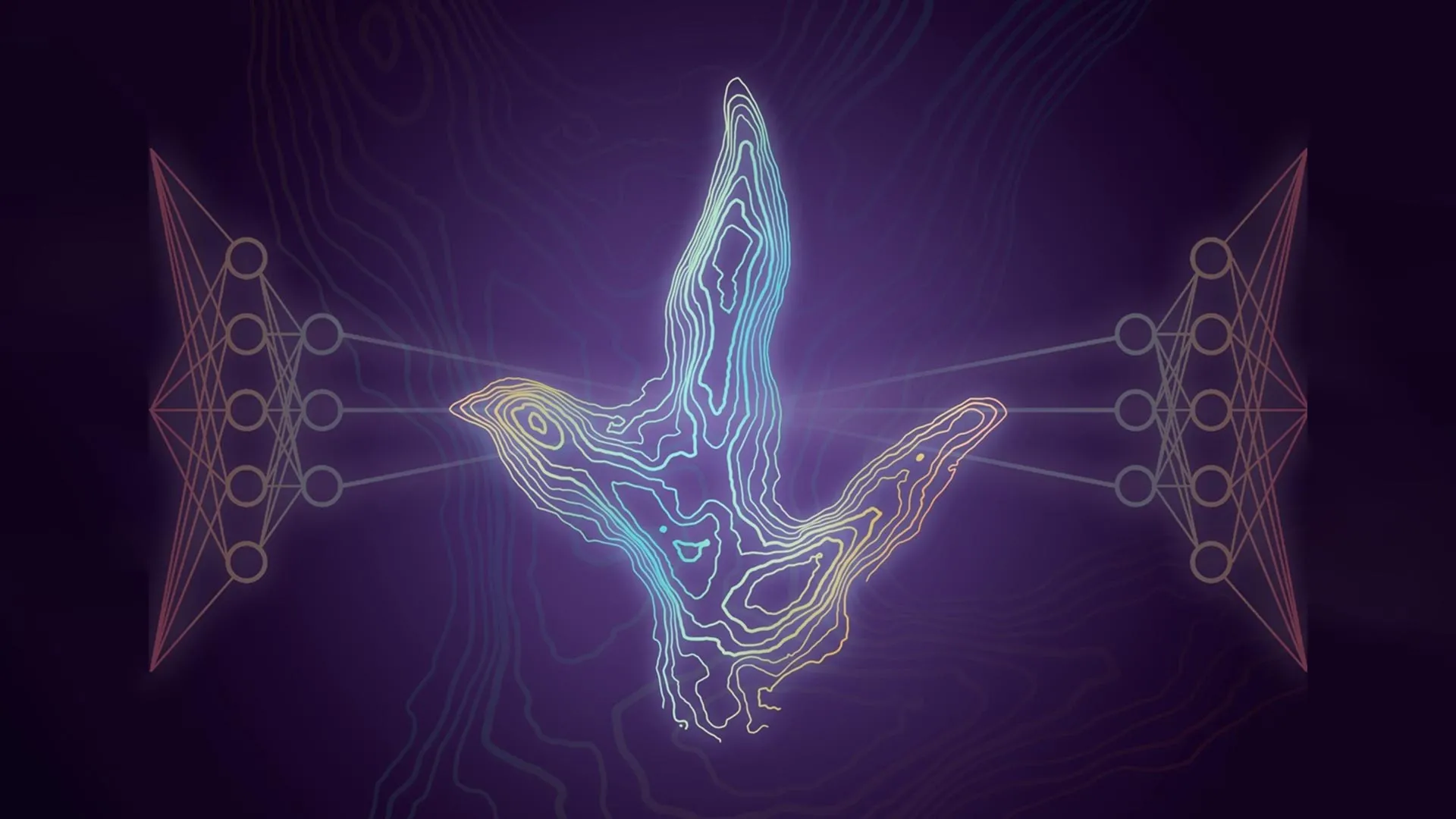
A groundbreaking new application, harnessing the power of artificial intelligence (AI), is poised to transform the field of ichnology—the study of fossil tracks. This innovative technology provides scientists and the general public alike with an unprecedented tool to accurately identify dinosaur footprints dating back millions of years, addressing long-standing challenges in paleontological research, according to a recently published study. The development promises to unravel mysteries surrounding ancient life, from the locomotion of prehistoric giants to potentially rewriting the timeline of avian evolution.
For centuries, the enigmatic impressions left by dinosaurs in ancient mud have fascinated researchers. Paleontologists have meticulously studied these fossilized tracks, engaging in extensive debates about the creatures that created them. The morphology of a track can suggest a swift, bipedal predator, a lumbering quadrupedal herbivore, or even hint at the presence of early bird species. However, interpreting these ancient traces has historically been fraught with difficulty. The very act of fossilization, coupled with geological processes over vast timescales, can significantly alter the original shape and structure of a footprint, making definitive identification a complex and often subjective endeavor.
The Enduring Challenge of Ichnology
The science of ichnology is critical for understanding prehistoric ecosystems. Unlike skeletal remains, which provide information about anatomy, fossil footprints (ichnites) offer direct evidence of dinosaur behavior, gait, speed, and even social interactions like herd movement. They can also reveal details about the ancient environments—the consistency of the substrate, the presence of water, and the overall climate. Yet, despite their immense value, the interpretation of ichnites has often been a source of scientific contention.
Traditional methods relied heavily on expert judgment and comparative anatomy, matching fossil prints to known skeletal structures or other established trackways. This approach, while foundational, was susceptible to bias. When a track’s identity was uncertain or disputed, different experts might arrive at different conclusions, leading to fragmented understanding and persistent scientific debates. Furthermore, the sheer volume of fossil tracks discovered globally, each subject to unique preservation conditions, made a comprehensive, standardized approach difficult to implement. The challenge was not merely one of identification, but of establishing a robust, objective framework for classification that could withstand rigorous scientific scrutiny.
Introducing DinoTracker: A Technological Leap Forward
The newly developed DinoTracker app represents a significant leap forward in addressing these challenges. Designed for accessibility and scientific rigor, the app allows both seasoned researchers and enthusiastic dinosaur fans to upload a photograph or even a drawing of a footprint using a standard mobile phone. Upon submission, the AI-powered system provides an immediate and sophisticated analysis, evaluating the intricate shape, structure, and depth characteristics of the track to estimate the most probable type of dinosaur responsible for its creation. This democratizes paleontological research, inviting a broader community to contribute to scientific discovery.
The app’s user-friendly interface belies the complex algorithms working behind the scenes. Its ability to provide instant analysis marks a departure from time-consuming manual comparisons and database searches, accelerating the initial stages of research and field identification. This rapid feedback loop has the potential to significantly enhance fieldwork, allowing paleontologists to make preliminary classifications on-site and prioritize further investigation more efficiently.
The AI’s Engine: Advanced Algorithms and Comprehensive Training
The development of DinoTracker is the result of an intensive collaborative effort led by the Helmholtz-Zentrum research centre in Berlin, in partnership with the University of Edinburgh. This interdisciplinary team set out to overcome the limitations of traditional, manually constructed computer databases, which often suffered from inherent biases due to the human interpretation embedded in their design. Their solution involved developing advanced machine learning algorithms capable of independent learning.
The core of the AI system’s intelligence lies in its training regimen. The model was exposed to an extensive dataset comprising nearly 2,000 real fossil footprints from various geological periods and locations. Crucially, this real-world data was augmented by millions of additional simulated examples. These synthetic trackways were not merely theoretical constructs; they were meticulously designed to reflect the realistic variations that occur as footprints are preserved over geological time. Factors such as compression due to the weight of the animal, edge displacement caused by the foot slipping, changes in substrate consistency (from soft mud to firmer ground), and subsequent erosion were all modeled to create a truly comprehensive and robust training environment. This vast and varied dataset allowed the AI to "learn on its own" how dinosaur footprints vary in shape, distinguishing subtle differences that might elude human observation or be misinterpreted.
Deciphering Ancient Trails: What the AI Analyzes
To achieve its remarkable accuracy, the AI model was trained to recognize and interpret eight key morphological features that distinguish one footprint from another. These features move beyond superficial appearance, delving into the biomechanical imprints left by the dinosaur’s foot. They include:
- Toe Spread: The angular divergence between the digits, indicating how widely the toes splayed.
- Heel Position: The precise location and impression depth of the heel, revealing weight distribution.
- Surface Area Contact: The total area of the foot that made contact with the ground, reflecting the animal’s weight and the substrate’s firmness.
- Weight Distribution: How pressure was distributed across different parts of the foot, offering clues about gait and posture.
- Digit Length and Proportion: The relative lengths and thicknesses of individual toes.
- Claw Impressions: The presence, shape, and orientation of claw marks, indicating whether the animal was predatory or herbivorous, and its specific foot anatomy.
- Overall Shape and Outline: The general contour of the track, often a primary identifier for broad groups like theropods (three-toed, bird-like) or sauropods (large, rounded).
- Depth Variation: The differing depths of various parts of the footprint, further refining insights into weight distribution and movement dynamics.
By analyzing these intricate variations, the AI system is able to compare newly uploaded footprints with its vast knowledge base of known fossil examples, predicting with high confidence which dinosaur species or group most likely made the tracks.
Validation and Accuracy: Matching Expert Consensus
The rigorous validation process demonstrated the AI’s exceptional performance. When evaluated against a diverse set of fossil footprints, the algorithm’s classifications matched those made by human experts approximately 90 percent of the time. This high degree of concordance is particularly significant because it extended even to species that are considered controversial or notoriously difficult to identify through traditional methods. This achievement underscores the AI’s potential to introduce a new level of objectivity and consistency into ichnological research, helping to resolve long-standing ambiguities and provide a standardized baseline for future studies.
The 90% accuracy rate is not merely a statistical benchmark; it represents a profound shift. It means the AI can consistently and reliably differentiate between subtle variations that might be overlooked or debated by human observers. This robustness is especially crucial when dealing with tracks that have been subject to significant taphonomic processes—the various physical and biological processes that affect an organism after death and during fossilization.
Groundbreaking Discoveries: Rewriting Prehistoric Timelines
Beyond its analytical capabilities, the DinoTracker app has already yielded surprising and potentially paradigm-shifting scientific discoveries.
Unexpected Links to Early Birds: One of the most remarkable findings emerged from the analysis of tracks estimated to be over 200 million years old, dating back to the late Triassic period. The AI detected striking similarities between certain dinosaur footprints from this era and the feet of both extinct and modern birds. This observation has profound implications for avian evolution.
Current scientific consensus places the definitive emergence of birds, specifically Archaeopteryx, in the Late Jurassic, around 150 million years ago. If these Triassic tracks are indeed attributable to early bird ancestors, it would suggest that birds, or at least highly bird-like dinosaurs, emerged tens of millions of years earlier than scientists have previously believed. This would necessitate a significant re-evaluation of the evolutionary tree and the timing of key adaptations leading to flight. The research team acknowledges an alternative hypothesis: that some early dinosaurs, perhaps not directly ancestral to birds, simply happened to possess feet that convergently resembled avian feet due to similar functional demands or ecological niches. However, the consistency of the AI’s findings warrants serious consideration of an earlier avian origin.
New Insights from Scotland’s Enigmatic Tracks: The system also provided crucial new clues about mysterious footprints found on the Isle of Skye in Scotland. These tracks, dating back approximately 170 million years to the Middle Jurassic period, were formed on the muddy edge of an ancient lagoon and have puzzled paleontologists for decades. The Isle of Skye is a globally significant site for Middle Jurassic dinosaur fossils, offering a rare window into an era often underrepresented in the fossil record.
The AI’s analysis suggests that these particular footprints may have been left by some of the oldest known relatives of duck-billed dinosaurs, scientifically known as hadrosaurs or their immediate ancestors, the iguanodonts. Hadrosaurs were a highly successful group of herbivorous dinosaurs that flourished during the Late Cretaceous period, characterized by their distinctive dental batteries and specialized beaks. Identifying their early relatives on Skye would make these among the earliest examples of this globally important group found anywhere in the world. This discovery not only sheds light on the early evolution and geographical distribution of hadrosauriforms but also underscores the invaluable nature of the Scottish fossil record.
Broader Implications: Democratizing Paleontology and Citizen Science
The development of the DinoTracker app extends beyond purely academic circles, creating new opportunities for public engagement and citizen science. Researchers anticipate that the technology will empower enthusiasts and amateur paleontologists to contribute to real scientific data collection and analysis. By simply uploading photos of tracks they encounter, members of the public can potentially identify previously unknown footprints, help map dinosaur distribution, and contribute to our collective understanding of how dinosaurs lived and moved across the Earth.
This democratization of research aligns with a growing movement in science to involve non-experts in data collection and analysis, leveraging collective intelligence and widespread enthusiasm. For educators, the app provides a dynamic and interactive tool for teaching about dinosaurs, evolution, and scientific methodology. For field paleontologists, it offers a powerful, portable assistant for preliminary identification and documentation, allowing for more efficient and objective data collection.
Expert Perspectives and Funding
Dr. Gregor Hartmann of the Helmholtz-Zentrum research centre emphasized the methodology’s objectivity: "Our method provides an unbiased way to recognize variation in footprints and test hypotheses about their makers. It’s an excellent tool for research, education, and even fieldwork." This statement highlights the core advantage of the AI: its ability to move beyond subjective human interpretation to provide data-driven classifications.
Professor Steve Brusatte, Personal Chair of Palaeontology and Evolution at the School of GeoSciences, University of Edinburgh, echoed this sentiment, stating: "This study is an exciting contribution for paleontology and an objective, data-driven way to classify dinosaur footprints — something that has stumped experts for over a century." He further elaborated on the broader implications: "It opens up exciting new possibilities for understanding how these incredible animals lived and moved, and when major groups like birds first evolved. This computer network might have identified the world’s oldest birds, which I think is a fantastic and fruitful use for AI."
The groundbreaking research was supported by a consortium of funding bodies, including the innovations pool of the BMBF-Project: Data-X, the Helmholtz project ROCK-IT, the Helmholtz-AI project NorMImag, the National Geographic Society, and the Leverhulme Trust. This diverse funding underscores the interdisciplinary nature and broad scientific appeal of the project.
Future Outlook and Challenges
While DinoTracker marks a significant advancement, the field of AI-powered ichnology is still evolving. Future research will likely focus on expanding the dataset to include an even wider variety of tracks from different geological periods and geographical locations, refining the algorithms to account for more subtle preservation biases, and potentially integrating other data types, such as geological context or sediment analysis. The challenge will be to continuously improve the AI’s adaptability to novel or highly altered trackways while maintaining its high accuracy.
The implications of this technology extend beyond dinosaur footprints. The methodology developed for DinoTracker could potentially be adapted to analyze other challenging fossil evidence, such as trace fossils of invertebrates, early mammal tracks, or even hominin footprints, offering new avenues for understanding the behavior and evolution of a much broader range of ancient life forms.
In conclusion, the AI-powered DinoTracker app represents a monumental step forward in paleontological research. By providing an objective, data-driven, and accessible tool for identifying dinosaur footprints, it promises to resolve long-standing debates, accelerate discovery, and potentially rewrite significant chapters in the history of life on Earth. Its ability to unveil hidden patterns in ancient data, as demonstrated by the potential early emergence of birds and new insights into Scottish dinosaurs, firmly establishes AI as an indispensable partner in our quest to understand the prehistoric world.
