
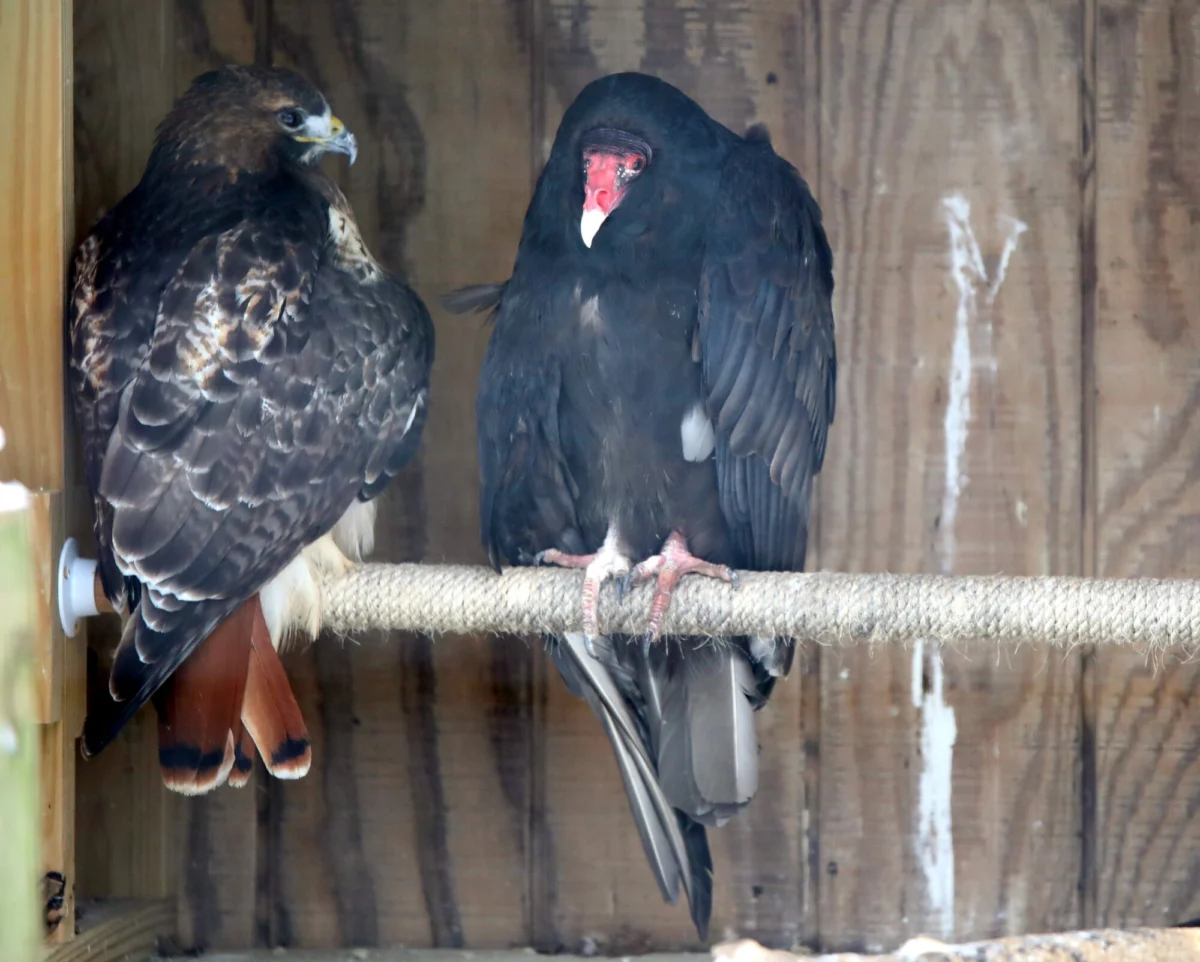
The Elmwood Park Zoo in Norristown, Pennsylvania, is home to a remarkable interspecies friendship, a testament to the profound capacity for connection that transcends the usual boundaries of the animal kingdom. Stan, a 20-year-old female Turkey Vulture, and Hunter, a 22-year-old female Red-tailed Hawk, have forged an unbreakable bond, sharing an aviary and a life together for over a decade. This unique partnership, characterized by mutual care and companionship, offers a compelling glimpse into the social complexities and emotional lives of wild animals.
Both Stan and Hunter arrived at the zoo as victims of human-inflicted injuries, their wild lives abruptly interrupted by circumstances that left them with permanent disabilities. Their shared experience of trauma and rehabilitation appears to have laid the foundation for their extraordinary connection.
A Shared Path to Sanctuary
Hunter’s journey to the Elmwood Park Zoo began in July 2005. As a juvenile, she was transferred from a rehabilitation center that has since ceased operations. Her arrival was marked by a severe injury: an air-rifle pellet lodged in her right wing, causing a fracture to her humerus. The damage was so significant that the bone failed to heal correctly, resulting in a permanently impaired wing and limiting her ability to fly.
Less than a month later, in August 2005, Stan joined Hunter at the zoo. She was brought in from Tri-State Bird Rescue & Research, a respected avian rehabilitation facility in Newark, Delaware. Stan’s plight was similar to Hunter’s; she had also been found with a pellet lodged in her right wing. The injury likely resulted in fractures to her radius and ulna, necessitating immediate veterinary intervention. Like Hunter, Stan’s wing sustained damage that prevented proper healing, leaving her with significantly compromised flight capabilities.
These shared circumstances, both birds arriving with similar debilitating injuries stemming from human actions, created a unique context for their introduction. Confined to enclosures designed for their specialized care and unable to return to the wild, they were placed together in a large, shared aviary. This decision by zoo staff, likely made with the intention of providing companionship and reducing stress for the injured birds, proved to be a pivotal moment in their lives.
The Genesis of an Unconventional Bond
For at least ten years, Stan and Hunter have been observed to be deeply bonded. Zoo staff consider them an inseparable pair, a testament to the strength and longevity of their relationship. The initial connection, which began to blossom following their introduction into the shared habitat, appears to have been fostered by their shared vulnerability and the absence of other conspecifics in their immediate environment.
"It’s truly remarkable to witness," commented a senior zookeeper who has worked with Stan and Hunter for several years. "We often see animals form bonds, but the depth of their connection is something special. They clearly find comfort and security in each other’s presence."
The precise mechanisms that drive interspecies friendships are complex and not fully understood. However, in the case of Stan and Hunter, several factors likely contributed to their profound bond:
- Shared Trauma and Rehabilitation: Both birds experienced similar life-altering injuries and underwent rehabilitation. This shared experience may have fostered a sense of mutual understanding and empathy.
- Complementary Social Needs: Despite their different species, they may have found fulfillment in each other’s company, fulfilling social needs that would otherwise go unmet.
- Absence of Competition: Housed together without other birds of their own species, they were not in direct competition for resources, which can be a significant factor in interspecies interactions.
- Mutual Benefit: Their interactions suggest a reciprocal relationship where both birds gain something from the companionship.
Daily Life: A Symphony of Shared Behaviors
The daily interactions between Stan and Hunter paint a vivid picture of their deep affection and reliance on one another. Their routine behaviors demonstrate a level of care and consideration that is both touching and scientifically intriguing.
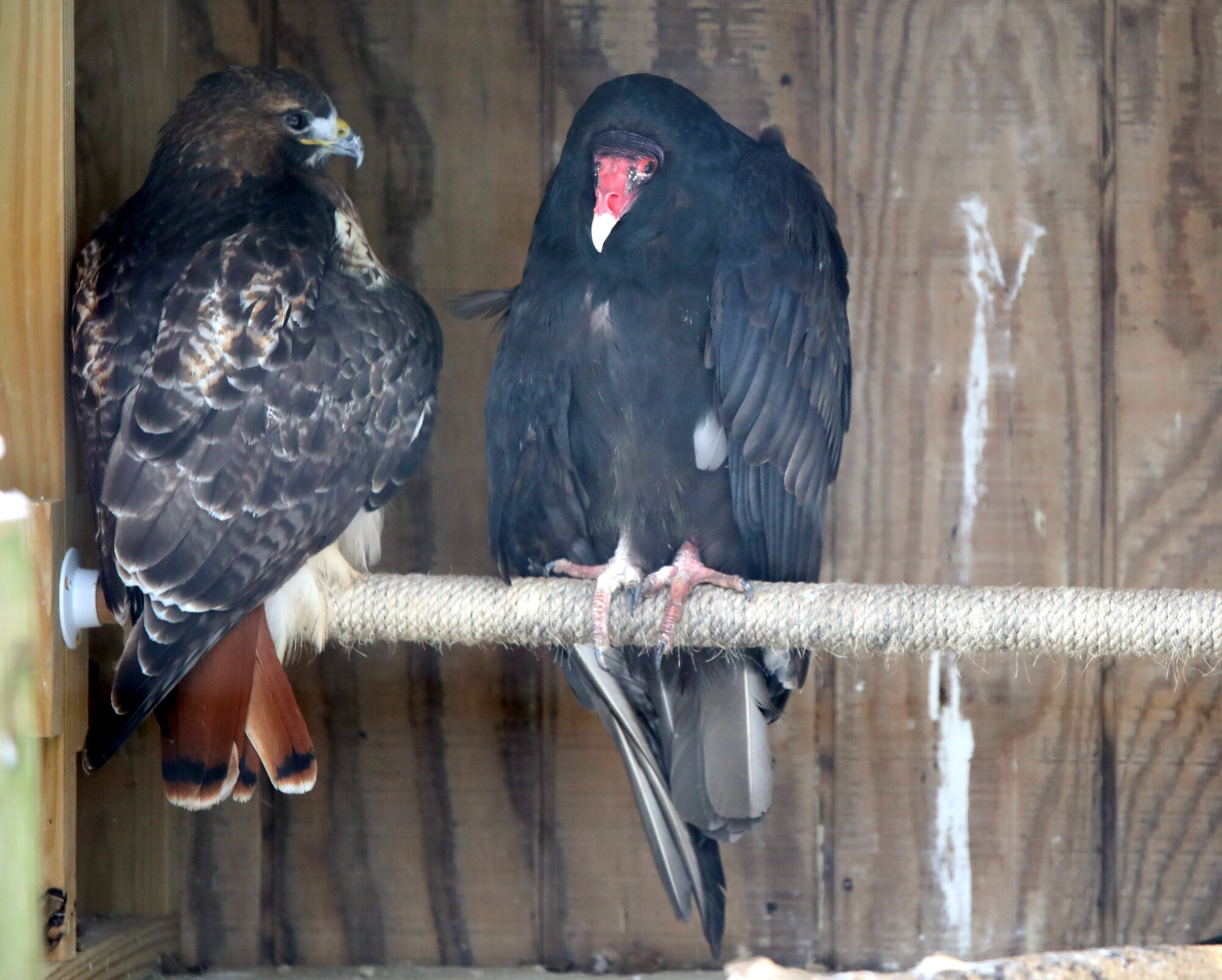
One of the most consistently observed behaviors is food sharing. When keepers introduce food into their enclosure, Hunter, typically the more dominant of the two, will gather the provisions and, in a remarkable act of generosity, share them with Stan. This behavior goes against the natural predatory instincts of a Red-tailed Hawk, which would normally consume prey independently or defend it fiercely.
Another significant aspect of their bond is allopreening. This is a behavior where one individual grooms another, typically seen between members of the same species. Stan and Hunter have been observed meticulously preening each other’s feathers, a mutual act of grooming that strengthens social bonds and contributes to hygiene. This behavior is particularly noteworthy as it is rarely observed between different avian species.
Perhaps the most poignant demonstration of their bond occurs when Hunter lays eggs. Despite being unable to reproduce themselves due to their injuries, Stan will approach Hunter’s nest and sit on the eggs. While Stan cannot fertilize or hatch these eggs, her action is interpreted by zoo staff as a protective and nurturing gesture, an extension of her commitment to Hunter and the concept of family. This behavior highlights a remarkable level of empathy and social bonding that scientists are still striving to fully comprehend.
The Science Behind Interspecies Bonds
The phenomenon of interspecies friendships in the wild is a well-documented, though still relatively understudied, area of ethology. While aggression and competition are often the focus of animal behavior studies, instances of cooperation and affection between different species do occur. These bonds can be driven by various factors, including:
- Mutualism: A relationship where both species benefit. For example, a smaller bird might alert a larger animal to danger, while the larger animal’s presence deters predators from the smaller bird.
- Alloparenting: Individuals caring for the young of others, sometimes even of different species. This can occur in situations where a species lacks sufficient parental figures or when there is a strong social drive to nurture.
- Social Deficits: In environments where individuals are isolated or lack sufficient social interaction with their own species, they may seek companionship from other species.
- Shared Environmental Pressures: Similar threats or challenges can sometimes lead to the formation of alliances between different species for mutual protection or resource access.
In the case of Stan and Hunter, their bond appears to be a complex interplay of shared trauma, a lack of conspecifics, and a mutual fulfillment of social and emotional needs. Their ability to exhibit behaviors like food sharing and allopreening, which are typically reserved for members of the same species, suggests a sophisticated level of social cognition and emotional attachment.
Broader Implications and Future Research
The story of Stan and Hunter offers valuable insights into animal welfare and conservation. It underscores the importance of providing enriched environments for captive animals and highlights the potential for unexpected social dynamics to emerge. Their friendship serves as a powerful reminder that animals, like humans, possess complex emotional lives and can form deep, meaningful connections.
For zoos and wildlife rehabilitation centers, stories like this can inform best practices for animal housing and social integration. Understanding the factors that contribute to successful interspecies relationships could lead to more effective strategies for managing social animals in captivity, potentially reducing stress and improving overall well-being.
Further research into Stan and Hunter’s interactions could provide valuable data on:
- The neurological and hormonal underpinnings of interspecies bonding.
- The development of social cognition in birds of prey and vultures.
- The role of shared trauma in fostering interspecies alliances.
- The potential for similar bonds to be facilitated in other captive animal populations.
The Elmwood Park Zoo’s decision to house these two injured birds together has not only provided them with a comfortable and secure existence but has also given the public a rare and heartwarming opportunity to witness the extraordinary power of friendship, proving that compassion and connection can indeed transcend species. Stan and Hunter’s story is a testament to the enduring spirit of companionship and a gentle, feathered reminder of the profound bonds that can be forged in the most unlikely of circumstances.
