
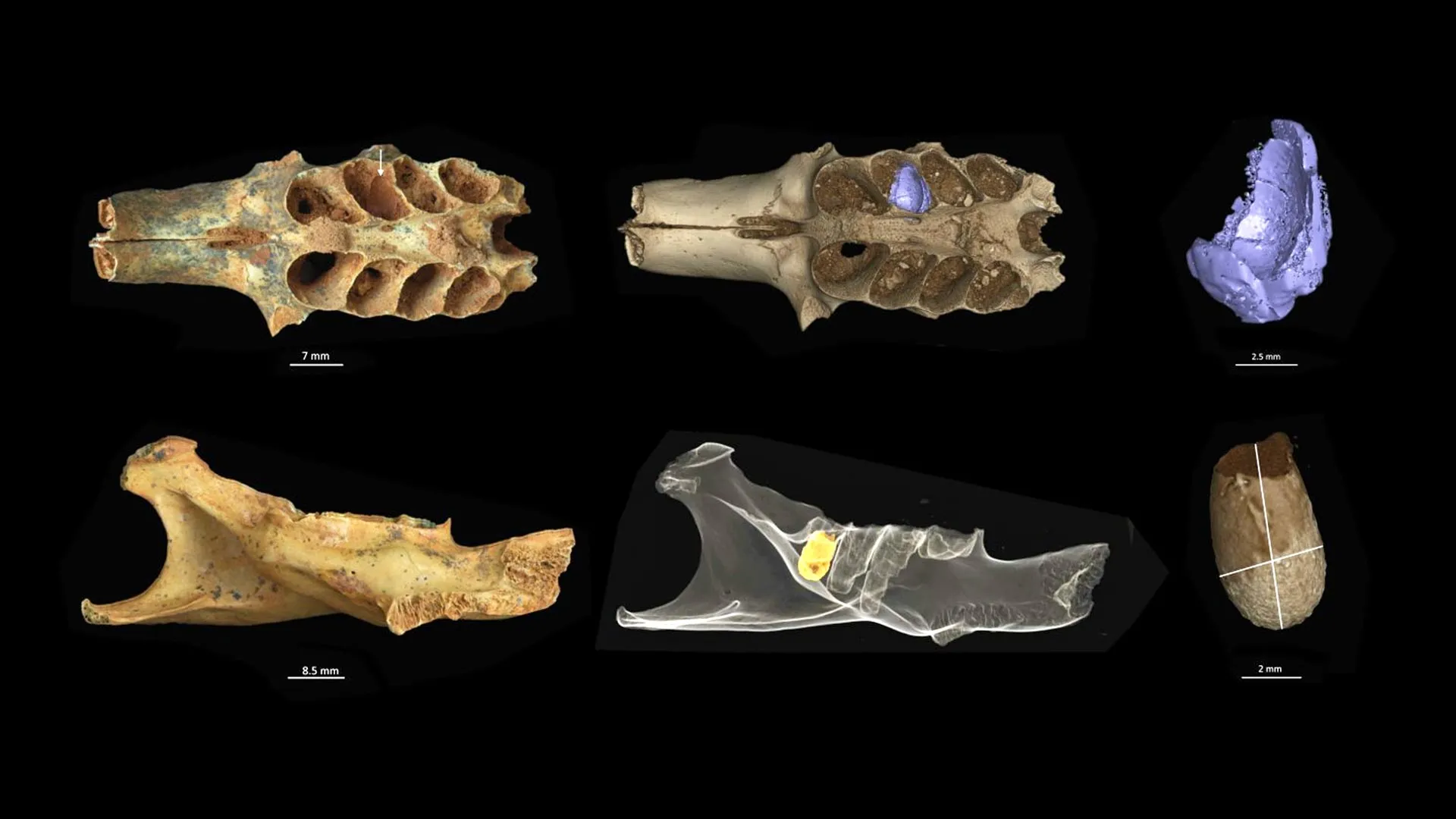
Thousands of years ago, on the rugged Caribbean island of Hispaniola, a dramatic ecological narrative unfolded within the confines of a dark cave. The central characters included a formidable giant barn owl, an unfortunate hutia—a native rodent—and, much later, a resourceful burrowing bee. This sequence of events, spanning millennia, has now been meticulously pieced together by paleontologists, revealing a remarkable instance of interspecies interaction and unprecedented adaptive behavior preserved in stone. The discovery, centered in the Cueva de Mono in the southern Dominican Republic, showcases the innovative ways life can thrive even in challenging environments, with ancient bees repurposing the fossilized remains of long-dead creatures as ready-made nurseries.
Ancient Encounters in a Caribbean Cave: A Prehistoric Drama
The initial act of this prehistoric drama began with a giant barn owl, a formidable avian predator that once patrolled the skies of Hispaniola. These extinct owls, often significantly larger than their modern counterparts, were apex predators in the Caribbean ecosystem, preying on local fauna, including various species of hutias. The specific cave, Cueva de Mono, likely served as a long-term feeding and roosting site for generations of these owls, a natural larder where they brought their catches to consume and feed their young. Over countless years, this activity led to the accumulation of vast quantities of disarticulated bones and skeletal fragments from their prey, primarily hutias, scattered across the cave floor.
Hutias, indigenous to the Caribbean, are a diverse group of rodents ranging in size and ecological niches. While some species still exist today, many, particularly larger ones, vanished following human colonization of the islands. The hutia whose remains became central to this discovery met its end as a meal, its bones, including jaws and vertebrae, becoming part of the accumulating detritus. As time passed, geological processes began to work their magic. Fine, clay-rich silt, washed into the cave from the surface, gradually covered these remains, protecting them from decay and initiating the slow process of fossilization.
Millennia after the owl and its hutia prey had vanished, another, much smaller inhabitant entered the scene: a burrowing bee. Facing the unique challenges of the island’s karst topography—a landscape characterized by sharp, porous limestone and a scarcity of stable soil—these bees found an ingenious solution within the cave. Rather than expending energy digging new burrows in the unsuitable terrain, they discovered and repurposed the hollow, fossilized bone cavities left behind by the hutias. Specifically, the empty tooth sockets (alveoli) in the hutia jaws, and even the pulp cavities of sloth teeth and the neural canals of vertebrae, provided perfectly sized and sheltered spaces for their nests.
Unearthing a Unique Trace Fossil: The Discovery Process
The remarkable nature of this discovery might have remained hidden had it not been for the meticulous attention to detail of Lazaro Viñola Lopez, then a doctoral student at the Florida Museum of Natural History. During an excavation in Cueva de Mono, a site particularly rich in hutia fossils, Viñola Lopez was specifically interested in the rarely found species of hutia endemic to the region. The cave’s immense fossil yield, thousands of specimens from what appeared to be the same species, strongly suggested its function as a long-term owl feeding ground.
Conventional paleontological practice often dictates that sediment within fossil cavities be removed during the initial cleaning process to better expose the bone structure. However, Viñola Lopez chose a different approach, closely inspecting the fossils before cleaning. This careful observation proved pivotal. He noticed a peculiar anomaly: certain cavities within the hutia jaws possessed inner surfaces that were unusually smooth, starkly contrasting with the rough, porous texture of bone. This subtle yet critical detail immediately caught his attention.
Viñola Lopez recalled a similar observation from 2014, while collecting dinosaur fossils in Montana, where he and colleagues had found wasp cocoons mixed with fossil material. His initial hypothesis for the Caribbean discovery was that these smooth cavities were evidence of ancient wasp nests. "It would be nice to write a short paper reporting the occurrence of these wasp nests in the mandibles," he remembers thinking, envisioning a straightforward, albeit niche, scientific contribution.
He shared his idea with colleague Mitchell Riegler, another doctoral student at the museum. Riegler, initially focused on other projects, was not immediately convinced of the project’s broader significance. "I was like, Lazaro, that’s a niche project, and I have a lot of other things to do," Riegler recounted. The idea lay dormant until a challenge from a former advisor spurred Riegler to produce a scientific paper within a week, prompting him and Viñola Lopez to revisit the "wasp nest" theory.
From Misidentification to Monumental Insight: The Scientific Scrutiny
As they delved deeper, reviewing existing research on ichnofossils—trace fossils that record past biological activity like footprints, burrows, or nests—the initial wasp hypothesis began to unravel. A key distinguishing factor emerged: the typical construction materials of wasp nests. Wasps commonly build their nests from chewed plant material mixed with saliva, resulting in a characteristically rough internal texture. The structures observed in the hutia fossils, however, were unequivocally smooth.
This discrepancy led the researchers to consider an alternative. Burrowing bees, unlike wasps, often line their nests with a waxy secretion. This secretion serves multiple purposes: it makes the nest waterproof, protects the developing larvae, and creates a polished, smooth interior. This crucial detail provided the breakthrough, revealing the true architects of these ancient nurseries. The team realized they had been studying bees, not wasps, a correction that dramatically elevated the significance of their discovery.
This re-identification transformed the project from a curious observation into a finding of profound scientific importance. The use of pre-existing fossilized structures by burrowing bees for nesting, without any significant alteration or drilling, was virtually unprecedented. While there is one other documented case of burrowing bees nesting inside a cave, and a separate report of bees drilling into human bones, none matched the unique scenario in Cueva de Mono, where natural cavities within fossil bones were simply occupied. This distinct behavior highlighted an extraordinary level of opportunistic adaptation.
Recognizing the magnitude of their findings, the researchers prudently slowed down their work, expanding the scope of their study. They sought expertise from specialists in modern bee biology and delved into extensive scientific literature to ensure the accuracy and robustness of their conclusions. Viñola Lopez even returned to the Cueva de Mono to conduct further geological examinations of its layers, seeking additional context for the bees’ activity.
Broader Implications for Paleoecology and Conservation
The research extended beyond hutia jaws. CT scans, a vital tool in paleontology, revealed the intricate internal architecture of these nests. In one remarkable instance, a nest was found within the pulp cavity of a sloth tooth, belonging to a species of tree sloth that once roamed the Caribbean but disappeared after human arrival. Another nest was discovered within a hutia vertebra, utilizing the space that once housed the spinal cord. These findings underscored the bees’ adaptability and their willingness to utilize a variety of suitable fossilized cavities. The CT scans also showed instances of multiple layers of nests within single alveoli, sometimes stacked like "Russian dolls," indicating that bees might have reused existing tunnels if they were empty, further maximizing resource efficiency.
The study also provided a compelling explanation for this unusual nesting behavior: Hispaniola’s distinctive karst topography. As Riegler vividly described, "The area we were collecting in is karst, so it’s made of sharp, edgy limestone, and it’s lost all of its natural soils. I actually fell on it at one point, so I can tell you all about it." In such an environment, stable, fine-grained soil suitable for traditional burrowing is exceptionally scarce. Any soil that does accumulate on the surface is often quickly washed into caves, where it settles into pockets, creating isolated oases of suitable nesting material. These cave deposits, rich in fine silt and protected from the elements, likely offered some of the only viable nesting conditions for burrowing bees in the entire region, driving their opportunistic use of fossilized bone cavities.
This discovery significantly enriches our understanding of paleoecology, the study of ancient environments and life. It provides a rare glimpse into the complex interrelationships between different species across vast stretches of time, demonstrating how a predator’s meal indirectly provided a future home for an insect. It also contributes valuable data to taphonomy, the science that studies the processes of fossilization, by adding a new dimension to how trace fossils can be formed and preserved.
The implications also touch upon the urgent need for conservation. The researchers’ efforts were not without challenges. At one point, the Cueva de Mono faced a direct threat when a development plan proposed converting the cave into a septic tank. This potential destruction prompted an immediate "rescue mission" by the team to recover as many fossils as possible. "We had to go on a rescue mission and get as many fossils out as possible, and we got a lot of them," Viñola Lopez stated, highlighting the constant race against time and development that many paleontological sites face. Such incidents underscore the fragility of these irreplaceable windows into the past and the critical importance of protecting them for future scientific inquiry.
A Cave Still Whispering Ancient Secrets
Published in the esteemed Proceedings of the Royal Society B, the research details a profound example of biological innovation and survival. The Cueva de Mono, once a silent graveyard of owl meals, transformed into a bustling nursery for ancient bees, a testament to life’s persistent ability to adapt. The researchers are continuing to analyze other fossils recovered from the cave, anticipating further revelations in future publications. Each bone, each trace fossil, contributes another whisper to the cave’s ancient narrative, reminding us that even the smallest details can unlock grand stories of our planet’s biological heritage. This discovery not only illuminates the intricate dance of life and death in prehistoric Hispaniola but also underscores the enduring value of meticulous observation and interdisciplinary scientific inquiry in uncovering the Earth’s hidden wonders.
