
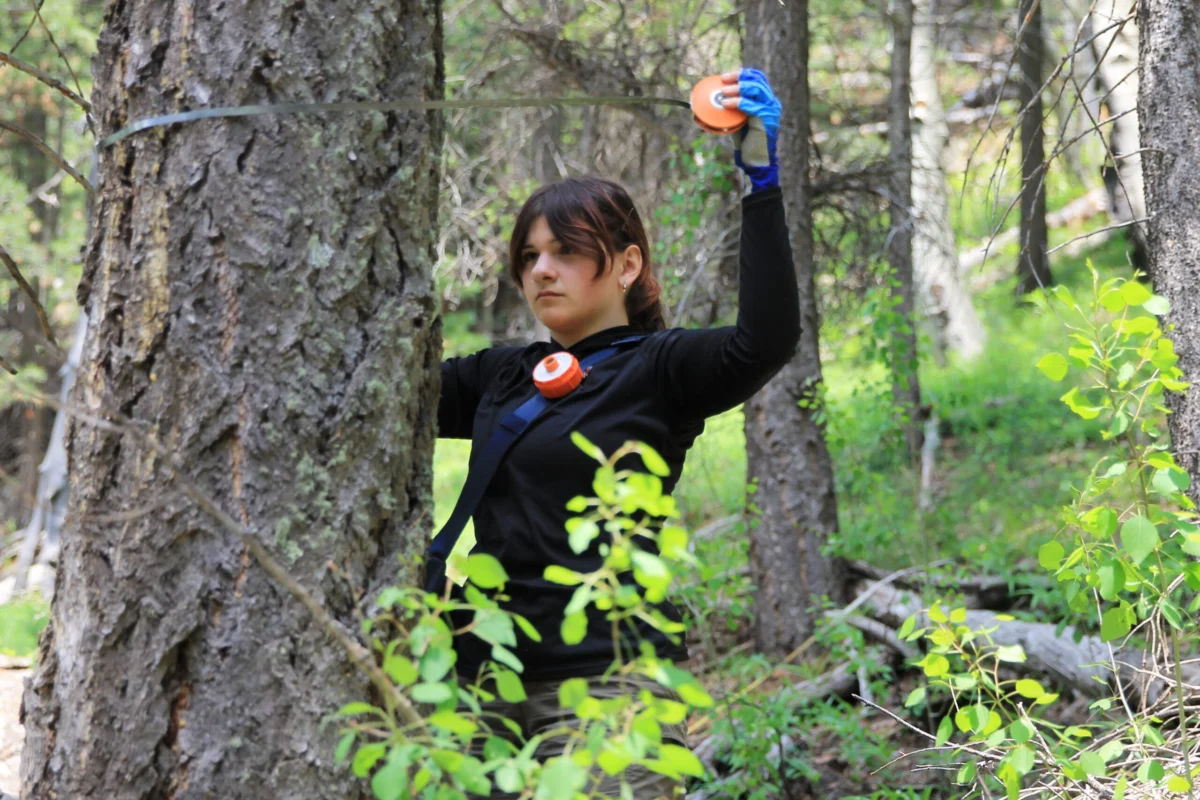
The Appleton-Whittell Research Ranch, a vital nexus of biodiversity in southeastern Arizona, has announced the selection of its latest cohort of Appleton-Whittell Research Fellows. This year, three early-career scientists will embark on critical research projects aimed at addressing some of the most pressing conservation issues facing the ranch and the broader southwestern grasslands. Their studies will delve into complex ecological questions, from the nuanced impacts of mesquite removal on grassland bird populations to the factors influencing the success of Chiricahua Leopard Frog recovery efforts, underscoring the fellowship’s role in generating data-driven solutions for a region under increasing environmental pressure.
A Jewel of Biodiversity: The Research Ranch at the Forefront of Conservation
The Appleton-Whittell Research Ranch stands as a testament to the rich, yet fragile, biodiversity of the Arizona-Sonora Desert and the Sky Islands region. Established by Frank and Ariel Appleton with a foundational mission to leave the land in a better state than they found it, the ranch spans thousands of acres of uniquely intact grasslands, riparian areas, and mesquite bosques. This mosaic of habitats supports an extraordinary array of life, including a "long list" of priority grassland bird species such as Baird’s Sparrow, Grasshopper Sparrow, Horned Lark, and Chihuahuan Meadowlark, whose populations have seen significant declines across North America. Beyond avian residents, the ranch is a sanctuary for numerous threatened and endangered species, contributing significantly to regional species recovery efforts.
However, this ecological richness is accompanied by a formidable array of conservation challenges. The ranch, like much of the American Southwest, contends with the relentless march of invasive species, particularly non-native grasses like buffelgrass and Lehmann lovegrass, which alter fire regimes and outcompete native flora. The pervasive effects of a changing climate manifest in prolonged droughts, increased frequency and intensity of wildfires, and shifts in precipitation patterns, all of which stress delicate ecosystems. Furthermore, the lingering impacts of historical land uses, including unsustainable grazing practices and fire suppression policies, continue to shape the landscape, often to the detriment of native species and ecological processes. These multifaceted threats create a complex conservation landscape where straightforward solutions are often elusive.
The Fellowship’s Mandate: Bridging Critical Knowledge Gaps
Addressing these interwoven challenges requires more than just dedicated labor; it demands robust, site-specific scientific data. The Research Ranch team, supported by a dedicated network of volunteers and the broader conservation community, possesses the passion and willingness to implement conservation actions. Yet, for many of the most critical problems affecting southwestern grasslands, the empirical data needed to inform effective interventions simply do not exist. This is where the Appleton-Whittell Research Fellowship program proves indispensable.
Launched to incentivize and support early-career scientists, the fellowship provides a crucial mechanism for generating novel, innovative research directly applicable to conservation efforts. Each year, fellows receive a cash award to support their studies, complimentary overnight stays on the ranch to facilitate fieldwork, and invaluable communication opportunities to share their findings with the Audubon community and beyond. In return, the Research Ranch benefits immensely, becoming a living laboratory at the epicenter of cutting-edge ecological science. This symbiotic relationship ensures that conservation strategies implemented on the ranch, and potentially across the wider region, are grounded in the most current and relevant scientific understanding. The program effectively transforms theoretical questions into actionable insights, moving conservation efforts from reactive responses to proactive, data-informed strategies.
Introducing the 2024 Fellows: A New Wave of Scientific Inquiry
This year’s cohort comprises three promising scientists, each bringing a unique focus to questions critical to the ranch’s mission and regional conservation. Their diverse projects reflect the complexity of the challenges at hand, promising to yield insights that will significantly advance our understanding and management of these vital ecosystems.
Alexia: Unraveling Broader Ecological Dynamics
One of the new fellows, Alexia, whose specific research project is yet to be fully detailed, has already established a significant connection with the Research Ranch through prior visits and collaborations. Her repeated engagements with the ranch’s unique environment have fostered a deep appreciation for its role in protecting habitat for a diverse range of birds and other wildlife. Alexia’s research is intended to directly contribute to the ranch’s conservation mission and to the broader ecological understanding of southeastern Arizona. While specifics are forthcoming, her involvement signals a commitment to foundational ecological studies that often underpin more targeted conservation actions. Such research might involve investigating habitat connectivity, the dynamics of avian communities in relation to various land management practices, or the intricate relationships between plant communities and insect populations, all of which are crucial for maintaining ecosystem health. The Research Ranch eagerly anticipates her return this summer and the results her studies will undoubtedly yield for the region’s ecological knowledge base.
Cameron: Navigating the Complexities of Mesquite Encroachment
Cameron’s research zeroes in on one of the most visible and ecologically impactful challenges in southwestern grasslands: mesquite encroachment. While mesquite trees are native to Arizona, historical land management practices, notably a century of fire suppression, coupled with overgrazing and a changing climate, have dramatically accelerated their spread into historically treeless grasslands over recent decades. This woody species invasion profoundly alters grassland structure, outcompeting native grasses and significantly reducing suitable habitat for obligate grassland birds such. For species like Baird’s Sparrow and Grasshopper Sparrow, whose populations have declined by an estimated 50-70% across their range since the 1970s, the loss of open grassland is a direct threat to their survival.
The removal of encroaching mesquite appears, on the surface, to be a straightforward solution for grassland restoration. Indeed, such interventions are known to improve forage quality for livestock, increase water infiltration, and potentially restore native plant communities. However, the ecological reality is far more complex. Cameron plans to investigate the "secondary impacts" of mesquite removal, which can include soil disturbance, increased erosion potential, the paradoxical rise of invasive grass cover in disturbed areas, and the lingering effects of herbicides and heavy machinery used in the removal process. These secondary impacts could potentially negate or even reverse the intended benefits for bird populations.
Taking advantage of an ongoing mesquite removal effort on the Santa Rita Experimental Range (SRER), which borders the Research Ranch and shares similar ecological characteristics, Cameron will meticulously study these downstream effects. His research is designed to provide critical, data-driven answers on how different mesquite removal techniques affect grassland bird communities in the short and long term. Beyond his scientific pursuits, Cameron is deeply committed to making birding and biology more accessible, inclusive, and welcoming. As part of his project, he will collaborate with the Sonoran Joint Venture, the Arizona Game and Fish Department, and the Tucson Bird Alliance to recruit and train a diverse team of field technicians. This initiative not only supports his research but also fosters a new generation of conservation leaders, broadening participation in scientific inquiry and environmental stewardship. The Research Ranch is thrilled to support this dual mission of scientific discovery and community empowerment.
Max: Safeguarding Imperiled Amphibians and Wetland Health
Max’s research addresses the urgent conservation needs of the Chiricahua Leopard Frog (Lithobates chiricahuensis), a species listed as threatened under the Endangered Species Act since 2002. Facing a gauntlet of threats including significant habitat loss and degradation, the pervasive chytrid fungus (Batrachochytrium dendrobatidis), and the impacts of invasive species like American Bullfrogs, the Chiricahua Leopard Frog has seen its populations dramatically decline across its historic range. With much of their natural habitat compromised, the species has become increasingly reliant on human-made, artificial ponds and wetlands for survival and recovery.
These constructed habitats play a critical role in recovery efforts, serving as refugia and breeding grounds from which biologists can harvest eggs for reintroduction programs elsewhere. However, the success rate of these artificial sites varies widely: some establish robust, productive populations, while others inexplicably fail to thrive. The Research Ranch, with its thriving metapopulation of Chiricahua Leopard Frogs across at least seven on-site locations and several more nearby, offers an unparalleled natural laboratory to investigate this perplexing disparity. Max will leverage this unique setting to explore the ecological factors that differentiate successful artificial ponds from those that falter. His research could involve analyzing water quality parameters, pond morphology, the presence of specific aquatic vegetation, invertebrate communities, or predator dynamics, all of which could influence frog survival and reproductive success.
Max is enthusiastic about ecological restoration and is driven by the potential of his work to inform and improve Chiricahua Leopard Frog conservation efforts throughout southeastern Arizona. His findings are expected to provide actionable recommendations for the design and management of artificial wetlands, thereby increasing the efficiency and success of reintroduction and population augmentation programs. The Research Ranch views this research as an invaluable opportunity to put its own ponds and wetlands to scientific good, ready to implement any suggested improvements that emerge from Max’s investigations to further bolster the resilience of this imperiled amphibian.
Broader Implications for Southwestern Ecosystems and Future Leadership
The work of these Appleton-Whittell Research Fellows extends far beyond the boundaries of the Research Ranch itself. The insights gleaned from their studies on mesquite encroachment, grassland bird ecology, and amphibian recovery hold significant implications for land management agencies, conservation organizations, and private landowners across the entire southwestern United States. By generating robust, evidence-based solutions, the fellowship program contributes directly to the Audubon Society’s broader conservation objectives and helps shape regional environmental policy. For instance, a clearer understanding of the nuanced impacts of mesquite removal can lead to more effective and ecologically sensitive restoration practices, while insights into leopard frog habitat requirements can refine wetland creation and management guidelines.
Furthermore, the fellowship program is a powerful incubator for the next generation of conservation leaders. By providing early-career scientists with the resources, mentorship, and platform to conduct meaningful research, it cultivates expertise and passion essential for tackling future environmental challenges. The emphasis on community engagement, as exemplified by Cameron’s project, ensures that scientific endeavors are connected to broader societal goals and contribute to a more inclusive and informed conservation movement.
Frank and Ariel Appleton’s enduring vision for the Research Ranch—to leave the land better than they found it—continues to guide the efforts of the Audubon team today. Each year, the Appleton-Whittell Research Fellows are instrumental in filling the critical knowledge gaps that, if left unaddressed, would limit the impact of even the most dedicated conservation efforts. The Research Ranch and the wider conservation community express profound gratitude to this latest batch of Fellows, and to all those who have contributed to the program’s legacy. Their commitment to scientific inquiry is not merely academic; it is a vital investment in the ecological health and resilience of one of North America’s most biodiverse and threatened regions. The public is encouraged to join in celebrating these new recruits and to stay tuned throughout the upcoming season for opportunities to learn more about their groundbreaking work and its tangible contributions to conservation.
