
The Republic of Ecuador, despite its relatively small geographic footprint, remains one of the most biologically diverse nations on Earth, harboring over 1,600 species of birds within its borders. A recent two-week professional bird photography expedition, concluding in early May, has highlighted the critical importance of these ecosystems and the growing role of community-led conservation in preserving them. From the humid lowlands of the Amazon Basin to the windswept páramo of the high Andes, the expedition documented a vast array of avian life, providing a contemporary snapshot of the region’s ecological health and the success of various ecotourism initiatives.
The Amazonian Foothold: Yasuní and the Napo River
The expedition commenced in the capital city of Quito on April 20, serving as a staging point for a transition into the Amazon Basin. By April 21, the group reached the Napo River, a major tributary of the Amazon, located near the Yasuní National Park. Yasuní is widely regarded by biologists as one of the most biodiverse places on the planet, designated as a UNESCO Biosphere Reserve in 1989. The region is home to an estimated 600 bird species, representing approximately one-third of all bird species found in the Amazon Basin.
The logistical framework of this leg relied heavily on the Sani Isla Kichwa community. This partnership underscores a significant trend in Ecuadorian conservation, where indigenous communities manage protected reserves as a sustainable alternative to extractive industries like logging and oil. Led by local guides such as Carlos from the Sani Isla community, the expedition utilized narrow waterways to access remote lagoons.
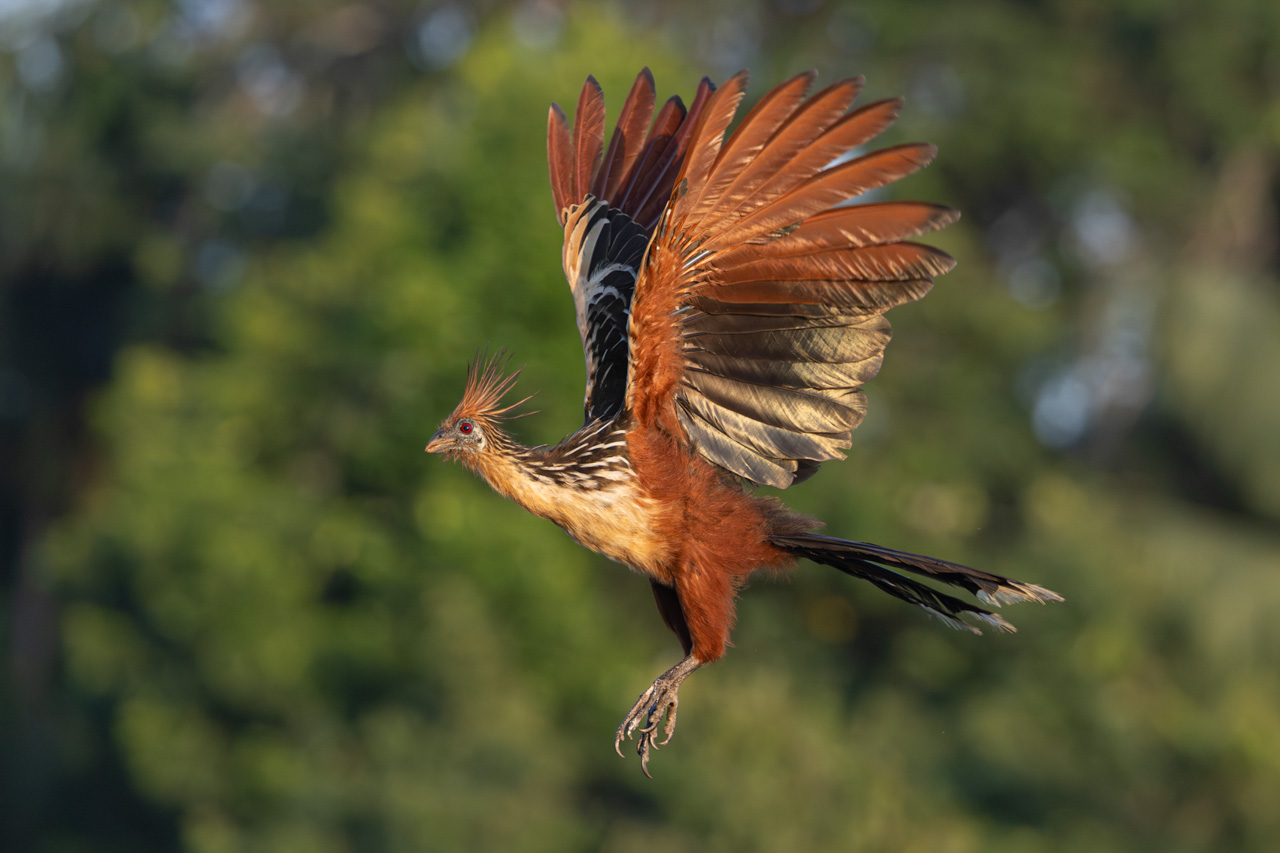
Initial observations included the Hoatzin (Opisthocomus hoazin), a phylogenetically isolated species known for its unique digestive system and "primitive" appearance. Other early sightings featured the Masked Crimson Tanager and Orange-winged Amazon. The presence of the Black Caiman, a top predator in these aquatic systems, indicated a robust and intact food web within the Sani Isla reserve.
Canopy Dynamics and Clay Lick Ecology
On April 22 and 24, the expedition utilized specialized canopy towers to observe species that rarely descend to the forest floor. These towers, often built around massive Ceiba (Kapok) trees, provide researchers and photographers with eye-level access to the upper rainforest strata. The canopy activity was marked by sightings of White-necked and Pied Puffbirds, Gilded Barbets, and the Ivory-billed Aracari.
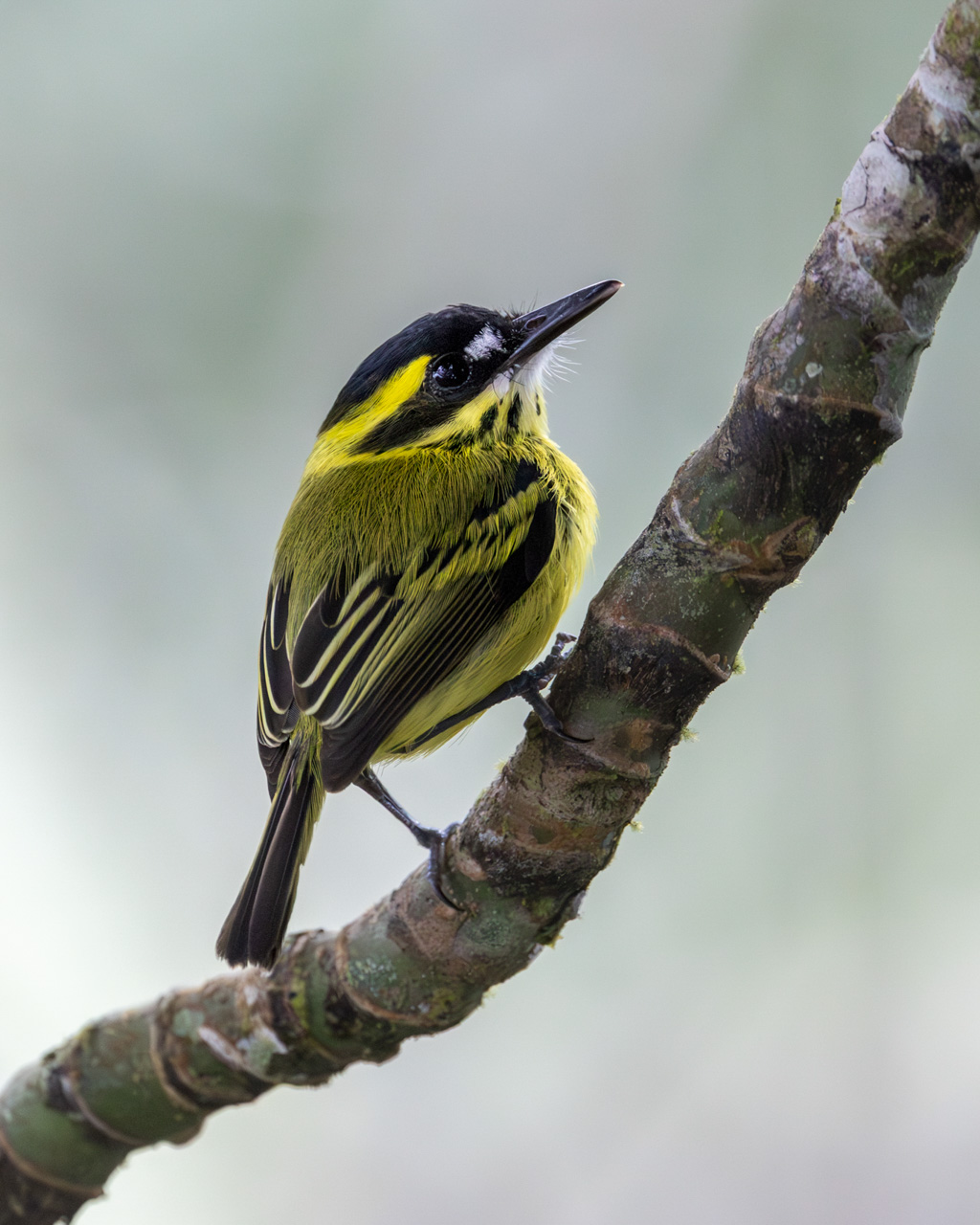
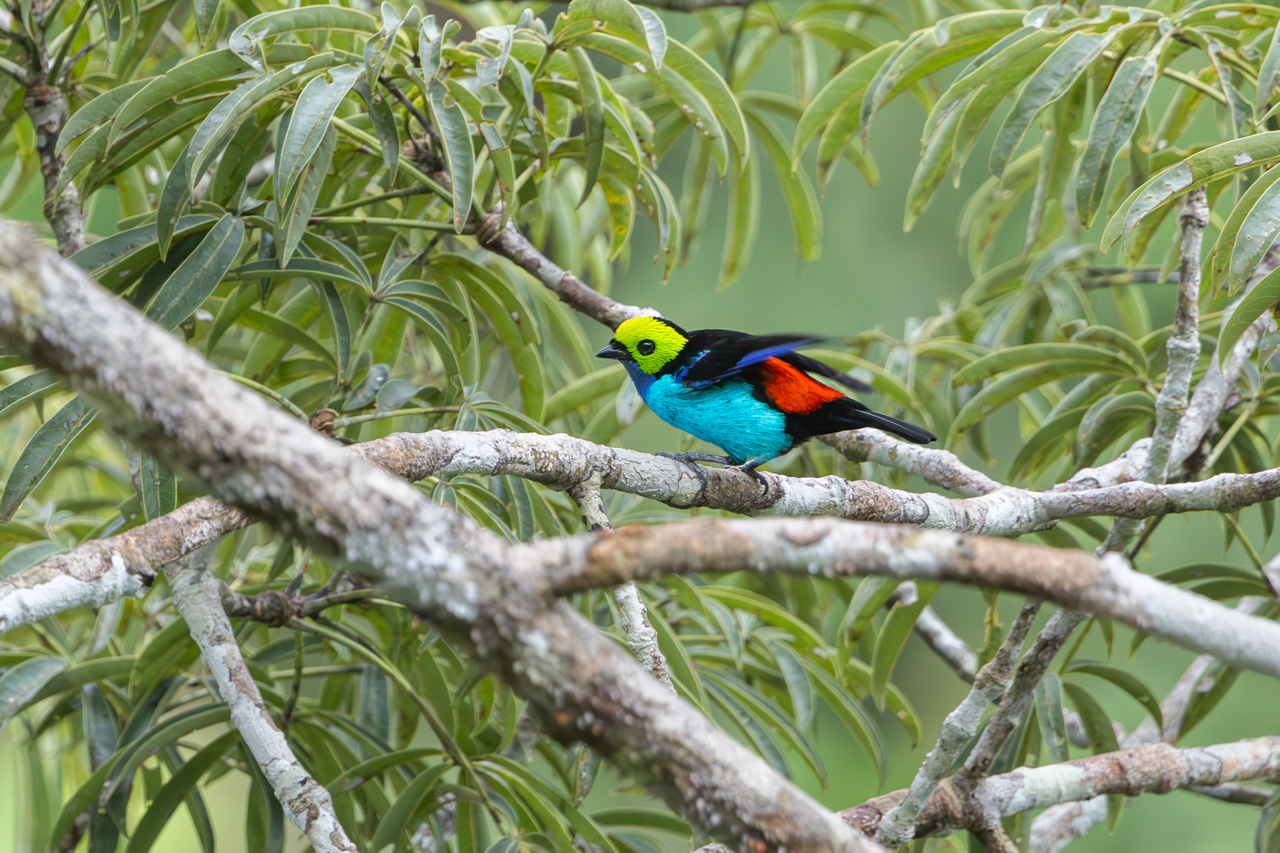
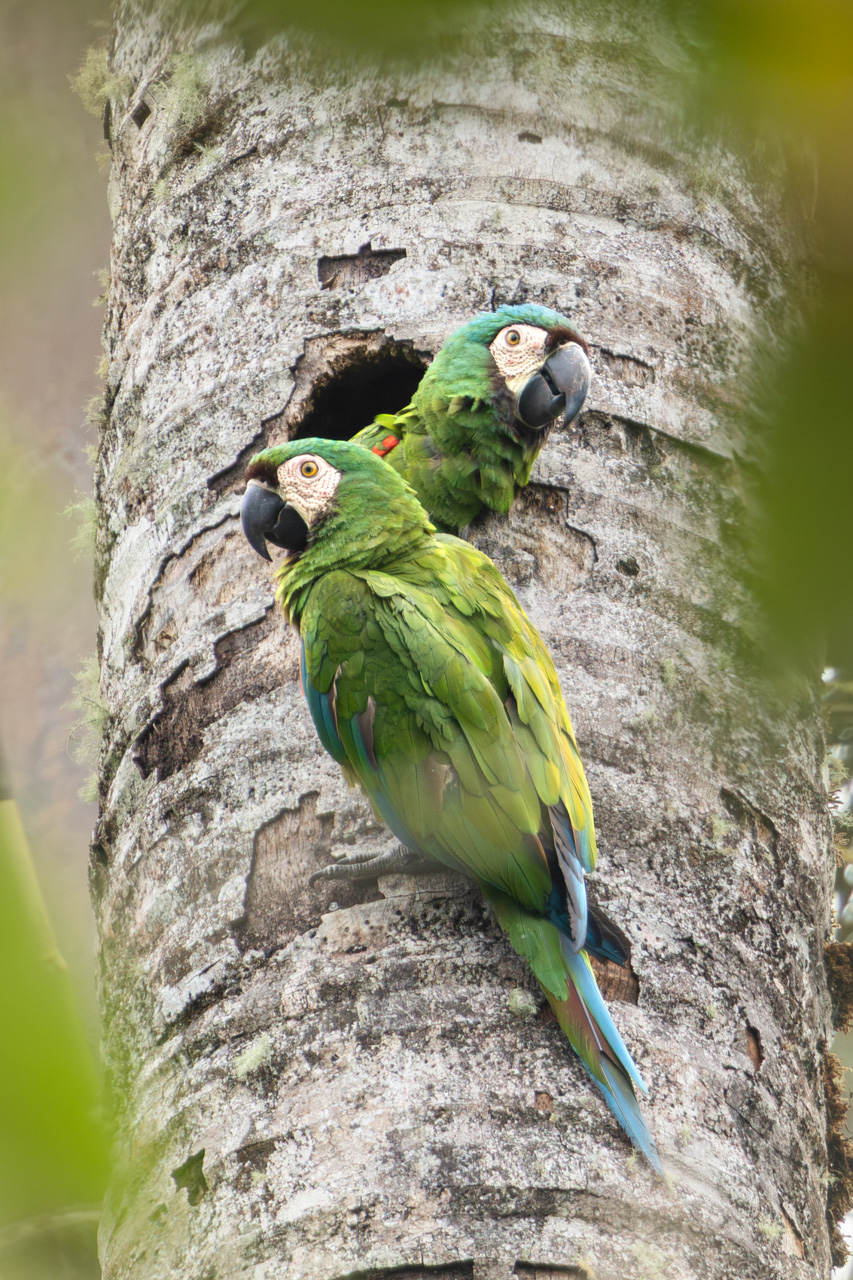
The observation of mixed-species tanager flocks—including Paradise, Opal-rumped, and Green-and-gold Tanagers—highlighted the complex social foraging behaviors prevalent in the Amazonian canopy. Furthermore, the expedition visited active clay licks (saladeros) on April 23. These geological features are essential for psittacines (parrots and macaws), which consume the mineral-rich soil to neutralize toxins found in their diet of seeds and unripened fruit. While sightings of Blue-headed Parrots and Mealy Amazons were recorded, the presence of a Slate-colored Hawk nearby demonstrated the constant pressure of predation that dictates the behavior of these avian communities.
The Eastern Andean Ascent: From Foothills to Cloud Forests
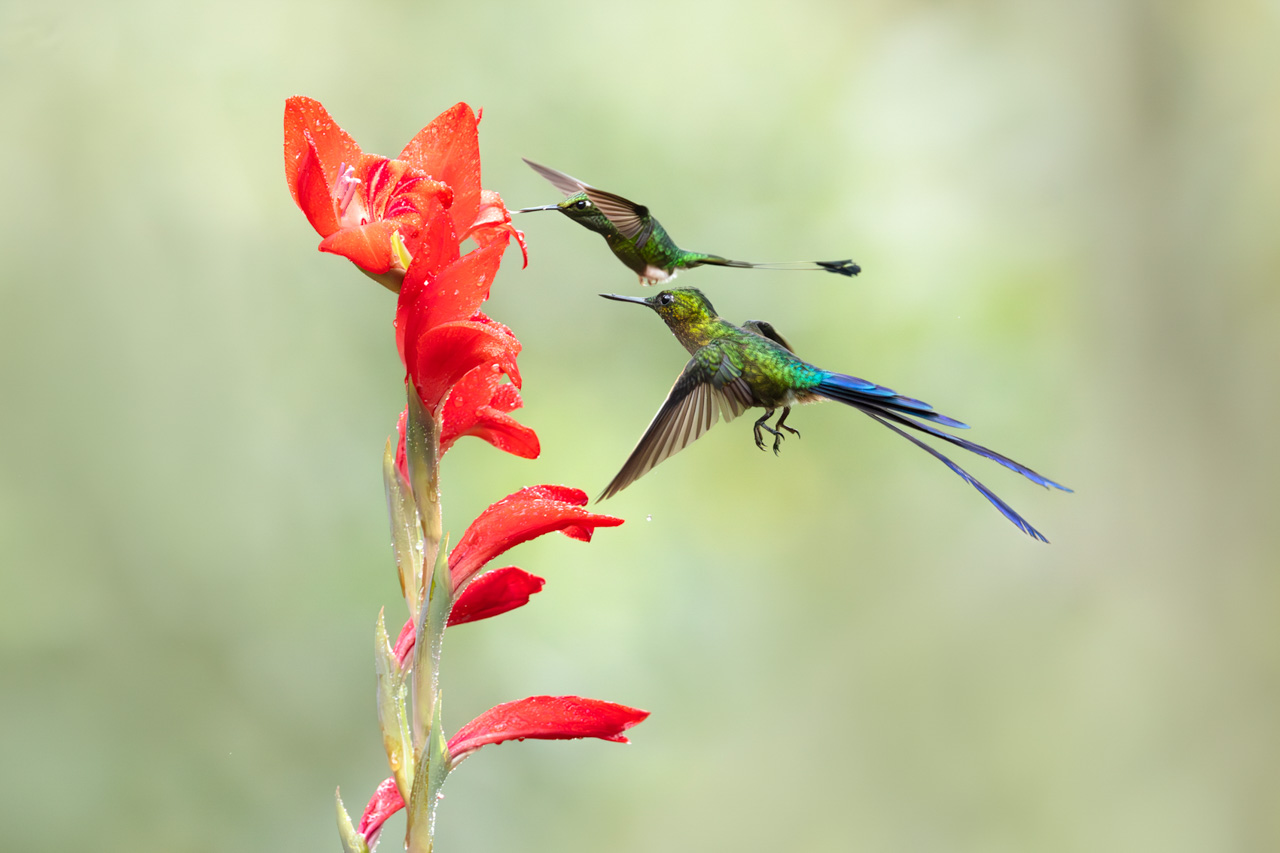
The transition from the Amazonian lowlands to the Andean foothills began on April 25. This altitudinal shift results in a rapid change in species composition. Stopping near Wildsumaco, the expedition documented a surge in trochilid (hummingbird) diversity. Species such as the Wire-crested Thorntail and the Napo Sabrewing were observed, showcasing the specialized bill morphologies adapted to the specific flora of the foothill region.

By April 26, the group reached the San Isidro Lodge on the eastern slope of the Andes. This area is famous among ornithologists for the "San Isidro Owl," a population of Ciccaba owls that do not perfectly match the descriptions of Black-and-white or Black-banded Owls, suggesting a possible undescribed species or a unique subspecies.
A major highlight of the San Isidro stay was the rare sighting of the Mountain Tapir (Tapirus pinchaque). Listed as Endangered by the IUCN, the Mountain Tapir is one of the most threatened mammals in the Neotropics. Its presence near the lodge, alongside an adult female and calf, indicates that the corridors between protected areas in the eastern Andes remain functional for large mammals.
High-Altitude Specialization: The Páramo and Antisana
On April 28 and 29, the expedition climbed above 4,000 meters into the páramo, a high-altitude tundra-like ecosystem unique to the northern Andes. The páramo acts as a vital "water tower" for Ecuador, capturing moisture from the clouds and feeding the rivers below.
In the windswept grasslands of Antisana National Park, the group documented the Andean Condor (Vultur gryphus). As the national bird of Ecuador, the condor is a symbol of the Andes, yet it faces significant threats from habitat loss and lead poisoning. With a national population estimated at only 150 individuals, the sighting of several soaring condors was of significant conservation interest.
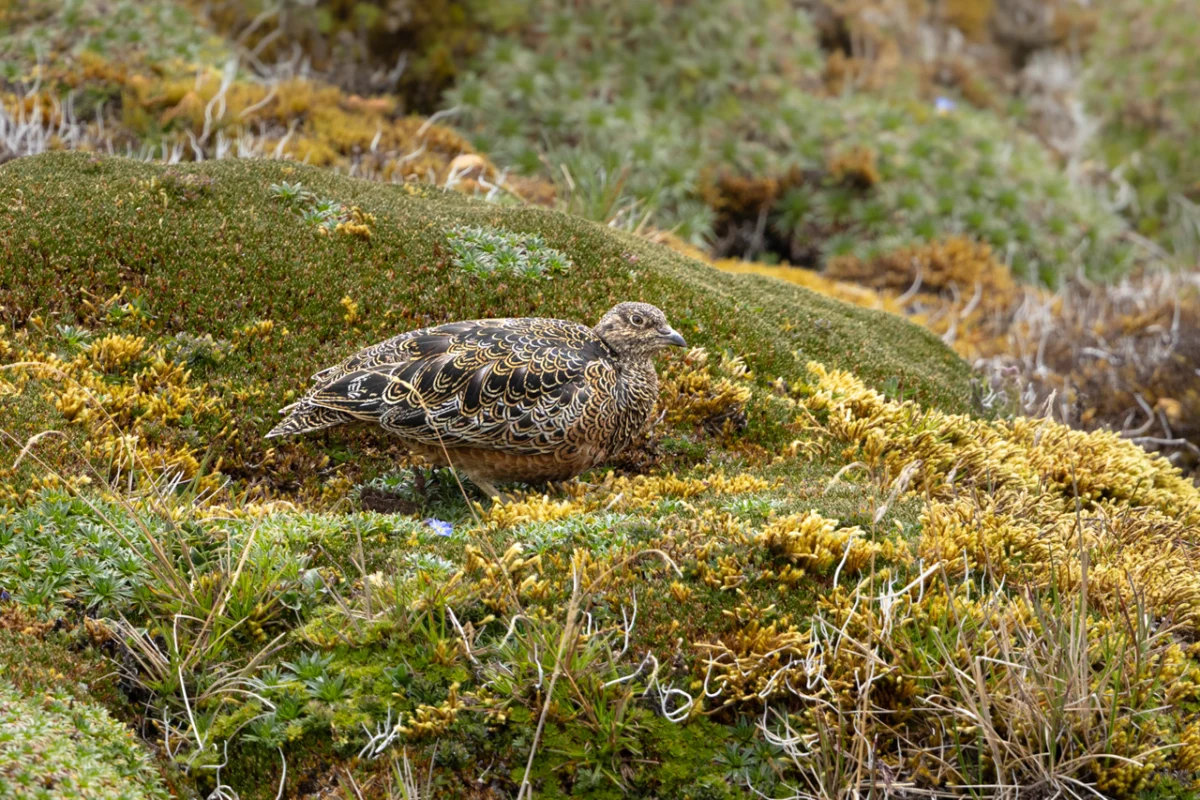
Other high-altitude specialists observed included the Rufous-bellied Seedsnipe and the Andean Ibis. The seedsnipe, in particular, is a master of camouflage, adapted to the harsh, cold environment of the high peaks. The interaction between a Carunculated Caracara and a pair of Andean Ibises provided a rare photographic opportunity of interspecies aggression in the high-altitude biosphere.
The Western Slope: The Chocó Bioregion and the "Paz de las Aves" Model
Moving to the western slope of the Andes on April 30, the expedition entered the Chocó bioregion, known for its high rates of endemism. The Tandayapa Valley served as the base for exploring these humid cloud forests.
On May 1, the group visited Refugio Paz de las Aves, a site that has become a global case study for conservation through ecotourism. The founder, Angel Paz, became world-renowned for his ability to "habituate" elusive antpittas—birds that are notoriously difficult to see—by offering them earthworms. This practice has allowed for unprecedented study and photography of species like the Giant Antpitta and Yellow-breasted Antpitta.
The "Paz de las Aves" model has proven that a small-scale, family-owned farm can be more profitable as a bird sanctuary than as agricultural land. This has inspired a wave of similar "private reserves" across Ecuador, effectively creating a patchwork of protected habitats that supplement the national park system.
Final Documentation: Evolutionary Extremes at Zuro Loma
The expedition concluded on May 2 and 3 with visits to Zuro Loma and the Yanacocha Reserve on the slopes of the Pichincha Volcano. These sites are critical for observing the Sword-billed Hummingbird (Ensifera ensifera). This species possesses the longest bill relative to body size of any bird in the world, an evolutionary adaptation that allows it to feed on long, tubular flowers like those of the Passiflora mixta.
Final observations included the Black-chested Mountain Tanager and the Burrowing Owl, the latter found in the open grasslands near Quito. These sightings capped a journey that spanned multiple life zones, documenting over 100 species in the Amazon alone and hundreds more across the Andean transect.

Chronology of the Expedition
- April 20: Arrival in Quito; initial garden birding.
- April 21-24: Exploration of the Amazon Basin, Sani Isla, and Yasuní National Park.
- April 25: Transit to the Andean foothills; Wildsumaco hummingbird observations.
- April 26-27: San Isidro Lodge; Mountain Tapir and "San Isidro Owl" sightings.
- April 28: High-altitude survey of the Papallacta and Guango regions.
- April 29: Antisana National Park; Andean Condor and high-altitude ibis documentation.
- April 30: Transition to the Western Andes; Tandayapa Valley cloud forests.
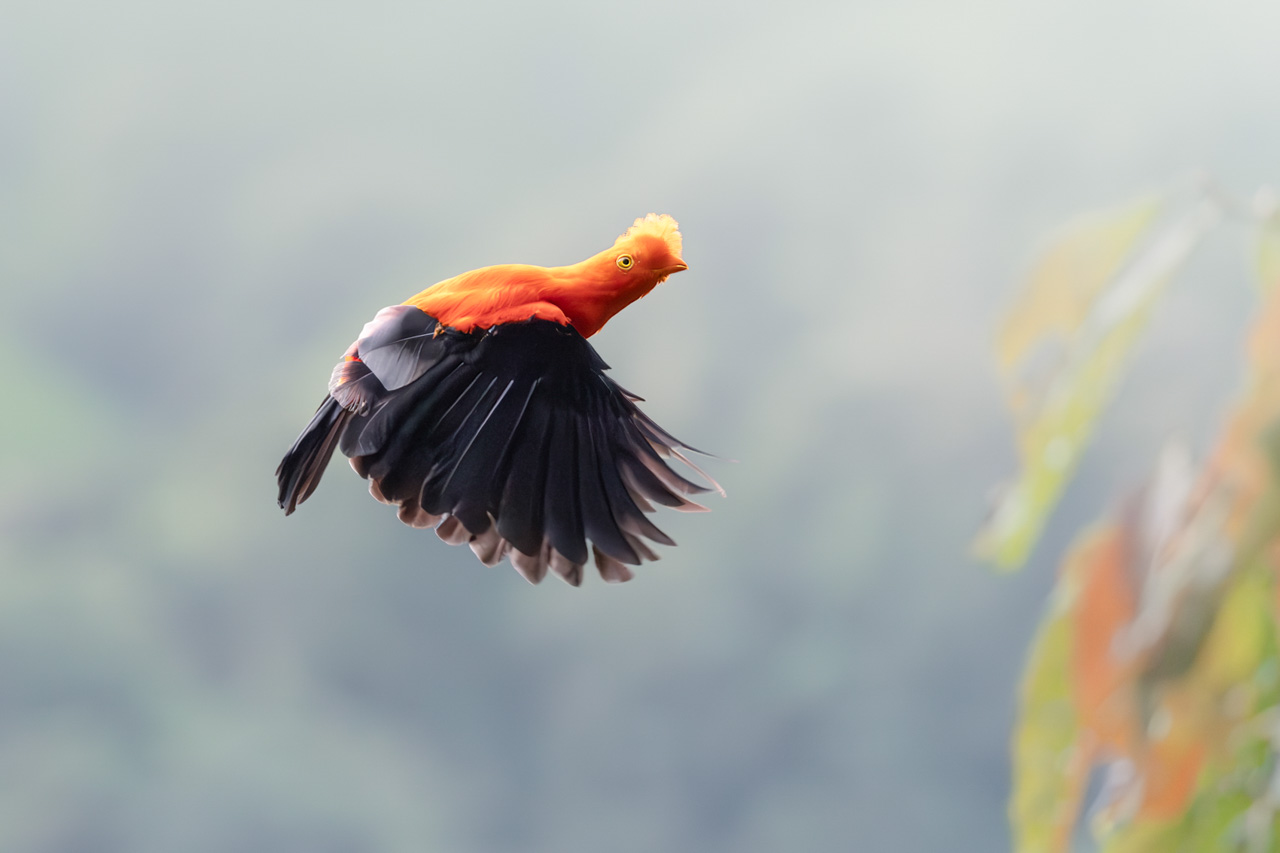
- May 1: Refugio Paz de las Aves; Antpitta conservation focus and Cock-of-the-rock lek.
- May 2-3: Zuro Loma and Yanacocha; Sword-billed Hummingbird and return to Quito.
Analysis of Implications for Regional Conservation
The success of this expedition and the variety of species documented provide a clear indication of the economic and ecological value of birding tourism in Ecuador. The data suggests that bird photography tours are no longer a niche market but a primary driver for habitat preservation in the Chocó and Amazonian regions.
- Economic Viability: The reliance on local guides from the Kichwa community and local entrepreneurs like Angel Paz demonstrates that ecotourism provides a viable financial alternative to deforestation. This "living forest" economy supports local livelihoods while keeping carbon sinks intact.
- Taxonomic and Scientific Contribution: Observations of rare species, such as the Black-banded Owl population at San Isidro and the Mountain Tapir, contribute to the ongoing monitoring of these species’ ranges and health.
- Connectivity: The ability of the group to find high-altitude specialists and lowland residents in relatively close proximity underscores the importance of altitudinal corridors. For many species, the ability to move up or down the mountain slopes is essential for survival in the face of a changing climate.
In conclusion, the two-week expedition served as both a photographic success and a testament to Ecuador’s standing as a premier destination for natural history. The integration of community-led guiding, private reserve management, and national park protection remains the most effective strategy for ensuring that the country’s avian treasures continue to thrive for future generations.
