
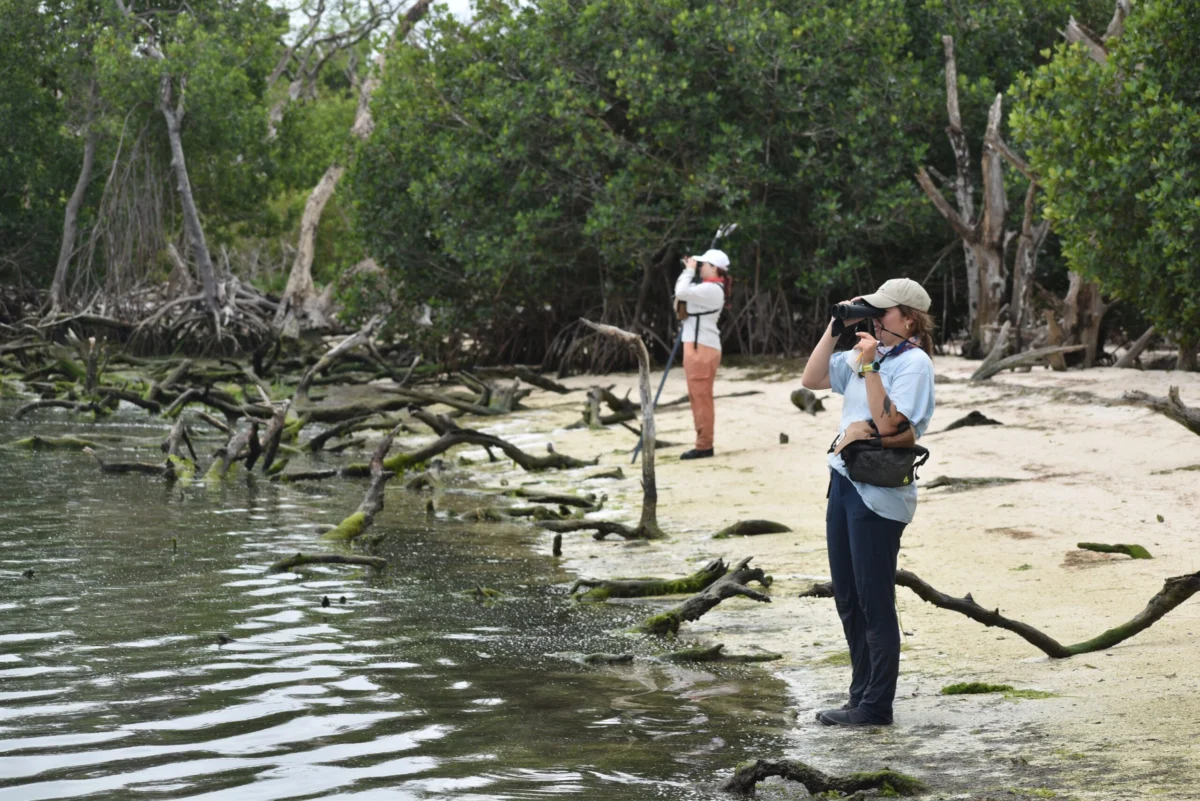
A resounding splash signals the dropping of an anchor, swiftly followed by the gentle placement of the first kayak into the serene, shallow waters surrounding Sandy Key in Florida Bay. This precise, methodical action marks the commencement of another critical mission for Shauna Sayers, a dedicated wading bird specialist affiliated with Audubon’s Everglades Research Station, nestled in Tavernier. Her regular springtime pilgrimages to Sandy Key and 62 other crucial keys form an indispensable part of a broader, long-term effort to meticulously monitor the nesting endeavors of a diverse array of wading birds. Central to this scientific inquiry is the Roseate Spoonbill (Platalea ajaja), a species whose ecological sensitivities render it an invaluable bio-indicator for assessing the overall health and resilience of the vast and complex Everglades ecosystem.
The Everglades: A Delicate Balance and a Lifeline for Wildlife
The Everglades, often referred to as the "River of Grass," represents one of the world’s most unique and biodiverse wetland ecosystems. Stretching from the Kissimmee River basin south of Orlando to Florida Bay at the southern tip of the peninsula, this vast sheet flow of freshwater once moved unimpeded, nourishing a mosaic of habitats including sawgrass marshes, cypress swamps, pinelands, and coastal mangroves. However, over the past century, extensive drainage and flood control projects, primarily designed to support agriculture and urban development, have drastically altered the natural hydrology of the system. This intervention has led to a significant reduction in the size of the Everglades, with over half of its original wetland area lost, and has profoundly impacted water quality and quantity.
Florida Bay, the downstream recipient of this freshwater flow, is particularly vulnerable to these hydrological changes. It is a critical nursery for numerous marine species and an essential foraging and nesting ground for a multitude of avian species. Alterations in freshwater delivery can lead to increased salinity, nutrient imbalances, and harmful algal blooms, all of which directly affect the prey base and habitat suitability for wading birds. It is against this backdrop of ecological vulnerability and ongoing restoration efforts that Audubon’s monitoring program assumes paramount importance.
The Roseate Spoonbill: A Vibrant Barometer of Environmental Change
The Roseate Spoonbill, with its distinctive spatulate bill and striking pink plumage, is not merely an aesthetically captivating bird; it serves as a crucial bellwether for the health of the Everglades. These birds are highly dependent on specific hydrological conditions – particularly shallow, brackish water environments – for successful foraging and nesting. Their unique feeding strategy involves sweeping their bills side-to-side through the water to detect small fish, crustaceans, and aquatic insects. Any significant deviation from optimal water levels or salinity can severely impact their ability to find food, subsequently affecting reproductive success.
Historically, Roseate Spoonbills faced severe population declines in the late 19th and early 20th centuries due to plume hunting, nearly pushing them to extinction. Conservation efforts allowed for a rebound, but their populations remain sensitive to habitat degradation and environmental shifts. Consequently, the nesting success or failure of Roseate Spoonbills provides scientists with tangible metrics to evaluate the efficacy of Everglades restoration initiatives, as well as to gauge the escalating impacts of climate change on this delicate ecosystem.
Audubon’s Decades-Long Commitment to Everglades Research
Audubon’s involvement in the Everglades dates back over a century, making it one of the longest-running conservation efforts in the United States. The Everglades Research Station, established in Tavernier, Florida, stands as a testament to this enduring commitment. For decades, the station has been at the forefront of wading bird research, accumulating an invaluable long-term dataset that informs conservation strategies and policy decisions. The monitoring program, encompassing 63 keys across Florida Bay, provides a comprehensive picture of avian reproductive trends, offering critical insights into the ecosystem’s response to both natural fluctuations and human-induced alterations.
The dedication of specialists like Shauna Sayers is pivotal to this effort. On any given monitoring day, Sayers demonstrates expert seamanship, skillfully navigating a compact vessel laden with kayaks, specialized equipment, and a small, highly trained team. The journey through a labyrinth of channel markers, which delineate shallow waters, no-wake zones, and seasonal no-entry zones established by the National Park Service, is a testament to the remoteness and protected status of these critical habitats. The one-hour-and-fifteen-minute boat ride to Sandy Key underscores the isolation of these islands, which serve as vital waypoints for migratory birds, overnight roosts, and indispensable nurseries for raising young.
A Day in the Field: Meticulous Monitoring and Data Collection
Upon arrival at Sandy Key, the sounds and unique briny smells of a thriving bird colony permeate the air, carried on a gentle breeze. The team, operating under specific permits and permissions granted for this essential scientific work, meticulously prepares for the next phase. The kayaks are deployed to traverse the shallow flats surrounding the island, a natural barrier that effectively deters unauthorized boat access and protects the sensitive nesting areas. As they paddle towards the mangrove-covered interior of the key, the air fills with a symphony of avian calls: the distinctive squeaky calls of Red-winged Blackbirds, the delicate twittering of warblers, and the guttural squawks of Tricolored Herons emanating from deep within the dense foliage.
Shauna Sayers and Senior Biologist Kaliegh Schendler efficiently ready their specialized gear, while Seasonal Research Assistant Alli Mallouk begins the crucial task of meticulously recording every observed bird species on her datasheet. The team’s approach is systematic and non-invasive, prioritizing the well-being of the birds. Carefully navigating the challenging terrain of mangrove prop roots and squishy mud, Sayers, with her keen eye, spots the first nest. She pauses, observing for any signs of adult birds or young, before cautiously extending her telescoping mirror to peer inside without disturbing the inhabitants. While this particular nest is vacant, the next reveals a promising sight: a young Reddish Egret beginning to stir within its nest.
“We have one chick at stage two,” Mallouk calls out, her voice precise and clear. Schendler, ever vigilant, quickly trains her zoom lens on the gangly young bird, capturing crucial photographic documentation, even as she deftly swats away a persistent horde of biting insects. The team continues their survey, diligently documenting a total of 31 bird species during their visit. Among the most numerous observations are Double-crested Cormorants, Ruddy Turnstones, and Tricolored Herons, all vital components of the Florida Bay ecosystem. Crucially, the team also records twelve "young-of-the-year" Roseate Spoonbills, a direct indicator of recent reproductive success for this critical species.
Broader Ecological Implications and Restoration Efforts
The data gathered on these monitoring trips extends far beyond mere bird counts. It provides a real-time snapshot of ecosystem health and serves as a vital feedback mechanism for the Comprehensive Everglades Restoration Plan (CERP). Initiated in 2000, CERP is the largest environmental restoration effort of its kind globally, a joint federal-state project designed to restore the quantity, quality, timing, and distribution of water flow through the Everglades. With an estimated cost in the tens of billions of dollars and a projected timeline spanning decades, CERP aims to re-establish the natural hydrological patterns that are essential for the survival of species like the Roseate Spoonbill.
The success or failure of spoonbill nesting efforts is directly correlated with the effectiveness of CERP projects. For instance, increased freshwater flows into Florida Bay from restoration initiatives can reduce hypersalinity events, which are detrimental to the small fish and invertebrates that spoonbills consume. Conversely, poor nesting seasons can signal a need to re-evaluate restoration strategies or highlight areas where environmental stressors are intensifying.
Beyond Roseate Spoonbills, the team’s documentation of other wading birds, such as Tricolored Herons, in partnership with the National Park Service, further enriches the ecological picture. Tricolored Herons, while less specialized than spoonbills, also depend on healthy wetland habitats for foraging and nesting, and their population trends contribute to a broader understanding of the overall avian community’s resilience.
The Shadow of Climate Change and Future Challenges
The ongoing monitoring efforts are increasingly critical in the face of climate change, which presents an existential threat to the delicate balance of the Everglades. Habitat loss, exacerbated by the escalating impacts of climate change, is a primary driver of bird declines not only in Florida but throughout the hemisphere. Sea-level rise poses a direct threat to low-lying coastal nesting islands like Sandy Key, potentially submerging crucial habitats. Altered rainfall patterns can lead to more frequent and intense droughts or floods, disrupting the precise water levels required for successful foraging and nesting. Furthermore, increased frequency and intensity of tropical storms and hurricanes can devastate nesting colonies, destroying nests and scattering young.
The data collected by Audubon’s Everglades Research Station helps to identify which areas are most critical to bird population success, the specific threats those areas face, and how best to safeguard the health and longevity of these habitats. This information is shared with a wide array of partners, including federal and state agencies, academic institutions, and other conservation organizations. This collaborative approach ensures that conservation strategies are science-based, adaptable, and responsive to the dynamic challenges facing the Everglades.
Collaborative Conservation: A Path Forward
The work at Sandy Key is a microcosm of a much larger, collaborative effort to protect one of the world’s most irreplaceable natural treasures. The National Park Service, which manages vast tracts of the Everglades, relies heavily on data from organizations like Audubon to inform its management decisions regarding habitat protection, visitor access, and ecological restoration within park boundaries. State environmental agencies utilize this data to guide water management policies and to prioritize funding for restoration projects.
The long-term implications of this work are profound. A healthy Everglades supports not only a stunning diversity of wildlife but also provides essential ecosystem services to human communities. It is a vital source of fresh water for millions of Floridians, supports a multi-billion dollar tourism industry, and protects coastal communities from storm surge. The continued monitoring of indicator species like the Roseate Spoonbill, therefore, is not just about counting birds; it is about ensuring the ecological integrity and long-term sustainability of an entire region, safeguarding a natural heritage for future generations, and respecting the intertwined needs of both wildlife and local communities. The regular journeys to remote islands like Sandy Key are a testament to an unwavering commitment to understanding, protecting, and ultimately, restoring the magnificent River of Grass.
