
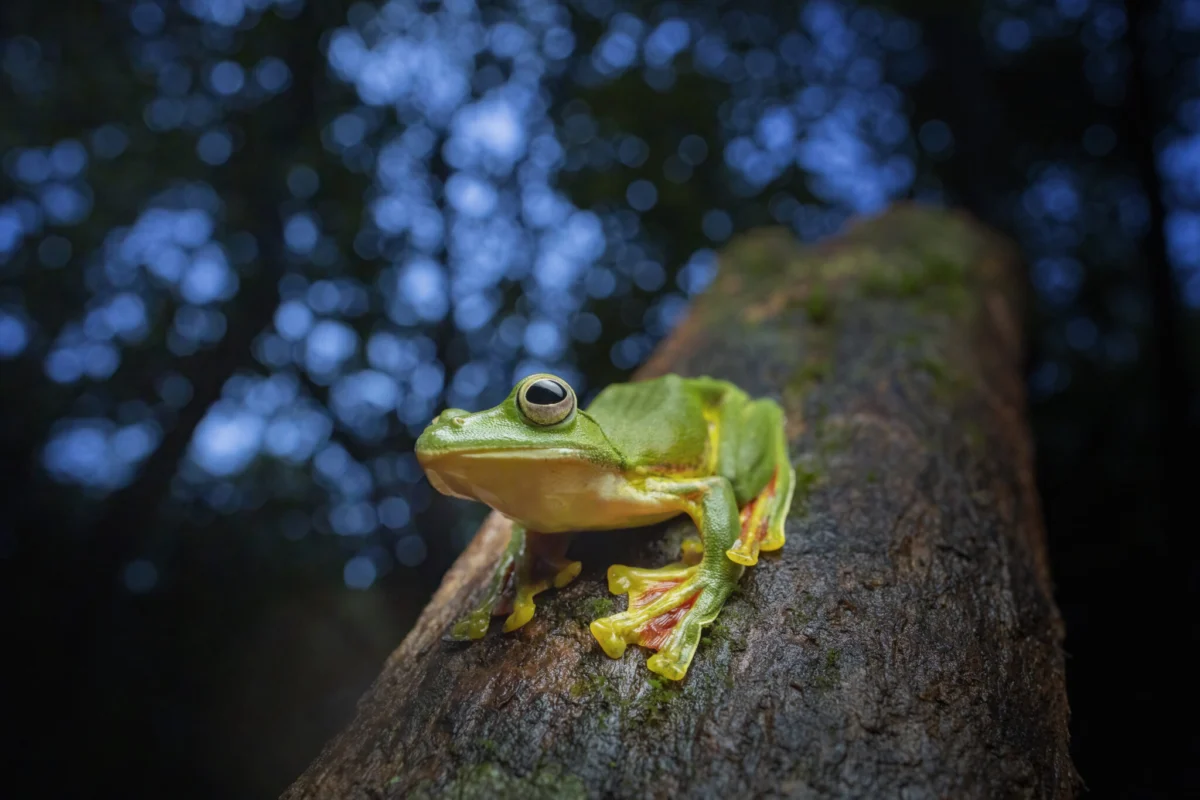
Using a wide-angle lens to capture a small subject within its natural habitat has emerged as a profoundly effective method for crafting immersive, storytelling images in contemporary nature photography. This innovative perspective transcends traditional close-ups by integrating the surrounding environment, thereby transporting the viewer directly into the scene and fostering a deeper connection with the subject’s world. The technique not only reveals the intricate details of the organism but critically places it within its ecological context, emphasizing the delicate balance inherent in its ecosystem. The resulting images are visually striking, inviting audiences to explore the miniature world through the subject’s own point of view, and significantly enhancing the narrative impact of wildlife photography.
The Narrative Power of Context and Immersion
The essence of wide-angle macro photography lies in its capacity for profound storytelling. Unlike conventional macro photography, which often isolates a subject against a blurred background, the wide-angle approach intentionally includes elements of the habitat. This contextualization is crucial for conveying a complete narrative. For instance, an image of a Hump-nosed Pit Viper (Hypnale hypnale) nestled among dead leaves or a Malabar Gliding Frog (Rhacophorus malabaricus) clinging to a dew-laden leaf gains immense depth when its immediate surroundings—the dappled light of the forest floor, the texture of the undergrowth, or the moisture of its arboreal home—are also visible. Such compositions illuminate the animal’s reliance on its environment for camouflage, hunting, or breeding, transforming a mere portrait into a compelling ecological vignette.

Conservation biologists increasingly highlight the value of habitat-rich imagery in public education and advocacy. Dr. Eleanor Vance, a leading expert in amphibian conservation, states, "To protect a species, people must first understand its world. Wide-angle macro photography offers an unparalleled window into these micro-ecosystems, making the plight of even the smallest creatures relatable and urgent. It’s a powerful tool for demonstrating the intricate web of life that sustains biodiversity." By presenting the subject as an integral part of its habitat, photographers can subtly communicate messages about habitat preservation, biodiversity, and the interconnectedness of all life forms. This immersive quality encourages empathy and a greater appreciation for the often-overlooked wonders of the natural world, moving beyond mere aesthetic appeal to foster genuine understanding and a call to action.
Deconstructing the Technique: Wide-Angle Macro Defined
From a technical standpoint, wide-angle macro photography involves utilizing a wide-angle lens at extremely close focusing distances to achieve magnified reproductions of subjects while retaining a broad field of view. This approach contrasts sharply with traditional macro photography, which typically employs dedicated macro lenses designed for 1:1 (life-size) or greater magnification, often resulting in very shallow depth of field and heavily blurred backgrounds. While wide-angle lenses, by their nature, generally do not meet the strict definition of "true macro" (which demands 1:1 magnification without additional accessories), the term "wide-angle macro photography" has gained widespread acceptance to describe this distinctive style of imagery. For clarity and simplicity, this guide adopts the widely used nomenclature.
The evolution of macro photography has seen several shifts since its inception. Early techniques relied on bellows and extension tubes to achieve magnification, often sacrificing light and working distance. The advent of purpose-built macro lenses revolutionized the field, offering sharp, high-magnification capabilities. However, these lenses, typically telephoto in design, inherently compress perspective and isolate subjects. The embrace of wide-angle optics for close-up work began to gain significant traction in the early 21st century, particularly with the availability of specialized wide-angle macro lenses (such as those from Laowa or specific offerings from major brands like Olympus/OM System) that allowed for extremely short minimum focusing distances while maintaining a wide field of view. This development empowered photographers to explore new creative avenues, moving beyond simple magnification to capture the broader ecological narrative. The technique is a sophisticated blend of macro precision and landscape perspective, demanding a unique understanding of both.

The Photographer’s Arsenal: Essential Equipment
Achieving impactful wide-angle macro images necessitates a carefully curated kit, tailored to the unique demands of this genre.
Cameras: The prevailing wisdom in photography often states that "the best camera is the one you already own." This holds true for wide-angle macro. Photographers can initiate their journey with any DSLR or mirrorless camera, regardless of brand or model. However, the latest mirrorless camera systems offer several advantages that significantly ease the technical challenges of macro photography. Features such as advanced autofocus systems with animal eye detection and sophisticated focus tracking capabilities can dramatically improve hit rates, especially with moving subjects. Live view functionality and articulating or tilt screens are invaluable for composing shots from low or awkward angles, which are frequently encountered when working close to the ground. Furthermore, cameras boasting a strong dynamic range are crucial for handling varied lighting conditions often present when balancing a bright background with a flash-lit foreground. Robust weather sealing is a significant asset for field work, protecting against rain, humidity, and dust, while a high burst rate can be beneficial for capturing fleeting moments of animal behavior. While these advanced features certainly streamline the process, a beginner with less cutting-edge gear should not be deterred; strong images are ultimately a product of skill, vision, and patience, rather than solely dependent on the newest technology. The market trend for camera technology indicates a continued push towards mirrorless systems, offering greater computational photography capabilities that further enhance macro photography potential.
Lenses: This component is undeniably critical. A wide-angle lens characterized by an exceptionally low minimum focusing distance (MFD) is indispensable for capturing the immersive images synonymous with this style. Standard wide-angle lenses typically used for landscape photography are generally unsuitable, as their MFDs often prevent sufficiently close engagement with small subjects. Fortunately, several top-tier brands and innovative third-party manufacturers have developed specialized wide-angle macro lenses that offer true macro capabilities (1:1 reproduction) or remarkably low MFDs. Lenses such as the Laowa 15mm f/4 Wide-Angle Macro or the Olympus M.Zuiko Digital ED 8mm f/1.8 Fisheye PRO (used with appropriate accessories) are prime examples. A lens with a short MFD is paramount, as it allows the photographer to fill the frame with the subject while simultaneously including the environment. Without this capability, the subject risks appearing insignificantly small within the frame, becoming lost against a dominant background, thereby undermining the core objective of the technique.

Flash: Despite wide-angle macro photography often being conducted during daylight or twilight hours, an external flash unit is an invaluable, almost essential, addition to the kit. The necessity arises from the need to narrow the aperture significantly (e.g., f/11 to f/22) to achieve sufficient depth of field, ensuring both the subject and its environment are in focus. This narrow aperture drastically reduces the amount of ambient light reaching the sensor, leading to underexposure. A flash effectively compensates for this light loss, providing controlled illumination. When selecting a flash, key features to prioritize include: both ETTL (Through The Lens) and manual modes for flexible exposure control; a fast recycle time to capture successive shots; a guide number above 60, indicating powerful output; high-speed sync (HSS) capability for using flash at shutter speeds faster than the camera’s native sync speed; and remote operation functionality for off-camera lighting setups. These features collectively provide greater creative control and operational flexibility in challenging field conditions.
Diffuser: To effectively soften harsh highlights and create natural-looking illumination, especially on subjects that are wet, reflective, or glistening, a diffuser is absolutely essential. While readily available standard diffusers for traditional macro lenses (typically 90–100 mm in diameter) exist, they are often ill-suited for wide-angle lenses. Their size and design can lead to the diffuser’s front section drooping into the frame, or its edges becoming visible in the wide field of view. To circumvent this, photographers can either opt for smaller, purpose-built diffusers that stay out of the frame or, more commonly, design custom diffuser solutions tailored to their wide-angle lens setup.
Smaller diffusers, such as dome diffusers or mini softboxes, are inherently easier to manage with a wide-angle lens, minimizing the risk of appearing in the shot. However, this convenience often comes at the cost of diffusion quality, as the fundamental principle dictates that a larger diffusion surface generally yields softer, more even light. To adapt a regular, larger diffuser for a wide-angle lens, several creative "hacks" can be employed. One method involves elevating the height of the diffuser using a trigger mounted on the camera, then attaching the flash and diffuser atop it, raising it above the lens’s field of view. Another effective approach is to use a disc-style diffuser positioned to provide top-lighting, which can be particularly useful for subjects on the forest floor. Alternatively, an off-camera flash setup with a large diffuser can produce excellent results, though managing this solo in the field, especially in dense terrain, can be challenging due to the need to balance camera, subject, and remote lighting. The choice often involves a trade-off between optimal diffusion and practical manageability in the field.
Protective Clothing and Field Gear: Essential field gear for wide-angle macro photography largely mirrors that required for any extensive macro photography expedition. This includes robust rain gear to protect both the photographer and sensitive equipment from adverse weather conditions. Proper, waterproof footwear is crucial for navigating damp, muddy, or uneven terrain. Leech guards are highly recommended in tropical or humid environments to protect against leeches and other ground-dwelling creatures, simultaneously allowing the photographer to move confidently through forest floors and marshy lands. Finally, effective mosquito and insect repellents are vital for comfort and concentration, especially during dawn, dusk, or nighttime excursions when insect activity peaks. Safety and preparedness are paramount for an enjoyable and productive shoot.

Timing is Everything: Optimizing for Day and Night
The selection of the time of day profoundly impacts the success of wide-angle macro photography, particularly when aiming to integrate the subject with its environment.
Shooting During the Day: The core objective of wide-angle macro photography—to showcase the subject within its habitat—is most naturally achieved in daylight hours, when the environment is fully illuminated and visible. One of the primary challenges in this genre arises when attempting to photograph nocturnal creatures, such as many reptiles and amphibians, which become active and most photogenic in rainforests at night. Capturing their environment under these conditions is inherently difficult. Traditional single-flash photography at night often results in images where the subject is well-lit, but the background fades into a dark, featureless void, effectively losing the crucial contextual details of the habitat.
While the natural behaviors of species cannot be altered, careful planning can mitigate this challenge. Thorough research into a location, its resident species, and their diurnal behaviors (if any) is indispensable before embarking on such a trip. Consulting with a local naturalist or guide can prove invaluable, offering insights into animal habits and prime photographic opportunities. It is crucial to emphasize an ethical stance against the practice of captivating or relocating animals for photography, even if they are later released. For the integrity of the image and the welfare of the subject, all photography should be conducted in situ, with the animal undisturbed in its natural state. This ethical commitment not only upholds responsible wildlife photography principles but also ensures the authenticity and scientific value of the captured images. Organizations like the North American Nature Photography Association (NANPA) and the International League of Conservation Photographers (ILCP) actively promote such ethical guidelines.

Shooting During the Night: Without precise and careful lighting, nighttime wide-angle macro photography can easily revert to resembling traditional macro, where a well-lit subject stands against a dark or black background, devoid of environmental context. This outcome undermines the fundamental premise of wide-angle macro. However, advanced lighting techniques provide effective solutions to this challenge.
The primary "hack" involves employing multiple flashes to illuminate both the subject and a portion of the background, thereby creating a more natural and contextual image. One common approach is to use a master trigger on the camera to wirelessly fire multiple slave flashes positioned strategically around the scene. For instance, one flash can be directed at the subject (often diffused), while another, placed further back and perhaps aimed at a lower power setting, illuminates the immediate background foliage or ground cover. Experimentation with flash power ratios and positioning is key to achieving a balanced exposure between foreground and background. Alternatively, constant LED lights can be utilized to illuminate backgrounds at night, providing a continuous light source that allows for easier visualization of the scene’s overall exposure, though this requires careful power management and may be less portable than flash units. Some photographers also use colored gels on their background flashes to add artistic mood or replicate ambient light conditions. Mastering multi-flash setups at night transforms what would otherwise be a dark void into a vibrant, contextual backdrop, preserving the immersive quality of wide-angle macro.
The Art of Seeing: Framing and Composition
The primary objective of employing a wide-angle lens in macro photography is to unveil the subject’s environment, thereby enriching the narrative and offering abundant storytelling opportunities. While virtually all standard rules of composition (e.g., Rule of Thirds, leading lines, negative space, symmetry) remain pertinent, specific attention must be paid to how these principles interact with the wide field of view.

Firstly, paramount importance should be placed on balancing the subject, foreground, and background. The subject, while central, must not overpower the environment, nor should it be lost within it. Incorporating multiple layers or depth elements—such as a blurred foreground leaf, the sharply rendered subject, and a softly defined background of foliage or sky—adds significant visual interest and draws the viewer deeper into the scene. Secondly, experimentation with diverse angles is highly encouraged. Shooting from extremely low perspectives can effectively include the forest canopy or sky, imparting a sense of scale and grandeur. Conversely, elevated angles can highlight the intricate patterns of the forest floor or the broader landscape in which the subject resides, adding drama and creative flair to the composition. Lastly, actively seek out and utilize natural leading lines—a gently curving blade of grass, a fallen branch, or a streak of sunlight—that subtly guide the viewer’s eye towards your main subject. Incorporating natural elements like leaves, twigs, flowers, or water droplets to frame the subject can also enhance the composition, creating a sense of intimacy and natural enclosure. The wide-angle perspective can also be creatively exploited to emphasize distortion, making foreground elements appear larger and more dynamic, thereby adding a unique visual signature to the image.
Navigating the Technical Gauntlet: Challenges and Solutions
Wide-angle macro photography, while immensely rewarding, presents a unique set of technical and practical challenges that demand careful consideration and skillful execution.
Distortion: Wide-angle lenses inherently exaggerate perspective, which can make foreground subjects appear disproportionately large compared to the background. While this characteristic can be creatively employed to enhance drama or a sense of scale, it can also result in an unnatural or visually jarring effect if not carefully composed. Tip: Compose meticulously, paying attention to how elements recede into the background. Slight adjustments in camera angle or subject placement can dramatically alter perceived proportions. Post-processing software often includes lens correction profiles to mitigate geometric distortion if undesired.

Depth of Field: At the close focusing distances typical of macro photography, depth of field becomes extremely shallow, even with a wide-angle lens. Balancing sharpness across both the primary subject and the desired environmental context can be particularly difficult. Tip: Utilize the narrowest practical aperture (e.g., f/16 to f/22) to maximize depth of field. However, be mindful of diffraction, which can degrade image sharpness at excessively narrow apertures. In challenging scenarios, focus stacking (capturing multiple images at different focal planes and blending them in post-processing) can be an effective solution, though it requires a stationary subject.
Lens Flare and Corner Softness: Wide-angle optics, especially when coupled with extension tubes or close-up filters (though often avoided in this genre), are susceptible to reduced sharpness at the edges and increased propensity for lens flare. Tip: Avoid using extension tubes or adapters unless a specific, often softer, aesthetic is intentionally sought. Use a lens hood to minimize flare, and carefully position your light source (e.g., flash) to avoid direct illumination into the lens element.
Blocking Light: Due to the extremely close working distance, the lens itself, and occasionally the photographer’s body, can inadvertently cast shadows onto the subject. Tip: A thoughtfully chosen and positioned diffuser is crucial. Experiment with off-camera flash setups to illuminate the subject from an angle that avoids lens shadow. Sometimes, simply shifting your body slightly can resolve the issue.
Balancing Lighting: Macro subjects often require strong, direct lighting (usually from a flash) to reveal fine details and overcome the narrow aperture, while the wide background needs natural, even exposure from ambient light or supplementary flashes. Achieving a harmonious balance in a single frame is a significant challenge. Tip: This often necessitates a combination of diffusers, fill lights, and precise flash power control. Manual flash mode allows for fine-tuning the intensity of light on the subject relative to the ambient background. Exposure blending in post-processing, where separate exposures for the foreground and background are combined, can also yield excellent results.

Working Distance: Wide-angle macro setups frequently demand extremely short minimum focusing distances, sometimes just a few centimeters from the front element of the lens. This makes approaching the subject without disturbing it, or even positioning the camera, incredibly challenging. Tip: Patience and a slow, deliberate approach are key. Understanding the subject’s behavior and natural reflexes can help. Using a remote trigger can allow for more distance between the photographer and the camera, minimizing disturbance.
Size of the Gear: While larger diffusers generally produce softer, more appealing light, in wide-angle macro photography, an oversized setup can be counterproductive. A large diffuser might easily disturb the subject as you approach or become cumbersome in dense environments. Tip: This is a crucial trade-off. In situations where space is limited or the subject is skittish, a smaller, more compact diffuser can be more effective. Experimentation with DIY compact solutions is often beneficial. The optimal size depends on the specific subject’s behavior and the prevailing field conditions.
Stability: Shooting at such close proximity with a wide-angle lens often demands incredibly precise focus and unwavering camera positioning. Any minute movement by the photographer or the subject is significantly magnified in the final image. Tip: While a tripod can provide ultimate stability, it’s not always practical in dynamic field situations. A monopod can offer a good compromise. When hand-holding, brace yourself against a tree, rock, or the ground, and use a fast enough shutter speed to freeze any camera shake. High ISO settings might be necessary to achieve adequate shutter speeds, though modern cameras handle noise remarkably well.
Broader Impact: Conservation, Science, and Public Engagement

The unique visual language of wide-angle macro photography extends far beyond aesthetic appeal, playing an increasingly vital role in scientific understanding, conservation efforts, and public engagement.
Conservation: By vividly illustrating the intimate relationship between a species and its specific microhabitat, these images serve as powerful tools for conservation advocacy. They can highlight the fragility of these ecosystems, drawing attention to threats such as habitat degradation, pollution, and climate change that might otherwise go unnoticed. A photograph showing a rare frog perfectly camouflaged in its diminishing wetland underscores the urgency of preserving that specific patch of nature. These images humanize (or creature-ize) the abstract concept of biodiversity loss, making the impact of environmental changes tangible and relatable to a broader audience. Major conservation organizations, such as the World Wildlife Fund (WWF) and the National Geographic Society, frequently feature such contextual wildlife photography in their campaigns to garner public support and inform policy decisions.
Scientific Documentation: For researchers, wide-angle macro photographs provide invaluable visual data. They offer a detailed, contextual record of species in situ, documenting not only morphology but also behavior, microhabitat preferences, and interactions within their immediate environment. This is particularly useful for cryptic species, which are difficult to observe or are poorly understood. Scientists can use these images to study distribution patterns, ecological roles, and behavioral nuances that might be missed in traditional field notes or isolated macro shots. The precise visual information aids in identification, species classification, and understanding ecosystem dynamics, contributing directly to scientific publications and databases.
Public Engagement: Perhaps one of the most significant implications is the profound capacity of wide-angle macro photography to foster public fascination and empathy for the natural world. It demystifies the miniature, transforming often-overlooked insects, amphibians, and reptiles into compelling subjects with their own stories. By allowing viewers to "step into" the animal’s world, these images build a connection that can inspire a sense of wonder and a desire to protect these often-fragile creatures. In an increasingly urbanized world, such photography serves as a crucial bridge, reminding people of the intricate beauty and importance of even the smallest components of our planet’s biodiversity. This engagement is fundamental for building a conservation-minded citizenry.

The Future of Immersive Nature Storytelling
Wide-angle macro photography stands at the intersection of intimacy and grand storytelling, uniquely capable of revealing not only the exquisite fine details of tiny subjects but also the rich, expansive environments they inhabit. While the technique comes with its share of formidable challenges—including precise lighting constraints, extremely short working distances, and complex compositional demands—the judicious combination of specialized equipment, creative diffuser applications, and thoughtful, ethical fieldcraft can transform these obstacles into opportunities for unparalleled photographic expression.
By mastering the delicate balance between foreground subject and surrounding habitat, photographers are empowered to create images that feel both deeply personal and universally expansive. These photographs capture not merely what a creature looks like, but fundamentally, where it belongs, how it thrives, and its integral role within the larger ecological tapestry. In its essence, wide-angle macro photography is far more than a technical pursuit; it is a profound method of connecting the smallest wonders of nature with the broader, interconnected world they enrich. As photographic technology continues to advance, offering even greater resolution, dynamic range, and focus capabilities, the potential for immersive nature storytelling through this captivating genre will undoubtedly continue to grow, deepening our collective appreciation for the planet’s magnificent biodiversity.
