
A groundbreaking new study, spearheaded by a researcher from Tel Aviv University’s School of Zoology and the Steinhardt Museum of Natural History, has analyzed exceptionally rare dinosaur fossils with impeccably preserved feathers, presenting compelling evidence that some feathered dinosaurs had already relinquished the capacity for powered flight. This remarkable discovery offers an unprecedented window into the lives of animals approximately 160 million years ago and profoundly reshapes our understanding of how flight evolved across both dinosaurs and modern avian species. As the research team aptly explains, "Feather molting seems like a small technical detail — but when examined in fossils, it can change everything we thought about the origins of flight, highlighting how complex and diverse wing evolution truly was." This finding has broad significance, challenging long-held assumptions and suggesting that the development of flight throughout the evolutionary history of dinosaurs and birds was far more intricate than previously imagined. Indeed, certain species may have developed basic aerial capabilities only to subsequently lose them over the course of their evolutionary journey, mirroring patterns observed in contemporary flightless birds.
The pivotal research was led by Dr. Yosef Kiat, an accomplished ornithologist specializing in feather studies, in collaboration with esteemed colleagues from China and the United States. Their findings were published in the prestigious journal Communications Biology, part of the Nature Portfolio, marking a significant contribution to the fields of paleontology and evolutionary biology.
Unraveling the Origins of Avian Flight: A Complex Evolutionary Tapestry
The question of how birds came to fly remains one of the most captivating and intensely debated subjects in evolutionary science. For decades, the dominant narrative often presented a relatively linear progression from ground-dwelling, bipedal dinosaurs to tree-dwelling gliders, and eventually to powered flight. However, a deluge of fossil discoveries over the past few decades, particularly from the rich fossil beds of China, has painted a far more intricate picture. The discovery of numerous feathered dinosaurs, many of which clearly lacked the skeletal adaptations for powered flight, forced paleontologists to reconsider the primary function of feathers, suggesting they initially evolved for purposes such as insulation, display, or even brooding eggs, a concept known as exaptation, before being co-opted for aerodynamics.
Dinosaurs, having diverged from other reptilian lineages approximately 240 million years ago during the Triassic period, rapidly diversified. On an evolutionary timescale, not long after this divergence, a multitude of species began to develop feathers. These lightweight, protein-based structures are now famously associated with flight, but their initial roles were likely far more varied. Around 175 million years ago, during the Middle Jurassic, a distinct group of feathered dinosaurs emerged, known as Pennaraptora. This clade, encompassing oviraptorosaurs, scansoriopterygids, dromaeosaurids, troodontids, and avialans (the group that includes modern birds), is considered to house the closest ancestors of modern birds. Notably, this was the only dinosaur lineage to survive the catastrophic mass extinction event at the end of the Mesozoic era, approximately 66 million years ago, which wiped out all non-avian dinosaurs.
While scientists generally concur that Pennaraptora evolved feathers, the assumption that these feathers universally conferred flight capability has been increasingly challenged. Environmental shifts, ecological pressures, and changes in lifestyle may have led certain species to abandon flight over evolutionary time, a phenomenon well-documented in modern avifauna with examples like the ostrich, emu, rhea, cassowary, kiwi, and the iconic penguins, all of which possess wings and feathers but are utterly incapable of aerial locomotion. This study on Anchiornis provides compelling fossil evidence that this evolutionary pathway – the loss of flight – may have occurred much earlier and more frequently in the lineage leading to birds than previously understood.
Anchiornis: A Jurassic Feathered Enigma
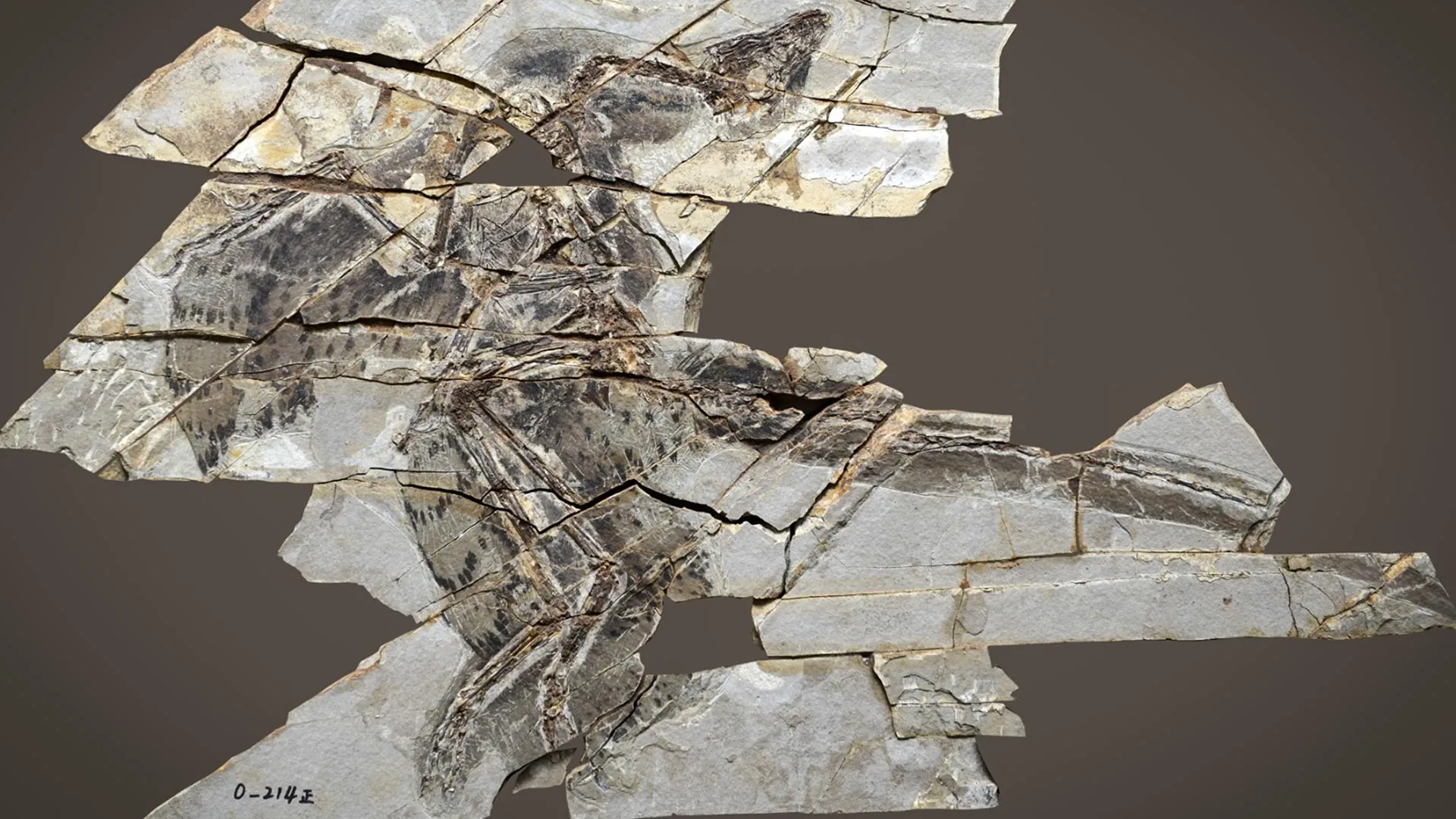
The focus of this groundbreaking study centered on nine exceptionally preserved fossils from eastern China, belonging to a small, feathered paravian dinosaur named Anchiornis huxleyi. Anchiornis, meaning "near bird," was first described in 2009 and quickly captured the scientific community’s attention due to its striking bird-like features. Dating back to the Late Jurassic period, around 160 million years ago, Anchiornis was a contemporary of some of the earliest known bird-like creatures and predates the iconic Archaeopteryx by several million years, making it a critical species for understanding the very earliest stages of avian evolution.
This diminutive dinosaur, estimated to be roughly the size of a pigeon or crow, possessed long feathers on its forelimbs, hind limbs, and tail, giving it a distinctive "four-winged" appearance. Its body was covered in downy feathers, with longer, pennaceous feathers on its wings and legs. The fossils analyzed in this study are exceptionally rare not merely for preserving the feathers, but for also retaining evidence of their original coloration. This remarkable preservation is attributed to the unique fossilization conditions prevalent in the Jehol Biota, a geological formation in Liaoning Province, China, renowned for its exquisite preservation of soft tissues, feathers, and even internal organs.
Each of the nine Anchiornis specimens examined revealed wing feathers that were predominantly white, adorned with a distinct black spot at the tip. This incredible detail of preserved coloration, achieved through the fossilization of melanosomes (pigment-producing organelles), allowed researchers to meticulously examine the structure, growth, and, critically, the molting patterns of these ancient feathers in ways that are usually impossible with standard skeletal fossils. The ability to discern specific color patterns and growth anomalies directly from the fossil record provided an unprecedented level of insight into the functional biology of these creatures.
The Intricate Science of Feathers and Molting as a Functional Indicator
To fully appreciate the significance of Dr. Kiat’s findings, it’s essential to delve into the biology of feathers and the process of molting. Feathers are complex integumentary structures unique to birds and some non-avian dinosaurs. Composed primarily of keratin, the same protein found in human hair and nails, they are incredibly versatile. A typical flight feather consists of a central shaft (rachis), from which barbs branch out. These barbs, in turn, have smaller barbules that interlock with microscopic hooks (barbicels), forming a cohesive, aerodynamic vane essential for flight.
Feathers are not permanent structures. They grow from follicles, nourished by a blood supply for approximately two to three weeks until they reach their full size. Once mature, they detach from their blood vessels, becoming "dead" protein structures. Over time, these feathers endure wear and tear from environmental factors, daily activities, and mechanical stress. To maintain their structural integrity and functional efficiency, they are periodically shed and replaced by new feathers in a process known as molting.
Dr. Kiat, drawing upon his extensive knowledge of modern avian biology, explains that the pattern of molting holds an "important story" about an animal’s flight capability. Birds that rely on flight for survival – whether for hunting, escaping predators, migration, or foraging – must maintain aerodynamic symmetry and efficiency even during the molting process. Consequently, these birds exhibit an orderly, gradual, and often symmetrical molting pattern. They typically replace feathers in a sequential fashion, often one or a few at a time from corresponding positions on each wing, ensuring that their overall wing shape and lift capabilities are not significantly compromised. This allows them to continue flying, albeit sometimes with reduced efficiency, throughout the molting period.
In stark contrast, birds that have lost the ability to fly face no such aerodynamic constraints. For these flightless species, molting tends to be a far more random, irregular, and sometimes simultaneous process. They can afford to shed multiple feathers at once, or in an asymmetrical manner, without jeopardizing their ability to move or survive. This fundamental difference in molting strategy provides a powerful functional indicator of flight ability.
By meticulously examining the fossilized feathers of Anchiornis, the research team identified a continuous line of black spots along the wing edges, consistent with the distinct coloration pattern of the species. Crucially, they also observed developing feathers whose black spots were clearly out of alignment with the continuous pattern, indicating that these feathers were still in various stages of growth and had not yet reached their final position or size within the mature feather array. A detailed microscopic and macroscopic analysis of these growth patterns and their distribution across the wings revealed a molting sequence that was distinctly irregular and asynchronous, rather than the orderly and symmetrical pattern characteristic of flight-capable birds.
Evidence for Flightlessness in Anchiornis
Dr. Kiat’s conclusion, informed by his unparalleled familiarity with the molting patterns of extant birds, was unequivocal: "Based on my familiarity with modern birds, I identified a molting pattern indicating that these dinosaurs were probably flightless." This conclusion is not merely a theoretical inference but a direct interpretation of preserved biological function. He emphasized the exceptional nature of this finding: "This is a rare and especially exciting finding: the preserved coloration of the feathers gave us a unique opportunity to identify a functional trait of these ancient creatures — not only the body structure preserved in fossils of skeletons and bones."
This revelation underscores how seemingly minor details, such as the growth and replacement of feathers, can unlock profound secrets about ancient life. Dr. Kiat reiterated, "Feather molting seems like a small technical detail — but when examined in fossils, it can change everything we thought about the origins of flight." The implication is clear: Anchiornis now takes its place among a growing list of feathered dinosaurs that, despite possessing impressive plumage, were not capable of powered flight. This reinforces the notion that the evolution of wings and flight was not a straightforward, linear progression but a highly complex and diverse series of evolutionary experiments, with multiple lineages exploring different aerial strategies, and some ultimately reverting to a terrestrial existence.
Broader Implications for Evolutionary Science and Paleontology
The discovery that Anchiornis was likely flightless despite its advanced feathering carries profound implications for our understanding of avian evolution. Firstly, it provides robust fossil evidence for secondary flightlessness occurring very early in the paravian lineage, long before the diversification of modern birds. This suggests that the evolutionary path to flight was not a one-way street; once evolved, the ability to fly could be lost if environmental pressures or ecological niches favored alternative strategies. This phenomenon of "evolutionary tinkering" – where traits are gained, modified, and sometimes lost – is a hallmark of natural selection.
Secondly, this research significantly complicates the "trees down" versus "ground up" debate regarding the origin of avian flight. If early feathered paravians like Anchiornis were already losing flight, it implies that the capacity for flight, or at least some form of arboreal gliding, might have been present in even earlier ancestors. Alternatively, it could mean that feathers evolved for a variety of functions, and only a select few lineages ultimately perfected powered flight, while others, like Anchiornis, developed wings for purposes other than sustained aerial locomotion – perhaps for display, balance, brooding, or limited leaping. The "four-winged" arrangement of Anchiornis, with feathers on its legs, has long puzzled scientists, with some suggesting it was an adaptation for gliding or parachuting from trees, while others proposed it might have been an awkward attempt at flight that never fully developed. The molting evidence leans towards the latter, or even a complete abandonment of such attempts.
This study also highlights the incredible diversity of form and function that existed within the feathered dinosaur community during the Jurassic. The presence of wings did not automatically equate to flight capability, much like the presence of fins does not automatically equate to aquatic locomotion in all tetrapods. Instead, wings likely served a spectrum of purposes, from intricate display structures for mating rituals to aids for navigating dense forest canopies.
The methodology employed in this study, leveraging the exquisite preservation of melanosomes to deduce biological function from fossilized soft tissues, opens exciting new avenues for paleontological research. Future studies could apply similar analytical techniques to other exceptionally preserved feathered dinosaur fossils, potentially revealing more about the functional capabilities and evolutionary trajectories of these ancient creatures. The insights gained from such detailed analyses promise to continually refine and enrich our understanding of one of life’s most remarkable evolutionary achievements: the conquest of the skies.
In conclusion, the finding that Anchiornis, a pivotal early feathered dinosaur, was likely flightless based on its molting patterns, represents a paradigm shift in our comprehension of flight evolution. It underscores the non-linear, experimental nature of evolution and challenges us to look beyond superficial similarities to understand the complex interplay of anatomy, physiology, and behavior that defines a species’ ecological role. The detailed examination of fossilized feathers, once thought to be mere ornamental relics, has now provided a dynamic narrative of adaptation and diversification, reaffirming the scientific community’s commitment to unraveling the profound mysteries of life’s ancient past.
