
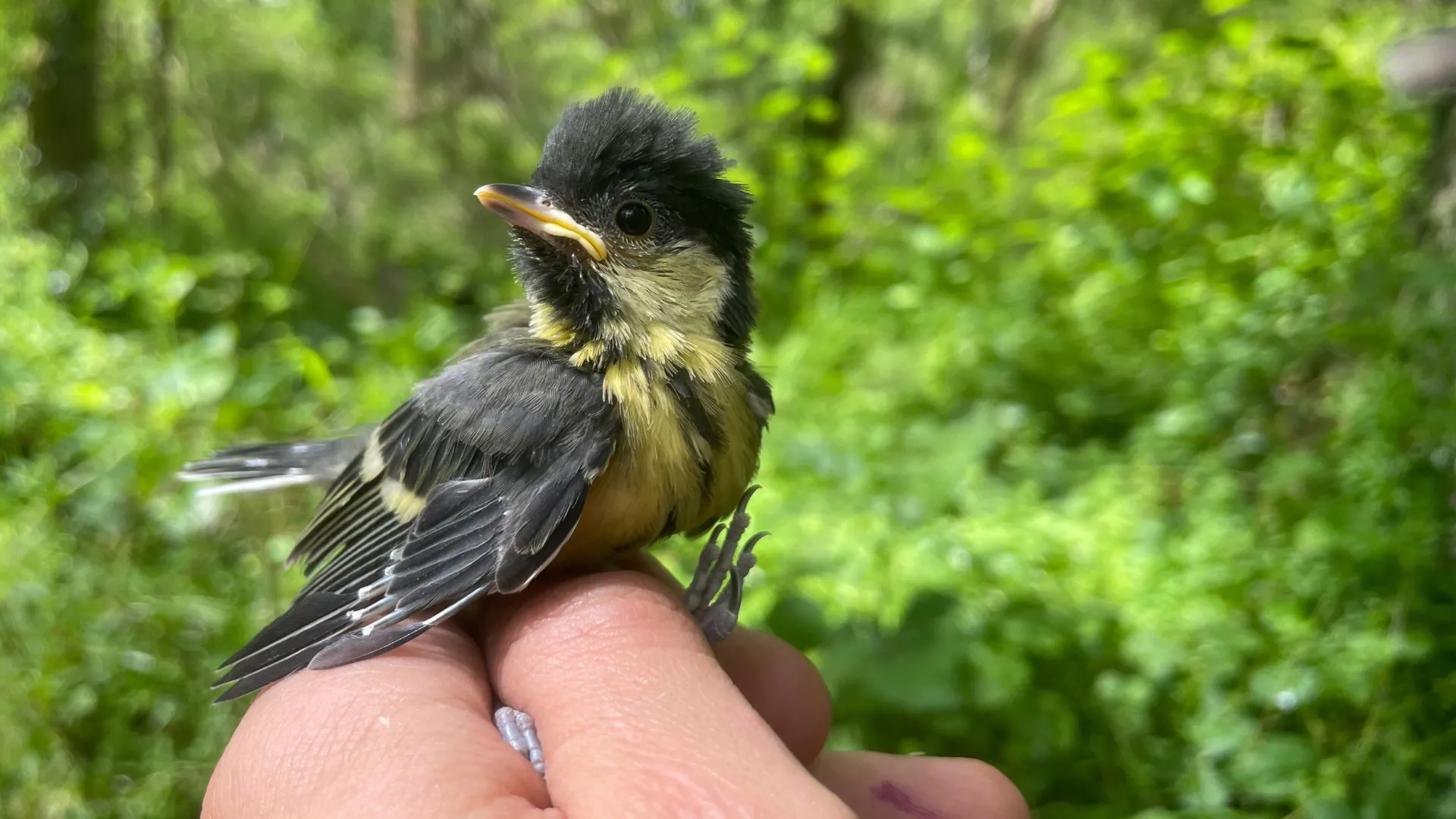
A new study from the University of Oxford, published March 11, finds that sudden cold spells and heavy rainfall can significantly slow growth and reduce survival chances for young great tits (Parus major) in the UK. The research also suggests that birds that begin breeding earlier in the season may avoid many of the harmful effects linked to these increasingly frequent weather extremes, highlighting a critical adaptive strategy in the face of a changing climate. These findings underscore the complex and often nuanced ways in which global warming is impacting wildlife populations, even for common and adaptable species.
Six Decades of Data: Unveiling Weather’s Grip on Great Tits
The groundbreaking insights emerge from an unusually comprehensive and long-term dataset, a hallmark of ecological research at the University of Oxford. Scientists meticulously analyzed 60 years of continuous records, spanning from 1960 to 2020, covering more than 80,000 individual wild great tits within the ancient woodland of Wytham Woods, located just west of Oxford. This unparalleled wealth of demographic and life-history data, collected through consistent monitoring of breeding pairs and their offspring, was then rigorously paired with detailed daily weather records for the same period. This allowed researchers to precisely identify the coldest, wettest, and hottest days in each breeding season and to measure how often these extreme conditions occurred during critical stages of chick development. The primary metric for assessing impact was the body mass of nestlings when they fledged – that is, when they left their nest – a widely accepted and crucial predictor of a young bird’s subsequent survival into adulthood. The sheer duration and scale of this dataset provide an exceptionally robust foundation for understanding long-term ecological trends and the subtle, yet profound, effects of environmental variability.
The Perils of Early Life: Cold Snaps and Deluges
The study revealed a stark differential impact of weather extremes depending on the chicks’ age and the type of extreme event. Severe cold during the first week after hatching was identified as particularly harmful. This vulnerability is primarily due to the physiological limitations of newly hatched chicks; lacking a full complement of feathers, they cannot effectively regulate their own body temperature. Consequently, during cold spells, a disproportionate amount of their metabolic energy, which would otherwise be directed towards growth and development, is expended simply to stay warm. This diversion of energy leads to slower growth rates and reduced body mass.
As chicks mature and grow older, heavy rainfall emerges as the greater threat. While older chicks are better equipped to handle cooler temperatures due to more developed plumage, intense and prolonged rainfall presents a different set of challenges. Both types of severe weather were found to reduce body mass at fledging by as much as 3%, a seemingly small percentage that can have significant implications for a young bird’s chances of survival in a competitive environment.
The research also uncovered a particularly alarming synergistic effect when intense heat coincided with heavy rain. In these specific, compounding scenarios, the impact on nestlings became dramatically more severe. Fledging mass could plummet by up to 27%, especially for broods that hatched later in the breeding season. This severe reduction suggests a combination of heat stress, reduced foraging efficiency for parents due to rain, and potentially a decline in the quality or availability of prey, creating a perfect storm of adverse conditions for the vulnerable chicks.
Devi Satarkar, a lead researcher from the Department of Biology at the University of Oxford, commented on these findings: "In the Wytham population, great tits have demonstrably adjusted to warmer springs by breeding earlier, a crucial adaptive response to track the peak abundance of their main prey, caterpillars. This overall earlier laying strategy is largely beneficial, buffering them against many of the impacts of extreme weather. However, it also exposes them to cold spells early in the season, which, as our data shows, can be devastating for very young chicks. Even small early-life deficits can have large implications for survival down the line. It will only get tougher for birds to keep up as extreme weather increases in frequency and intensity with ongoing climate change." Her statement underscores the evolutionary tightrope these birds walk, balancing the benefits of early breeding against the risks of encountering early-season extreme weather.
Why Cold and Rain Affect Baby Birds: A Deeper Dive
The mechanisms behind these observed impacts are multifaceted. As previously noted, newly hatched chicks are ectothermic to a large extent, meaning they rely on external heat sources and parental brooding to maintain their body temperature. Without insulating feathers, they struggle immensely in cold conditions, diverting vital energy from growth to thermoregulation. This energy drain, particularly during the rapid growth phase, can stunt development irreversibly.
Beyond direct physiological stress, bad weather significantly impacts the availability and delivery of food. Extreme cold and heavy rain can severely limit how often parent birds can leave the nest to search for food. Foraging efforts become less efficient and more energetically costly for adults in adverse conditions. Simultaneously, heavy rainfall can physically knock caterpillars – the primary, protein-rich food source for growing chicks – off plants and trees, making them less accessible or even washing them away. This double whammy of reduced parental foraging efficiency and diminished prey availability means that chicks, especially during their period of highest energy demand, receive less food, directly impacting their body mass and overall health at fledging. The high energy demands of growing chicks, which require constant provisioning by both parents, make them acutely sensitive to any disruption in food supply.
The Nuance of Warmth: A Surprising Benefit in Oxfordshire
One of the more unexpected and intriguing findings of the study was that warmer extremes, within certain parameters, were actually linked to heavier fledging weights during the nestling stage. High temperatures are often globally associated with heat stress and negative impacts on avian populations. However, in the specific context of Oxfordshire, the warmer periods observed appear to be relatively mild compared with the more extreme, often lethal, heatwaves experienced in southern Europe or other arid regions.
Devi Satarkar elaborated on this intriguing finding: "Extreme weather events are affecting wild bird populations in complex ways, and our study highlights this complexity. The level of warmth we typically see in these heat extremes in Oxfordshire might actually boost growth. This is likely because moderate warmth can increase insect activity and visibility, making caterpillars easier for parent birds to find and capture. It also allows parents to forage more efficiently and for longer periods, while simultaneously reducing the nestlings’ own thermoregulatory costs, as they don’t have to expend as much energy to stay warm. Furthermore, the high water content in caterpillars also helps against dehydration, providing an additional benefit during warmer periods. This contrasts sharply with hotter regions like the Mediterranean, where similar events can exceed 35°C and lead to severe dehydration, heat stress, and ultimately harm nestlings." This distinction underscores the importance of local climatic conditions and species-specific adaptations when assessing the impact of temperature extremes. What constitutes "extreme heat" and its biological consequences can vary significantly across different geographical and ecological contexts.
A Timely Adaptation: The Advantage of Earlier Breeding
The study provided compelling evidence that breeding earlier in the spring season offers a substantial advantage. Broods that hatch earlier tend to benefit from occasional warm spells when caterpillars are abundant and temperatures remain within safe, beneficial limits. This timing aligns with the peak availability of their primary food source, a critical factor for successful breeding. Birds that breed later in the season, however, face considerably tougher conditions. Their fledglings were found to be approximately one third lighter, even though the warmest days they experienced reached similar temperatures of about 16-17°C. This suggests that factors beyond mere temperature, such as declining caterpillar availability later in the season, play a crucial role. The phenological mismatch, where the timing of prey emergence shifts differently from the birds’ breeding cycles, likely exacerbates the challenges for later breeders.
Over longer periods, the cumulative effect of extreme cold and rainfall was found to slightly reduce the odds that young birds would survive to adulthood. Conversely, the "warm extremes" in Oxfordshire could have small but positive effects on long-term survival. Overall, the ability to breed earlier within a season appears to be a robust adaptive strategy, shielding many great tits from the worst consequences of increasingly unpredictable weather patterns. This temporal shift in breeding is a direct evolutionary response to climate change, demonstrating the plasticity of avian life histories.
Wytham Woods: A Living Laboratory for Ecological Research
Wytham Woods, owned and managed by the University of Oxford, is not just any woodland; it is one of the most intensively studied woodlands in the world. For over 70 years, it has served as a critical site for long-term ecological research, providing an unparalleled natural laboratory for understanding complex ecological processes. The great tit population within Wytham Woods has been continuously monitored since 1947, making it one of the longest-running studies of a wild bird population globally. This continuity of research, spanning generations of scientists and birds, is what allowed the Oxford team to collect the extraordinary 60-year dataset on individual great tits and their breeding success. The consistent methodology and dedicated fieldwork at Wytham have created a treasure trove of information, invaluable for detecting subtle, long-term environmental changes and the adaptive responses of species like the great tit. The robust infrastructure for monitoring and data collection at Wytham Woods is a testament to the importance of long-term ecological research in an era of rapid environmental change.
Great Tits: Sentinels of Environmental Change
The great tit (Parus major) is a small, ubiquitous passerine bird found across Europe and Asia. Its widespread distribution, relatively high population density, and ease of monitoring make it an excellent model species for ecological and evolutionary studies. As a cavity-nesting bird that readily uses nest boxes, it allows researchers to closely track breeding success, chick development, and survival rates. Great tits are primarily insectivorous, particularly during the breeding season when they rely heavily on caterpillars to feed their fast-growing chicks. This dietary dependency makes them highly sensitive to changes in insect phenology, which is itself strongly influenced by temperature and rainfall. Consequently, great tits serve as effective "bio-indicators" or "sentinels" for understanding the broader impacts of climate change on woodland ecosystems and the complex food webs within them. Their responses to weather extremes can provide crucial insights into how other insectivorous bird species, and indeed entire ecosystems, might fare under future climate scenarios.
Broader Implications for Wildlife Conservation
As climate change intensifies the frequency and intensity of weather extremes, the findings from this Oxford study carry significant implications for wildlife conservation efforts. Scientists emphasize that it will become increasingly vital to monitor small-scale environmental conditions, often referred to as "microclimates," and to understand subtle habitat differences. These localized variations, such as sheltered areas within a woodland or differences in canopy cover, can offer crucial refugia for vulnerable chicks during periods of extreme weather.
This type of granular research can directly guide conservation strategies. For instance, knowledge about the specific vulnerabilities of young chicks to cold and rain could inform decisions about nestbox placement. Positioning nest boxes in more sheltered, warmer, or drier microclimates within a woodland could provide a critical buffer against adverse weather, enhancing chick survival. Similarly, woodland management practices, such as selective thinning or planting strategies, could be adapted to create and maintain areas that offer greater protection for nesting birds, thereby better safeguarding vulnerable chicks during key stages of their development.
Conservationists highlight that proactive adaptation strategies, informed by detailed ecological research, are essential. "Understanding the specific thresholds and vulnerabilities of species to different types of extreme weather allows us to develop targeted interventions," noted an expert in avian conservation, emphasizing the need to move beyond broad-brush approaches. "For species like the great tit, which are already showing adaptive responses like earlier breeding, our role is to facilitate these adaptations and mitigate the remaining risks." The study also adds to the growing body of evidence that climate change is not a distant threat but an immediate ecological pressure, requiring urgent and informed conservation action.
Looking Ahead: The Future of Avian Resilience
The researchers at Oxford plan to continue their long-term monitoring of the great tit population in Wytham Woods. This ongoing effort is crucial to understanding how these weather effects may shift in the future as global temperatures continue their upward trend. One key question for future research is whether the heatwaves that are currently considered moderate and even beneficial in Oxfordshire could eventually become harmful as ambient temperatures continue to rise. As the baseline temperature increases, what is currently a "mild warm spell" might escalate to a "damaging heatwave," tipping the balance from positive to negative impacts.
This continuous research will be vital for informing dynamic conservation strategies that can adapt to evolving climate pressures. The insights gained from model species like the great tit in long-term study sites like Wytham Woods are not just academic exercises; they provide critical foresight into the challenges faced by countless other species globally. The ability of wildlife to adapt to a rapidly changing climate will determine the health and biodiversity of ecosystems for generations to come, making studies like this an indispensable tool in the fight for environmental resilience.
