
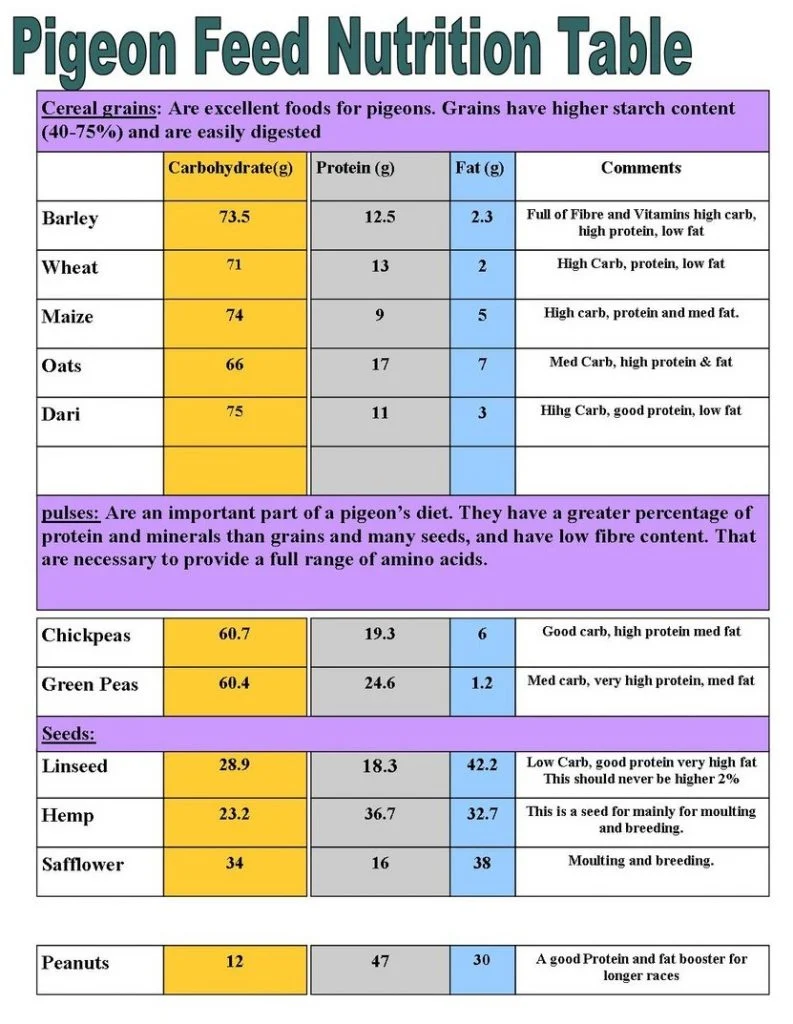
The biological mechanics of pigeon racing are fundamentally an exercise in energy management. Much like a high-performance athlete, the racing pigeon relies on specific metabolic pathways to sustain flight over hundreds of miles. While the traditional diet for racing pigeons has long been centered on carbohydrates—primarily maize, wheat, and peas—modern ornithological research and elite-level fancier practices suggest that shifting toward high-fat energy sources may be the key to unlocking superior performance, particularly in marathon-distance events.
The Metabolic Engine: Carbohydrates vs. Lipids
When a pigeon consumes carbohydrates, its digestive system converts these nutrients into glucose, which is subsequently synthesized into glycogen. This glycogen is stored in the liver and skeletal muscles. During a race, this stored glycogen acts as the primary fuel source, undergoing combustion to generate mechanical energy. The efficiency of this process is well-documented: one gram of glycogen yields approximately 4.1 calories of energy.
However, the limitation of a glycogen-based energy system is its finite capacity. Once the "glycogen tank" is depleted, the bird’s metabolism shifts to a catabolic state, beginning the process of burning body proteins—essentially the muscle tissue itself—to maintain flight. This transition is not only inefficient but detrimental to the bird’s physical condition. In extreme marathon races, birds that exhaust their glycogen reserves may arrive home in a state of severe emaciation, having effectively consumed their own structural muscle to reach the loft.
The introduction of high-fat dietary components changes this equation entirely. Lipids provide a much higher energy density than carbohydrates or proteins. A single gram of fat provides approximately 9.3 calories—more than double the energy density of glycogen. By supplementing a pigeon’s diet with high-fat seeds and nuts, fanciers can provide the bird with a sustained energy reserve, allowing them to complete grueling races without sacrificing muscle mass or entering a catabolic state.

The Role of Oil-Rich Seeds and Peanuts
To optimize performance, competitive fanciers have increasingly turned to seeds with high oil content. While standard grains like maize contain roughly 4% fat and oats roughly 7%, the inclusion of sunflower seeds (28% fat), linseed (34% fat), hempseed (32% fat), and rapeseed (42% fat) provides a significant metabolic advantage. These fats allow birds to maintain their weight and stamina under the most challenging weather conditions, such as sustained head winds or extreme temperatures.
Among these energy-dense supplements, the peanut stands out as a "first-class fuel" for the racing pigeon. With a fat content that makes it an exceptionally dense energy source, peanuts are also rich in proteins, boasting a 30% content level that rivals that of soybeans. This dual-purpose profile—high fat for endurance and high protein for tissue recovery—makes them an invaluable tool for the serious competitor.
Chronology of Nutritional Evolution
Historically, the pigeon racing community relied on standard grain mixtures, often ignoring the potential for specialized "fueling" phases. Over the last three decades, however, the professionalization of the sport has led to a more structured nutritional timeline:
- Winter Conditioning: This is the primary period for introducing new, calorie-dense foods like peanuts. Because pigeons are naturally neophobic (cautious of new food), winter allows for a low-stress environment where birds can adapt to the taste and texture of nuts.
- Early Breeding Season: During the 6th to 12th day of rearing, as youngsters transition from "crop milk" (a secretion rich in fat and protein) to solid food, supplementing parents with crushed peanuts mimics the nutritional composition of natural crop milk, supporting rapid growth in squabs.
- Racing Season (The Widower Strategy): During the active racing weeks, peanuts serve a dual function. They provide the necessary energy for long-distance flights and act as a behavioral reinforcement tool. By training pigeons to associate the return to their nest boxes with the reward of peanuts, fanciers can significantly reduce "clocking" times—the crucial seconds spent getting a bird to enter the loft upon arrival.
Expert Analysis and Empirical Evidence
Recent studies, including those conducted by avian researchers in the United Kingdom, have corroborated the benefits of high-fat diets. Specifically, the inclusion of 5% corn oil in racing mixtures has been shown to improve performance metrics in endurance flights. These findings support the anecdotal successes reported by veteran breeders like Eduard Pape, who famously utilized an all-peanut regimen in the post-war period to achieve exceptional results in long-distance races.
However, the application of this diet requires precision. Over-reliance on peanuts without proper monitoring can lead to obesity or uneven distribution within a flock. To mitigate this, experts such as Dr. Meyer recommend mechanical processing—breaking peanuts into smaller, uniform pieces. This ensures that the entire flock, including more timid birds, receives an equitable share of the fuel, preventing the most aggressive birds from monopolizing the high-energy supply.
Strategic Implications for Race Management
The strategic use of peanuts extends beyond simple calorie counting; it is a psychological tool. By using peanuts as an incentive, fanciers can influence the behavior of both widowers and hens. For example, by restricting access to peanuts during the early part of the week and increasing them as the basketing date approaches, the fancier can induce a higher state of desire and motivation in the birds.
Furthermore, weather-dependent feeding adjustments are critical. If a race forecast predicts strong head winds, increasing the fat intake is a necessary logistical preparation for the extra energy expenditure required. Conversely, for races with a tail wind, the energy demand is lower, and the ration can be reduced to prevent unnecessary weight gain.
Broader Impact on the Sport
The transition from a "one-size-fits-all" feed to a precision-based, energy-dense nutritional strategy represents a significant shift in the sport of pigeon racing. It mirrors the professionalization of human endurance sports, where nutrition is no longer considered a passive component of health but an active component of performance.
For the modern fancier, the "peanut strategy" is not merely about feeding birds; it is about building a relationship of trust and efficiency. By managing the diet individually, the owner can monitor the recovery rate of each bird, ensuring that a pigeon that has undergone an exceptionally difficult flight is given the necessary nutritional support to recover, rather than being pushed back into competition too soon.
In summary, the integration of high-fat, high-protein supplements into the racing pigeon’s diet is essential for those competing at the highest levels. As racing conditions become increasingly demanding and the competition more refined, the ability to manage the pigeon’s metabolic state through targeted nutrition will remain the defining factor between average performance and consistent victory. The future of the sport lies in the granular understanding of how these nutritional inputs translate into physical endurance, ensuring that the birds are not only capable of returning home but are in optimal condition to do so with speed and vitality.
