
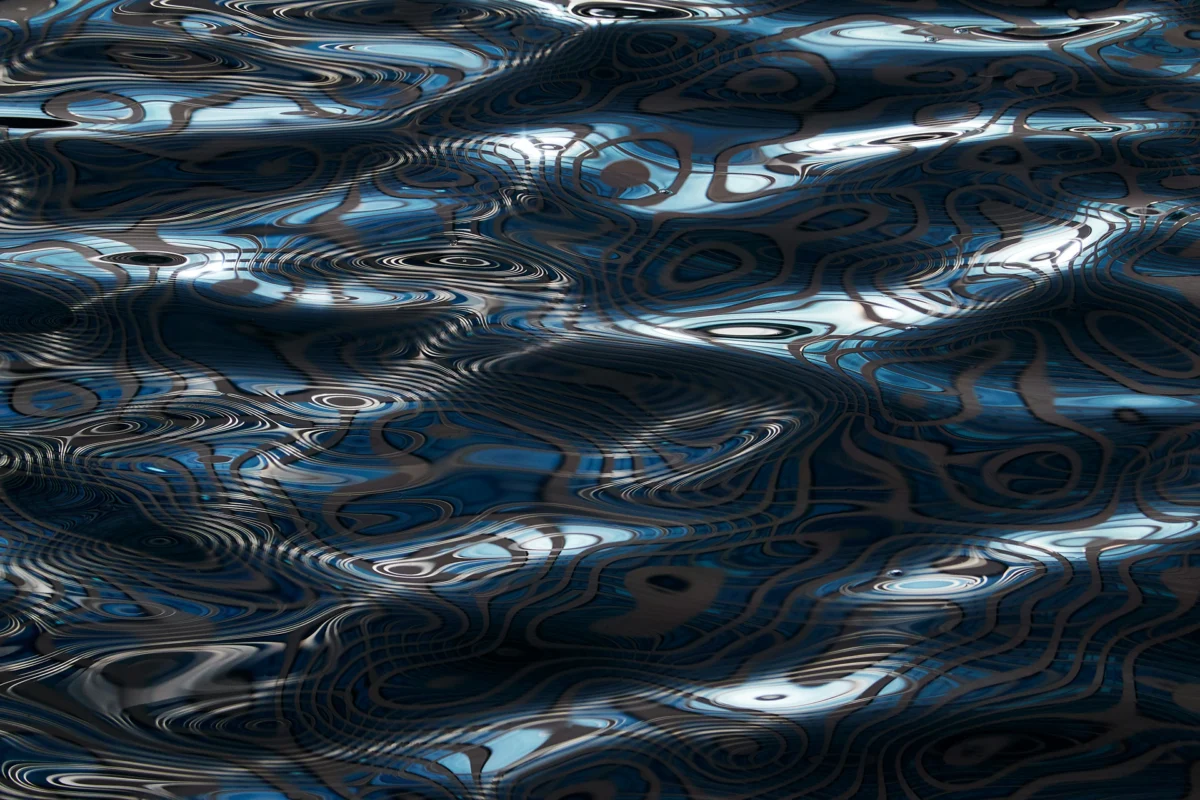
The photographic series Fleeting Reflections has consistently captivated audiences, often prompting the initial assumption that its intricate, abstract compositions are the product of extensive digital manipulation in software like Photoshop. Yet, the artist behind the work readily clarifies that these images are purely in-camera creations, born from the complex interplay of light, urban architecture, and water. What viewers witness is the raw capture of light bouncing off the glass and steel façades of Canary Wharf, breaking and reforming on the surface of the docks below. These moments are recorded either as single, precise frames or through carefully layered in-camera multiple exposures, a testament to pure photographic skill, focused attention, persistent repetition, and the profound investment of time.
At the very core of this decade-long endeavour lies the singular concept of time. Spanning over more than ten years, the photographer has meticulously explored and documented the environs of Canary Wharf, London. Through this sustained engagement, a foundational understanding emerged: meaningful creative work in both nature and abstract photography is anchored by three indispensable pillars. While the technical aspects of photography—cameras, lenses, and modes—often dominate discussions among enthusiasts, the artist posits these as mere supporting characters. The true driving force behind the Fleeting Reflections series is the symbiotic relationship between a chosen place, the persistence of the artist, and a disciplined approach to observation and execution.
A Chronology of Dedication: From Concept to Published Work

The journey of Fleeting Reflections is a compelling narrative of artistic gestation and maturation. The project commenced in the early 2010s, with the photographer embarking on a sustained exploration of the Canary Wharf docks. For years, this undertaking remained a private artistic pursuit, an intensive period of experimentation, refinement, and deep learning. The artist deliberately withheld public exhibition or significant publication, allowing the body of work to evolve organically, distinguishing essential visual narratives from mere aesthetic noise.
It was approximately seven years into this rigorous process, around 2017, that the artist felt the collection had achieved a level of coherence and depth sufficient for public presentation. This crucial decision led to the publication of the first volume, Fleeting Reflections, by Triplekite in 2017. The book was swiftly followed by exhibitions, bringing the striking imagery to a wider audience. The Greenwich Gallery hosted an exhibition in 2017, further cementing the project’s burgeoning reputation. This momentum continued, with another significant exhibition at the Anise Gallery in London in 2019, showcasing the project’s evolution and impact. The enduring nature of the work and the artist’s continued dedication culminated in the release of a second volume, Fleeting Reflections II, in 2023. These milestones, while appearing as markers of rapid success, underscore a reality far more demanding: a journey characterized by slow, deliberate, and often obsessive engagement, where thousands of hours of walking, watching, waiting, shooting, editing, rejecting, and returning formed the unseen bedrock beneath the visible artistic output.
The Three Pillars of Abstract Vision
The sustained success and unique aesthetic of Fleeting Reflections are rooted in the artist’s adherence to three fundamental principles: accessibility, repeatability, and patience. These pillars, often overlooked in the pursuit of dramatic imagery, prove to be the real engines of profound artistic creation.

1. Accessibility: The Unlikely Muse of Urban Docks
A pervasive myth within nature photography suggests that truly worthwhile images demand journeys to remote, untouched wildernesses. The Fleeting Reflections series stands as a powerful refutation of this notion. The entirety of the project has largely emerged from a mere square mile of water, nestled within the towering steel-and-glass landscape of Canary Wharf. This global financial district, an architectural marvel of contemporary London, is often perceived solely through its economic significance. However, the photographer views it through a different lens: as an expansive, dynamic "set of light sources."
The colossal office towers, with their reflective surfaces, cast an ever-shifting palette of colours and lines onto the water’s surface. Wind, a constant sculptor, then transforms this reflected light into an infinite array of waves, shimmering ribbons, and fragmented patterns. The artist’s role, in this dynamic environment, is akin to "listening" – a deep, almost meditative engagement with these transient phenomena.
The profound intimacy with the subject matter is directly attributable to the site’s accessibility. The artist can reach Canary Wharf with ease, traverse its docks on foot, and return as frequently as desired. This eliminates the formidable logistical barriers often associated with landscape photography – no need for costly flights, special permits, extended leaves of absence, or demanding pre-dawn hikes to remote locations. Instead, the artist can visit for a mere 40 minutes, whenever the opportunity arises. This freedom allows for photographic sessions even when the light is deemed "bad" by conventional standards, or when rain transforms the water’s surface into a mesmerizing tapestry of hammered metal. Such conditions, often shunned by others, become unique artistic opportunities.

While "accessibility" might sound prosaic, its importance is paramount. Without the practical ability to frequently engage with a subject, a photographer cannot cultivate the profound familiarity necessary to transcend superficial observation and delve into its deeper, more nuanced truths. The more readily one can stand before a subject, the more authentically one can study and understand it. This local immersion challenges the conventional wisdom that grand subjects require grand journeys, instead championing the artistic potential within one’s immediate, accessible environment.
2. Repeatability: The Ever-Changing Canvas
The second pillar, repeatability, refers to the deliberate selection of a subject that possesses an inherent capacity for continuous change, surprise, and the unveiling of new possibilities with each encounter. The docks of Canary Wharf exemplify this quality in abundance. The urban waterscape is never truly static; no two moments are ever precisely alike.
Consider the dramatic variations: a tranquil morning might present long, glassy expanses of colour, reflecting the pristine blues of the sky or the vibrant hues of the surrounding buildings. A sudden gusty afternoon, however, can shatter these reflections into serrated lines, evoking the iconic waveform imagery from Joy Division’s album Unknown Pleasures. The passage of a boat can smear and distort the reflections, transforming them into painterly strokes that appear hand-drawn. Even subtle environmental factors, like a film of diesel on the water’s surface, can create ephemeral iridescent interference patterns that might last only minutes before vanishing forever, never to reappear in the same form.

Because the environment offers such rich repeatability, the artist can legitimately photograph the "same" scene hundreds or even thousands of times, yet consistently feel that new work is being created. It is not uncommon for the artist to remain in a single location for hours, patiently observing a specific patch of water as it cycles through a myriad of personalities dictated by light, wind, and movement. At such moments, the act transcends mere architectural documentation; it becomes an acute observation of "behaviour" – the dynamic dance of light and water.
This intrinsic repeatability directly informs and elevates the in-camera techniques employed. Fast burst rates are crucial for freezing fleeting micro-moments on the water’s surface before they collapse into new forms. Multiple exposure modes are utilized to layer these transient gestures, extending and deepening the inherent abstraction already present in the reflections. These techniques are not ends in themselves but tools that only gain significance because the dynamic subject continually offers fresh raw material. The chromatic palette of the water shifts with the weather, its geometric forms bend with the wind, and its mood changes subtly with the tide. This constant flux transforms the location from a mere backdrop into an active participant in the creative process. The artist underscores this profound distinction: "Without repeatability you get postcards. With repeatability you get a body of work."
3. Patience: The Unsung Core of Artistic Mastery
The final pillar, patience, is perhaps the most critical and most frequently underestimated aspect of the artist’s methodology. Patience permeates every stage of the creative process, long before the shutter is even pressed.

It begins with the meticulous waiting for the right confluence of weather conditions and available personal time. Bright, hard sun on still water yields dramatically different results from the flat, diffused light of a drizzly day. Not every combination is artistically useful, and often, the artist will walk for miles, scrutinizing various angles and sections of water, only to find nothing that aligns with the day’s specific conditions.
Even when conditions are promising, patience transforms into a physical exercise. The artist might stand at a single location for up to four hours, capturing as many as 3,000 frames of what, to an casual observer, might appear to be the exact same scene. The objective is not brute force, but rather the focused pursuit of that singular, elusive instant where colour, rhythm, structure, and tension coalesce perfectly. This cannot be rushed; it demands a sustained, present awareness to recognize and seize the moment.
The exercise of patience extends into the post-capture phase. Upon returning home, thousands of nearly identical-looking images are downloaded, initiating a slow, deliberate culling process on an iMac. This is where artistic discipline becomes paramount. The artist moves purposefully through the vast collection, searching for the precise frame where every element aligns, rigorously rejecting all others. The "keep rate" is, by the artist’s own admission, "brutally low," a testament to the uncompromising standards applied.
The processing methodology itself is equally restrained, reflecting a deep philosophical commitment to honesty. Working primarily in Capture One, the artist employs only global adjustments—levels, clarity, sharpness, and contrast. There is no manipulation of shapes or forms in Photoshop. The intent is not to "create" forms but to "reveal what was already there in the water." This choice is as much philosophical as it is aesthetic, driven by a profound need for authenticity. The artist wishes to be able to declare, hand on heart, "this happened."

Finally, there is the longest form of patience: the willingness to wait for the entire body of work to mature. As detailed in the project’s chronology, the initial seven years were dedicated solely to shooting, refining, and understanding the essence of the project before any public presentation. This long-term patience, the commitment to an artistic vision over years, often goes unnoticed by those who only see the final, polished output. The photographs, in essence, are merely the visible tip of an enormous iceberg, beneath which lie thousands of hours of unseen dedication and iterative refinement.
Broader Implications and a New Paradigm for Photographers
The Fleeting Reflections series offers profound lessons for photographers, challenging conventional notions and democratizing the pursuit of artistic excellence. The primary message is clear: the creation of personal and distinctive work does not necessitate dramatic landscapes or exotic locales. What truly matters is consistent access, a subject capable of repeatability, and an unwavering commitment to patience.
Aspiring photographers are encouraged to seek out accessible subjects in their immediate environments – a local canal, a harbour wall, a marsh on the edge of town, or even rainwater pooling in a car park. The instruction is to return to these places repeatedly, in all seasons and all weather conditions, to cultivate an intimate understanding of how the environment responds to change. Then, they must commit to the slow, deliberate work: walking, waiting, refining, and maintaining absolute honesty in the editing process.

The artist fundamentally reframes patience, not as a passive waiting game, but as a highly active and intentional decision. It is an investment of oneself into a subject for as long as it takes to achieve true understanding. Over time, this deep-seated patience becomes visibly embedded within the photographs themselves. While viewers may initially be drawn to the vibrant colours and intriguing shapes, what they are ultimately perceiving, whether consciously or not, is the profound attention that has been poured into the work.
This approach has significant implications for the broader photographic community. It broadens the definition of "nature photography," demonstrating that the intricate beauty of natural phenomena can be found and celebrated within urban contexts, blurring the lines between genres. It also provides a sustainable model for artistic practice, one that prioritizes depth of engagement over geographical breadth, potentially reducing the environmental impact associated with extensive travel. Art critics and curators have commended the project for its rigorous methodology and philosophical depth, recognizing its contribution to contemporary abstract photography. It serves as an inspiring testament that dedication, rather than exoticism or technological wizardry, is the ultimate catalyst for profound artistic achievement.
In conclusion, Fleeting Reflections is more than just a collection of stunning abstract photographs. It is a powerful manifesto for a different way of seeing and creating. Through a decade-long engagement with the often-overlooked reflections of Canary Wharf, the artist has not only produced a critically acclaimed body of work but has also articulated a timeless philosophy of art: that profound beauty and meaning are often found closest to home, revealed through the relentless pursuit of vision, sustained by unyielding patience, and forged in the crucible of time.
