
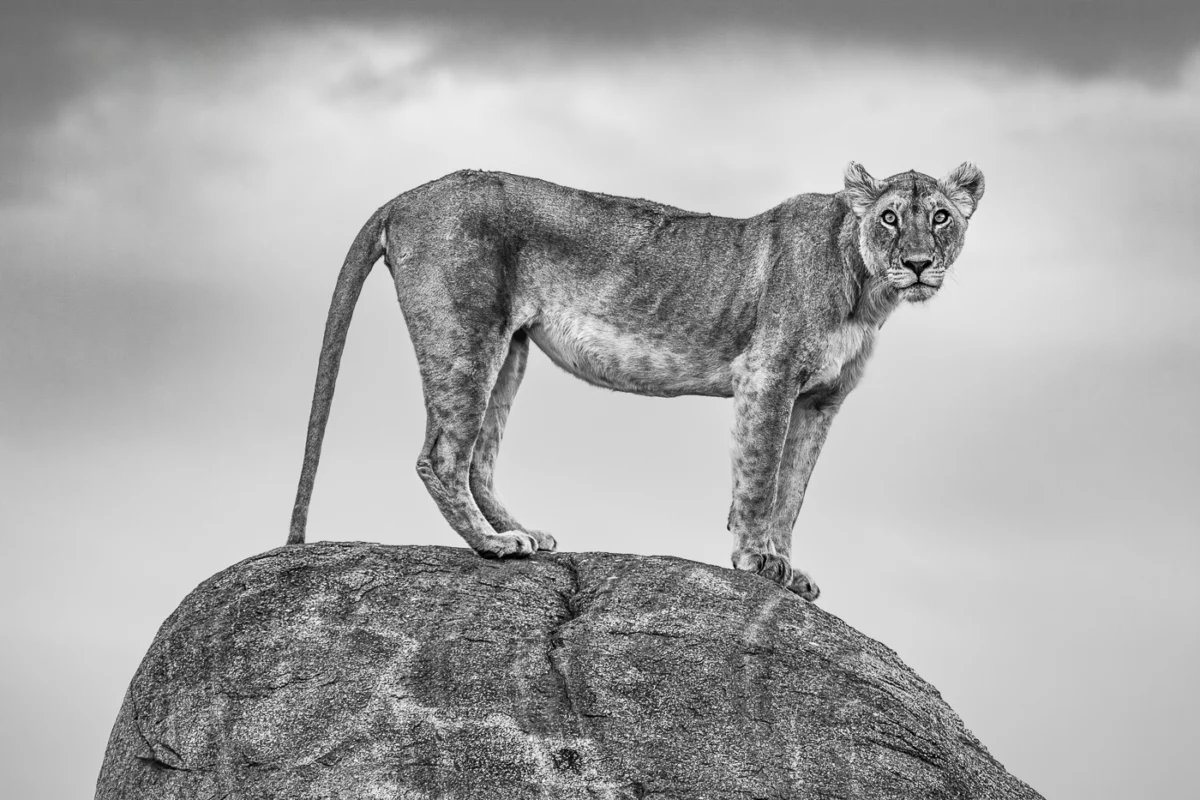
Wildlife photographer Gabi Guiard is carving a distinctive niche in a vibrant field, transcending mere documentation to create timeless, emotionally resonant portraits of nature and its inhabitants through her compelling use of black-and-white imagery. Her work, a profound exploration of essence and form, challenges viewers to connect with the raw power and inherent dignity of the wild, stripped of chromatic distraction, and invites a deeper, more reflective engagement with the natural world. This deliberate artistic choice, rooted in a lifelong passion for animals and a background in graphic design, positions her photography not just as art, but as a potent language for storytelling and emotional communication.

From Commercial Artistry to Nature’s Canvas: Guiard’s Unconventional Path
Guiard’s journey into the heart of wildlife photography was not a direct one, yet her earlier career significantly shaped her unique artistic vision. Her innate fascination with animals, sparked in childhood by curiosity about their behavior and presence, gradually matured into a guiding force in her life. This deep connection, however, initially found expression in the bustling world of advertising, where she dedicated herself to graphic design and art direction. It was here, amidst campaigns and creative briefs, that her interest in photography began to blossom, nurtured by her admiration for the iconic black-and-white fashion and advertising photographers whose work defined an era. These masters, renowned for their ability to convey drama, elegance, and profound narrative through monochrome, laid the groundwork for Guiard’s own photographic evolution. She recognized the potent application of her burgeoning photographic skills as a bridge between two enduring passions: the untamed beauty of wildlife and the evocative power of photography. This transition highlights a broader trend in artistic careers, where foundational skills developed in one creative discipline, such as design’s emphasis on composition and visual hierarchy, are successfully translated and repurposed into another, enriching the new medium with a distinct perspective.

Black and White: A Deliberate Language of Authenticity
For Guiard, black-and-white is far more than an aesthetic choice; it is the very lexicon of her artistic expression. She articulates it not as a mere "style" or an attempt to appear "artistic" or "classic," but as a fundamental means of communication. By consciously removing color from her images, Guiard eliminates a layer of visual information that, while often beautiful, can sometimes serve as a distraction from the core message. This deliberate act forces the viewer to confront the essential elements of the photograph: the intricate textures of fur or bark, the stark contrasts of light and shadow, and the fundamental shapes that define a subject. "When I think about my work, I feel that black-and-white is much more than a style: it is my way of speaking, telling stories, and showing what I feel when I am in front of nature," Guiard explains. "It allows me to focus on the essentials, on what I really want to convey." This approach aligns with a rich historical lineage of photography, from early masters like Ansel Adams, whose landscapes defined the genre through their tonal grandeur, to contemporary artists who continue to leverage monochrome for its raw emotive power. The absence of color demands a heightened focus on form, light, and shadow, compelling a more visceral response from the observer.

The Essential Over the Superfluous: Embracing "Less Is More"
A cornerstone of Guiard’s philosophy is the principle that "less is more." This minimalist approach is not about emptiness, but about precision and impact. She firmly believes that the power of an image lies not in overwhelming the viewer with detail, but in highlighting what truly matters. By simplifying reality, Guiard elevates the "wild character of nature" to center stage, allowing a single gaze, a subtle silhouette, or a telling gesture to narrate a complete story. This philosophy is particularly effective in wildlife photography, where the sheer complexity of natural environments can sometimes dilute the emotional punch of a moment. "Simplifying reality and taking it to the most essential so that the wild character of nature takes center stage," she states, encapsulating her drive to distill scenes to their most potent visual components. This artistic decision fosters an intimate connection, enabling viewers to immerse themselves in the "silence of the instant," undisturbed by extraneous visual noise. It’s an invitation to introspection, prompting observers to complete the narrative with their own feelings and interpretations, making the viewing experience deeply personal. This selective presentation of reality empowers the viewer to engage actively, rather than passively observing, fostering a stronger emotional bond with the subject.

Composition: The Unseen Architect of Visual Power
In Guiard’s monochrome world, composition emerges as the indispensable backbone of every photograph. Without the guiding cues of color, the arrangement of elements within the frame assumes paramount importance, meticulously directing the viewer’s eye and shaping the narrative. Lines, shapes, and spaces, often overlooked in color photography, take on a profound weight, orchestrating a delicate balance between harmony and tension. The precise placement of an animal within its vast environment, the interplay of light and shadow, or the strategic use of negative space all contribute to the image’s overall coherence and emotional resonance. Guiard often seeks simplicity in her compositions, diligently removing any element that might dilute the message. A diagonal line leading the eye to the intense gaze of a lion, the graceful curve of a tree framing a majestic silhouette, or the deliberate emptiness surrounding a subject can generate immense strength and intimacy. She views good composition not as a rigid adherence to rules, but as an intuitive understanding of when to artfully bend them to evoke a stronger emotional response. This invisible structure allows the image to "breathe," imbuing it with both elegance and power.

Contrast: Sculpting Emotion with Light and Shadow
For Guiard, light and shadow are not merely photographic phenomena but the very brushes with which she paints each image. Contrast, in her hands, transcends an aesthetic choice to become a potent communicative tool. The deep blacks strategically conceal what she deems unnecessary, drawing focus to the salient features, while the luminous highlights artfully reveal what she intends the viewer to feel. In black-and-white photography, shadows are imbued with as much narrative weight as the illuminated subjects themselves, often carrying unspoken stories and contributing significantly to the mood and atmosphere of the scene. This dynamic interplay allows Guiard to sculpt form and emotion, transforming a two-dimensional image into a profound, almost tactile experience. The starkness of high contrast can convey drama and intensity, while subtler tonal shifts might evoke tranquility or mystery. This mastery of chiaroscuro is central to her ability to strip away the superficial and lay bare the emotional core of her subjects.

Emotion Behind Every Image: Beyond Mere Depiction
While her photographs are born from an acute observation of wildlife, Guiard’s ultimate pursuit is emotion. Her aim extends beyond simply showcasing an animal or a landscape; she strives to convey something far deeper – be it power, profound solitude, inherent majesty, or even poignant fragility. For her, lions are not merely biological entities; they embody the "kings and queens of a territory that breathes at its own rhythm." Each image, therefore, is intended to preserve a fragment of their unique story: a calm, steady gaze that subtly hints at formidable strength, or a serene gesture that communicates an unspoken dignity. This focus on the emotive quality of wildlife transforms her subjects from passive objects of observation into sentient beings with their own inner lives. Black-and-white intrinsically intensifies this narrative, compelling viewers to concentrate on the raw, unfiltered emotional content, forging a more profound connection with the subjects and their natural existence. This approach encourages empathy, a critical component for fostering conservation awareness.

The Timelessness of Black and White: A Universal Mirror
One of the most compelling aspects of Guiard’s commitment to black-and-white photography is its inherent timelessness. There is a magical quality, she notes, that allows an image captured today to feel as if it could have originated decades ago, and conversely, to retain its impact for decades to come. This enduring quality presents nature as something eternal, an enduring mirror reflecting both humanity’s present and its past. The absence of color liberates the image from the temporal constraints of specific eras, fads, or even changing light conditions, granting it a universal appeal. Furthermore, by removing color, Guiard creates an expansive space for each viewer to project their own memories, emotions, and experiences onto the photograph. Black-and-white, therefore, transforms every image into an intimate, personal dialogue between the artwork and its observer, transcending cultural and temporal barriers to communicate on a deeply human level. This timeless quality is particularly valuable in a world saturated with ephemeral digital content, offering a sense of permanence and gravitas that encourages sustained contemplation.

Technique, Yes… But Above All, Sensitivity
Guiard readily acknowledges the indispensable role of technique in her craft—the meticulous pursuit of optimal light, the precision of composition, and the attention to fine detail. Yet, she asserts that what truly imbues her work with meaning is the profound sensitivity with which she observes and interacts with her subjects. This sensitivity is paramount in deciding what to highlight and what to subtly leave in the shadows, discerning the precise moment to press the shutter, and, equally important, recognizing when to simply remain silent and observe. She posits that "technique without sensitivity tells nothing; when both come together, a photograph is born that can move, inspire, and invite reflection." This delicate balance between technical mastery and emotional intelligence is what elevates her photographs from mere records to powerful artistic statements. In the realm of wildlife photography, where moments are fleeting and the subjects inherently wild, sensitivity often means patience, respect, and an almost meditative connection with the environment, allowing the photographer to truly see beyond the surface.

Broader Implications: Wildlife Photography as a Conservation Catalyst
Gabi Guiard’s distinct photographic approach holds significant implications beyond the realm of fine art. In an era where environmental challenges and species endangerment are pressing global concerns, powerful visual narratives play a crucial role in fostering awareness and empathy. By stripping away distractions and focusing on the essential character and emotional depth of wildlife, Guiard’s black-and-white images can resonate more profoundly with viewers, eliciting a visceral connection to the natural world. This emotional engagement is often a prerequisite for inspiring action and supporting conservation efforts. Historically, photography has been instrumental in shaping public opinion and driving environmental movements, from the iconic images of Yellowstone that fueled the national park movement in the United States to contemporary photojournalism highlighting climate change impacts. Guiard’s work, by emphasizing the intrinsic dignity and wildness of her subjects, subtly yet powerfully advocates for their preservation. Her art serves as a poignant reminder of the beauty and vulnerability of these creatures, silently urging viewers to appreciate and protect the ecosystems they inhabit. In a world awash with digital imagery, her timeless, evocative photographs cut through the noise, offering a sustained, contemplative experience that can subtly shift perspectives towards greater ecological stewardship.

In Summary: Guiard’s Guiding Principles
Gabi Guiard’s compelling body of work is anchored in four core principles that define her artistic philosophy:

- Focus on the Essential: Eliminating distractions to highlight textures, shapes, and contrasts, revealing the honest truth of the moment.
- Composition as the Backbone: Meticulously arranging elements to guide the viewer’s eye, creating both harmony and tension, and telling a story through form and space.
- Contrast as a Tool: Utilizing light and shadow to sculpt emotion, conceal the superfluous, and reveal what truly matters, making shadows as eloquent as subjects.
- Emotion Over Mere Depiction: Striving to convey deeper feelings like power, solitude, majesty, or fragility, transforming animals into symbols of their inherent wildness and dignity.
For Gabi Guiard, black-and-white is not merely a filter or a stylistic choice; it is a vital, intentional decision. It is her profound way of inviting silence into the visual cacophony of the world, allowing her to truly listen to and articulate what nature has to communicate. In that profound silence, unburdened by color, she discovers and captures the images that most authentically represent her unique vision and her deep, abiding connection to the wild.
