

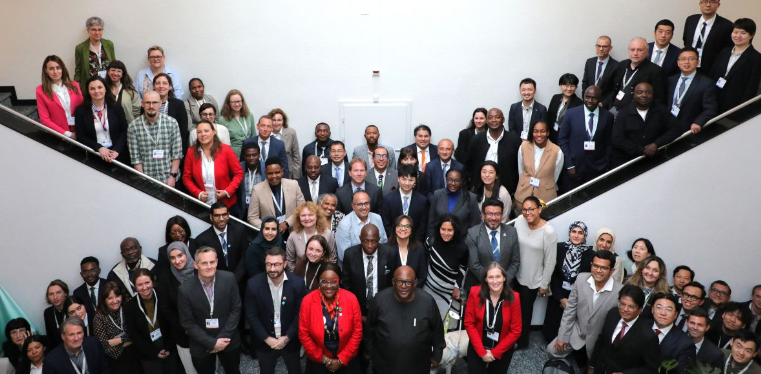
The international wetlands community convened on the picturesque shores of Lake Geneva in May 2026, marking a significant gathering for the Convention on Wetlands Standing Committee (SC67). This pivotal meeting, the first since the high-profile Convention on Wetlands COP15 held in Victoria Falls, Zimbabwe, in July of the previous year, brought together government delegates, experts, and observers, including representation from Wetlands International. The SC67 session was dedicated to reviewing progress on the newly adopted global wetlands goals and targets, fostering the exchange of invaluable experience and expertise, and charting a course for enhanced implementation efforts.
Context and Significance of SC67
The Convention on Wetlands, also known as the Ramsar Convention, is an intergovernmental treaty that provides a framework for national action and international cooperation for the conservation and wise use of wetlands and their resources. Adopted in Ramsar, Iran, in 1971, it is one of the oldest and most respected global environmental agreements. The Convention’s COP (Conference of the Parties) is its supreme governing body, meeting every three years to set priorities and adopt resolutions. COP15, held in 2025, was particularly groundbreaking, resulting in the adoption of the ambitious Kunming-Montreal Global Biodiversity Framework, which significantly elevated the role of wetlands in global conservation efforts. The SC67 meeting served as a crucial follow-up to COP15, providing a platform for the Standing Committee, a body elected by the COP to provide guidance and manage the Convention between meetings, to operationalize the decisions made at the highest level.
The choice of Lake Geneva as the venue for SC67 was symbolic, situated in a region with a rich history of environmental diplomacy and close to numerous important wetland ecosystems. The gathering’s primary objective was to translate the commitments made at COP15 into concrete actions, ensuring that the momentum generated by the adoption of new targets would translate into tangible conservation outcomes for these vital ecosystems.
Key Outcomes and Achievements of SC67
The SC67 meeting proved to be highly productive, yielding several significant decisions and advancements in the global effort to conserve and restore wetlands. Six key highlights emerged from the week-long deliberations in Switzerland:
Partners for Wetland Priorities: A United Front
The proceedings commenced with a powerful opening statement delivered by Wetlands International on behalf of all six International Organisation Partners (IOPs) of the Convention on Wetlands. This unified voice underscored the critical role of these partner organizations in supporting the Convention’s objectives. The IOPs articulated three core priorities for immediate action:
- Addressing Root Causes of Wetland Loss: A central theme was the urgent need to tackle the underlying drivers of wetland degradation, with a particular focus on integrating wetland considerations into financial and economic decision-making processes. This involves re-evaluating development paradigms that often overlook the immense ecological and economic services provided by wetlands.
- Reconfiguring Human-Wetland Relationships: The IOPs emphasized the necessity of fostering a more harmonious relationship between humanity and wetlands. This includes exploring innovative approaches like the "Rights of Wetlands," a concept gaining traction globally that seeks to grant legal personhood or rights to wetland ecosystems, enabling their protection through legal frameworks.
- Investing in Wetlands as Delivery Mechanisms for Global Goals: A crucial point was made regarding the indispensable role of wetlands in achieving targets set by other Multilateral Environmental Agreements (MEAs). By prioritizing wetlands in national and regional implementation plans, and recognizing their interconnectedness across various global agendas – including the outcomes of the 2025 Rio COPs and the UN Water Conference – their contribution to broader sustainability efforts can be maximized.
Later in the week, an official IOP information session provided a deeper dive into the specific work of these organizations. Wetlands International, for instance, highlighted progress in key implementation initiatives such as the Freshwater Challenge, aiming to restore 30% of degraded freshwater ecosystems by 2030, and the Mangrove Breakthrough and Peatland Breakthrough initiatives, focused on significantly increasing the area of these critical carbon-rich ecosystems under protection and restoration. The session also facilitated valuable dialogue with Contracting Parties on how IOPs can further enhance their effectiveness in achieving shared wetland goals.
Establishing Robust Wetland Indicators for Progress Measurement
A cornerstone decision of SC67 was the adoption of a comprehensive indicator framework designed to meticulously measure progress towards the targets outlined in the Convention on Wetlands Strategic Plan 2025-2034. This framework is deliberately and explicitly aligned with the Kunming-Montreal Global Biodiversity Framework, ensuring coherence with broader global biodiversity targets. Key amendments to the framework were introduced to allow for greater flexibility in distinguishing between lost and degraded wetlands. Furthermore, enhancements were made to improve alignment with targets related to mobilizing finance and reducing harmful incentives, as stipulated by the Global Biodiversity Framework.
This crucial step paved the way for the adoption of the template for National Reports. These reports, due by December 7, 2027, will form the basis of a global implementation report to be presented at COP16. A draft guidance document accompanying the template was also presented, with plans for further refinement and improvement based on feedback. The development of these standardized reporting tools is vital for transparently tracking progress, identifying challenges, and adapting strategies for effective wetland conservation.
Strengthening the Global Waterbird Estimates Partnership (GWEP)
Following the establishment of the Global Waterbird Estimates Partnership (GWEP) at COP15, SC67 made another significant decision by approving an update on the partnership’s progress and establishing a permanent GWEP International Coordination Committee. While acknowledging the urgent need to address a funding gap, this decision solidifies the GWEP’s foundation for its critical task: providing long-term coordination, scientific and technical guidance, and resource mobilization for the production of Waterbird Population Estimates. These estimates, crucial for both waterbird and wetland conservation, are essential for designating and managing Wetlands of International Importance under the Ramsar Convention and informing broader waterbird conservation actions at national and international flyway levels. The GWEP’s work is vital, as waterbird populations are often sensitive indicators of wetland health and ecosystem integrity.
Science Takes Center Stage: Advancing Wetland Research and Application
Contracting Parties warmly welcomed a report on the vital work of the Scientific and Technical Review Panel (STRP), the Convention’s scientific advisory body. Plans to strengthen the involvement of early-career researchers, promote the dissemination of STRP outputs, and expand collaborative efforts were enthusiastically supported. The Parties also considered a prioritized list of STRP tasks. Notably, four tasks highlighted by the IOPs in their opening statement were given prominence:
- GEOwetlands: Leveraging earth observation technologies for comprehensive wetland inventories, assessment, monitoring, management, and reporting. This initiative promises to significantly enhance our ability to track wetland changes globally.
- Global Wetland Outlook on Cities: The next iteration of this crucial outlook will focus on the complex relationship between urban environments and wetlands, providing insights and recommendations for sustainable urban development.
- Analysis of Transformative Change Pathways for Wetlands: This includes exploring the potential of Other Effective area-based Conservation Measures (OECMs) in contributing to wetland conservation goals.
- Report on Wetlands and the Water Cycle: This report, slated for launch at the UN Water Conference later in 2026, will underscore the fundamental role of wetlands in regulating water resources and ensuring water security.
The renewed focus on science and research at SC67 underscores the Convention’s commitment to evidence-based decision-making and the application of cutting-edge knowledge to address the complex challenges facing wetlands.

Wetland Cities Accreditation Scheme: Expanding Urban Connections
An update on the Wetland Cities accreditation scheme was presented, highlighting the growing recognition of cities that foster strong relationships with their local wetlands. Future roundtables of Wetland City Mayors are scheduled to take place in Valdivia, Chile, in 2027, and Mechelen, Belgium, in 2028. Preparations are already underway for this year’s roundtable in Niigata, Japan, with a specific focus on rice paddies and the dual importance of urban wetlands for both waterbirds and human populations.
As global urban populations continue to grow, the Wetland City Accreditation scheme plays an increasingly vital role in raising public awareness and fostering education on wetland conservation and wise use. These urban wetlands contribute significantly to global biodiversity targets, particularly concerning urban green and blue spaces, climate adaptation strategies, and the provision of essential ecosystem services. To date, 74 cities across 27 countries have received official recognition through the accreditation scheme. With a deadline for new applications in December 2026, an upcoming Global Wetland Outlook focusing on cities, and the selection of "Wetlands for Sustainable Cities" as the theme for World Wetland Day 2028 (aligning with the next wetland COP in Panama City), interest and action on urban wetlands are expected to surge.
Exploring the Potential of Rights of Wetlands
With the "Rights of Nature" movement gaining significant traction globally, SC67 saw robust discussions on the exciting potential of "Rights of Wetlands" approaches as a powerful pathway for wetland conservation and restoration. This concept aligns with the broader call for transformative change in how humanity interacts with nature. Building upon recent IUCN resolutions concerning the rights of rivers and the rights of nature, and the ongoing work of the Rights of Wetlands Initiative, there is strong support for the development of a new Draft Resolution on the rights of wetlands. Such a resolution, if brought forward by Contracting Parties to the next wetlands COP, could provide a significant legal and ethical framework for protecting these vital ecosystems. The growing recognition of the intrinsic value of natural systems, independent of their direct utility to humans, marks a paradigm shift in conservation thinking.
Broader Implications and Future Outlook
Beyond these six key highlights, SC67 addressed a wide spectrum of critical issues. Discussions encompassed the risks to wetlands and water security posed by the potential dilution of the European Union’s Water Framework Directive and the threats to High Andean wetlands from increased lithium mining. The indispensable role of Ramsar Regional Initiatives (RRIs) in driving transboundary implementation was also affirmed, with welcome confirmation of new funding for the Southern African RRI and the Danube WILD Island RRI. Furthermore, the extensive work required in wetland finance was a recurring theme, including the adoption of a resource mobilization plan where IOPs are poised to play a significant role.
With just over two years remaining until the next wetlands COP in Panama City, the global focus remains resolutely on action and implementation at local, landscape, national, and regional levels. As International Organisation Partners to the Convention on Wetlands, the commitment to continued collaboration with governments, the Convention secretariat, and an ever-expanding array of wetland partners from across society is paramount. The overarching goal is to scale up wetland protection and restoration efforts, recognizing their indispensable contribution to the well-being of people, the preservation of biodiversity, and the mitigation of climate change. The decisions and momentum generated at SC67 provide a critical foundation for achieving these ambitious, yet essential, objectives.
All SC67 documents are accessible through the Ramsar Convention website. Further insights can be found on the Convention on Wetlands website and through Wetlands International’s perspectives on the importance of these global gatherings.
