

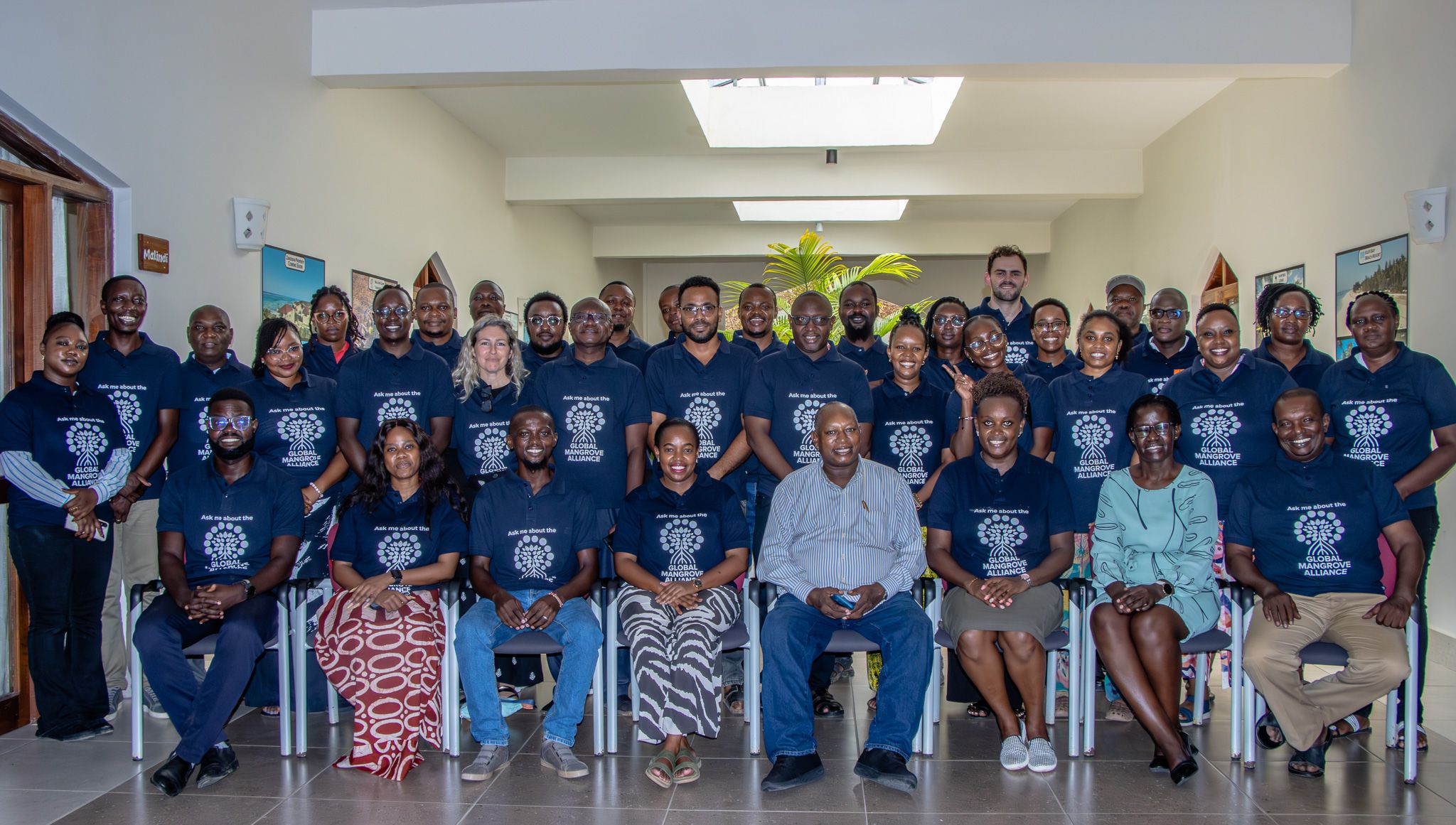
The recent inauguration of the Kenya Mangrove Champions Initiative in Kenya, hosted by Wetlands International and the Global Mangrove Alliance, signifies a pivotal moment in the global effort to conserve and restore these vital coastal ecosystems. This landmark workshop convened a comprehensive array of stakeholders, including seasoned mangrove practitioners, influential community leaders, dedicated youth mangrove champions, specialized technical experts, key government partners, and representatives from various non-governmental organizations. The gathering, which took place last week, marks the formal commencement of a collaborative endeavor aimed at bolstering mangrove restoration efforts through the empowerment of local leadership, underpinned by robust scientific understanding and community-driven methodologies. As global aspirations and investments in mangrove restoration continue their rapid ascent, an urgent imperative arises to foster interconnected communities that can share knowledge, learn from one another’s experiences, and thereby accelerate the adoption of effective, contextually appropriate mangrove restoration strategies.
Laying the Foundation for a Network of Expertise
The overarching objective of the Mangrove Champions Initiative is to cultivate a cohesive and dynamic network of practitioners. This network is envisioned to transcend the limitations of fragmented, short-term, and conventional restoration approaches, paving the way for more sustainable and intrinsically community-led projects. The initiative firmly acknowledges that each mangrove landscape possesses unique ecological, social, economic, and cultural characteristics. Consequently, successful restoration necessitates bespoke strategies meticulously tailored to these local realities. Participants at the workshop underscored a fundamental principle: mangrove restoration cannot be divorced from the livelihoods, cultural identities, local governance structures, and the paramount priorities of the communities themselves.
A cornerstone of this initiative is the explicit recognition and dedicated support for local leaders – the very "Mangrove Champions" – who are already at the forefront of driving positive change within their respective territories. Their invaluable lived experiences, when synergistically combined with scientific knowledge and technical expertise, are indispensable for the conceptualization and implementation of restoration approaches that are both impactful and enduring. The inherent challenge, and simultaneously the profound opportunity, lies in effectively bridging these diverse dimensions to generate lasting, meaningful outcomes.
The Global Mangrove Alliance, through its established national chapters worldwide, including its presence in Kenya, has been instrumental in supporting effective mangrove conservation and restoration at the national level. The Mangrove Champions Initiative represents a strategic extension of this work, specifically focusing on bringing together the diverse spectrum of stakeholders identified above, commencing with Kenya, to foster joint learning and facilitate the widespread adoption of best practices in mangrove restoration. In doing so, the initiative is actively forging a connected ecosystem of practitioners across various project sites, all unified by a shared commitment to continuous learning, robust collaboration, and the implementation of locally rooted actions.
Elena Roddom, representing Wetlands International, articulated the profound value derived from the workshop, stating, "This experience was so valuable, all participants were so committed and keen to learn from each other, and people felt very comfortable to share their local experience and expertise. As a result, established mangrove restoration experts, researchers, and government actors learned from young mangrove champions and community leaders that are testing experimental approaches in the field, and vice versa." This reciprocal exchange of knowledge highlights the initiative’s core strength: democratizing expertise and valuing insights from all levels of engagement.
Empowering Local Champions: The Heart of the Initiative
The genesis of the Kenya Mangrove Champions Initiative can be traced back to a growing recognition within the conservation sector that top-down, externally driven restoration projects often falter due to a lack of local ownership and understanding of the intricate socio-ecological dynamics at play. Wetlands International and the Global Mangrove Alliance identified a critical need to bridge this gap by empowering individuals and communities who possess intimate knowledge of their local mangrove ecosystems and face the direct consequences of their degradation.
The inception workshop, held in April 2026, was strategically designed to foster an environment of open dialogue and mutual learning. The diverse assembly of participants brought a wealth of perspectives. Community leaders shared their deep-seated understanding of traditional resource management practices and the immediate socio-economic pressures that influence mangrove utilization. Youth mangrove champions, representing the future custodians of these ecosystems, brought fresh energy and innovative ideas, often informed by their direct engagement with local environmental challenges. Technical experts provided scientific grounding, offering insights into ecological processes, climate change impacts, and the efficacy of various restoration techniques. Government partners, such as representatives from the Kenya Forest Service and the National Environment Management Authority (NEMA), offered crucial context regarding policy frameworks, regulatory landscapes, and the potential for scaling up successful interventions. NGO representatives brought invaluable experience in project implementation, community mobilization, and monitoring and evaluation.
The workshop’s agenda was meticulously crafted to facilitate this cross-pollination of ideas. Interactive sessions focused on identifying common challenges in mangrove restoration, such as land tenure issues, competing land-use demands, the impacts of climate change (sea-level rise, increased storm intensity), and the need for sustainable financing mechanisms. Participants engaged in case study analyses, drawing from both successful and less successful restoration projects in Kenya and beyond. A significant portion of the workshop was dedicated to understanding the principles of science-based restoration, emphasizing the importance of site selection, appropriate species selection, planting techniques, and post-planting management.
Mangrove Restoration Expeditions: Bringing Learning to the Field
A defining and innovative component of the Mangrove Champions Initiative is the organization of immersive, locally grounded mangrove restoration expeditions. These field-based learning excursions are designed to move beyond theoretical discussions and bring participants directly to active restoration sites. The inaugural expedition is scheduled to take place in Kwale County, a region near Mombasa known for its significant mangrove cover and its vulnerability to coastal erosion and degradation.
These expeditions will bring together the newly identified Mangrove Champions, along with technical experts, NGO representatives, and government implementation agencies like the Kenya Forest Service. The expeditions are conceptualized as mobile classrooms, offering highly participatory and immersive learning environments. Within these settings, participants will feel empowered to openly discuss challenges, uncertainties, and hard-won lessons learned. The focus will be on a holistic analysis of ecological conditions, the practical application and efficacy of various restoration approaches, and the on-the-ground challenges encountered during implementation.

A critical element of these expeditions will be the exploration of how to engage respectfully and effectively with local communities. This includes a deep dive into understanding local realities, such as existing power dynamics, the articulated priorities of community members, traditional governance structures, and the imperative of engaging a broad spectrum of stakeholders, extending beyond just village leaders. This nuanced approach acknowledges that successful restoration is deeply intertwined with social equity and inclusive decision-making.
The intended impact of these expeditions extends beyond mere knowledge exchange. They are designed to foster tangible behavioral change across the entire restoration sector. By enhancing the quality of restoration efforts, promoting collaborative learning, and embedding field-informed decision-making into the restoration process, these expeditions aim to significantly amplify the impact of mangrove restoration projects in Kenya. Furthermore, they are poised to contribute to broader systemic changes that will improve the efficacy and scalability of mangrove restoration initiatives nationwide.
The Broader Implications: Scaling Up for Global Impact
The Kenya Mangrove Champions Initiative is envisioned not as an isolated project but as the vanguard of a much wider, global effort. Throughout the workshop, participants consistently emphasized the profound importance of continuous reflection and the necessity for cross-learning, not only between different projects within Kenya but also across international borders. Key questions that emerged included: How can meaningful data be effectively collected in contexts where baseline information is often scarce or incomplete? How can the valuable insights gleaned from one expedition be leveraged to inform and enhance another? And crucially, how can the power of storytelling be harnessed to build a compelling narrative of impact without sacrificing the nuanced realities of local contexts?
The successful launch in Kenya serves as a critical blueprint for scaling the Mangrove Champions initiative to other countries and priority landscapes facing similar challenges. The intention is to cultivate a globally interconnected yet deeply locally grounded community of practice. In such a community, restoration knowledge will flow freely across diverse landscapes, and the future trajectory of mangrove restoration will be shaped as much by the invaluable on-the-ground experience and leadership of local communities as by scientific advancements and overarching global ambitions.
Supporting Data and Context
Mangroves are critically important coastal ecosystems, providing a multitude of ecological and economic benefits. Globally, they are disappearing at an alarming rate, estimated to be between 0.1% and 0.7% per year. This loss has profound implications for coastal protection, biodiversity, carbon sequestration, and the livelihoods of millions of people. In Kenya, mangrove forests are estimated to cover approximately 54,000 hectares along the coastline, playing a crucial role in protecting shorelines from erosion, storm surges, and tsunamis. They also serve as vital nurseries for fish and crustaceans, supporting significant fisheries that are essential for local economies.

The economic value of mangroves is substantial. Studies have shown that healthy mangrove ecosystems can provide coastal protection services worth billions of dollars annually by reducing the impact of storm surges. Furthermore, mangroves are among the most effective terrestrial carbon sinks, capable of storing significantly more carbon per hectare than tropical rainforests. This makes their conservation and restoration a critical nature-based solution for climate change mitigation.
The Global Mangrove Alliance, a collaborative platform of leading organizations, governments, and research institutions, aims to significantly increase global mangrove cover by 2030. Initiatives like the Mangrove Champions program are designed to translate these global goals into tangible, on-the-ground action, ensuring that restoration efforts are effective, equitable, and sustainable.
Statements from Related Parties (Inferred)
While direct quotes from all inferred parties are not available in the provided text, the emphasis on collaboration and local leadership suggests anticipated positive responses. Government agencies, such as the Kenya Forest Service, are likely to welcome initiatives that align with national conservation policies and offer practical, community-backed approaches to mangrove restoration, potentially reducing the burden on public resources while enhancing effectiveness. International funding bodies and conservation organizations are expected to view the Mangrove Champions Initiative favorably, as it addresses a key bottleneck in restoration efforts: the need for sustained, locally relevant, and scientifically informed practices. Community leaders, empowered by direct involvement and recognition, are anticipated to become strong advocates for the program, ensuring its long-term success through active participation and stewardship.
Analysis of Implications
The Kenya Mangrove Champions Initiative holds significant implications for the future of coastal ecosystem restoration, not only in Kenya but globally. By prioritizing local leadership and integrating scientific expertise with traditional knowledge, the initiative is poised to create more resilient and sustainable restoration outcomes. The emphasis on learning expeditions and continuous cross-learning fosters a culture of adaptive management, crucial for navigating the complexities of ecological restoration in a changing climate. The potential for scaling this model to other countries offers a powerful pathway to achieving ambitious global conservation targets. Ultimately, this initiative represents a paradigm shift, moving from a top-down, interventionist approach to a bottom-up, empowering model that recognizes the intrinsic value and agency of local communities in safeguarding their natural heritage.
