
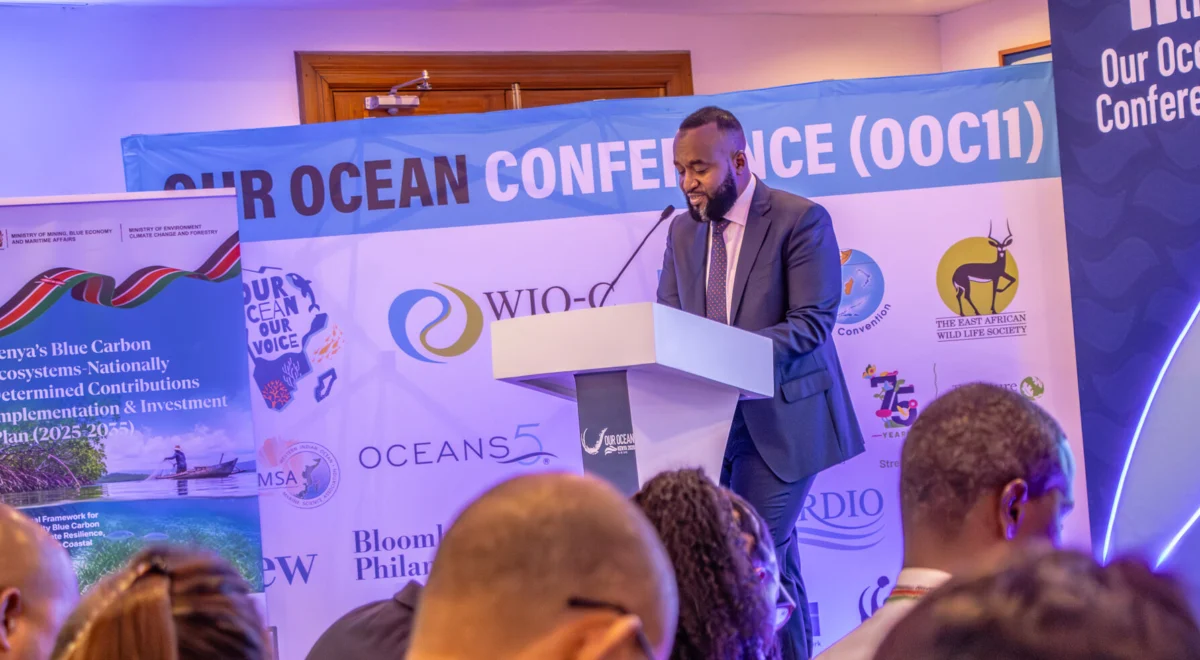
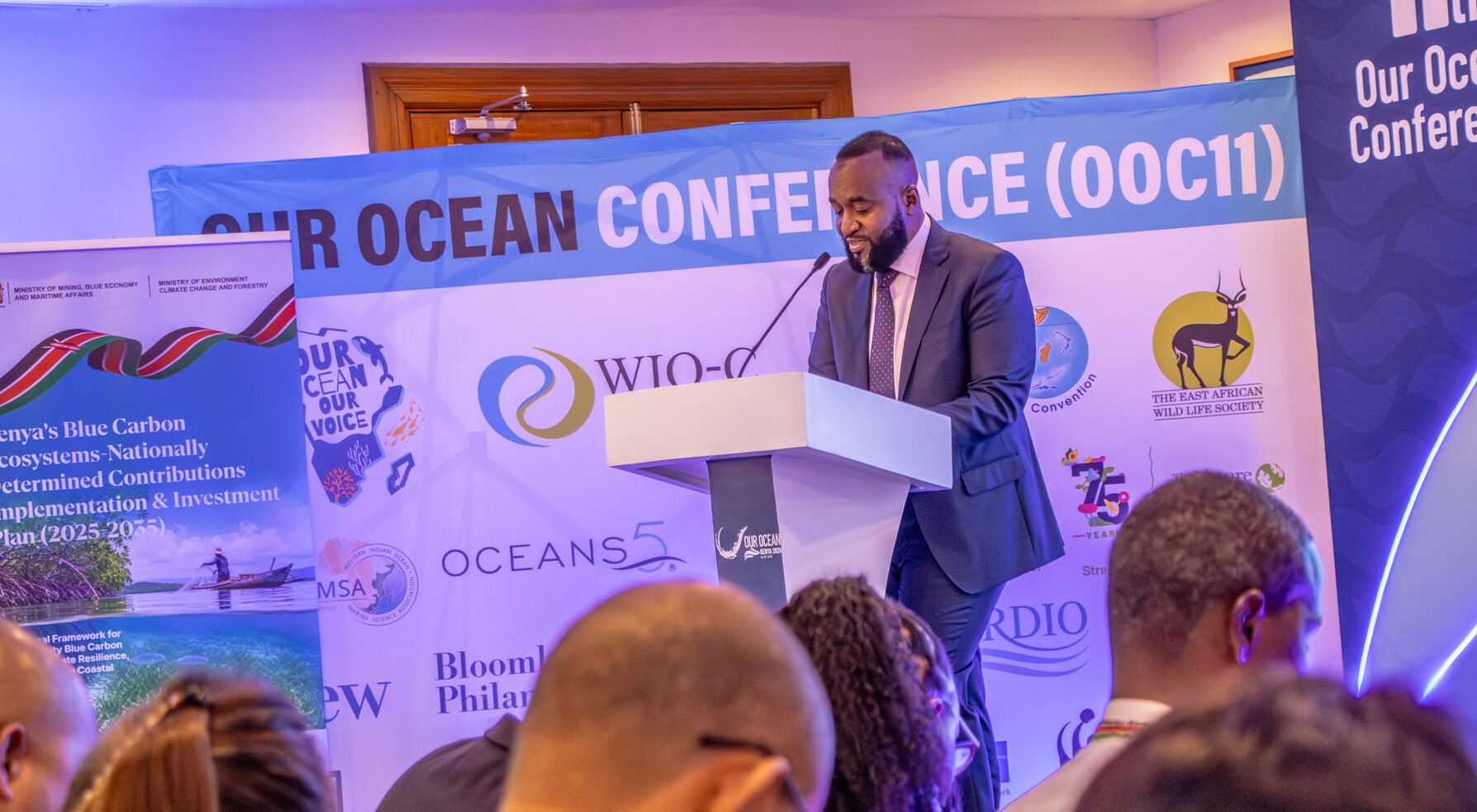
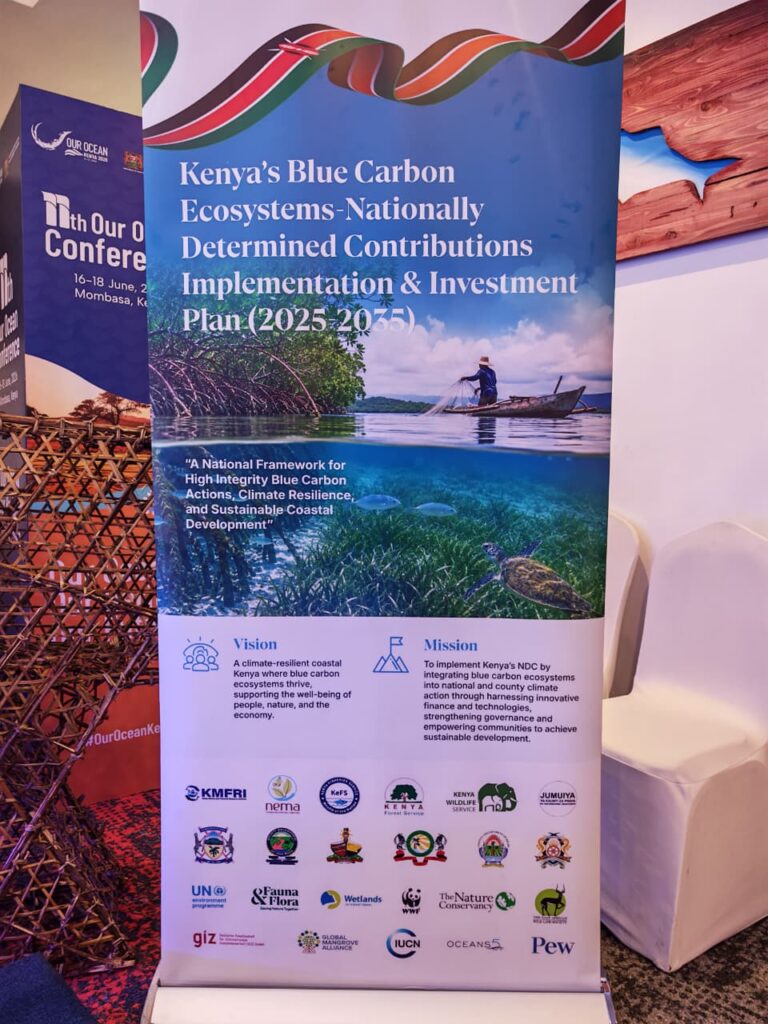
The Government of Kenya officially launched the Blue Carbon Ecosystems NDC Implementation and Investment Plan 2025-2035 at the 11th Our Ocean Conference (OOC11), marking a significant stride in the nation’s commitment to climate action and the sustainable development of its blue economy. This comprehensive plan, developed over an extensive period with multi-agency collaboration, aims to harness the power of coastal and marine ecosystems to meet Kenya’s climate objectives and foster economic prosperity.
The development of this landmark strategy was spearheaded by a dedicated Technical Working Group, with leadership from both the Ministry of Environment, Climate Change and Forestry, and the Ministry of Mining, Blue Economy and Maritime Affairs. The resulting plan offers a clear, actionable, and investable framework for deploying nature-based solutions, focusing on the restoration and conservation of mangroves, seagrasses, and other coastal wetlands. Its strategic scope consolidates Kenya’s Nationally Determined Contributions (NDCs) across two commitment cycles (2020-2030 and 2031-2035) into a unified national strategy, ensuring a coherent and sustained approach to climate mitigation and adaptation.
Key Targets and Vision
The plan sets forth ambitious yet achievable targets designed to yield substantial environmental and socio-economic benefits. By 2035, Kenya aims to restore at least 75% of its degraded mangrove ecosystems, a critical step in reversing past environmental damage. Furthermore, the initiative is projected to create up to 70,000 new jobs, providing vital employment opportunities for coastal communities. Crucially, the plan seeks to mobilize USD 620 million in investment, a significant financial commitment necessary for the large-scale implementation of restoration and conservation projects.
The overarching vision articulated in the plan is that of a climate-resilient coastal Kenya, where thriving blue carbon ecosystems serve as the foundation for the well-being of its people, the preservation of its natural heritage, and the robust growth of its economy. This vision underscores the interconnectedness of environmental health, human prosperity, and economic stability in the coastal regions.
The Significance of Blue Carbon Ecosystems
The strategic importance of blue carbon ecosystems—mangroves, seagrasses, and salt marshes—cannot be overstated, particularly in the context of climate change mitigation and adaptation. These coastal and marine habitats are exceptionally effective at sequestering carbon dioxide from the atmosphere, often at rates significantly higher than terrestrial forests. Kenya’s extensive coastlines are home to approximately 61,000 hectares of mangroves and 39,000 hectares of seagrass beds. These vital ecosystems collectively store over 75 million tonnes of CO2 equivalent (tCO2e), sequestering carbon at rates five to ten times greater per hectare than many terrestrial forests.
Beyond their remarkable carbon sequestration capabilities, these ecosystems play an indispensable role in supporting marine biodiversity and coastal livelihoods. They are nurseries for a vast array of fish species, directly supporting an estimated 80% of coastal fisheries. This, in turn, underpins the livelihoods of over 800,000 artisanal fishers who depend on these resources for their income and sustenance. The health of these blue carbon environments is thus directly linked to food security and economic stability for a significant portion of Kenya’s coastal population.
However, these invaluable ecosystems are under severe threat. Historical data indicates a concerning decline in mangrove cover, with a reduction of approximately 40% from its historical extent. Current rates of loss are estimated at 0.57% annually, translating to thousands of hectares lost each year. Similarly, seagrass beds are experiencing degradation, shrinking at a rate of 0.26% per year. The economic consequences of this degradation are substantial, with an estimated annual cost to the Kenyan economy of KES 6 billion. This economic toll arises from increased coastal erosion, loss of biodiversity, and heightened vulnerability to coastal hazards, underscoring the urgent need for intervention.

Official Statements and Endorsements
The launch of the plan was met with strong endorsements from key government officials and environmental experts, highlighting its strategic importance and the nation’s commitment.
Dr. Deborah Barasa, Cabinet Secretary for the Ministry of Environment, Climate Change and Forestry, emphasized the plan’s role in solidifying Kenya’s international climate commitments. "This initiative reaffirms Kenya’s commitment to the Paris Agreement’s transparency framework and strengthens our position as a regional leader in ocean-climate resilience and sustainable development," stated Dr. Barasa. Her remarks underscored the plan’s alignment with global climate goals and Kenya’s aspiration to be a vanguard in sustainable ocean management.
Dr. James Kairo, Chief Scientist at the Kenya Marine and Fisheries Research Institute and a member of the International Blue Carbon Scientific Working Group, provided crucial scientific backing for the plan. He highlighted its role in mobilizing essential resources. "This plan is critical for mobilizing the science, partnerships, and financial resources required to protect and restore Blue Carbon Ecosystems (BCEs), ensuring they align seamlessly with Kenya’s climate and development goals. By advancing BCEs investments, Kenya can drive meaningful climate action and promote sustainable development," Dr. Kairo explained. His statement underscored the integrated approach of the plan, linking environmental conservation with economic progress.
Echoing these sentiments, Hon. Hassan Ali Joho, Cabinet Secretary for Mining, Blue Economy & Maritime Affairs, commended the collaborative spirit behind the plan. "We commend the collaboration between government, research institutions, partners, civil society, and coastal communities in developing this plan. We urge all stakeholders to continue supporting its implementation to protect and sustainably manage Kenya’s Blue Carbon Ecosystems," said Hon. Joho. His statement highlighted the inclusive process and called for continued collective action.

A Strategic Framework for Action: Five Key Result Areas
The Blue Carbon Ecosystems plan is strategically structured around five Key Result Areas (KRAs), designed to provide a comprehensive roadmap for implementation and impact. While the specific details of these KRAs were not enumerated in the provided text, their overarching objective is to guide efforts towards the effective conservation, restoration, and sustainable utilization of blue carbon ecosystems. These KRAs are expected to encompass aspects such as policy and legal frameworks, scientific research and monitoring, community engagement and livelihood development, financial mobilization and investment, and the integration of blue carbon into national climate and development strategies.
Development Partners: A Collaborative Endeavor
The successful formulation of the Kenya Blue Carbon Ecosystems Plan was made possible through the invaluable support and expertise of a wide array of development partners and regional organizations. This collaborative effort underscores the global recognition of the importance of blue carbon ecosystems and Kenya’s leadership in this domain.
Key contributors include Fauna & Flora, The Pew Charitable Trusts, The International Union for Conservation of Nature (IUCN), Wetlands International Eastern Africa, World Wide Fund (WWF) Kenya, The Nature Conservancy, Global Mangrove Alliance, The East African Wildlife Society, GIZ, and the United Nations Environment Programme (UNEP). Additionally, the Government of Canada provided significant technical and financial support.

Dr. Julie Mulonga, Regional Director at Wetlands International Eastern Africa, articulated the significance of this collaborative approach. "This Plan is an important step because it brings together what Kenya has been building over the years: science, policy, community knowledge, and partnerships into one clear roadmap for action," she stated. "We know that protecting mangroves and seagrass is not only about conserving nature. It is about supporting fisheries, strengthening livelihoods, building resilience to climate change and creating opportunities for coastal communities. The real work now is implementing the Plan in partnership with the people who are already stewarding these ecosystems every day." Her remarks emphasize the community-centric approach and the practical benefits derived from protecting these ecosystems.
George Maina, Africa Fisheries Strategy Manager at The Nature Conservancy (TNC), expressed enthusiasm for the plan’s potential to bridge the gap between ambition and action. "We are excited to be part of this process, ensuring we continue to catalyze the adoption of blue carbon ecosystems and ocean actions into NDCs. To achieve lasting and enduring impact, community-led solutions, sustainable finance, and enabling conditions are needed to drive action. This plan will help bridge the existing gap between climate ambitions and action," Maina commented. His statement highlights the crucial role of community involvement and sustainable financing mechanisms.
Projected Outcomes by 2035
The Blue Carbon Ecosystems NDC Implementation and Investment Plan 2025-2035 outlines a set of transformative outcomes anticipated by the year 2035. These projected achievements reflect the multifaceted benefits of investing in blue carbon ecosystems.
The plan aims to achieve a reduction of 0.68 to 0.69 million tCO2e in emissions, contributing significantly to Kenya’s climate mitigation targets. Furthermore, it is projected to avert between USD 200 million and USD 500 million in coastal damages, a testament to the protective services offered by healthy coastal ecosystems against erosion and storm surges.
In terms of socio-economic impact, the plan seeks to increase fisheries productivity by an estimated 25%, benefiting between 300,000 and 600,000 households that rely on these resources. This enhancement in fisheries output will bolster food security and economic resilience for coastal communities. Collectively, these outcomes are expected to position Kenya as a regional and global leader in ocean-based climate action, showcasing a model for sustainable development that integrates environmental conservation with economic growth.
Broader Context and Implications
The launch of Kenya’s Blue Carbon Ecosystems NDC Implementation and Investment Plan comes at a critical juncture in global climate action. As nations grapple with the escalating impacts of climate change, there is a growing recognition of the indispensable role of nature-based solutions. Blue carbon ecosystems, with their unique capacity for carbon sequestration and coastal protection, are emerging as vital allies in the fight against climate change.
Kenya’s proactive approach, formalizing its commitment through a detailed implementation and investment plan, serves as a powerful example for other coastal nations. The plan’s comprehensive scope, addressing policy, finance, community involvement, and scientific research, provides a blueprint for effective blue carbon management.
The success of this plan will not only contribute to Kenya’s climate resilience and economic development but also have broader implications for international climate negotiations and conservation efforts. By demonstrating the tangible benefits of investing in blue carbon, Kenya can inspire increased global support and action for these critical ecosystems. The plan’s emphasis on job creation and livelihood enhancement also highlights the potential of blue carbon initiatives to drive inclusive and sustainable development, ensuring that climate action benefits the communities most directly impacted by environmental change.

The detailed roadmap presented in the plan is expected to attract further investment and foster innovation in blue carbon management. As the world strives to meet the goals of the Paris Agreement, Kenya’s Blue Carbon Ecosystems NDC Implementation and Investment Plan stands as a beacon of progress, illustrating how strategic investment in natural capital can yield substantial environmental and economic dividends. The ongoing implementation will be closely watched as a critical case study in translating ambitious climate goals into tangible, on-the-ground action.
