
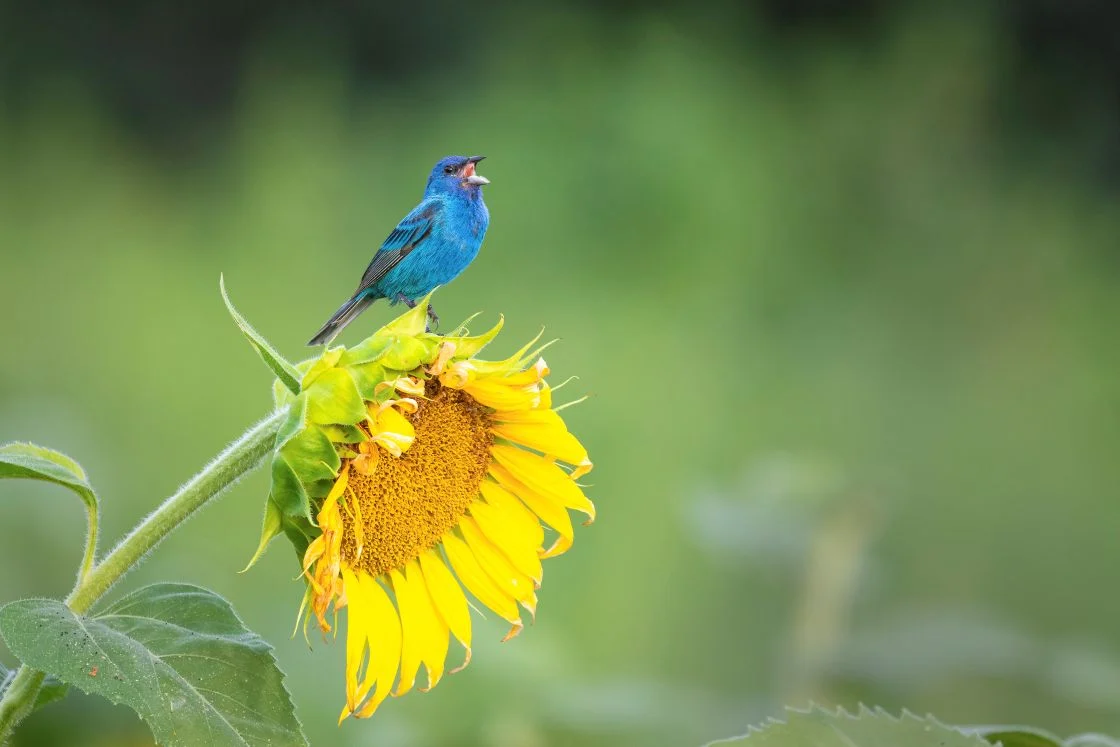
As an education and awareness campaign, Lights Out, Texas! continues to spread across the state, fostering a crucial understanding of migratory bird conservation among neighbors, friends, and families. This expansive reach is largely thanks to the tireless work done by dedicated members and partners across Texas, who have collectively amplified the campaign’s vital message. The initiative has garnered significant public support, with countless individuals sharing its tenets on social media platforms and prominently displaying campaign yard signs, signaling a burgeoning statewide commitment to protecting avian life. Over the course of the Fall 2025 and Spring 2026 seasons, the campaign achieved remarkable visibility, registering approximately 70 earned media pieces and an immeasurable number of social media shares, collectively reaching an estimated 170 million people. This level of engagement is not merely impressive in scope but holds the potential to instigate profound and lasting change across the state of Texas, a critical corridor for millions of migratory birds.
The Urgent Imperative: Protecting Migratory Birds
Texas plays an indispensable role in the grand spectacle of avian migration, serving as a pivotal crossroads within the Central Flyway, one of North America’s primary migratory routes. Each spring and fall, billions of birds traverse the continent, with hundreds of millions passing through Texas, often traveling under the cloak of darkness. These nocturnal migrants, ranging from tiny warblers to majestic raptors, rely on celestial cues – primarily the stars and the Earth’s magnetic field – for navigation. However, the rapid proliferation of artificial light at night, particularly from urban centers, poses a severe and often fatal threat. This phenomenon, known as light pollution, disorients birds, drawing them off course and into brightly lit areas where they become trapped in dazzling light domes. Exhausted and confused, they become vulnerable to collisions with illuminated buildings, windows, and other structures, or fall prey to predators.
Scientific estimates suggest that artificial light at night contributes to the deaths of hundreds of millions, possibly even a billion, birds annually across North America. In Texas alone, given its geographical position and growing urban footprint, the numbers are staggering. The "Lights Out" concept, pioneered by conservationists in cities like Chicago in the late 1990s, recognizes that a simple, collective action – turning off non-essential lights during peak migration periods – can dramatically reduce these fatalities. The Lights Out, Texas! campaign is built upon this proven strategy, tailored to the unique ecological landscape and diverse communities of the Lone Star State. Its mission extends beyond mere awareness, aiming to empower individuals, businesses, and municipalities to adopt practices that create safer passage for these essential ecological indicators.
Campaign Milestones and Broadened Outreach (2025-2026)
The period spanning Fall 2025 through Spring 2026 marked a pivotal phase in the Lights Out, Texas! campaign’s expansion and impact. The estimated reach of 170 million people underscores the campaign’s successful strategy in leveraging diverse communication channels. This included traditional media outlets, which provided in-depth coverage of the campaign’s objectives and the science behind light pollution’s impact on birds. Local news segments, newspaper features, and environmental blogs disseminated information, bringing the plight of migratory birds and the simple solutions offered by Lights Out, Texas! into countless homes. Simultaneously, a robust social media presence amplified these messages, utilizing engaging visuals and shareable content to foster a grassroots movement of awareness and action.
A significant aspect of the campaign’s outreach strategy has been its commitment to inclusivity and accessibility, recognizing the rich cultural and linguistic diversity of Texas. This commitment was powerfully demonstrated when stations like Telemundo San Antonio visited the Mitchell Lake Audubon Center. This critical partnership resulted in the filming of a comprehensive segment on Lights Out, Texas!, capturing both an insightful interview with campaign representatives and compelling footage of the center’s vital role in bird conservation. The Mitchell Lake Audubon Center, a sanctuary and educational hub, provided a tangible backdrop for understanding the campaign’s goals. The Telemundo coverage was particularly impactful, as it brought the story of bird migration and the threat of light pollution to a significant Spanish-speaking audience, thereby broadening the campaign’s demographic reach and fostering a more inclusive conservation dialogue. Inspired by the success of this segment and the evident need for culturally relevant materials, plans are firmly underway to translate all educational materials into Spanish for distribution in Fall 2026, ensuring that the campaign’s message resonates deeply within all communities across Texas.
Community engagement events have also been central to the campaign’s success, providing direct opportunities for dialogue and collaboration. A prime example was the Lights Out, Texas! film screening hosted by the Amon G. Carter Foundation in Fort Worth. This well-attended event brought together approximately 130 community members, representing a diverse cross-section of the city. Crucially, the audience included key stakeholders such as city officials, building owners, and operators. The film screening served as a powerful educational tool, vividly illustrating the challenges faced by migratory birds and the practical solutions available. The direct interaction facilitated at the event proved invaluable, as many attendees, particularly those in positions of influence over urban infrastructure, connected strongly with the program’s message. Such gatherings are instrumental in building consensus and fostering the collaborative spirit necessary for implementing large-scale changes in urban environments.
A Major Milestone for Bird-Friendly Design: The Dallas Convention Center
One of the most significant achievements to date for the Lights Out, Texas! campaign, realized in 2026, has been a landmark decision by the Dallas Convention Center. Through strategic partnerships with the Texas Conservation Alliance, Environment Texas, and American Bird Conservancy, the campaign successfully advocated for the inclusion of bird-friendly glass in the convention center’s major remodel. This represents a monumental step forward for avian conservation and urban planning.
Bird-friendly glass, often incorporating subtle patterns, fritting, or UV-reflective coatings, is designed to be visible to birds, preventing the fatal collisions that often occur when birds mistake reflective or transparent glass for open sky or habitat. The Dallas Convention Center, a prominent civic structure and a beacon of economic activity, setting this precedent is profoundly impactful. Its decision is not merely an isolated act of environmental responsibility but is expected to serve as a powerful catalyst, inspiring other large-scale developments and existing buildings across the state to adopt similar bird-friendly design principles. This success underscores the power of collaborative advocacy, demonstrating how conservation organizations can work with developers and municipal entities to integrate ecological considerations into architectural standards, shifting from reactive mitigation to proactive, preventative design. The long-term implications of this decision could transform urban landscapes, making them inherently safer for migratory birds.
The Scientific Mandate: Understanding Migration and Collisions
The urgency behind the Lights Out, Texas! campaign is consistently reinforced by real-time scientific data on bird migration. According to BirdCast, a collaborative project that provides migration forecasts and analyses, April 2026 saw nearly 26,000 birds per kilometer of airspace across Texas. This staggering number represents the immense volume of avian life traversing the state during peak spring migration. To put this into perspective, imagine a single square kilometer of sky above Texas, teeming with tens of thousands of birds flying overhead. With such dense migratory traffic, the risk of collisions with human-made structures escalates dramatically, particularly in urban areas illuminated at night.
Despite the growing awareness and the campaign’s successes, the sobering reality is that collisions persist. The campaign is unfortunately still recording hundreds of collisions, a stark reminder that while progress is being made, the challenge remains substantial. These collision records serve as critical data points, highlighting specific problem areas and informing future strategies. The data underscores the fact that even with widespread awareness, individual actions, though vital, must be complemented by systemic changes to achieve significant reductions in bird mortality.
The science behind bird collisions is complex. Birds, especially nocturnal migrants, are instinctively drawn to light. Artificial lights can confuse their internal compass, causing them to circle buildings, expending precious energy and disorienting them. This "fatal attraction" often leads to collisions with glass, which birds cannot perceive as a solid barrier, especially when it reflects vegetation or the sky. The type of light also matters; blue and white lights are particularly problematic. Understanding these mechanisms is crucial for developing effective solutions, ranging from altering lighting schemes to implementing bird-friendly architectural designs.
Looking Ahead: Policy, Code, and Systemic Change
The long-term vision of Lights Out, Texas! extends beyond voluntary participation and individual actions. While these are invaluable for immediate impact and public education, the campaign recognizes the necessity of embedding bird protection into the very fabric of urban development and infrastructure. Looking forward, the campaign is actively exploring a potential partnership aimed at advancing systemic updates to building lighting through policy and code improvements.
This proactive approach seeks to integrate bird-friendly lighting standards and design requirements into municipal building codes and zoning ordinances. Such policy changes could mandate automatic, timed dimming or extinguishing of non-essential lights during peak migration periods for commercial buildings, or require bird-friendly glass in new constructions and major renovations. The advantage of policy and code improvements is that they create an automatic, standardized framework for bird protection, ensuring that buildings play an active and consistent role in safeguarding birds every year, without requiring constant manual intervention or renewed awareness campaigns.
The implications of such systemic changes are vast. They would not only reduce bird mortality but also contribute to energy conservation and dark sky initiatives, benefiting human well-being and astronomical observation. By making bird-friendly design and lighting practices the norm rather than the exception, Texas can cement its legacy as a leader in environmental stewardship. This ambitious future requires continued collaboration among conservation groups, architects, urban planners, policymakers, and the public. The journey initiated by Lights Out, Texas! is a testament to the power of collective action and a shared commitment to preserving the rich biodiversity that defines the state. The widespread public engagement, the significant media coverage, and the landmark policy wins of 2026 signal a hopeful trajectory towards a future where Texas’s urban landscapes coexist harmoniously with the breathtaking phenomenon of avian migration.
