
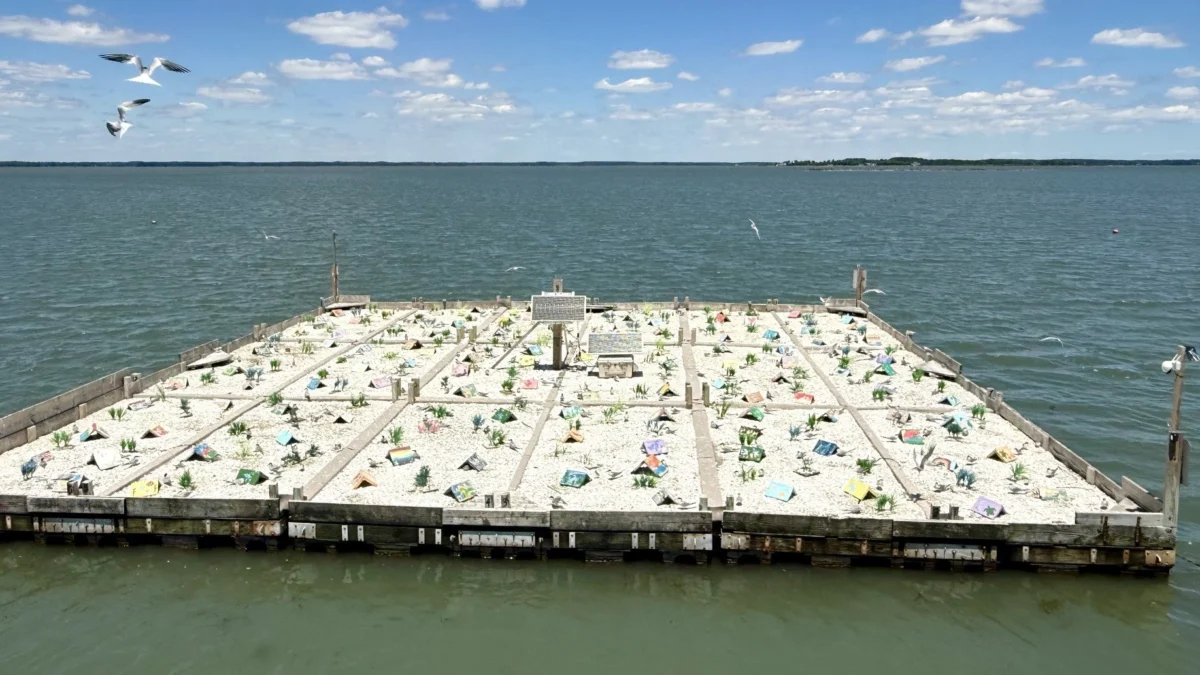
In the brackish waters of Ocean City, Maryland, a remarkable environmental turnaround is taking place. After hovering on the brink of local extirpation just six years ago, the Common Tern (Sterna hirundo) has staged a significant recovery in the state’s Coastal Bays. During the 2026 breeding season, biologists documented a total of 460 nesting pairs—a figure that represents the most robust coastal breeding population in decades and a monumental leap from the mere 30 pairs recorded in 2020. This resurgence, driven by a strategic combination of floating artificial habitats and the restoration of natural island ecosystems, provides a blueprint for avian conservation in an era defined by climate-driven habitat loss.
A Steep Decline: The Historical Context
The story of the Common Tern in Maryland is one of resilience against the backdrop of industrial and environmental pressure. Historically, these elegant, silver-grey seabirds thrived on the state’s natural barrier islands and coastal spits. These environments offered the ideal combination of seclusion, proximity to high-quality forage, and protection from terrestrial predators.
However, the late 20th and early 21st centuries proved devastating for these habitats. Data from the Maryland Department of Natural Resources (DNR) indicates that the population plummeted by approximately 95% between the late 1980s and 2020. Several factors converged to create this "perfect storm" for the species:
- Accelerated Erosion: Rising sea levels and the intensification of storm surges have physically stripped away the low-lying nesting islands that terns have occupied for generations.
- Human Encroachment: Increased recreational boating and coastal development have introduced unprecedented levels of human disturbance, causing adult birds to abandon nests or leave eggs vulnerable to exposure and predation.
- Predatory Pressures: With the loss of secure nesting sites, eggs and chicks became easier targets for avian and mammalian predators, further depressing recruitment rates.
By 2020, the situation reached a critical juncture. With fewer than 30 nesting pairs remaining, experts feared that the Common Tern would soon be relegated to a memory in Maryland’s coastal landscape, effectively breaking a link in the local food chain.
The Turning Point: The Raft Initiative
Recognizing that natural habitat could not be replaced overnight, a coalition consisting of the Maryland Department of Natural Resources’ Wildlife and Heritage Service, the Maryland Coastal Bays Program, and Audubon Mid-Atlantic took an unconventional approach. In 2020, they launched a specialized, floating wooden raft designed to serve as a high-density nesting colony.
The raft was engineered to mimic the characteristics of an ideal, undisturbed sand island while mitigating the risks posed by fluctuating water levels and ground-based predators. The results were almost immediate. In its inaugural season, the structure hosted 23 nests, which successfully fledged 22 chicks. This initial success served as a proof-of-concept, demonstrating that Common Terns possess strong site fidelity—the instinctual tendency to return to a proven nesting location year after year.
Chronology of Recovery
- 1980s–1990s: The peak of the Maryland Coastal Bays population, with over 1,200 nests recorded.
- 2000–2019: A long, sustained decline due to habitat loss and environmental degradation, leading to a 95% population drop.
- 2020: The launch of the floating nesting raft; 23 nests are documented in the first season.
- 2023: Expansion of the project to include the restoration of natural nesting grounds at Reedy Beach and West Reedy Island.
- 2026: A banner year. The combined effort yields 376 nests on the raft and 84 on restored island sites, totaling 460 nests—a massive recovery that restores the population to levels not seen since the early 2000s.
Expert Insights on Habitat Management
Dave Brinker, an Avian Conservation Ecologist at the DNR’s Natural Heritage Program, notes that the success of the program is rooted in addressing the fundamental deficiency: space. "We have recovered the coastal Common Tern breeding population in Maryland to where we were back in the early 2000s," Brinker stated. "The problem has been a lack of nesting habitat, and we are restoring that for the birds."
The social nature of the Common Tern has proven to be a strategic asset for the recovery team. Kim Abplanalp, Bird Habitat Coordinator at the Maryland Coastal Bays Program, explains that once the first few pairs established themselves on the raft, the colony’s social structure acted as a beacon. "Give them a plot of land and they’ll use it," Abplanalp remarked. "Terns are highly social; they want to be where the numbers are. On the raft, they’re offered protection in large groups and more resources to raise their young."
Beyond the Raft: The Broader Ecological Impact
While the floating raft is the centerpiece of this success story, the long-term strategy focuses on the restoration of natural island topography. Projects at Reedy Beach and West Reedy Island in the Isle of Wight Bay have successfully created a mosaic of habitats. Researchers have observed a fascinating generational shift: birds that hatched on the artificial raft are now maturing and establishing their own nests on the newly restored natural islands.
The impact of this project extends far beyond the Maryland coastline. Because these birds are migratory, they serve as biological indicators for ecosystems thousands of miles away. Banding data collected by the conservation teams has provided vital insights into migratory patterns, with resightings of Maryland-banded terns as far south as Punta Rasa, Argentina. By protecting the birds in their breeding grounds, Maryland is directly contributing to the preservation of a hemispheric migratory corridor.
Furthermore, the raft has become a biodiversity hub. The presence of Common Terns has attracted other species, including the Royal Tern, the Roseate Tern, the Gull-billed Tern, and the Sandwich Tern. These birds have been documented roosting on the platform, indicating that the structure is providing a multi-species benefit to the Coastal Bays’ ecosystem.
Analysis: Implications for Future Conservation
The recovery of the Common Tern offers significant lessons for wildlife management in the age of climate change. First, it demonstrates that "assisted habitat" can provide a critical stopgap during periods of ecological transition. While the raft is not a permanent substitute for natural coastal geomorphology, it has provided the "biological capital"—a sufficient number of breeding adults—to ensure the species does not go extinct while more permanent island restoration projects are underway.
However, the reliance on artificial infrastructure carries its own challenges. Such projects require consistent funding, ongoing maintenance, and vigilant monitoring to ensure that artificial structures do not inadvertently attract invasive species or become traps if not managed properly. The shift toward natural island restoration at Reedy Beach signifies a maturing strategy: moving from temporary fixes to self-sustaining ecological solutions.
As Maryland looks toward the future, the success of the Common Tern project serves as a beacon of hope for other threatened coastal species. It proves that targeted, science-based intervention can reverse decades of decline. For now, the sight of hundreds of terns circling the coastal waters of Ocean City acts as a testament to the efficacy of the partnership between state agencies and conservation groups. It is a reminder that when given the right conditions, nature possesses a remarkable capacity to recover, provided humans are willing to provide the necessary space and stewardship.
