
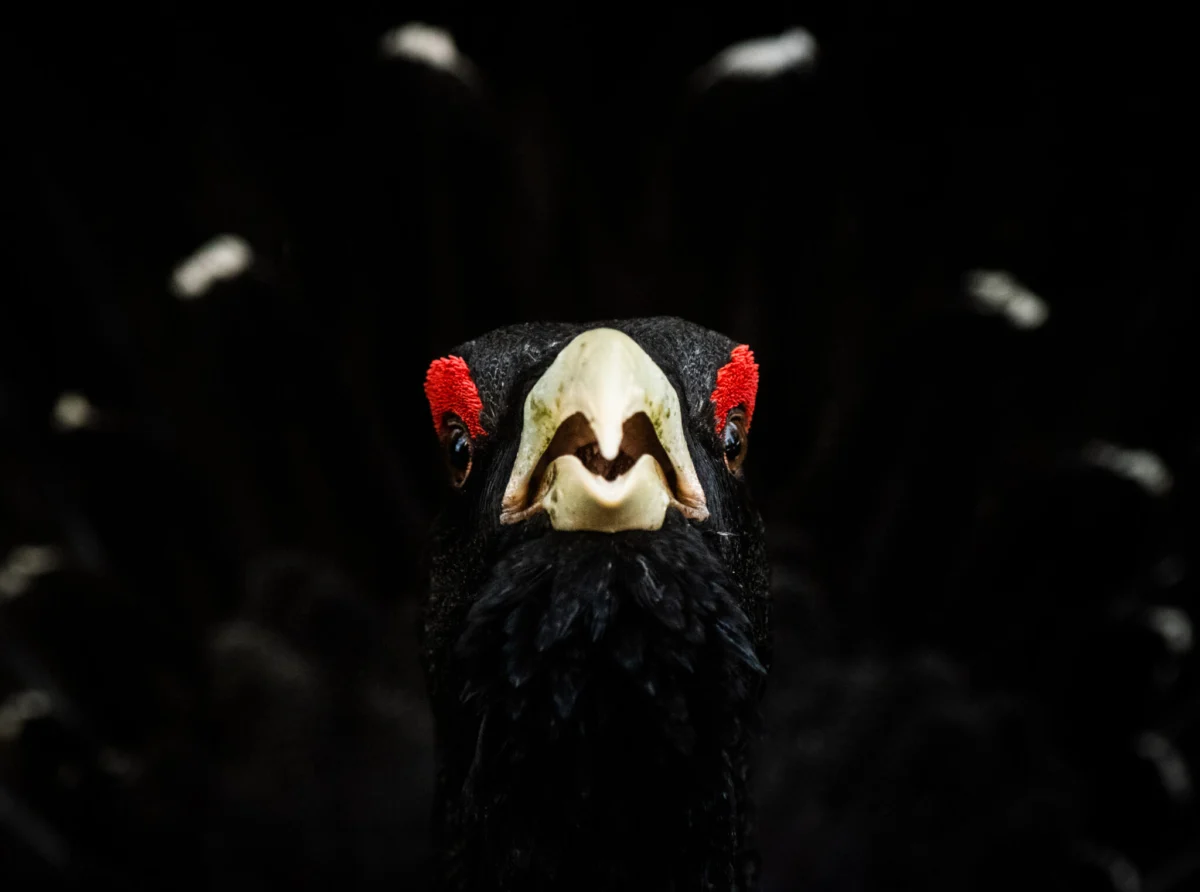
In the dynamic world of nature photography, one artist is distinguishing themselves by embracing the furthest ends of photographic techniques, believing that at these extremities, distractions dissipate, essential elements are amplified, and the narrative within each image gains profound strength. This approach, characterized by the deliberate application of ultra-wide or super-telephoto lenses, blackout or whiteout exposures, extended shutter speeds, and unconventional compositions, serves as a potent vehicle for conveying the photographer’s intimate impressions and emotions derived from the natural world.

The foundational philosophy guiding this artistic endeavor posits that photography is, at its heart, a quest to impose order upon a seemingly chaotic existence. Nature, in its rawest form, often presents as an overwhelming tapestry of elements – dense forests, vast animal herds, or the intricate plumage of a bird. The challenge for the photographer lies in discerning the hidden structures and underlying patterns within this apparent disarray, translating them into a coherent and compelling visual narrative. This task, while sounding straightforward, demands immense skill and a discerning eye. It is this pursuit of translating nature’s complexity into aesthetically pleasing and emotionally resonant images that has compelled the artist to delve into the most extreme photographic methods, ultimately enabling a stronger, more impactful story that intimately connects the viewer with the photographer’s experiences and sentiments.

Crafting Atmosphere: The Expressive Power of Exposure Extremes
One of the most significant challenges for still photographers is the inherent limitation of their medium: capturing a multi-sensory experience through vision alone. In nature, our perceptions are shaped by a symphony of inputs – the rustle of leaves, the scent of damp earth, the feel of wind on skin – all complementing the visual spectacle to create a holistic impression. Consequently, it is a common frustration for photographers to find their captured images lacking the intensity of emotion felt during the actual encounter, missing the full spectrum of sensory engagement.

To overcome this inherent limitation and effectively immortalize atmospheres and emotions, the photographer strategically employs extreme ends of exposure: dark, moody images achieved through heavy underexposure (blackout), or bright, ethereal scenes rendered through deliberate overexposure (whiteout). These techniques are not merely technical adjustments but powerful artistic tools designed to heighten and emphasize the viewer’s emotional response.

The choice of exposure fundamentally dictates the emotional expression within an image. Dark, heavily underexposed scenes inherently convey drama, mystery, and solemnity, allowing a blackout technique to accentuate these atmospheric qualities. Conversely, brightly exposed images often evoke feelings of purity, elegance, and lightness, making the whiteout technique ideal for highlighting these characteristics, whether in the subject itself or its surrounding environment. In this context, exposure transcends a mere technical setting; it evolves into a sophisticated language for emotion. By consciously manipulating the light and dark values of a scene, the photographer actively guides the viewer towards the specific emotional landscape experienced in the field, transforming a two-dimensional image into a conduit for profound feeling.

Mastering Perspective: The Narrative Range of Focal Lengths
Beyond exposure, perspective plays an equally crucial role in defining the viewer’s relationship with the photographic subject. Within a photographer’s arsenal, focal length stands out as a primary instrument for altering how a subject appears in relation to its habitat, each end of the spectrum — from ultra-wide-angle to super-telephoto — telling a distinctly different story. The further one ventures from conventional focal lengths, the more pronounced and impactful the effect becomes, serving to reinforce the specific narrative the photographer wishes to convey.

Ultra-Wide Angles (e.g., 14-24mm): Immersive Context
Ultra-wide lenses capture an expansive field of view, drawing the viewer into the environment. They emphasize grand landscapes, vast skies, and the sheer scale of natural phenomena. By including more of the surroundings, these lenses convey a sense of place and immersion, often making the viewer feel as if they are standing right there, experiencing the scene firsthand. This can be particularly effective for illustrating ecological relationships or the vulnerability of a subject within its grand habitat. However, distortion can be a challenge, requiring careful composition to maintain natural proportions.

Super-Telephoto Lenses (e.g., 400mm-1200mm): Intimate Isolation and Abstraction
At the opposite end, super-telephoto lenses dramatically narrow the field of view, compressing perspective and isolating subjects from their backgrounds. This technique allows for intimate portraits of wildlife, revealing intricate details of fur, feather, or form that would otherwise be lost. Furthermore, extreme telephoto compression can transform landscapes into abstract compositions, flattening planes and creating a sense of layered depth from distant elements. The ability to achieve such magnification without disturbing wildlife is a significant advantage, promoting ethical photographic practices.

Recent technological advancements, particularly in mirrorless camera systems, have revolutionized the possibilities available to photographers, especially concerning extra-long focal lengths. Unlike their DSLR predecessors, modern mirrorless cameras offer superior autofocus performance and image stabilization, even when paired with teleconverters, which multiply the effective focal length of a lens. This means that even relatively inexpensive telezoom lenses can now achieve previously unattainable magnifications while maintaining excellent image quality and usable autofocus. This accessibility to extreme focal lengths has, for many photographers, including this artist, opened up an entirely new world of perspectives, enabling unprecedented levels of detail and creative isolation in nature photography.

A compelling illustration of this versatile approach is found in the photographer’s project on Hornøya, a remote seabird island above the Arctic Circle in Norway. Here, a thriving population of European shags breeds amidst harsh, snow-covered conditions during the early breeding season. Utilizing a comprehensive range of focal lengths, from a broad 24mm to an extreme 1200mm, the photographer meticulously documented the shags’ story. Wide-angle shots captured the birds within their dramatic, snow-laden environment, conveying the challenging habitat. Mid-range telephotos depicted territorial displays and interactions, providing context to their daily lives. Finally, super-telephoto lenses allowed for incredibly detailed close-ups of individual birds battling snowstorms, showcasing their resilience and the intricate textures of their plumage. This multi-focal length approach created a holistic and deeply engaging visual narrative, painting a complete picture of life on Hornøya, covering environmental context, detailed intimacy, and creative perspectives all within a single portfolio.

The Dance of Time: Capturing Movement with Shutter Speed
Photography, at its core, is the art of capturing moments and preserving movements to tell a story. For this photographer, a particular fascination lies in employing shutter speeds that create images transcending the capabilities of the human eye, revealing unseen aspects of motion and time.

Long Exposures and Intentional Camera Movement (ICM): Abstracting Reality
Long exposures, especially when combined with Intentional Camera Movement (ICM), unlock a new realm of photographic possibilities. This technique moves beyond merely capturing the static landscape, colors, and shapes, allowing the photographer to "paint" the image with blurred strokes derived from the entire scene, all within a single exposure. By deliberately moving the camera during a long exposure, each ICM image becomes uniquely unrepeatable, a one-of-a-kind artistic expression that cannot be precisely recreated. This experimental nature, however, also results in a significant number of "failed" images, underscoring that ICM is a technique demanding considerable patience, practice, and a willingness to embrace serendipity. The learning curve is steep, but the rewards are images that evoke a sense of dynamism, abstraction, and the passage of time.

Ultra-Fast Shutter Speeds: Freezing the Fleeting Moment
Conversely, advancements in mirrorless camera technology have enabled the use of shutter speeds previously unattainable with traditional DSLR systems. While DSLRs were typically limited to around 1/8000th of a second, mirrorless cameras now offer speeds up to several ten-thousandths of a second (e.g., 1/32,000s or 1/64,000s). This exponential increase in speed proves invaluable in extremely bright conditions, such as shooting directly into the midday sun. Where human eyes would be overwhelmed and highlights would be irrevocably "blown out" in older cameras, modern mirrorless systems can capture intriguing images, revealing fine details within the sun itself and the backlit clouds surrounding it. Artistically, these ultra-fast shutter speeds allow for the freezing of incredibly rapid movements, capturing fleeting moments and intricate details that are invisible to the naked eye, adding a layer of scientific precision and awe to the artistic capture.

Redefining Balance: The Art of Unconventional Compositions
Composition in photography is often governed by a set of well-established rules, and for good reason. Guidelines such as the Rule of Thirds or the Golden Ratio frequently lead to visually balanced, aesthetically pleasing, and harmonious images. However, rigid adherence to these principles, while ensuring consistent results, can inadvertently stifle creativity and lead to predictable, even formulaic, outcomes.

For this photographer, composition has evolved beyond a strict checklist of rules into a more intuitive understanding of how elements within the frame interact. While classic advice, such as leaving "looking room" in the direction a subject is facing, often enhances an image, slavishly following it can mean missing opportunities for more compelling and unique compositions. In certain scenarios, an unconventional composition can dramatically amplify the power and narrative impact of an image. For instance, placing a subject off-center or allowing it to "look out" of the frame can create tension or draw the viewer’s eye to a secondary element that balances the frame in an unexpected way. The key, according to this perspective, is not to discard rules entirely, but to understand when and how to deviate from them purposefully. This demands a heightened sense of visual literacy and an ability to train one’s eye to perceive the subtle interplay of shapes, lines, light, and shadow within a scene. Cultivating this discerning eye for how disparate elements coalesce to form a cohesive whole is considered one of the most critical steps in elevating one’s photographic artistry.

The Ethos of Experimentation: Creativity for Creativity’s Sake
A prevalent norm in photographic practice advocates for intentionality: every compositional choice, every exposure setting, every shutter speed decision should be made with a clear purpose and a predefined vision. While this systematic approach undeniably fosters consistent results, balanced exposures, and predictable outcomes—qualities often desirable in creating order from chaos—it also carries the potential to inadvertently restrict creative exploration and playfulness.

For this artist, embracing creativity purely for its own sake, without a preconceived purpose or a specific end vision, is equally vital. It serves as a necessary counterbalance to a systematic approach that might otherwise discourage spontaneous discovery. Not every captivating photograph can be fully pre-visualized; the human eye and mind are often incapable of predicting the serendipitous coincidences and random occurrences that frequently add a missing piece of magic to an image—such as an unexpected reflection, a sudden gust of wind creating a unique blur, or an unforeseen interaction between subjects.

In this spirit, nature photography transforms into a continuous process of exploration and experimentation. The photographer questions conventions: "Can a static subject be enhanced by camera movement?" or "Why not underexpose when conventional wisdom dictates overexposure?" This approach, it is readily admitted, inevitably leads to a significant number of "bad shots" or "throwaways." However, it is precisely within this vast collection of discarded attempts that true "gold" can emerge. Sometimes, this takes the form of a spectacular, unprecedented image; more often, it manifests as the discovery of a new effect, a novel technique, or a fresh perspective that can then be consciously developed and integrated into the photographer’s evolving artistic repertoire.

Final Remarks: Curiosity as the Ultimate Creative Tool
When observing the work of other photographers, what truly captivates and inspires is often an image that prompts immediate inquiry: "How was that made?" These are the creations of photographers who possess the courage to challenge established rules, to innovate with techniques that might initially seem unconventional, and to deeply explore the intricate interactions between the natural world and their photographic equipment. Whether through the deliberate use of extended shutter speeds to blur motion, the strategic application of extreme focal lengths to alter perception, or the bold implementation of creative, unconventional compositions, the wellspring for truly unique and innovative images is found in a blend of playfulness, relentless experimentation, and an abiding interest in the natural world. In the view of this artist, curiosity, unburdened by strictures and open to unexpected outcomes, stands as the most profound and powerful creative tool available to the nature photographer.
