
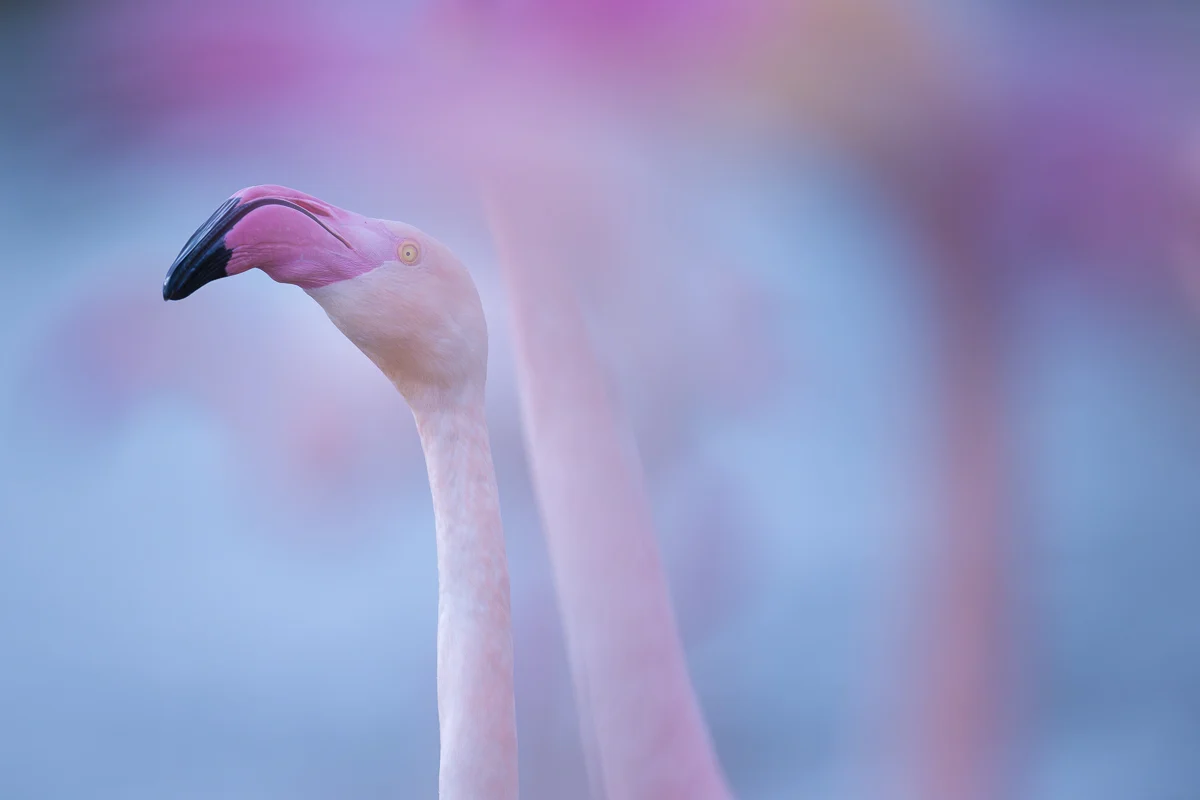
In the realm of visual storytelling, particularly within the demanding genre of wildlife photography, what lies outside the sharp plane of focus often plays a more profound and evocative role than initially perceived. The deliberate application of foreground blur, far from being a mere aesthetic flourish or a technical compromise, emerges as a sophisticated artistic strategy that shapes an image’s atmosphere, guides the viewer’s gaze, and imbues the scene with nuanced emotional depth. This technique transcends simple documentation, transforming a raw moment in nature into a compelling visual narrative that not only displays a subject but truly expresses its essence and context.

The Art of Subtlety: Redefining Sharpness in Wildlife Imaging
At its core, photography has always grappled with the interplay of light, composition, and focus to render reality. However, the pursuit of absolute sharpness across an entire frame has, for some artists, given way to a more interpretive approach. Foreground blurs represent a conscious decision to manipulate depth of field, placing an out-of-focus element between the camera and the primary subject. This element, softened into an ethereal haze, creates a delicate veil that partially overlays the subject. Crucially, this is not about obscuring; it is about enhancing. Instead of distracting the observer, these soft blurs are designed to add layers of visual information—depth, spatial context, a sense of mystery, and profound emotional resonance—without diminishing the subject’s central importance.
This technique challenges the conventional wisdom that every part of a wildlife image must be rendered with pinpoint clarity. By strategically softening the immediate foreground, photographers can achieve a dreamlike quality, drawing the viewer into a more intimate and contemplative experience. The subtle diffusion creates a visual pathway, gently directing the eye towards the crisply defined subject, while simultaneously providing contextual clues about the environment. It transforms the photographic act from mere observation to an act of interpretation, inviting the viewer to engage with the image on a deeper, more intuitive level. This approach has gained traction among contemporary wildlife photographers seeking to differentiate their work in an increasingly saturated field, moving beyond purely scientific or documentary captures to embrace a more artistic, painterly sensibility.

Crafting Narrative and Emotion: Beyond Pure Documentation
The strategic use of foreground blurs serves as a powerful storytelling tool. By carefully composing the shot to include blurred elements, a photographer can hint at the environment, suggest the prevailing mood, or even imply a narrative context for the scene. Consider an image where the subject—perhaps a majestic European Bison—is partially veiled by soft, out-of-focus foliage. This blur might suggest the animal’s hidden existence within its natural habitat, emphasizing its wildness and the difficulty of its observation. Such compositional choices move beyond simply showing "what is there" to communicating "what it feels like to be there." The image of the European Bison, for instance, evokes a sense of ancient wilderness and the enduring presence of these magnificent creatures, framed by the very elements that define their secluded world.
Furthermore, this technique can infuse an image with a distinct painterly quality. The soft transitions and diffused forms echo the brushstrokes of a canvas, imparting a timeless and authentic feel, as if the scene were carefully constructed rather than merely captured. This authenticity resonates deeply, fostering a more profound connection between the viewer and the subject. It transforms the photograph from a fleeting moment into a carefully composed piece of art, where every element contributes to a cohesive emotional and aesthetic statement. In an era where digital photography can often feel clinical in its precision, the intentional introduction of softness reintroduces an organic, handcrafted quality, reminiscent of earlier photographic processes or traditional art forms. Leading figures in wildlife photography, such as Frans Lanting or Art Wolfe, while not exclusively using this technique, have often explored creative depth-of-field manipulation to elevate their work beyond mere scientific records, seeking to evoke wonder and emotion.

Tools of the Trade: Natural Elements as Artistic Mediums
The effectiveness of foreground blurs lies in the creative utilization of available elements within the environment. Photographers must become adept at scouting and improvising, leveraging whatever nature offers at a given moment. These elements can be broadly categorized:
- Plant-based elements: Branches, leaves, flowers, or grasses are among the most common and versatile. A photograph of a Pyrenean capercaillie, for instance, might use local shrubs and underbrush as a natural filter, creating a soft, dreamlike frame. This not only softens the composition but also adds tangible depth and atmosphere, subtly enclosing the bird without overwhelming it. The low, crepuscular light of early morning further enhances such scenes, casting long shadows and imbuing the forest with a quiet mystery, elevating the photograph from documentation to evocative storytelling.
- Water or Snow: These elements can create mesmerizing patterns and textures when blurred, adding a sense of movement, fluidity, or stark serenity. The shimmering surface of a lake or the delicate fall of snow can transform into abstract veils, lending a poetic quality to the image.
- Geological Features: Rocks, sand dunes, or even subtle undulations in the earth can be employed to create diffused foregrounds, grounding the subject within its broader landscape while maintaining an ethereal quality.
- Other Animals: As demonstrated by the photograph of vultures, sometimes the very subjects themselves can serve as foreground elements. In situations with multiple animals, one animal, slightly out of focus in the foreground, can provide a dynamic, naturalistic frame for another in sharp focus, suggesting interaction or community within the species. This requires exceptional timing and compositional foresight.
- Light and Shadow: Beyond physical objects, the interplay of light and shadow can also create atmospheric blurs. By carefully adjusting exposure and white balance, a photographer can sculpt the scene, using illuminated and shaded areas to reinforce three-dimensionality and guide the eye. A photograph of a Goshawk, for example, might use dappled light and deep shadows to create a rich, tactile atmosphere, subtly emphasizing the bird’s form and presence within its environment. This technique is less about physical obstruction and more about manipulating luminosity to achieve a soft, enveloping effect, reinforcing the focal point with both clarity and depth.
The versatility of these natural elements allows for a wide range of creative expressions, ensuring that each photograph, even of a familiar subject, can carry a unique signature. The resulting images often lean towards minimalism, yet paradoxically convey a strong sense of the surrounding environment and the subject’s relationship within it, offering a glimpse into the animal’s behavior and habits without explicit detail.

The Photographer’s Canvas: Scene Control and Ethical Engagement
An essential consideration when employing foreground blurs is the degree of control a photographer can exert over the shooting environment and the subject. This control can vary significantly:
- Controlled Environments (Hides/Setups): When photographing less skittish species from a hide, photographers may have the luxury of intervening or even recreating elements within the scene. This allows for meticulous planning, where foreground elements can be strategically placed or manipulated to align with the artistic vision. This level of control enables precise compositional choices and experimentation. Ethical considerations remain paramount, ensuring that any intervention does not disturb the wildlife or alter their natural behavior.
- Reactive Situations ("Photographic Hunts"): More often in wildlife photography, control is limited. Here, the photographer must approach subjects cautiously, always prioritizing the animal’s well-being and adhering to strict ethical guidelines to avoid disturbance. In these "photographic hunts," the art lies in improvisation and patience. The photographer waits for the opportune moment when light, subject, and available foreground elements align serendipitously. This requires a deep understanding of animal behavior, a keen eye for composition, and the ability to react swiftly. The image of the Razorbills, for example, would likely stem from such a reactive scenario, capturing a fleeting moment where the environment naturally offered a blurring opportunity.
This dynamic interplay between planning and improvisation is what many wildlife photographers find most appealing. The element of serendipity, the unique interaction with the wild, and the challenge of capturing beauty under uncontrolled conditions, fuel a passion that goes beyond mere technical skill. This approach demands a high tolerance for failure, as many attempts may not yield the desired result, but the rewards—a truly authentic and expressive image—are often immeasurable. It underscores the philosophical stance that for many, wildlife photography is not just about the final image, but the immersive process of observation and engagement with nature itself.

Genre Suitability and Dynamic Challenges
While broadly applicable, the foreground blur technique finds its most harmonious expression in certain photographic genres:
- Portrait Photography: This genre is exceptionally well-suited for foreground blurs. The ethereal softness often aligns perfectly with the intended meaning of a wildlife portrait, which aims to capture the essence, character, and emotional state of an individual animal. The blurred foreground can frame the subject, drawing attention to its eyes or distinct features, while adding a sense of intimacy and tranquility. The image of the Fallow Deer, for instance, exemplifies a classic wildlife portrait enhanced by this technique, creating a sense of quiet observation.
- Dynamic Scenes: In contrast, applying foreground blurs to highly dynamic scenes, such as birds in flight, mammals in pursuit, or other fast-paced action, becomes significantly more challenging, if not nearly impossible. The speed at which events unfold leaves little room for deliberate compositional intervention. Maintaining focus on a rapidly moving subject while also aligning a foreground element to create an intentional blur requires exceptional reflexes and often sacrifices critical elements like sharp focus on the subject’s eyes. In such scenarios, the opportunities for controlled artistic application are significantly reduced, and photographers typically prioritize freezing the action with a fast shutter speed. The image of the Kite, for instance, might be less about foreground blur and more about capturing the bird’s dynamic movement, although subtle environmental blurs can still occur naturally.
Understanding these limitations allows photographers to choose their moments wisely, maximizing the potential for success with this artistic technique. It highlights that no single technique is universally applicable, and artistic decisions must always be guided by the specific context and desired outcome.

Mastering the Blur: Techniques and Types
Achieving effective foreground blurs involves understanding different approaches and technical considerations:
- Proximity of Elements:
- Closer to Camera: Placing objects very close to the lens increases their blur and abstraction. This can create a more dreamlike, impressionistic effect, where the foreground becomes a wash of color or light, rather than a discernible object.
- Closer to Subject: Positioning elements closer to the subject allows for a less abstract blur, potentially maintaining some recognition of the foreground element, especially if it adds valuable context or content to the photograph (e.g., specific foliage relevant to the animal’s diet).
- Coverage and Framing:
- "Veils": Creating soft "veils" that cover the entire image partially, adding an overall ethereal quality.
- Partial Blurs: Using blur to selectively cover different parts of the animal, often meticulously preserving the subject’s gaze or key features to maintain connection with the viewer.
- Compositional Approaches:
- "Look-throughs": This involves composing the shot by aiming the camera through a small opening in the foreground elements, creating a natural frame around the subject.
- "Look-overs": When a "look-through" isn’t feasible, "look-overs" involve filling the bottom of the frame with a blurred foreground, suggesting a hidden or elevated perspective.
Technical Considerations:

- Manual Focus: When working with intricate foreground elements, particularly those very close to the lens, autofocus systems can struggle. Being ready to switch to manual focus is crucial to ensure the main subject remains sharp while the foreground achieves the desired blur.
- Aperture: A wider aperture (smaller f-number, e.g., f/2.8, f/4) will inherently create a shallower depth of field, maximizing the blurring effect in both foreground and background.
- Focal Length: Longer focal lengths tend to compress perspective and exaggerate background and foreground blur, making telephoto lenses ideal for this technique in wildlife photography.
- Embracing Imperfection: While precision is often sought, a slight loss of absolute sharpness or minute detail in the subject can sometimes be compensated for by the overall artistic impact of the blurred foreground. The goal is to create an evocative image, not necessarily a technically perfect one by conventional standards. This artistic license allows for a more expressive outcome.
Broader Impact: Elevating Wildlife Photography to Art
The technique of foreground blurs has considerable appeal due to its broad applicability and its ability to infuse wildlife photography with profound artistic merit. It allows for improvisation and inspiration in diverse contexts, from dense forests to open plains, as long as the photographer can exert some control over their position relative to the subject and its environment. Moreover, it offers a fresh and original perspective on "recurring" or familiar species, preventing monotony and encouraging continuous creative exploration. A common Song Thrush, often overlooked, can be transformed into a poignant figure when framed by the soft, diffused elements of its habitat.
This approach is also fully compatible with a myriad of other creative techniques related to composition and light, such as intentional over- or underexposure, capturing movement through slower shutter speeds, dramatic backlighting, experimental double exposures, or abstract compositions. When combined, these techniques allow photographers to push the boundaries of visual expression, creating images that are truly unique and deeply personal.

This artistic method has been embraced by masters and influential photographers who consistently bring a distinctive aesthetic to their work. By offering a pathway to emotional connection and artistic interpretation, foreground blurs contribute significantly to elevating wildlife photography beyond mere scientific record-keeping into the realm of fine art. It invites viewers to not just see an animal, but to feel its presence, understand its context, and appreciate the profound beauty of the natural world through a captivating, softened lens. As such, aspiring and established photographers alike are strongly encouraged to experiment with and integrate this powerful technique into their creative repertoire.
