
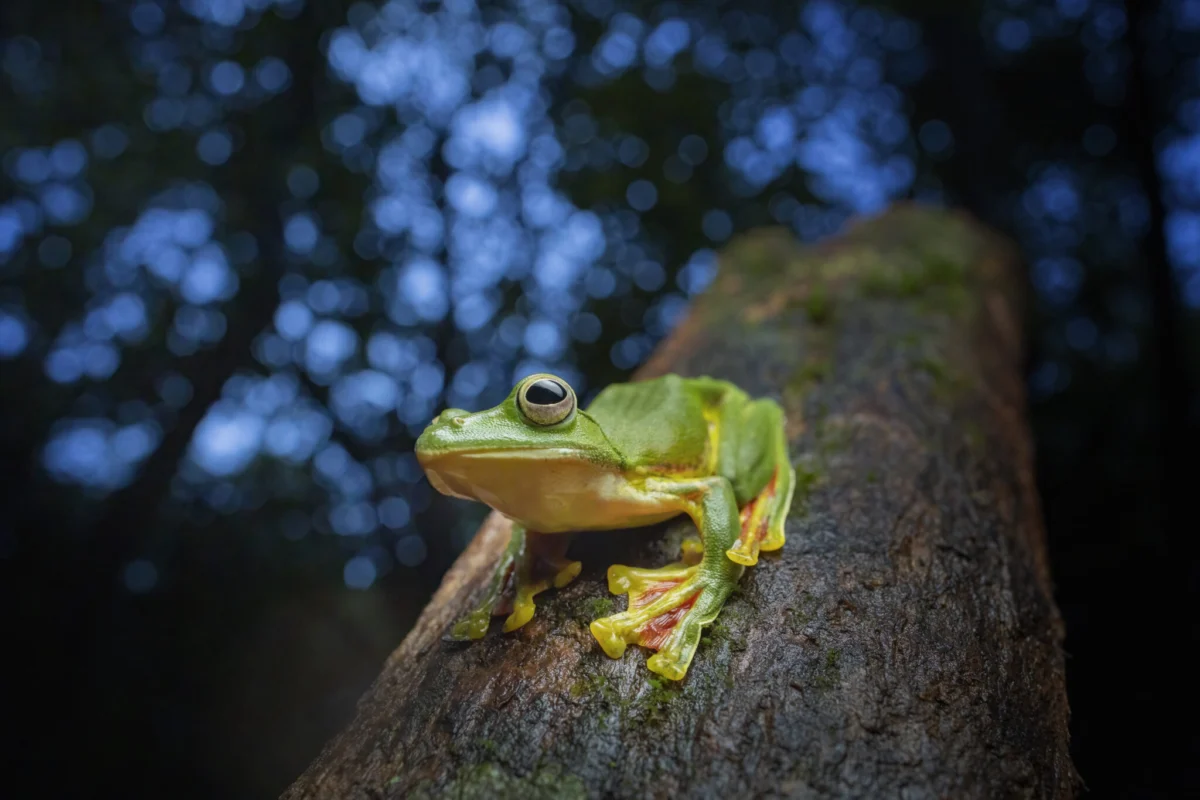
Capturing a small subject within its natural habitat using a wide-angle lens is a revolutionary technique that creates profoundly immersive, storytelling images, transporting the viewer directly into the scene and allowing them to experience the world from the subject’s intimate perspective. This photographic approach not only reveals the intricate details of the organism but critically places it within its ecological context, illuminating the delicate balance between the creature and its surrounding environment. The result is a visually arresting image that invites deeper engagement, fostering a unique connection between the audience and the natural world.
From a technical standpoint, wide-angle macro photography involves utilizing a wide-angle lens at extremely close focusing distances to achieve magnified reproductions of subjects. Unlike traditional macro photography, which strictly adheres to dedicated macro lenses for achieving true 1:1 magnification ratios or greater, wide-angle lenses typically do not meet this precise definition. Nevertheless, the term "wide-angle macro photography" has gained widespread acceptance within the photographic community to describe this distinctive style of imagery. For clarity and simplicity, this guide will continue to employ this widely understood nomenclature. This technique represents a significant evolution in nature photography, moving beyond simple subject isolation to a holistic portrayal that underscores the interconnectedness of life.

This comprehensive guide will delve deeper into this captivating photographic technique, covering everything from the essential gear required and advanced lighting setups to innovative compositional approaches and effective solutions for common challenges encountered in the field. Whether you are an experienced photographer aiming to expand your creative toolkit and explore new dimensions of nature imaging, or a novice eager to experiment with cutting-edge methods, this resource is designed to empower you. By mastering the principles and practices of wide-angle macro photography, you will be equipped to harness its full potential, elevating your visual storytelling and creating images that resonate with both scientific accuracy and artistic impact.
The Evolution of Nature Storytelling Through Wide-Angle Macro
The emergence and popularization of wide-angle macro photography mark a pivotal moment in nature imaging, shifting the focus from purely aesthetic subject isolation to comprehensive environmental narratives. Traditionally, macro photography excelled at revealing hidden worlds by isolating tiny subjects with blurred backgrounds, drawing attention to minute details often invisible to the naked eye. While effective, this often stripped the subject of its environmental context. Wide-angle macro, conversely, embraces the surroundings, allowing the viewer to understand not just what the creature looks like, but where and how it lives. This contextual richness is invaluable, particularly in an era where environmental awareness and conservation are paramount. By presenting subjects like a tiny frog perched on a mossy branch amidst a sprawling rainforest canopy, or an insect camouflaged against a vibrant wildflower meadow, photographers create powerful visual narratives that speak to habitat integrity and biodiversity. This immersive style has been increasingly adopted by leading nature photographers and conservation organizations, recognizing its capacity to educate and inspire broader audiences about the intricate ecosystems that sustain life. The technique serves as a powerful tool for scientific communication, enabling researchers and educators to visually articulate the complex relationships between species and their habitats more effectively than traditional methods.
Essential Equipment for Wide-Angle Macro Expeditions
Success in wide-angle macro photography hinges on a thoughtful selection of specialized equipment. While the adage "the best camera is the one you already own" holds true for starting, specific advancements and tools significantly enhance the capabilities of this demanding genre.

Camera Bodies: Beyond the Basics
Any modern DSLR or mirrorless camera can initiate your journey into wide-angle macro. However, contemporary mirrorless systems offer distinct advantages that streamline the process for macro photographers. Features such as advanced autofocus systems with animal eye detection and sophisticated focus tracking can be game-changers when dealing with skittish subjects and shallow depths of field. The latest cameras also boast live view capabilities and articulating or tilt screens, which are incredibly beneficial for composing shots from challenging low angles without requiring the photographer to contort into uncomfortable positions. Furthermore, cameras with superior dynamic range are crucial for handling high-contrast scenes often encountered when balancing flash-lit subjects with ambient backgrounds. Robust weather sealing is non-negotiable for fieldwork in humid rainforests or damp environments, protecting sensitive electronics from moisture and dust. A high burst rate can also increase the chances of capturing fleeting moments of animal behavior, which is essential when working with live subjects in unpredictable natural settings. While beginners need not invest in the absolute latest gear immediately, understanding these features allows for informed upgrades as skill and passion develop.
Lenses: The Gateway to Immersive Perspective
The lens choice is arguably the most critical component for wide-angle macro photography. Standard wide-angle lenses, commonly used for landscapes, typically possess a minimum focusing distance (MFD) that is too long to achieve the necessary magnification for macro subjects. The key is a wide-angle lens with an exceptionally low MFD, allowing you to get incredibly close to your subject while still incorporating a broad environmental perspective. Several manufacturers, including specialist third-party brands like Laowa and Irix, have developed innovative wide-angle lenses specifically designed for close focusing, some even offering true 1:1 macro capabilities. For instance, the Laowa 15mm f/4 Wide-Angle Macro and Laowa 24mm f/14 Probe Lens are celebrated for their unique close-focusing abilities combined with a wide field of view. These lenses enable photographers to fill the frame with the subject while simultaneously capturing its habitat in sharp detail. Without such a lens, your subject risks appearing minuscule and lost within the expansive background, undermining the core objective of the wide-angle macro aesthetic. The choice of focal length within the wide-angle spectrum (e.g., 10mm to 24mm) will influence the degree of environmental inclusion and perspective distortion, offering creative flexibility.
Lighting: Sculpting the Scene with Flash
Even when shooting during daylight or twilight hours, an external flash unit is an invaluable asset in wide-angle macro photography. The necessity to narrow the aperture (often to f/11 or higher) to achieve sufficient depth of field across both the subject and its environment can lead to significant underexposure of the ambient background. A flash effectively compensates for this light loss, illuminating the subject and allowing for proper exposure. When selecting a flash, several features are paramount: ETTL (Evaluative Through-The-Lens) or TTL metering for automatic exposure adjustments, manual mode for precise control, a fast recycle time to capture multiple shots, a high guide number (typically above 60) for ample power, and high-speed sync (HSS) capability to use faster shutter speeds than the camera’s native flash sync speed. Remote operation functionality, either via radio triggers or optical slave modes, provides immense flexibility for positioning flashes off-camera, which is crucial for advanced lighting setups. The ability to control light remotely is essential for achieving nuanced illumination and avoiding harsh shadows.

Diffusion: The Art of Soft Light
To mitigate harsh highlights and create soft, flattering light on your subject, particularly when it is wet or glistening, a diffuser is absolutely indispensable. While standard diffusers designed for traditional macro lenses (typically 90-100mm in diameter) exist, they often prove problematic with wide-angle lenses. The larger size and different lens profile can cause the diffuser’s front section to droop or its edges to intrude into the wide frame. To overcome this, photographers often resort to either utilizing smaller, more compact diffusers that remain outside the frame or constructing custom-designed diffusers tailored to their specific wide-angle lens setup.
Smaller diffusers, such as compact dome diffusers or mini softboxes, offer greater ease of use with wide-angle lenses, although they may compromise the extent and quality of light diffusion. The principle holds that a larger diffusion surface generally produces softer, more appealing light. To adapt larger diffusers for wide-angle applications, several ingenious "hacks" can be employed. One common method involves elevating the diffuser’s height using a hot-shoe mounted trigger or bracket, with the flash and diffuser then mounted on top, preventing the diffuser from dipping into the frame. Another option is a disc-style diffuser positioned to provide overhead lighting. For ultimate control and diffusion quality, an off-camera flash setup with a large diffuser can be used, though managing this solo in the field presents significant logistical challenges. Experimentation with various materials and shapes, from DIY foamcore constructions to commercial solutions, is often necessary to find the optimal balance between diffusion quality and practical usability.
Protective Clothing and Field Gear
Standard protective clothing and field gear are just as vital for wide-angle macro photography as they are for any other macro expedition. This includes reliable rain gear to shield both yourself and your expensive equipment from inclement weather, robust waterproof footwear for navigating diverse terrains, and leech guards or gaiters to protect against reptiles, insects, and leeches, enabling confident movement across forest floors and marshy landscapes. Finally, never underestimate the importance of effective mosquito and insect repellents, especially when spending extended periods in humid, biodiverse environments where many target species reside. Safety and comfort are paramount for successful and enjoyable fieldwork.

Optimal Timing and Ethical Considerations
The chosen time of day significantly influences the outcome of wide-angle macro images, particularly when considering the habitat context. Ethical considerations are also paramount, guiding responsible practice.
Shooting During the Day: Illuminating the Habitat
The primary objective of wide-angle macro photography is to showcase the subject within its habitat, an endeavor best accomplished during daylight hours when the environment is naturally illuminated and its details are visible. However, one of the most significant challenges in this genre lies in portraying nocturnal creatures, such as many reptiles and amphibians, in their natural habitat. These photogenic subjects become active and accessible primarily at night in rainforests and other environments, making it inherently difficult to capture their surroundings effectively without artificial light.
Given that the photographer cannot alter the natural rhythms of wildlife, thorough research into the location, the species present, and their diurnal behaviors is indispensable when planning such a photographic trip. Consulting with a local naturalist or ecological expert can provide invaluable insights into what to expect, increasing the chances of encountering nocturnal species during brief periods of daytime activity or in specific resting spots where their environment can still be observed. It is crucial to emphasize and uphold the highest ethical standards: the practice of captivating or manipulating an animal for photography, even with the intention of releasing it, is unequivocally discouraged. The authenticity of "in situ" photography—capturing subjects undisturbed in their natural state—is a core principle that should never be compromised. This commitment not only ensures the welfare of the wildlife but also enhances the integrity and scientific value of the resulting images.

Shooting During the Night: Overcoming Darkness
Without careful and deliberate lighting strategies, nighttime wide-angle macro photography often yields images resembling traditional macro shots: a well-lit subject against a dark, featureless background, devoid of environmental context. This outcome defeats the purpose of wide-angle macro, which is to integrate the habitat into the narrative.
However, advanced lighting techniques can effectively overcome this challenge. The most common "hack" involves using multiple flashes to illuminate both the subject and the background, thereby creating a more natural and contextual image. One effective approach is to use a master flash or a remote trigger mounted on the camera to wirelessly fire multiple slave flashes strategically positioned around the scene. These slave flashes can be placed to illuminate background elements, creating depth and revealing environmental details that would otherwise be lost in darkness. Alternatively, continuous LED lights can be employed to "paint" light onto backgrounds, providing a constant, controllable light source. This method allows for real-time visualization of the lighting effect, which can be advantageous in complex nocturnal environments. Experimentation with flash power, angles, and diffusion for each light source is essential to achieve a balanced exposure that highlights the subject while still revealing its vibrant nocturnal world. This meticulous approach transforms the challenge of nighttime photography into an opportunity for highly creative and informative imagery.
Framing and Composition: Weaving the Narrative
The primary objective of employing a wide-angle lens in macro photography is to unveil the subject’s environment, thereby providing rich context and unlocking potent storytelling opportunities. While virtually all standard rules of composition apply, special emphasis must be placed on harmoniously balancing the subject, foreground elements, and the expansive background.

Incorporating multiple layers or depth elements within the frame is crucial for adding visual interest and guiding the viewer’s eye. For instance, a blade of grass in the immediate foreground, the main subject in the mid-ground, and a distant tree line in the background can create a powerful sense of depth and immersion. Experimentation with various camera angles is highly encouraged: shooting from an extremely low perspective can effectively include the forest canopy or sky, adding drama and a sense of scale, while a slightly elevated angle might showcase the intricate patterns of the forest floor or water surface. Actively seek out leading lines—such as a winding vine, a flowing stream, or a patterned rock formation—that naturally draw the viewer’s gaze toward your primary subject. Furthermore, leverage natural elements like leaves, twigs, flowers, or rock formations to organically frame your subject, enhancing its prominence and creating a sense of natural enclosure. The wide-angle perspective can also be used creatively to exaggerate elements, making a tiny dewdrop or a mushroom appear monumental, thus adding an artistic flair to the narrative. Careful attention to these compositional techniques transforms a mere photograph into a captivating story.
Navigating the Challenges of Wide-Angle Macro Photography
While immensely rewarding, wide-angle macro photography presents a unique set of technical and practical challenges that require thoughtful consideration and skillful execution.
Perspective Distortion: A Double-Edged Sword
Wide-angle lenses inherently exaggerate perspective, which can be both a creative tool and a potential pitfall. Foreground subjects will appear disproportionately large compared to background elements, creating a dramatic, immersive effect. However, if not composed with careful intent, this distortion can render the image unnatural or disproportionate. Understanding lens characteristics and practicing deliberate framing can help photographers either embrace this exaggeration for artistic impact or minimize it for a more subtle integration of subject and environment. Post-processing software often includes lens correction profiles to mitigate geometric distortions, but in-camera composition remains paramount.

Depth of Field: The Perpetual Struggle
At macro focusing distances, the depth of field becomes incredibly shallow, even with a wide-angle lens. Achieving sufficient sharpness across both the intricate details of the subject and the relevant elements of the background can be exceptionally difficult. The common solution involves using the narrowest possible aperture (e.g., f/16, f/22, or even higher). However, excessively narrow apertures can introduce diffraction, leading to a noticeable softening of the image. Photographers must make a careful judgment, balancing the need for extended depth of field with the desire for optimal sharpness. Advanced techniques like focus stacking, where multiple images are taken at different focus points and later merged, can provide comprehensive sharpness but demand a stationary subject and controlled conditions, which are often challenging in dynamic field environments.
Lens Flare and Corner Softness: Optical Compromises
Wide-angle optics, particularly when pushed to their limits with close-focusing mechanisms or when combined with extension tubes or adapters, can exhibit reduced sharpness at the edges of the frame and increased susceptibility to lens flare. While some photographers might intentionally use flare for artistic effect, for most, it detracts from the image’s clarity and impact. It is generally advisable to avoid extension tubes or non-optimized adapters if pristine optical quality across the frame is desired. High-quality wide-angle macro lenses are designed to minimize these optical aberrations, but awareness of their potential presence is crucial.
Blocking Light: The Proximity Problem
Due to the extremely close working distances inherent in wide-angle macro photography, the camera lens itself, and sometimes even the photographer’s body, can cast undesirable shadows on the subject. This challenge underscores the importance of a carefully chosen and strategically positioned diffuser, as well as the creative use of off-camera flash to direct light from angles that avoid obstruction. Articulating LCD screens on modern cameras also help in composing shots from awkward angles, allowing the photographer to maintain a low profile and minimize light blockage.

Balancing Lighting: Subject vs. Surroundings
One of the most complex aspects of wide-angle macro is balancing the intense, close lighting required for the subject with the broader, often softer ambient exposure needed for the wide background. This often necessitates sophisticated lighting setups involving diffusers, fill lights, or even blending multiple exposures. Techniques such as "drag-the-shutter," where a slower shutter speed is used to capture ambient light while the flash freezes the subject, are critical for achieving a harmonious balance. Remote flash control and precise power adjustments are essential for sculpting light effectively across the entire scene.
Working Distance: A Test of Patience
Wide-angle macro setups frequently demand incredibly short minimum focusing distances, sometimes mere centimeters from the front element of the lens. This proximity makes it exceedingly difficult to position the camera without disturbing sensitive subjects or their delicate habitats. Patience, slow movements, and a deep understanding of animal behavior are paramount. Often, waiting for the subject to move into an advantageous position or slowly approaching over an extended period is the only way to achieve a successful shot without causing undue stress to the wildlife.
Gear Size vs. Efficacy: A Practical Trade-off
It is generally true that larger diffusers produce softer, more even light, which is ideal for macro photography. However, in wide-angle macro, this principle can sometimes work against the photographer. An oversized diffusion setup can become cumbersome, easily disturbing the subject as the photographer attempts to get into the extremely close working distance. In such scenarios, a smaller, more compact diffuser, despite offering less extensive diffusion, might be more effective simply because it allows for an unobtrusive approach. Ultimately, the choice of diffuser size involves a practical trade-off, dictated by the subject’s behavior, the environmental conditions, and the photographer’s ability to manage the gear without causing disturbance.

Stability: The Magnification of Movement
Shooting at such close distances with a wide-angle lens demands exceptionally precise focus and rock-solid camera positioning. Any minute movement, whether from the photographer, the camera, or the subject itself, is greatly magnified in the resulting image, leading to blur or loss of critical sharpness. Utilizing stable supports like mini-tripods, bean bags, or even ground-level platforms is highly recommended. Employing a remote shutter release further minimizes camera shake. For active subjects, a higher shutter speed, possibly achieved with flash, becomes crucial to freeze motion effectively.
Broader Implications and the Future of Immersive Nature Photography
Wide-angle macro photography stands at the intersection of intimacy and grand-scale storytelling, allowing photographers to reveal not just the exquisite fine details of minute subjects but also the rich, complex environments they inhabit. While the technique is undeniably challenging—marked by lighting constraints, incredibly short working distances, and intricate compositional demands—the judicious combination of specialized equipment, creative diffuser application, and meticulous fieldcraft can transform these obstacles into profound artistic and scientific opportunities. By mastering the delicate balance between foreground subject and expansive surroundings, photographers can craft images that feel simultaneously personal and expansive, capturing not only the physical characteristics of a creature but also its intrinsic belonging within a larger, vibrant world.
The impact of this genre extends beyond aesthetics. In an era facing unprecedented biodiversity loss and climate change, wide-angle macro photography serves as a powerful tool for conservation and environmental education. By showcasing the interconnectedness of species and their habitats, these images cultivate a deeper appreciation for ecosystems, fostering empathy and inspiring action. They can be crucial for scientific documentation, illustrating ecological relationships in ways traditional close-ups cannot. As technology continues to advance, with computational photography and artificial intelligence enhancing camera capabilities, the potential for even more sophisticated and accessible wide-angle macro techniques will undoubtedly grow. Features like enhanced in-camera focus stacking, more intelligent autofocus systems, and integrated, adaptive lighting solutions could further empower photographers to push the boundaries of this captivating discipline. Ultimately, wide-angle macro is more than a technical pursuit; it is a profound way of connecting the smallest wonders of nature with the colossal world they thrive in, inviting viewers to witness, understand, and protect the intricate tapestry of life on Earth.
