
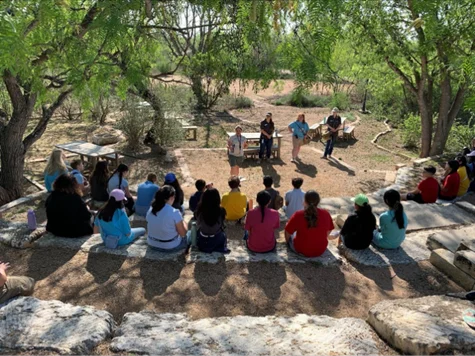
The Mitchell Lake Audubon Center, a vital ecological hub nestled within the burgeoning metropolis of San Antonio, Texas, is actively spearheading comprehensive initiatives in environmental education, habitat restoration, and community engagement. Serving an impressive roster of over 3,000 K-12 students annually, the Center operates with a dedicated team of educators, led by Senior Education Coordinator Erin Magerl. This summer, the educational outreach is further bolstered by the addition of two Seasonal Education Assistants, Emma Stimson and Jay Lauritsen, whose contributions extend beyond structured K-12 programming to encompass family-friendly events and critical hands-on learning experiences, such as invasive plant removal walks. These efforts collectively underscore the Center’s unwavering commitment to fostering a deeper connection between people and the natural world, safeguarding biodiversity, and promoting sustainable practices within the region.
Cultivating a Lifelong Appreciation for Nature: The Education Team’s Mission
At the heart of Mitchell Lake Audubon Center’s educational success lies its passionate and diverse team of educators, each bringing a unique background and perspective to their shared mission: connecting people to nature. This ethos is particularly crucial in an urban setting like San Antonio, where access to wild spaces can be limited for many. The Center acts as a crucial bridge, offering immersive experiences that often mark the first significant encounter with untouched nature for young learners, thereby laying foundational knowledge for environmental literacy.
Erin Magerl, the Senior Education Coordinator, exemplifies this dedication. Her journey into environmental stewardship began early, forged during childhood fishing trips with her father. These formative experiences, spent not only mastering the practicalities of baiting a line but also exploring the intricate ecosystems along riverbanks and lake shores, instilled in her a profound curiosity and appreciation for wildlife. Today, at Mitchell Lake, she channels this enduring passion into developing and delivering programs designed to build lasting connections between individuals and the outdoors. Her work is instrumental in nourishing a lifelong appreciation for birds, wildlife, and the broader natural environment, emphasizing experiential learning as a cornerstone of environmental education. Under her guidance, the Center’s programs are meticulously crafted to meet state educational standards while simultaneously fostering an innate sense of wonder and responsibility towards the environment.
Joining Erin this summer are two equally dedicated individuals, Emma Stimson and Jay Lauritsen, whose complementary skill sets significantly enrich the Center’s offerings. Jay Lauritsen’s connection to the avian world commenced in childhood, solidifying in intermediate school under the tutelage of a remarkable teacher, Ms. Heron, who specialized in birds and reptiles. It was a pivotal birding trip to a local drainage ditch behind the school that irrevocably "hooked" Jay, igniting a passion that has since guided their academic and professional aspirations. As an aspiring educator, Jay brings a fresh perspective and an infectious enthusiasm for helping students and adults alike discover the intricate wonders of their local environment, often through the captivating lens of ornithology. Their ability to translate complex ecological concepts into accessible and engaging lessons makes them an invaluable asset to the team, particularly in guiding budding birdwatchers and illustrating the interconnectedness of urban and wild spaces.
Emma Stimson, another lifelong bird and nature enthusiast, contributes a robust scientific background to the team. Her early fascination with the natural world propelled her towards the Texas coast, where she gained invaluable hands-on experience studying marine ecosystems and wildlife. This specialized knowledge was honed through her work with Texas A&M University at Galveston, where she educated students of all ages on marine biology, from engaging summer programs for youth to rigorous laboratory and field experiences conducted on Galveston Bay for college students. Her expertise in aquatic environments is particularly relevant to Mitchell Lake, a site renowned for its extensive wetlands and the diverse birdlife they support. Emma is now enthusiastically continuing her mission at Mitchell Lake, sharing her profound passion and inspiring others to explore and connect with the natural world, ultimately fostering a lasting appreciation for wildlife and conservation principles. Her deep understanding of ecological processes, from the microscopic to the macroscopic, enriches the Center’s interpretive programs, particularly those focusing on wetland health and aquatic biodiversity.
The combined expertise of Magerl, Lauritsen, and Stimson creates a dynamic educational environment. Their diverse backgrounds—from terrestrial exploration and avian specialization to marine biology—allow Mitchell Lake Audubon Center to offer a multifaceted approach to environmental education, covering a broad spectrum of ecological topics and catering to varied interests. This collaborative spirit ensures that the Center’s educational programming remains innovative, engaging, and scientifically sound, reaching thousands of students and community members each year.
San Antonio: A Crucial Junction on the Central Flyway
The educational programming at Mitchell Lake often leverages the Center’s unique geographical position. San Antonio is strategically situated at the intersection of multiple distinct habitats, a feature that places it squarely along the Central Flyway, one of North America’s four major migratory bird routes. This "migration highway" is utilized by millions of birds annually, traversing vast distances from their breeding grounds in the north (such as Canada and the Arctic) to their wintering grounds in the south (including Mexico, Central, and South America), and vice versa. This immense journey makes these areas critical stopover points for feeding, resting, and refueling. Birds, with their vibrant plumage and compelling behaviors, serve as charismatic indicators of environmental health, making them ideal subjects for sparking a lifelong appreciation for nature. Even a brief moment of observation can ignite profound curiosity and connection.
Mitchell Lake Audubon Center capitalizes on this unique location by offering students unparalleled opportunities to observe this avian spectacle firsthand. The Center’s diverse ecosystems—including freshwater wetlands, riparian woodlands, arid brushlands, and native grasslands—provide essential resources for a wide array of migratory and resident species. On a recent habitat tour, an unforgettable moment unfolded when a large Turkey Vulture gracefully swooped low over the heads of a group of elementary schoolers. This dramatic display provided the perfect spontaneous teaching moment. "Do we have any vulture enjoyers in the group today!?" the educator enthusiastically called out. To the delightful surprise of their parent chaperones, nearly all the students enthusiastically shouted "Yes!" and waved their hands in the air. These positive, impactful moments of learning, often unplanned and deeply experiential, are frequently remembered for a lifetime, laying the groundwork for future environmental advocacy. The Center’s programs are meticulously designed to encourage students to "try out" being interested in something new, fostering active engagement rather than passive reception of facts.
The educational offerings at Mitchell Lake are extensive and tailored to various age groups and interests. From interactive story times designed to introduce the youngest visitors to the wonders of nature, to more advanced opportunities for older students to actively participate in on-site conservation projects, there is truly "something for everyone." This tiered approach ensures that individuals at every stage of their educational journey can find meaningful engagement and deepen their understanding of ecological principles and conservation practices. The Center’s role in cultivating a new generation of environmental stewards is increasingly vital as urban sprawl encroaches upon natural habitats and climate change poses growing threats to migratory bird populations.
Restoring Habitats: A Collective Effort at Mitchell Lake
Beyond its crucial role in education, Mitchell Lake Audubon Center is a vibrant hub for active conservation, particularly in habitat restoration. Over the past few weeks, a remarkable display of teamwork has been evident in the Center’s grassland restoration area, demonstrating a strategic and collaborative approach to ecological management. These localized efforts contribute significantly to the broader health of the Central Flyway ecosystem.
The genesis of this concentrated effort began with a critical visit from Sarah Galvan, a distinguished Range Ecologist from Audubon Texas. Galvan, whose expertise lies in sustainable land management and native grassland ecosystems, worked closely with the Mitchell Lake staff to formulate an immediate, actionable plan. The primary objective was to mitigate the proliferation of invasive plant species and simultaneously encourage the resurgence of native flora. One of the most significant takeaways from Galvan’s consultation was the refined strategy for tackling Rapistrum (Rapistrum rugosum), a particularly aggressive invasive plant that poses a considerable threat to native grasslands. This species, often referred to as annual bastard cabbage, can quickly outcompete native plants, reducing biodiversity and altering the ecological balance of an area.
Traditionally, the instinct might be to pull invasive plants up by the root. However, Galvan elucidated that for Rapistrum, this method is counterproductive, as it often disturbs the soil, creating ideal conditions for its latent seeds to germinate and thrive. The new, scientifically informed approach dictates that Rapistrum should be cut at its base after it flowers but critically before it has a chance to set seed. If the plant is cut after seeds have already begun to form, there is a significant risk of inadvertently assisting in its further propagation, scattering viable seeds across the landscape. This nuanced understanding of plant life cycles and ecological responses is central to effective invasive species management, minimizing disturbance while maximizing removal efficiency.
This vital knowledge was swiftly put into practice during a subsequent Habitat Work Day. Volunteers from Ismaili CIVIC, a community service organization renowned for its global humanitarian efforts and commitment to social responsibility, partnered with students from the University of Texas at San Antonio (UTSA). Together, these diverse groups joined forces, meticulously hand-cutting more than 80 pounds of Rapistrum that had already begun forming seed heads. This preventative action was crucial in halting the immediate spread of the invasive species, showcasing the tangible impact of collective volunteer effort guided by expert advice. The Mitchell Lake staff maintained this crucial momentum, continuing the removal efforts and proactively sourcing native plants and grasses in preparation for the next wave of volunteers, demonstrating sustained commitment to the restoration goals.
The subsequent Habitat Work Day saw employees from International Motors dedicate their time and energy to the restoration project. This corporate volunteer group helped conclude the intensive Rapistrum removal phase and initiated the exciting next stage: filling the newly cleared spaces with native plants. The strategic introduction of native species is a critical component of restoration ecology, as these plants are naturally adapted to the local climate and soil conditions, enabling them to out-compete residual invasive species and establish a resilient ecosystem. The volunteers meticulously planted plugs of Little Bluestem (Schizachyrium scoparium) and Switchgrass (Panicum virgatum), two cornerstone native grasses known for their ecological benefits, and scattered Firewheel (Gaillardia pulchella) seeds across the designated area.
Little Bluestem is a warm-season grass that provides excellent forage and cover for wildlife, stabilizes soil, and contributes to grassland biodiversity. Switchgrass is another robust native grass, known for its deep root systems which prevent erosion and its ability to sequester carbon, playing a role in climate change mitigation. Firewheel, a vibrant native wildflower, not only adds aesthetic beauty but also provides crucial nectar sources for pollinators like bees and butterflies, which are essential for ecosystem health and agricultural productivity. With the benefit of recent rains, these hardy native species are now primed for successful establishment, promising significant long-term benefits for the grassland ecosystem and the myriad wildlife that depend upon it for sustenance and shelter. This multifaceted approach, combining expert consultation, dedicated volunteerism, and strategic native plant reintroduction, epitomizes effective, community-driven conservation that yields tangible ecological improvements.
Community Engagement: A Gateway to Action
The Mitchell Lake Audubon Center consistently extends invitations to the broader community, recognizing that active participation is key to fostering environmental stewardship and creating a lasting impact. The Center’s calendar is replete with free, family-friendly events designed to be accessible and engaging for all ages, transforming casual interest into active involvement. These events serve not only as educational opportunities but also as crucial points of contact for community members to contribute directly to local conservation efforts and connect with like-minded individuals.
One such regular event is the 3rd Saturday Litter Bug Clean-Up, scheduled for May 16, June 20, and July 18, from 8:00 to 10:00 a.m. This initiative embodies a clever play on words, inviting participants to "help take back the phrase ‘litter bug’" by engaging in positive environmental action. The clean-up is more than just tidying up; it is a vital community service that helps maintain Mitchell Lake Audubon Center as a safe and welcoming habitat for the diverse wildlife that calls it home. Litter poses significant threats to wildlife, from entanglement and injury to ingestion of harmful plastics and chemicals, impacting everything from small insects to large migratory birds. No prior experience is necessary, and all necessary supplies, including gloves and bags, are provided, lowering any barriers to participation. The program is designed for individuals aged 8 and older, with a requirement that those under 16 are accompanied by an adult, ensuring a safe and supervised environment for younger volunteers.
For those eager to delve into the fascinating world of birds, the 4th Saturday Beginner Bird Walk offers an ideal starting point. Occurring on May 23, June 27, and July 25, from 8:00 to 10:00 a.m., these walks are specifically tailored for novice birders. Mitchell Lake Audubon Center is an unparalleled location for such an introduction, boasting a sprawling 1,200-acre sanctuary that supports over 300 bird species annually. This incredible biodiversity is a result of its varied habitats, including vital wetlands, dense woodlands, expansive brushlands, and crucial grasslands, all converging to create a rich ecological tapestry. The guided tours focus on fundamental skills such as bird identification, understanding bird behavior, and the proper use of binoculars, equipping participants with the tools to become confident birdwatchers. These family-friendly programs are recommended for ages 5 and up, though advanced birders are always welcome to join and share their expertise. Beyond avian observation, visitors also learn about the benefits of native plant gardens, strategies for attracting native birds and insects to their own backyards, and how to contribute to citizen science initiatives, such as eBird, which play a crucial role in collecting data on urban wildlife populations and migratory patterns.
A special, themed event, "Shellebrate" World Turtle Day!, took place on Saturday, May 23, from 10:00 a.m. to 12:00 p.m. This drop-in activity, for which registration was requested but not strictly required, offered a unique opportunity for visitors to learn about native turtle species. World Turtle Day, celebrated globally every May 23rd, raises awareness about the conservation of turtles and tortoises, many of which face significant threats due to habitat loss, pollution, climate change, and illegal trade. At Mitchell Lake, participants had the chance to touch real turtle shells, learn intriguing facts about the various native species found in Texas, such as the Red-eared Slider or the Texas Cooter, and engage in an interactive turtle shell matching game. This activity provided hands-on education about how different native turtle species are uniquely adapted to their specific habitats, highlighting the importance of preserving these crucial ecosystems and understanding the challenges these ancient reptiles face.
Mitchell Lake Audubon Center also championed diversity and inclusion in the outdoors by offering **
