
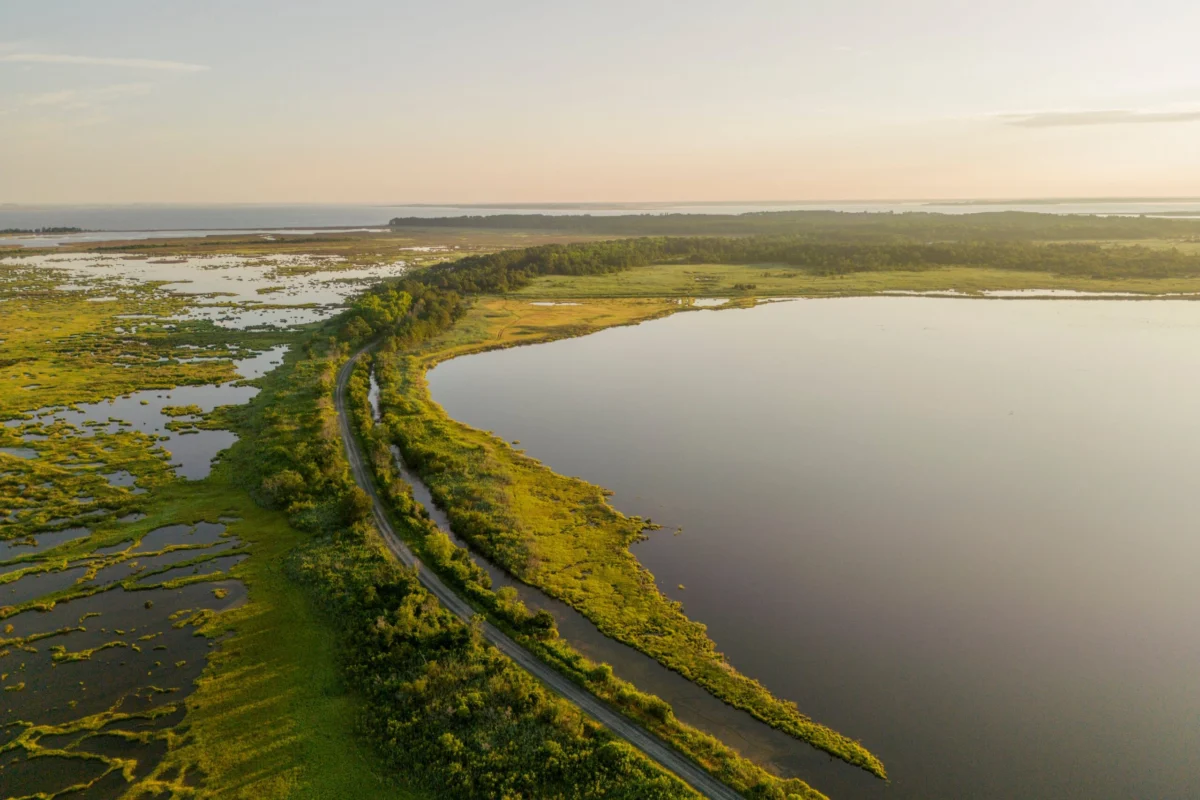
Baltimore, MD – The National Audubon Society has been awarded a transformative $13 million grant, earmarked for extensive marsh restoration projects across Maryland. This significant funding initiative directly confronts the rapid degradation of vital salt marsh habitats throughout the Chesapeake Bay region and beyond, marking a critical intervention in the ongoing environmental crisis facing coastal ecosystems. The grant is specifically designated to support the restoration of 600 acres of tidal marsh and wetlands, representing a monumental leap forward for "Marshes for Tomorrow," an Audubon-led collaborative initiative dedicated to tackling Maryland’s salt marsh crisis through robust, science-based, and nature-driven solutions.
The Urgent Crisis Facing Coastal Marshes
Salt marshes are indispensable ecosystems, acting as critical natural infrastructure that provides a myriad of benefits to both wildlife and human communities. These highly productive wetlands serve as vital nurseries for numerous fish and shellfish species, filter pollutants from waterways, sequester significant amounts of carbon, and offer essential protection against coastal flooding and storm surges. However, these invaluable habitats are facing unprecedented threats. Dr. Elizabeth Gray, Chief Executive Officer of the National Audubon Society, underscored the severity of the situation, stating, "Salt marshes are in crisis along the Atlantic, Pacific, and Gulf coasts, and in Maryland, much of this vital habitat is at immediate risk of being lost. This investment allows Audubon and our partners to accelerate large-scale restoration at the scale this moment demands, putting proven solutions on the ground that restore marshes, support birds and other wildlife, sustain fisheries, and help protect coastal communities from flooding and storm surge. We are deeply grateful to the partners and funders who are making this urgent work possible."
The Chesapeake Bay, the largest estuary in the United States, has historically suffered immense ecological pressures, including significant losses of its once-extensive marshlands. Over the past century, Maryland alone has seen tens of thousands of acres of tidal wetlands disappear, primarily due to factors such as sea-level rise, coastal erosion, subsidence, and human development. Projections for sea-level rise in the Mid-Atlantic region indicate an acceleration of marsh loss, with some estimates suggesting a further decline of up to 50% or more of existing marshes by the end of the century if no significant intervention occurs. This rapid disappearance not only threatens the ecological integrity of the bay but also jeopardizes the economic stability of coastal communities reliant on healthy fisheries and tourism, while simultaneously increasing their vulnerability to extreme weather events.
A Collaborative Funding Pipeline for Climate Resilience
The substantial funding originates from a Climate Pollution Reduction Grant provided by the U.S. Environmental Protection Agency (EPA). This national grant program is a cornerstone of the Biden-Harris administration’s efforts to address climate change by investing in state, local, and tribal-led initiatives that reduce greenhouse gas emissions and enhance climate resilience. The grant was initially awarded to the Atlantic Conservation Coalition, a multi-state partnership comprising Maryland and three other coastal states, alongside The Nature Conservancy. This coalition focuses on regional strategies for environmental protection and climate adaptation along the Atlantic seaboard.
Subsequently, the Maryland Department of Natural Resources (DNR), a key partner within the Atlantic Conservation Coalition, launched its "Roots for Resilience" initiative in May 2026. This statewide program is designed to strengthen climate adaptation and resilience efforts across Maryland, particularly on the vulnerable Eastern Shore. As part of this broader initiative, the Maryland DNR strategically subawarded the EPA funding to support Audubon’s established "Marshes for Tomorrow" program, recognizing its proven scientific approach and collaborative framework. This multi-tiered funding mechanism highlights a coordinated effort from federal to local levels to channel resources effectively towards critical environmental challenges.
A spokesperson for the U.S. Environmental Protection Agency, speaking on the broader context of the Climate Pollution Reduction Grants, emphasized, "These grants are vital for empowering states and communities to develop and implement tailored strategies for climate resilience and pollution reduction. The investment in Maryland’s marsh restoration efforts exemplifies how federal resources can catalyze significant, on-the-ground ecological benefits, protecting both natural resources and human populations from the impacts of a changing climate."
Maryland DNR Secretary, Josh Kurtz, added, "The ‘Roots for Resilience’ initiative is a testament to Maryland’s unwavering commitment to protecting our natural heritage and building a more resilient future for our coastal communities. Partnering with organizations like the National Audubon Society through this EPA grant allows us to leverage expertise and resources to address critical challenges like marsh loss, ensuring our state remains a leader in climate adaptation."
Strategic Planning and Innovative Restoration Techniques
The "Marshes for Tomorrow" initiative, led by Audubon, has been meticulously developed through an extensive planning process that commenced in 2023. This process involved a series of workshops, focus groups, and public meetings, fostering broad stakeholder engagement and incorporating local knowledge. Audubon scientists, working closely with various partners, systematically identified priority marsh sites across Maryland. These sites were chosen based on their heightened vulnerability to environmental stressors such as accelerated sea-level rise, chronic erosion, and geological subsidence. Crucially, the selection also prioritized locations where restoration efforts could yield the most significant ecological benefits and provide enhanced protection for nearby communities.
The $13 million grant will fund a diverse suite of restoration approaches, each tailored to the specific ecological conditions and degradation patterns of the chosen sites. One key technique that may be employed is "runnelling." This innovative method involves the excavation of narrow, sinuous channels across the marsh surface. The primary purpose of runnelling is to improve hydrological connectivity, allowing trapped water to escape more efficiently from the marsh surface into adjacent tidal creeks. This drainage can reduce stagnant water pools, which often contribute to marsh degradation, and promote healthier marsh vegetation growth by optimizing soil aeration and salinity levels. Additionally, runnelling can significantly reduce mosquito breeding habitats, providing a direct benefit to local residents.
Another crucial restoration approach involves restoring tidal connectivity. This often entails enlarging or unblocking existing culverts – man-made structures that allow water to flow under roads or other embankments. Over time, culverts can become undersized, blocked by sediment, or completely collapsed, impeding the natural ebb and flow of tides into marsh areas. By restoring proper tidal exchange, these projects reintroduce vital nutrients, flush out accumulated pollutants, and allow for the natural migration of aquatic species, reinvigorating the marsh ecosystem. These science-backed techniques are designed not just to restore acreage but to enhance the long-term ecological function and resilience of the marsh.
David Curson, Audubon Mid-Atlantic’s Coastal Director, emphasized the fundamental role of these habitats. "Salt marshes are the foundation of Maryland’s coastal ecosystem, sustaining birds while protecting people and their livelihoods through cleaner water and reduced flooding," he said. "Marshes for Tomorrow is a bold, science-driven effort to confront their rapid loss, and this investment gives us a transformational opportunity to put plans into action."
Ecological Significance and Broader Impact
Maryland’s tidal salt marshes are not merely picturesque landscapes; they are iconic and irreplaceable natural resources that underpin the state’s ecological and economic well-being. These vibrant ecosystems are crucial for the state’s world-renowned blue crab populations, providing essential foraging grounds and shelter. They also sustain an abundance of other commercially and ecologically important species, including various fish, shellfish, and invertebrates, forming the base of a complex food web.
Furthermore, these marshes provide critical habitat for a diverse array of migratory and resident birds. Among the species that rely heavily on healthy salt marshes are the American Black Duck, a popular waterfowl species; the elusive Black Rail, a secretive marsh bird listed as federally threatened; and the Saltmarsh Sparrow. The Saltmarsh Sparrow, in particular, is one of North America’s most imperiled birds, facing an existential threat. Scientists predict that this unique species, which nests only in salt marshes and faces repeated nest inundation due to rising tides, could go extinct this century without urgent and comprehensive marsh conservation action. The restoration of 600 acres will provide crucial breeding and foraging habitat for these and many other species, helping to reverse alarming population declines.
Beyond their direct support for biodiversity, marshes also deliver invaluable ecosystem services that directly benefit human communities. They act as natural buffers, significantly reducing the impact of storm surges and coastal flooding, thereby protecting homes, businesses, and agricultural land. Their dense vegetation and complex root systems stabilize shorelines, mitigating erosion. Moreover, marshes are highly efficient natural filters, removing excess nutrients, sediments, and pollutants from water runoff before they enter the open bay, contributing to cleaner water and healthier aquatic environments for recreation and consumption.
The current $13 million investment represents a significant scaling up of previous conservation efforts. Initial funding for the "Marshes for Tomorrow" initiative was provided by the U.S. Fish and Wildlife Service (USFWS), a federal agency dedicated to wildlife conservation. This foundational support allowed Audubon and its partners to conduct initial research and planning. Later, a grant from the National Fish and Wildlife Foundation (NFWF) expanded the initiative’s scope to include the Maryland Coastal Bays Program, broadening its geographic reach and collaborative network. This latest grant, however, propels the initiative into an unprecedented phase of large-scale implementation, allowing for the restoration of hundreds of acres and setting a new benchmark for marsh conservation in the region.
Looking Ahead: A Model for Climate Resilience
The success of the "Marshes for Tomorrow" initiative, bolstered by this substantial EPA grant, carries profound implications not just for Maryland but for coastal resilience efforts nationwide. It serves as a compelling model for how targeted, science-driven, and collaboratively funded nature-based solutions can effectively address the multifaceted challenges of climate change. The project’s emphasis on innovative restoration techniques like runnelling and tidal connectivity restoration offers valuable lessons that can be applied to other vulnerable coastal ecosystems.
While the restoration of 600 acres is a significant achievement, the ongoing threat of climate change, particularly accelerating sea-level rise, necessitates sustained commitment and adaptive management strategies. Long-term monitoring will be crucial to assess the effectiveness of the restoration efforts, understand how these newly restored marshes adapt to environmental changes, and inform future conservation practices. The project also highlights the critical need for continued investment in research and development of new restoration techniques to ensure the resilience of coastal ecosystems for generations to come.
Community engagement will remain a cornerstone of the initiative’s success. By involving local stakeholders, including landowners, fishermen, and community leaders, "Marshes for Tomorrow" aims to build a shared sense of ownership and stewardship for these vital natural resources. A local waterman, John Davies, whose family has fished the Chesapeake Bay for generations, commented on the grant, "Our livelihoods depend on a healthy bay, and healthy marshes are the backbone of that. This work isn’t just about birds; it’s about our future, our crabs, our oysters, and protecting our homes from the storms that seem to get stronger every year. It’s a real shot in the arm for our community."
The $13 million grant for the National Audubon Society’s "Marshes for Tomorrow" initiative is more than just a financial allocation; it is an investment in the ecological health, economic stability, and climate resilience of Maryland’s coastal region. By restoring these crucial habitats, the project will safeguard biodiversity, enhance water quality, protect communities, and set a powerful precedent for nature-based climate solutions across the nation.
