
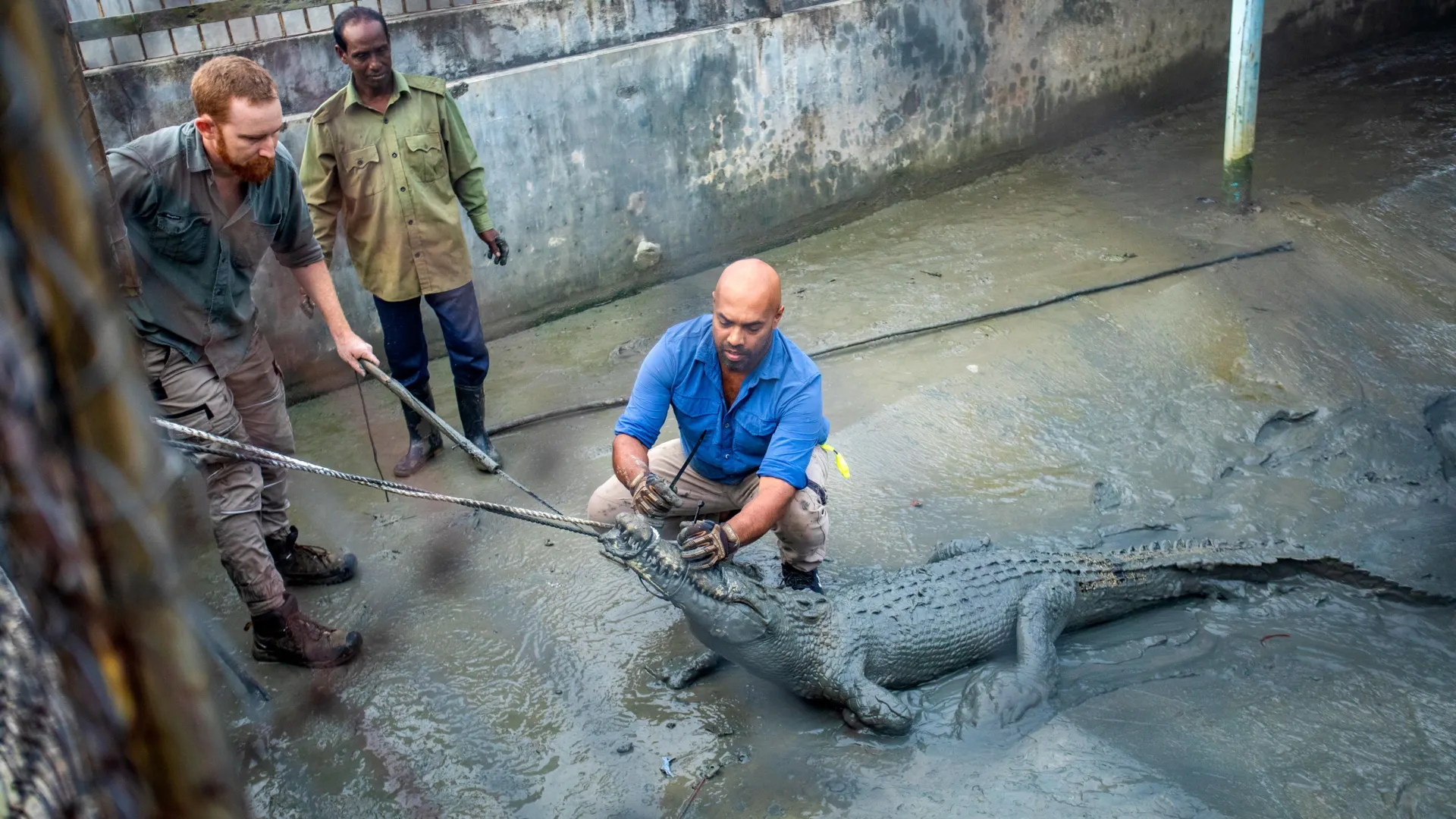
Conservation efforts targeting the dwindling populations of the estuarine crocodile, commonly known as the saltwater crocodile (Crocodylus poracinus), have received a major analytical boost following the publication of a groundbreaking field study. Historically, conservation initiatives aimed at bolstering wild populations of large apex predators have faced persistent hurdles, not least of which is the innate homing behavior of relocated or captive-released animals. When mature animals are introduced to unfamiliar habitats, their biological compulsion is frequently to navigate back to their point of origin, exposing them to human-wildlife conflict, exhaustion, and high mortality rates. However, recent empirical data indicates that saltwater crocodiles born or raised in captivity may bypass this instinct entirely, presenting a viable, previously underexploited pathway for species recovery programs.
The research, formally titled "What is home? Post-release movements of captive-reared and translocated mature saltwater crocodiles in Bangladesh," was published in the peer-reviewed journal Wildlife Research. Spearheaded by a collaborative network involving the International Union for Conservation of Nature (IUCN) Bangladesh and the Bangladesh Forest Department, and funded by the Deutsche Gesellschaft für Internationale Zusammenarbeit (GIZ), the study offers critical behavioral insights that could redefine reintroduction methodologies across the tropical and subtropical regions of South and Southeast Asia.
Background Context and Historical Decline in Bangladesh
To understand the weight of these findings, one must examine the precarious status of the saltwater crocodile within the geopolitical boundaries of Bangladesh, specifically within the Sundarbans mangrove forest. Spanning the delta of the Padma, Brahmaputra, and Meghna rivers across Bangladesh and India, the Sundarbans represents one of the largest continuous mangrove forests in the world. Historically, this labyrinth of tidal waterways, mudflats, and small islands served as a stronghold for Crocodylus poracinus, an apex predator capable of exceeding six meters in length.
Throughout the nineteenth and early twentieth centuries, the species experienced catastrophic population declines. The primary driver of this collapse was relentless commercial hunting driven by the global demand for high-grade exotic leather destined for the luxury fashion market. By the 1970s, unregulated hide hunting had pushed the saltwater crocodile to the absolute brink of local extinction in Bangladesh.
In response to the ecological emergency, the government of Bangladesh granted the species strict legal protection under national wildlife conservation frameworks in 1973. Despite over half a century of legislative shielding, the population has failed to demonstrate any measurable, self-sustaining recovery. Modern wildlife surveys paint a grim picture of the current demographic reality. The vast majority of the country’s surviving saltwater crocodiles are restricted to the remote reaches of the Sundarbans. Even within this vast protected biosphere, the population remains critically fragmented and dangerously small. The most recent comprehensive ecological surveys estimate that only 140 mature individuals remain in the wild across the entire Bangladeshi sector of the mangrove forest, leaving the local population vulnerable to stochastic environmental events, genetic bottlenecking, and ongoing anthropogenic pressures.
The Traditional Dilemma of Crocodile Reintroduction
For decades, wildlife managers seeking to reverse population declines in large crocodilians faced a frustrating procedural bottleneck. The standard conservation paradigm relied heavily on harvesting or collecting newly hatched crocodiles—hatchlings—from the wild or captive breeding facilities, and subsequently releasing them into depleted habitats.
This approach, while logistically straightforward, suffers from severe biological limitations. Hatchling mortality rates in the wild are extraordinarily high. Subject to heavy predation by avian predators, large fish, varanid lizards, and older conspecifics, only a negligible fraction of released hatchlings survive to reach breeding age. Furthermore, because crocodilians are slow-growing, K-selected species, hatchlings require many years—often a decade or more—to attain sexual maturity and contribute to population replenishment.
Conservation biologists have long recognized that releasing larger, subadult or fully mature captive-bred crocodiles would theoretically bypass the high mortality phase of early life, providing an immediate boost to the adult breeding pool. Yet, this strategy harbored a potentially fatal flaw rooted in animal behavior: the powerful homing instinct.
"Finding the way back home is an important behavior across the animal kingdom," explains behavioral ecologist and Adjunct Associate Professor Ru Somaweera from Murdoch University, a leading authority on crocodilian ecology. "For many species, it can play a major role in survival and reproduction. Some animals make short daily trips back to nests or burrows after searching for food, while others navigate across vast distances over weeks or months."
When applied to crocodilians, this instinct poses unique challenges. "Crocodilians, the largest predators in most tropical, subtropical freshwater and brackish environments, are a unique case when it comes to homing behavior," Associate Professor Somaweera notes. "Crocodiles are remarkably good at finding their way home, often returning to their original capture sites and limiting the success of relocation programs. What we still don’t fully understand, though, is how this behavior plays out in individuals that have been bred or kept in captivity for long periods before being released back into the wild."
If a captive-raised crocodile, upon being released into a distant river system, maintains a psychological anchor to its breeding facility or enclosure, it will attempt to navigate back. In doing so, it risks traversing populated fishing villages, agricultural zones, and shipping lanes, drastically increasing the likelihood of fatal encounters with humans or recapture by authorities.
Methodology and Satellite Tracking Chronology
To bridge this critical knowledge gap, researchers designed a rigorous empirical study inside the Sundarbans mangrove forest. The primary objective was to monitor and compare the post-release spatial ecology of three distinct cohorts: long-term captive-reared crocodiles, a local wild crocodile returned to its native habitat, and a translocated wild crocodile moved far from its home range.
The scientific team fitted a cohort of five mature saltwater crocodiles with advanced satellite-linked telemetry tracking devices secured to the scutes of their tails. This hardware allowed researchers to monitor the precise geographic coordinates, movement speeds, and home ranges of the animals over a multi-month tracking period following their coordinated releases.
The study sample comprised:
- Three captive-reared female saltwater crocodiles, each of which had spent between 8 and 22 years housed continuously in captive breeding or holding facilities.
- One local wild crocodile, which was captured within a specific zone of the Sundarbans and subsequently released precisely at its capture site to serve as a baseline control.
- One wild-caught adult male crocodile, designated in project records as "Jongra," which was captured and then intentionally translocated (moved a significant geographic distance) away from its home territory before release.
Following the deployment of the satellite transmitters, the researchers tracked the daily and weekly movements of all five apex predators, analyzing their navigational trajectories, habitat utilization, and behavioral adaptations.
Behavioral Divergence: Captive-Reared Versus Translocated Wild Individuals
The results of the telemetry tracking revealed a stark, highly illuminating behavioral divergence between the animals that had experienced long-term captivity and the wild adult that had been forcibly relocated.
According to the data analyzed by the research team, the most encouraging outcomes centered on the three captive-reared females. Despite having spent up to two decades in artificial enclosures, none of the three individuals exhibited any behavioral indicators of attempting to navigate back to their respective breeding facilities.
Instead, the captive-reared crocodiles demonstrated a remarkable capacity for environmental integration. Within days of release, they selected small, well-defined geographic ranges within the Sundarbans estuarine network. Their daily movement patterns, core-use areas, and ranging behaviors closely mirrored those of the local wild control crocodile that had been released at its capture site.
"They settled into small, well-defined areas and moved in much the same way as the local wild crocodile we tracked, which tells us they are possibly able to adapt to their new environment seamlessly," Associate Professor Somaweera stated. This behavioral plasticity suggests that prolonged captivity does not entirely erode an adult crocodile’s fundamental survival instincts, nor does it necessarily instill an inescapable psychological imprint tying it to an artificial home base.
Conversely, the telemetry data captured a very different narrative for the translocated wild crocodile, Jongra. Uprooted from his familiar territory and released approximately 132 kilometers away, Jongra immediately initiated purposeful, long-distance directional movement.
"Unfortunately, the results weren’t as good for the wild crocodile Jongra, who was translocated about 132km from his home before being released," Associate Professor Somaweera explained. "Although Jongra didn’t make it back to his original capture site during the study, his movements were very clearly going in that direction. He traveled far more each day than any other crocodile we tracked, covered an exceptionally large area, and even recorded single-day movements of more than 30 kilometers: all typical signs of homing behavior."
Jongra’s frenetic journey highlights the inherent risks of wild-to-wild translocations. Driven by a powerful spatial memory and territorial compulsion, the wild adult expended vast amounts of energy traversing unfamiliar estuarine corridors, exposing himself to heightened risks of anthropogenic conflict as he attempted to bridge the 132-kilometer gap separating him from his historical home range.
Practical Implications for Global Crocodile Conservation
The behavioral dichotomy observed between the captive-reared females and the translocated wild male carries profound practical applications for wildlife managers, conservation planners, and governmental forestry departments tasked with rehabilitating depleted crocodilian populations across the globe.
For decades, conservation biologists debated the viability of utilizing subadult and adult captive-reared crocodiles in augmentation programs, fearing that their lack of early wild experience or their attachment to human-managed facilities would doom reintroduction efforts. The empirical evidence provided by this study dispels those concerns, suggesting that older, captive-raised animals can be successfully integrated into wild ecosystems without the confounding complication of homing-induced dispersal.
"These findings suggest that releasing subadult and adult captive-reared crocodiles can be a viable strategy to strengthen wild populations," Associate Professor Somaweera emphasized. By utilizing mature or subadult individuals rather than vulnerable hatchlings, conservation programs can bypass the high-mortality juvenile life stage, thereby accelerating the timeline for population stabilization and natural reproduction in depleted habitats such as the Sundarbans.
At the same time, the study sounds a cautionary note regarding the management of nuisance or conflict-causing wild crocodiles. When wild adults must be removed from areas of high human density, simply relocating them over long distances within the same river system or coastal zone may prove counterproductive or hazardous.
"For translocated crocodiles, it’s important there is careful release planning to manage their tendencies to return home," Associate Professor Somaweera advised. Wildlife authorities must account for the persistent navigation drives of wild-caught adults, implementing barrier strategies, soft-release enclosures, or strategic placement protocols to mitigate the risks associated with long-distance homing attempts.
Broader Ecological Impact and Future Research Directions
As conservationists grapple with the accelerating degradation of tropical wetland ecosystems worldwide, empirical studies of post-release behavior provide the granular data necessary to transition from reactive species management to proactive, science-based ecological restoration.
The saltwater crocodile, as an apex predator, plays a vital structural role in maintaining the health and biodiversity of mangrove and estuarine ecosystems. By regulating prey species populations, recycling nutrients, and shaping aquatic habitats, healthy crocodile numbers contribute to the overall resilience of wetland biomes against climate change and anthropogenic disturbance.
The success of the tracking project in the Sundarbans demonstrates the value of international scientific collaboration and modern telemetry in wildlife conservation. By combining the institutional resources of IUCN Bangladesh, the Bangladesh Forest Department, and GIZ with the ecological expertise of academic institutions like Murdoch University, conservationists are gaining the analytical tools needed to give endangered apex predators a second chance in the wild.
Future research initiatives stemming from this study are expected to expand sample sizes across broader demographic groups, tracking varying age classes and male-female cohorts of captive-reared crocodiles over longer temporal horizons. Additionally, researchers aim to monitor the long-term reproductive success of released captive-bred individuals to confirm whether these animals can successfully integrate into wild breeding hierarchies and contribute genetically to the recovery of the Sundarbans population.
Ultimately, the revelation that captive-raised saltwater crocodiles do not seek to return to their breeding centers offers a renewed sense of optimism for wildlife managers. It dismantles a long-held biological assumption and opens a promising new chapter in the ongoing global effort to restore and protect the planet’s magnificent estuarine giants.
