
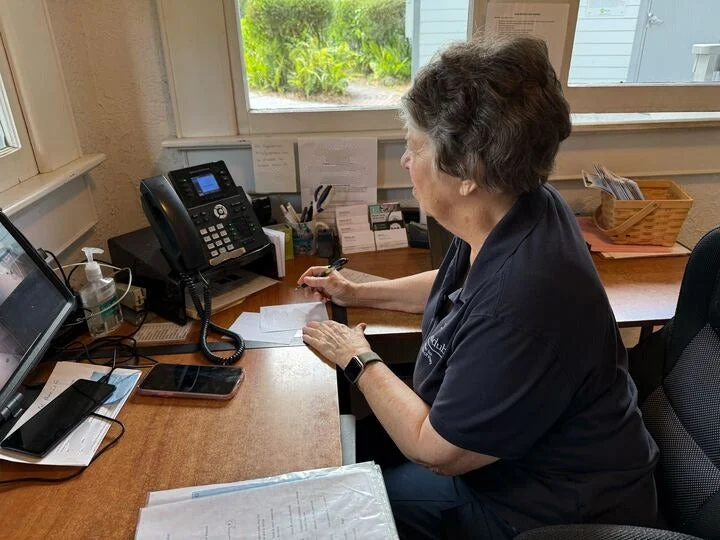
Phyllis Hall, a stalwart of the Audubon movement in Florida, has been recognized with the prestigious Volunteer of the Year award by both the Audubon Center for Birds of Prey and Audubon Florida. Her unwavering commitment, spanning nearly a decade, has profoundly impacted bird conservation, habitat protection, and the mentorship of a new generation of environmental leaders. Hall’s dual roles as a pivotal volunteer at the Audubon Center for Birds of Prey and as the President of the Seminole Audubon Society exemplify her multifaceted dedication, demonstrating an extraordinary blend of on-the-ground action, strategic leadership, and educational outreach. Her recognition underscores the vital role played by dedicated volunteers in advancing the mission of environmental organizations and fostering community engagement.
A Pillar of Support at the Audubon Center for Birds of Prey
On any given Friday morning at the Audubon Center for Birds of Prey in Maitland, Florida, Phyllis Hall can be found at the guest relations desk, a nexus of activity and critical first contact for the public. Her calm yet authoritative voice is a reassuring presence, particularly when guiding panicked callers through the delicate process of rescuing an injured bird. "Don’t give it any water, no food of any kind," she advises with practiced ease, meticulously jotting down details for rescue volunteers. This scene is a common one, repeated multiple times throughout the morning, as Hall fields a steady stream of calls concerning injured raptors, from majestic Ospreys to the diminutive American Kestrel. Each interaction is met with a welcoming tone and a reassuring answer, reflecting her deep empathy and extensive knowledge.
Beyond the critical task of coordinating wildlife rescues, Hall simultaneously manages the bustling ticket window, a role that proves surprisingly demanding even on a school-year Friday. Adding to her responsibilities, she is frequently found training new volunteers, imparting her wealth of experience and the intricate operational details of the center. This demanding workload, which would overwhelm many, is handled by Hall with an unshakeable composure. Her serene demeanor in the face of constant demands makes it abundantly clear why she has earned the highest volunteer accolades from both the regional Audubon chapter and the state organization. Her name is consistently mentioned in discussions regarding highly effective and truly extraordinary chapter leaders, a testament to her profound impact.
The Audubon Center for Birds of Prey, a crucial facility in Central Florida, plays a significant role in raptor rehabilitation and public education. Annually, the center admits hundreds of injured birds of prey, providing life-saving medical care and rehabilitation with the ultimate goal of returning them to the wild. In addition to its rescue and recovery efforts, the center serves as an invaluable educational resource, hosting thousands of visitors each year to learn about raptors, their habitats, and the importance of conservation. Volunteers like Hall are the backbone of these operations, ensuring smooth public interaction, efficient rescue coordination, and effective educational outreach. Her ability to juggle these diverse tasks with such grace directly contributes to the center’s mission and its positive public image.
A Decade-Long Journey Through Audubon Leadership
Phyllis Hall’s journey with Audubon predates her involvement with the Center for Birds of Prey, beginning long before she started volunteering there in late 2021. Her initial foray into environmental advocacy started with the Orange Audubon Society, where she served on the conservation committee, dedicating her time to local preservation initiatives. This early engagement laid the groundwork for her deeper involvement. Subsequently, she transitioned to the Seminole Audubon Society, a chapter geographically closer to her home, where her leadership qualities quickly became evident. Since 2020, Hall has served as the president of the Seminole Audubon Society, guiding the chapter through various conservation campaigns, educational programs, and community engagement efforts. Under her leadership, the chapter has seen enhanced member participation and a renewed focus on local environmental issues.
The Seminole Audubon Society, like other local chapters across the nation, serves as a critical frontline for Audubon’s broader mission. These chapters translate national conservation goals into tangible local actions, from bird counts and habitat restoration projects to public advocacy against destructive development. As president, Hall is responsible for steering these initiatives, mobilizing volunteers, and fostering a strong sense of community among members. Her leadership has been instrumental in ensuring that the Seminole chapter remains a vibrant and effective voice for nature in its region, reflecting the essential role that dedicated local leadership plays in the overall health and impact of the Audubon network.
Nurturing the Next Generation: The Power of Mentorship
It is perhaps in her role as a mentor that Phyllis Hall truly distinguishes herself. Drawing upon a rich professional background, Hall spent much of her career in adult education and hospital training before her retirement. This extensive experience provided her with decades of expertise in teaching, guiding, and supporting learners across various settings. Complementing this practical experience, she holds a master’s degree in training and education, solidifying her pedagogical foundation. This unique blend of academic rigor and real-world application made her an ideal candidate for the Audubon Florida’s Conservation Leadership Initiative (CLI).
The CLI program is a cornerstone of Audubon’s strategy to cultivate future conservationists. It strategically pairs undergraduate students with seasoned conservation professionals for a year-long mentorship designed for mutual learning and professional development. Since joining the program in 2017, Hall has mentored seven students, guiding them through the complexities of conservation work, helping them navigate career paths, and fostering their passion for environmental stewardship. Her approach to mentorship is deeply rooted in her educational philosophy: "I enjoy being around young people and learn so much from them," Hall states, highlighting the reciprocal nature of the relationship. "My role is to listen and encourage, which is rewarding for me." This humble perspective belies the profound impact she has had on her mentees, many of whom have gone on to achieve significant milestones in their academic and professional lives.
The importance of programs like CLI cannot be overstated in the current environmental landscape. As the conservation movement faces the challenge of an aging workforce and the need for fresh perspectives, investing in young talent is paramount. CLI provides these emerging leaders with practical experience, networking opportunities, and the invaluable wisdom of experienced professionals. Hall’s consistent participation and success within this program illustrate how effective mentorship can bridge generational gaps and ensure a robust pipeline of dedicated conservationists for years to come.
Evolving Contributions: From CLI to Internal Training
While Hall has recently taken a step back from her direct CLI mentoring responsibilities this year, her commitment to fostering talent has simply shifted focus. She has channeled her exceptional teaching and organizational skills into developing comprehensive training manuals for other volunteers at the Audubon Center for Birds of Prey. These meticulously crafted manuals have proven instrumental in cross-training more volunteers, enhancing the center’s operational efficiency and ensuring a higher standard of care and public engagement. This initiative reflects her proactive approach to identifying needs and implementing practical solutions, further solidifying her reputation as an indispensable asset to the Audubon community.
Hall’s dedication to her former CLI mentees remains unwavering. She maintains regular contact with them, offering continued support and guidance. Her commitment is further evidenced by the numerous letters of recommendation she has penned, opening doors for her mentees in their academic pursuits and career advancements. The success of her mentorship is clearly visible: two of her former mentees have even served on the Seminole Audubon board of directors, working directly alongside her in her capacity as president. These instances underscore the enduring relationships she builds and the tangible impact of her guidance. A particularly proud moment for Hall was attending the induction ceremony of her 2021-22 mentee into the University of Central Florida’s Pegasus Society, a testament to the academic excellence she helps inspire.
The Broader Vision: Engaging Youth for Future Conservation
Audubon’s mission extends beyond direct conservation actions; it strives to maximize collective impact by building a diverse community of bird and nature lovers and mobilizing them to create positive change. The CLI program is a prime example of this strategy, infusing chapters with fresh ideas and youthful enthusiasm. However, Hall acknowledges that keeping college students engaged beyond their year of mentorship presents unique challenges. College students, by their very nature, are often transient, moving on to graduate school or careers, frequently in distant locations. Early career professionals also face significant time constraints, making sustained volunteerism more difficult compared to retirees like herself.
To address this, Hall advocates for a proactive approach to youth outreach, recommending engagement at local elementary, middle, and high schools. Her philosophy recognizes that the seeds of conservation passion must be planted early. Earlier this year, the Seminole Audubon Society, under her leadership, delivered a compelling seminar at a private school in Oviedo, providing students with an overview of the organization’s rich history and current initiatives. This was followed by an engaging "bio-bingo" walk, transforming a simple nature stroll into an interactive learning experience. In April, during Earth Week, the chapter led another impactful event at an Oviedo elementary school, further cementing their commitment to educating the youngest generations.
This focus on engaging children is less about immediate member recruitment and more about sharing the intrinsic joy of birds and the critical work of conservation with the generations who will one day be charged with carrying on this vital work. Hall’s appreciation for nature is genuinely infectious, and she relishes the opportunity to share it with the public through chapter programs and in her role at the Center for Birds of Prey. She often speaks of the profound learning experiences she gains from these interactions, stating, "I love seeing that ‘a-ha’ moment when I tell guests something they didn’t know." She adds, "I learn something new every time I am at the Center, either from staff or other volunteers." This continuous learning and shared enthusiasm are central to her effectiveness as an educator and advocate.
Local Advocacy: A Voice for Central Florida’s Ecosystems
While Hall has judiciously scaled back some of her mentorship responsibilities, her drive for conservation has pivoted towards crucial local causes. She has actively taken on roles within government committees, dedicating her expertise to protect Central Florida’s invaluable ecosystems from the relentless pressures of development. This shift highlights her strategic understanding that conservation must be fought on multiple fronts, from inspiring future leaders to directly influencing policy at the community level. Central Florida, a region experiencing rapid population growth, faces significant challenges in balancing urban expansion with the preservation of its unique natural habitats, including sensitive wetlands, scrublands, and pine forests that are home to numerous endemic and endangered species.
Hall’s involvement in these local committees demonstrates yet another way she leverages her calm, unwavering voice: to speak up for birds and the critical places they need to survive. Her ability to articulate conservation concerns clearly and persuasively within political forums is invaluable. This type of grassroots advocacy, often less visible than direct fieldwork but equally vital, ensures that environmental considerations are integrated into land-use planning and development decisions. It is through the persistent efforts of individuals like Hall that local ecosystems receive the protection necessary to sustain biodiversity and provide essential ecological services, linking her local actions directly to broader regional and national conservation priorities.
The Indispensable Role of Volunteerism in Conservation
Phyllis Hall’s journey is a powerful testament to the indispensable role of volunteerism in the success of conservation efforts globally. Environmental organizations, often operating with limited resources, rely heavily on the dedication, expertise, and passion of volunteers to extend their reach and impact. Volunteers contribute millions of hours annually, translating into substantial economic value and, more importantly, countless hours of tangible work that would otherwise be impossible. From data collection and habitat restoration to public education and policy advocacy, volunteers are the lifeblood of the conservation movement.
Hall embodies the ideal volunteer: not only does she commit her time, but she also brings a lifetime of professional experience, strategic insight, and an infectious passion. Her ability to transition from hands-on bird rescue guidance to strategic chapter leadership, and from long-term mentorship to critical local policy advocacy, showcases the breadth of impact a single dedicated individual can have. Her recognition as Volunteer of the Year is not merely an award for past service but an acknowledgment of a dynamic and ongoing contribution that continues to shape the future of conservation in Florida. Her calm demeanor, extensive knowledge, and profound dedication serve as an inspiring model for aspiring conservationists and seasoned environmental advocates alike.
Looking Ahead: Sustaining a Legacy of Dedication
As Phyllis Hall continues her multifaceted contributions to Audubon, her legacy is already being woven into the fabric of Central Florida’s conservation landscape. Her direct impact on mentees, many of whom are now making their own marks in environmental fields, ensures a ripple effect that will extend for decades. Her strategic leadership at the Seminole Audubon Society strengthens the local chapter’s capacity to protect critical habitats and educate the public. Her direct involvement in local government committees offers a crucial voice for nature in the face of development pressures.
The story of Phyllis Hall is a powerful reminder that conservation is a collective endeavor, built on the individual dedication of passionate people. Her ability to adapt her skills and passion to evolving needs, from direct public engagement to strategic advocacy and leadership development, makes her an exemplary figure in the conservation community. Her quiet yet profound influence continues to inspire action, foster knowledge, and protect the natural world for generations to come, embodying the very spirit of Audubon’s enduring mission.
