

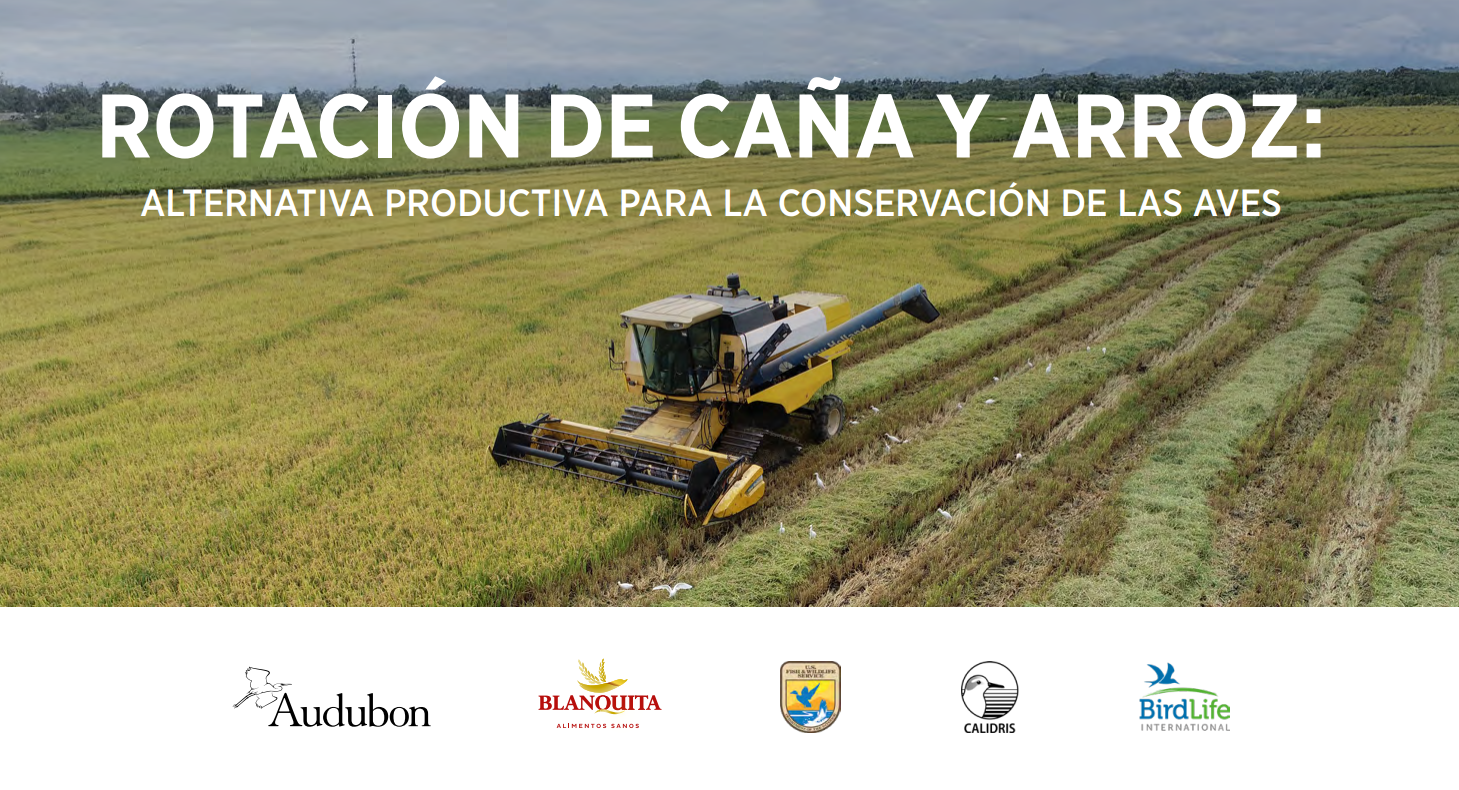
The release of the "Sugarcane and Rice Rotation Playbook" marks a pivotal moment in the global pursuit of sustainable agricultural practices, offering an innovative nature-based solution to enhance agro-ecosystem resilience and biodiversity, particularly in Colombia’s vital Cauca River Valley. This comprehensive guide, born from a collaborative effort involving the National Audubon Society, Calidris Association, Universidad Icesi, and Arroz Blanquita, meticulously details how the strategic rotation of sugarcane and rice crops can transform conventional farming into a powerful tool for environmental stewardship, economic viability, and regional bird conservation. It addresses critical challenges faced by modern agriculture, including climate change impacts, resource depletion, and the imperative to bolster food production sustainably, by harnessing the inherent power of ecological processes.
The Nexus of Agriculture and Conservation: Addressing Modern Challenges
Modern agriculture stands at a critical juncture, grappling with escalating demands for food production amidst intensifying environmental pressures. Climate change manifests through unpredictable weather patterns, including prolonged droughts and severe flooding, which directly threaten crop yields and farmer livelihoods. Concurrently, traditional intensive farming practices have often led to soil degradation, water pollution, and significant biodiversity loss, eroding the very natural capital upon which agriculture depends. In this complex landscape, nature-based solutions (NBS) have emerged as a promising paradigm, advocating for the utilization and enhancement of natural processes within ecosystems to address societal challenges effectively and sustainably. This approach recognizes that healthy ecosystems are not merely recipients of environmental protection but active partners in ensuring agricultural productivity and long-term resilience.
The Cauca River Valley, a region renowned for its agricultural output, particularly sugarcane and rice, exemplifies these global challenges on a local scale. Intensive cultivation of these monocultures, while economically significant, has historically contributed to habitat fragmentation, reduced ecological diversity, and increased reliance on synthetic inputs. The urgency to transition towards more sustainable models is amplified by the valley’s rich biodiversity, including numerous endemic and migratory bird species whose habitats are increasingly threatened by human activities and habitat alteration. The "Sugarcane and Rice Rotation Playbook" directly confronts these issues by providing a scientifically validated framework for integrating conservation into the agricultural fabric, transforming potential conflicts into synergistic opportunities.

A Collaborative Effort for Sustainability: Uniting Expertise
The development of this groundbreaking initiative is the culmination of a robust partnership between diverse organizations, each contributing unique expertise to the shared goal of sustainable agriculture and conservation. The National Audubon Society, a leading force in bird conservation across the Americas for over a century, brought its extensive experience in ecological research, habitat protection, and community engagement. Its involvement underscored the project’s profound focus on avian biodiversity, recognizing birds as key indicators of ecosystem health and vital providers of ecological services such as pest control and seed dispersal.
Joining Audubon was the Calidris Association, a Colombian non-profit dedicated to the study and conservation of birds and their habitats. Calidris provided crucial local ecological knowledge and on-the-ground research capabilities, ensuring the scientific rigor and regional applicability of the studies. Their expertise in monitoring bird populations and understanding their specific habitat requirements in the Cauca River Valley was indispensable to demonstrating the conservation benefits of the rotation system. The association’s commitment to applied science helped bridge the gap between academic research and practical conservation action.
Academic insight and scientific validation were provided by Universidad Icesi, a prominent Colombian institution known for its research excellence and commitment to social and environmental development. The university’s role was critical in designing robust methodologies, analyzing complex ecological and agronomic data, and translating scientific findings into practical agricultural recommendations. This academic partnership ensured that the playbook is not only evidence-based but also accessible and actionable for farmers and agricultural technicians, reinforcing its credibility and utility.
Finally, Arroz Blanquita, a major agricultural company in Colombia, represented the industry’s commitment to sustainability and innovation. Their participation highlights a growing trend within the private sector to integrate environmental responsibility into core business practices and supply chains. Arroz Blanquita’s practical understanding of agricultural operations, market dynamics, and farmer needs was essential in developing a manual that is relevant, feasible, and economically attractive to local producers. This multi-sectoral collaboration exemplifies how combining conservation science, academic research, and industry experience can yield impactful, scalable solutions for sustainable development.
The Science Behind the Rotation: Agronomic and Ecological Synergy
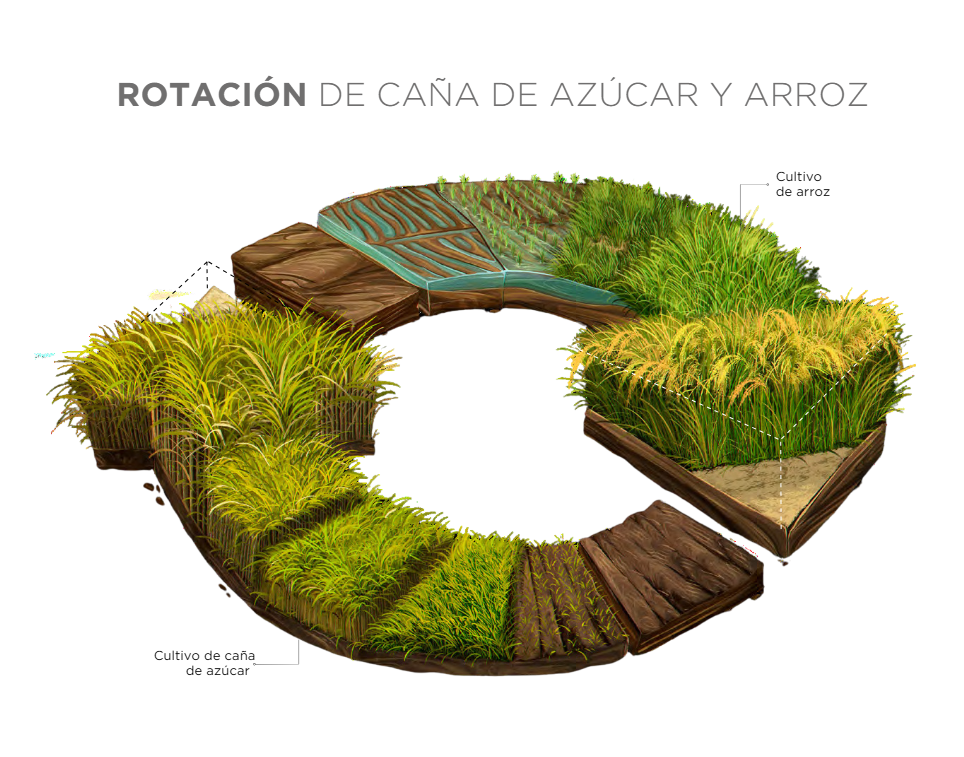
The core of this initiative lies in the agricultural practice of crop rotation, specifically alternating sugarcane and rice. This is not merely a change in crops but a fundamental shift in land management that leverages natural ecological processes for manifold benefits. From an agronomic perspective, rotating these two distinct crops offers significant advantages over continuous monoculture. Sugarcane, a perennial crop with deep root systems, extracts nutrients from deeper soil layers, contributing to soil structure and organic matter accumulation. Rice, typically an annual crop grown in flooded conditions, utilizes surface nutrients, suppresses certain weeds, and contributes to the breakdown of organic matter when fields are drained. This alternation helps to break pest and disease cycles that often plague continuous cultivation of a single crop, significantly reducing the reliance on chemical pesticides. For instance, pathogens specific to sugarcane may not survive in flooded rice paddies, and vice versa, leading to a natural reduction in pest pressure.
Furthermore, the flooded conditions required for rice cultivation play a crucial role in soil health and water management. Waterlogged soils can suppress anaerobic weeds and pests, and upon draining, the decomposition of rice residues enriches the soil with organic matter. This process improves soil structure, enhances water infiltration and retention capacity, and fosters a healthier soil microbiome, which is essential for nutrient cycling and plant vigor. Studies have consistently shown that improved soil health directly translates to reduced needs for synthetic fertilizers over time, leading to substantial cost savings for farmers and a reduced environmental impact from nutrient runoff into local waterways. The strategic timing of these rotations, particularly the suggested one or two cycles of rice per year, is critical to maximizing these benefits without compromising overall productivity.
Enhancing Biodiversity: A Haven for Birds
One of the most compelling outcomes of the sugarcane and rice rotation, as highlighted by the extensive studies, is its profound positive impact on regional bird species. The alternation of crops creates a dynamic and diverse mosaic of habitats within the agricultural landscape, which is far more beneficial for biodiversity than vast monoculture fields. Rice paddies, during their cultivation cycle, function as temporary wetlands, providing critical foraging grounds and resting sites for a wide array of water-dependent birds, including various species of egrets, herons, ibises, and migratory shorebirds that utilize the Andean flyway. These species often struggle to find suitable habitats in intensively farmed landscapes, making the rotational fields vital oases.
As the rice fields are drained and subsequently planted with sugarcane, the changing landscape offers different resources. Sugarcane fields, with their dense foliage, provide shelter and nesting opportunities for various passerine birds, such as seedeaters and wrens, and even some raptors, offering protection from predators and harsh weather conditions. The field edges, hedgerows, and inter-row spaces, especially in a rotational system, can support a greater variety of native vegetation, insects, and small vertebrates, forming a robust food web that sustains diverse bird populations. The research specifically found that cultivating rice for one or two cycles per year significantly improved the survival chances of regional bird species, indicating that even a relatively short period of habitat availability can have a substantial positive effect on avian populations, including species of conservation concern like the Least Bittern or the Yellow-hooded Blackbird.
These birds are not merely beneficiaries of the system; they are active contributors to the agro-ecosystem’s health. Birds provide essential ecosystem services such as natural pest control, consuming insects and rodents that can damage crops, thereby reducing the need for chemical interventions. They also play a role in pollination and seed dispersal, contributing to the broader ecological balance and promoting genetic diversity within the landscape. By fostering a richer avian community, farmers are, in essence, enlisting natural allies to maintain the health and productivity of their fields, reinforcing the concept that conservation and agricultural success are deeply intertwined.
Economic and Agronomic Benefits for Farmers
The "Sugarcane and Rice Rotation Playbook" is meticulously designed to be not only environmentally sound but also economically advantageous for farmers in the Cauca River Valley. The agronomic benefits directly translate into tangible economic gains. By naturally breaking pest and disease cycles, farmers can significantly reduce their reliance on costly pesticides, leading to substantial savings on input costs. Improved soil health, stemming from enhanced organic matter content and efficient nutrient cycling, can diminish the need for synthetic fertilizers, further cutting expenses and improving long-term soil productivity.
Furthermore, diversifying crops through rotation leads to more stable and resilient farm incomes. While sugarcane is a valuable cash crop, the inclusion of rice provides an additional revenue stream and can act as a crucial buffer against market fluctuations affecting a single commodity. The improved resilience of the agro-ecosystem to climate variations, such as better water retention during droughts or reduced erosion during heavy rains,
