
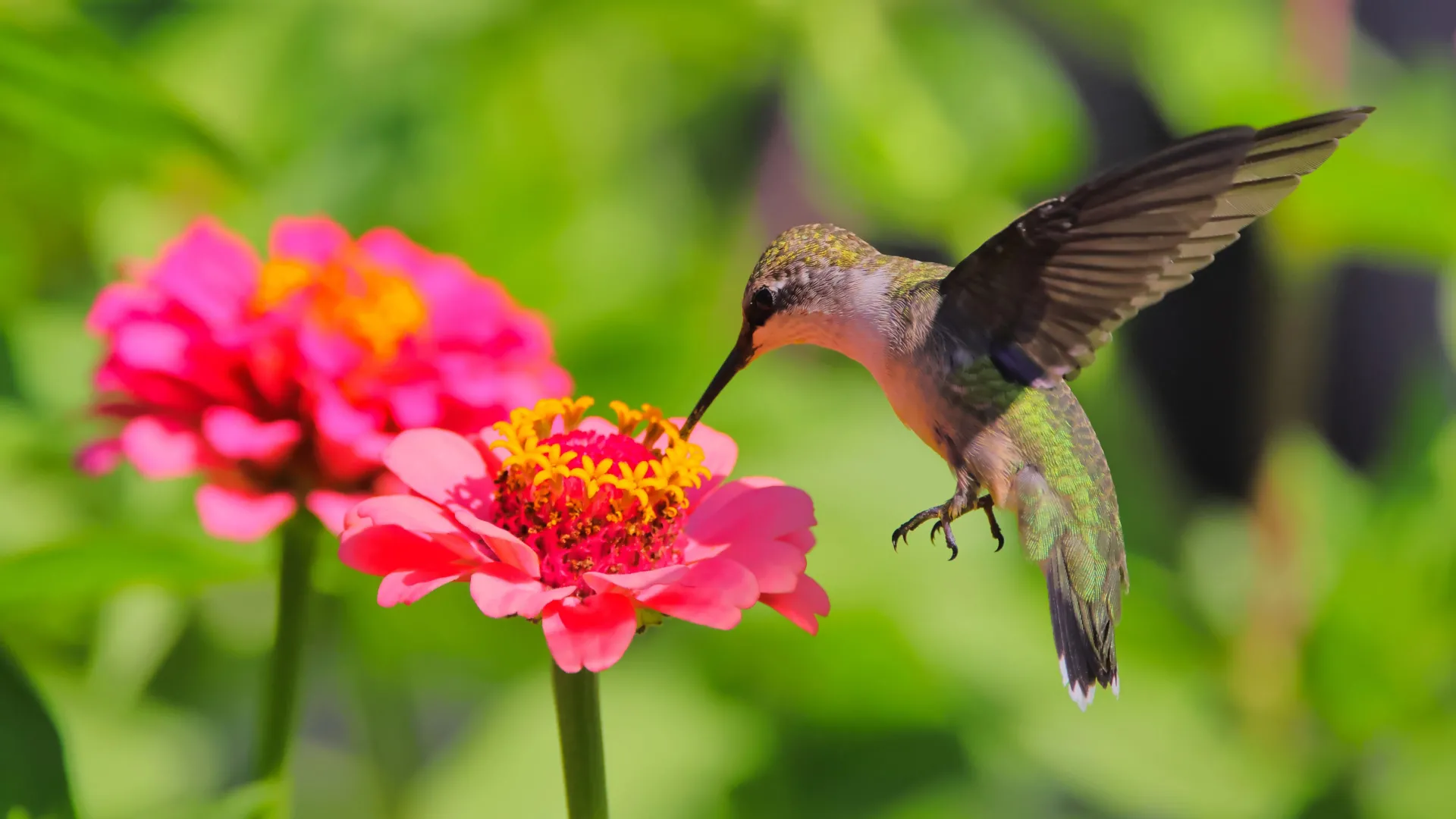
As bees and hummingbirds flit tirelessly from one flower to another, diligently gathering nectar for sustenance while inadvertently orchestrating the reproduction of countless plant species, they are also engaging in an unexpected dietary habit: the regular consumption of small, yet significant, amounts of alcohol. This groundbreaking revelation, emerging from a comprehensive survey conducted by biologists at the University of California, Berkeley, sheds new light on the intricate chemical landscape of floral nectar and the evolutionary adaptations of the animal kingdom to dietary ethanol.
The conventional understanding of nectar focuses primarily on its sugar content, serving as a vital energy source for a myriad of insects and birds. However, this recent large-scale investigation has fundamentally altered that perception, revealing that ethanol is a surprisingly common, albeit often subtle, component of this critical floral reward. Biologists meticulously analyzed nectar samples from 29 different plant species, discovering detectable levels of ethanol in at least one sample from 26 of them. While the majority of these samples contained only trace amounts—likely the natural byproduct of yeast fermenting the sugars present in the nectar—one particular sample exhibited an ethanol concentration of 0.056% by weight. To put this into perspective, this concentration is approximately equivalent to 1/10 proof, a level previously unappreciated in its ubiquity and potential impact on pollinator physiology and behavior.
A Widespread Phenomenon: The Berkeley Discovery
The findings, published on March 25 in Royal Society Open Science by doctoral student Aleksey Maro, postdoctoral fellow Ammon Corl, and UC Berkeley professor of integrative biology Robert Dudley, alongside colleagues Rauri Bowie and Jimmy McGuire, represent a significant advancement in our understanding of plant-pollinator dynamics. The research team employed an enzymatic assay, a precise biochemical method, to accurately measure ethanol levels in the collected nectar samples. This systematic approach allowed them to quantify the presence of alcohol across a diverse range of flora, establishing the widespread nature of this phenomenon.
The presence of ethanol in nectar is not entirely surprising when considering the natural processes occurring within floral structures. Nectar, rich in various sugars like sucrose, glucose, and fructose, provides an ideal substrate for microorganisms, particularly yeasts. These single-celled fungi are ubiquitous in many natural environments, including flower surfaces and within nectar itself. As yeast metabolizes the sugars for energy, alcohol fermentation is a common metabolic pathway, producing ethanol as a byproduct. The varying concentrations detected across different plant species and even within samples from the same species likely reflect a complex interplay of factors, including the sugar concentration of the nectar, the specific yeast strains present, ambient temperature, and the duration of fermentation. This natural biochemical process effectively transforms floral nectar into a subtly alcoholic beverage for its primary consumers.
Quantifying the Daily Dose: Pollinators’ Unexpected Intake
While the detected ethanol levels might seem minuscule at first glance, their significance becomes apparent when considering the prodigious feeding habits of many nectar-dependent species. Pollinators, particularly hummingbirds, are metabolic marvels, requiring immense amounts of energy to sustain their high-speed flight and rapid metabolism. Hummingbirds, for instance, are known to consume an astonishing volume of nectar daily, often drinking between 50% and 150% of their own body weight. This constant intake of sugar-rich fluid translates directly into a substantial, continuous exposure to the ethanol present within it.
Based on these intensive feeding patterns, the UC Berkeley researchers meticulously estimated the daily alcohol intake for an Anna’s hummingbird (Calypte anna), a common sight along the Pacific coast of North America. Their calculations revealed that an Anna’s hummingbird consumes approximately 0.2 grams of ethanol per kilogram of body weight each day. To provide a relatable context for human readers, this intake is comparable to a human having about one standard alcoholic drink over the course of a day. A standard alcoholic drink in many countries typically contains around 14 grams of pure alcohol, equating to about 0.14 grams of alcohol per kilogram of body weight for an average 70 kg human. This comparison underscores that while the absolute amounts are small for tiny creatures, the relative dose is far from negligible.
This discovery prompts a re-evaluation of the physiological and behavioral ecology of pollinators. For species like hummingbirds, whose lives revolve around the efficient extraction and utilization of nectar, even subtle chemical components can have profound effects. The chronic nature of this exposure, occurring throughout their active lives, suggests that these animals have evolved mechanisms to cope with and potentially even benefit from, this regular dietary alcohol.
Beyond the Buzz: Subtle Effects and Evolutionary Tolerance
Despite this consistent, daily intake of ethanol, the research team observed no overt signs of intoxication in the bees and birds. This absence of visible impairment can be attributed to several factors. Firstly, the alcohol consumption occurs gradually throughout the day, rather than in a single large dose, allowing the animals’ systems to process it continuously. Secondly, pollinators, especially hummingbirds, possess incredibly high metabolic rates, enabling them to rapidly metabolize and clear substances from their bloodstream. As doctoral student Aleksey Maro aptly put it, "Hummingbirds are like little furnaces. They burn through everything really quick, so you don’t expect anything to accumulate in their bloodstream."
However, the absence of clear intoxication does not imply an absence of effect. Nectar is a complex biochemical cocktail, known to contain various other psychoactive compounds such as nicotine and caffeine, which are understood to subtly influence animal behavior and foraging choices. The researchers hypothesize that ethanol, even at low concentrations, could exert similar subtle influences. "We don’t know what kind of signaling or appetitive properties the alcohol has," Maro explained, suggesting that ethanol might play a role in modulating preferences or foraging efficiency. Professor Robert Dudley further elaborated, stating, "There may be other kinds of effects specific to the foraging biology of the species in question that could be beneficial." These effects could range from altering energy metabolism to influencing social interactions or even offering antimicrobial properties within the animal’s gut. The idea that ethanol might serve functions beyond a simple "buzz" for humans parallels its potential role in these animals.
A Deeper Dive: Experimental Evidence and Metabolic Pathways
The current survey builds upon a foundation of earlier work by the same UC Berkeley team, providing a chronological narrative of their exploration into this fascinating area. Previous experiments conducted at a feeder positioned outside Professor Dudley’s office yielded crucial insights into hummingbirds’ tolerance levels. These studies demonstrated that Anna’s hummingbirds were largely indifferent to low alcohol concentrations (below 1% by volume) in sugar water. This suggests that concentrations commonly found in natural nectar are well within their physiological comfort zone. However, a clear aversion was observed when concentrations rose to 2%, with the birds visiting the feeder about half as often. This indicates a finely tuned ability to detect and regulate their intake, likely to avoid any potentially detrimental effects of higher alcohol levels. "Somehow they are metering their intake, so maybe zero to 1% is a more likely concentration that they would find in the wild than anything higher," Dudley noted.
Further strengthening the evidence of regular alcohol ingestion and processing, another pioneering study led by former graduate student Cynthia Wang-Claypool revealed the presence of ethyl glucuronide in the feathers of birds, including Anna’s hummingbirds. Ethyl glucuronide is a well-known byproduct of ethanol metabolism in mammals, indicating that these birds not only consume alcohol but also process it through similar metabolic pathways. This finding is critical, as it provides direct biological evidence of ethanol processing within the birds’ systems, mirroring the detoxification mechanisms found in humans and other mammals.
Taken together, these prior experiments and the latest comprehensive survey paint a compelling picture: pollinators are routinely exposed to ethanol in their diet, possess a remarkable tolerance for it at natural concentrations, and actively metabolize it. As Corl summarized, "The laboratory experiment was showing that yes, they will drink ethanol in their nectar, though they have some aversion to it if it gets too high. The feathers are saying that, yes, they will metabolize it. And then this study is saying that ethanol is actually pretty widespread in the nectar they consume."
Comparing the Sips: Alcohol Intake Across the Animal Kingdom
To contextualize the alcohol intake of nectar-feeding birds, the research team extended their analysis to compare estimated daily ethanol consumption across a broader spectrum of animal species. After accurately measuring ethanol levels using the enzymatic assay, they calculated daily alcohol intake for several nectar-feeding species based on their caloric needs and typical feeding volumes. Their focus included two hummingbird species, like the Anna’s hummingbird, and three species of sunbirds. Sunbirds, which are found in Africa and feed on plants such as honeybush (Melianthus major), occupy a similar ecological niche to hummingbirds in the Americas, making them ideal subjects for comparative study.
The comparison revealed a fascinating range of dietary alcohol exposure. The European honeybee (Apis mellifera) exhibited the lowest estimated intake, at approximately 0.05 grams of ethanol per kilogram of body weight daily. At the other end of the spectrum was the pen-tailed tree shrew (Ptilocercus lowii), an animal famously known for its high consumption of naturally fermented palm nectar, with an estimated intake of a remarkable 1.4 grams per kilogram per day. Fruit-eating chimpanzees, which often consume overripe, fermented fruits, also fall within this comparative framework. Humans consuming one standard alcoholic drink per day (approximately 0.14 g/kg/day) provided another benchmark.
Nectar-feeding birds, including hummingbirds and sunbirds, were found to consume ethanol within a similar range to humans, specifically between 0.19 and 0.27 grams per kilogram per day when feeding on their native floral sources. Interestingly, the feeder experiments suggested that Anna’s hummingbirds, when presented with fermented sugar water in human-provided feeders, might actually ingest even higher levels of alcohol, potentially reaching 0.30 grams per kilogram per day. This raises important questions about the impact of human intervention on pollinator diets and potential consequences for their health and behavior.
This comparative analysis not only highlights the widespread nature of dietary ethanol in the animal kingdom but also underscores the diverse physiological and behavioral adaptations that have evolved in response to its presence. From the tiny honeybee to the fruit-guzzling chimpanzee and the specialized nectar-feeding bird, each species navigates the world of natural alcohol with unique strategies.
The Evolutionary Tapestry: Adaptations to Dietary Ethanol
This seminal research is not an isolated endeavor but forms an integral part of a larger, ambitious five-year National Science Foundation (NSF) project. This broader initiative aims to gather extensive genetic data from hummingbirds and sunbirds, seeking to unravel the complex evolutionary pathways that have enabled these animals to adapt to vastly different environments and highly specialized food sources. These adaptations include thriving in high-altitude environments, efficiently processing sugar-rich diets, and, crucially, coping with frequently fermented nectar. The inclusion of ethanol tolerance within this broader evolutionary framework signals a new frontier in understanding pollinator biology.
The ubiquity of dietary ethanol, coupled with the varied responses observed across species, strongly suggests that a broad range of physiological adaptations exists throughout the animal kingdom. This challenges the anthropocentric view that human responses to alcohol are universally representative. As Professor Dudley emphasized, "Maybe there are other physiological detoxification pathways or other kinds of nutritional effects of ethanol for animals that are consuming it every day of their lives." This continuous, chronic exposure, often spanning the animals’ entire post-weaning lifespan, implies a deeply ingrained evolutionary relationship with alcohol.
The findings resonate with broader evolutionary hypotheses, such as the "drunken monkey hypothesis," which posits that the ability to metabolize alcohol evolved in ancestral primates due to their consumption of fermented fruits. This new research extends such ideas to a much wider array of taxa, suggesting that the evolutionary pressure to process dietary alcohol might be a far more pervasive force than previously recognized. Plants, in their intricate co-evolution with pollinators, may even inadvertently or directly benefit from certain levels of alcohol in their nectar, potentially influencing pollinator behavior or acting as a deterrent to less desirable visitors.
Looking Ahead: Implications and Future Research
The implications of this discovery are far-reaching, touching upon various fields from evolutionary biology and ecology to conservation and even pharmacology. For instance, understanding the long-term effects of chronic, low-level alcohol consumption on pollinator health is crucial, particularly in the context of global pollinator declines. Do these low levels of ethanol have subtle impacts on reproductive success, immune function, or stress responses? Could they interact with other environmental stressors, such as pesticides or habitat loss, in ways we don’t yet understand?
Furthermore, the research opens new avenues for studying the co-evolutionary dynamics between plants and pollinators. Could plants be inadvertently selecting for pollinators that are more tolerant to alcohol, or could certain alcohol concentrations act as a signaling mechanism for nectar quality? The observation that Anna’s hummingbirds might consume more alcohol from human-provided feeders also carries significant implications for urban ecology and conservation efforts. If artificial feeders alter natural alcohol intake, understanding the consequences for pollinator health becomes paramount.
The UC Berkeley team’s work underscores the need for continued, comparative research into ethanol ingestion. "That’s the interesting thing — this is chronic through the course of the day, but that’s a lifetime exposure post-weaning," Dudley concluded. "It just means that the comparative biology of ethanol ingestion deserves further study." Future research could delve deeper into the genetic basis of alcohol tolerance in pollinators, investigate the precise behavioral and physiological effects of low-level ethanol, and explore the ecological consequences of these interactions across diverse ecosystems.
In conclusion, the seemingly innocuous act of a hummingbird sipping nectar or a bee gathering pollen is now understood to involve a subtle yet widespread interaction with alcohol. This groundbreaking discovery from UC Berkeley challenges long-held assumptions about pollinator diets and opens up a rich new field of inquiry into the complex chemical ecology of plant-animal interactions and the remarkable evolutionary adaptations that allow life to thrive in a world full of hidden chemical nuances. The humble flower, it turns out, offers more than just sweet sustenance; it provides a daily, mild, and utterly essential "drink" for the creatures that help sustain our planet.
