
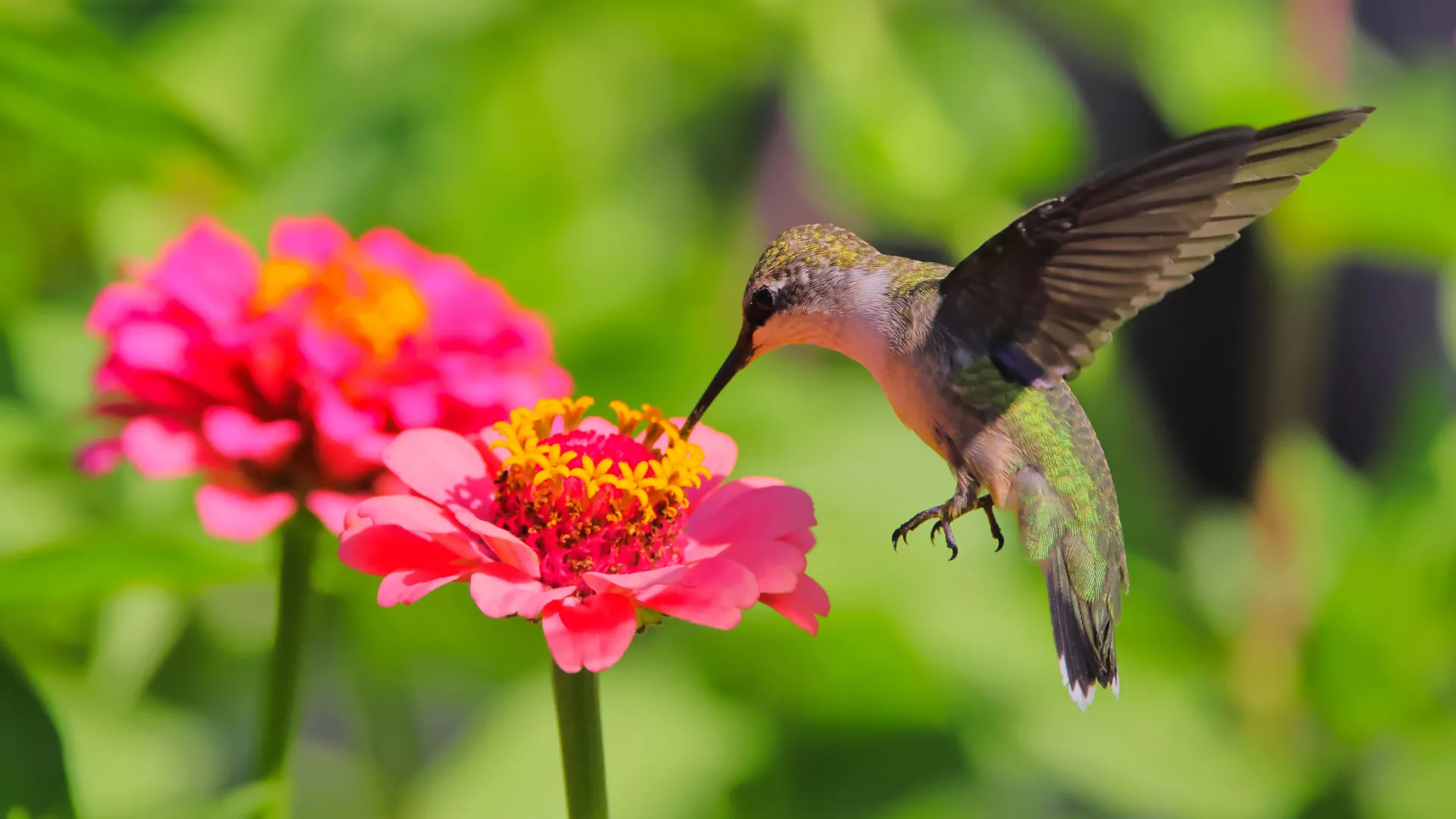
In a groundbreaking study that reshapes our understanding of plant-pollinator interactions, biologists at the University of California, Berkeley have revealed that bees, hummingbirds, and other nectar-feeding animals are regularly consuming small, yet significant, amounts of alcohol. Far from being an isolated occurrence, ethanol was detected in a substantial majority of the floral nectar samples examined, suggesting a pervasive presence of naturally fermented sugars in the diets of critical ecosystem contributors. This discovery opens new avenues for research into the physiological and behavioral adaptations of pollinators to a ubiquitous, albeit low-level, dietary alcohol intake.
The Unexpected Discovery: Alcohol as a Nectar Component
The research, representing the first large-scale survey of alcohol in floral nectar, identified ethanol in at least one sample from 26 of the 29 plant species investigated. While most nectar samples contained only trace amounts, indicative of yeast fermenting the rich sugars, one particular sample recorded a concentration of 0.056% ethanol by weight, roughly equivalent to 1/10 proof. This finding, published on March 25 in Royal Society Open Science by doctoral student Aleksey Maro, postdoctoral fellow Ammon Corl, and UC Berkeley professor of integrative biology Robert Dudley, alongside colleagues Rauri Bowie and Jimmy McGuire, challenges previous assumptions about the pristine nature of nectar as a pure sugar source.
For centuries, nectar has been recognized as a primary energy source, a sugary reward that plants offer to entice pollinators. Its composition has been extensively studied for sugar types, amino acids, and secondary metabolites like caffeine and nicotine, which can influence pollinator behavior. However, the consistent presence of ethanol introduces a new dimension to this intricate biological exchange. The most plausible explanation for this ethanol is the natural fermentation of sugars by yeasts, microorganisms commonly found in various floral environments. These yeasts convert sugars into ethanol and carbon dioxide, a process that is well-known in winemaking and brewing but less explored in the context of floral ecology until now. The specific environmental conditions within a flower – warmth, humidity, and an abundance of sugar – create an ideal microhabitat for such microbial activity.
Quantifying Daily Intake: A "Drink" for a Hummingbird
While the detected ethanol levels might seem minuscule, the sheer volume of nectar consumed by pollinators translates into a notable daily alcohol intake. Hummingbirds, for instance, are metabolic powerhouses, requiring immense energy to sustain their rapid wing beats and high body temperatures. An Anna’s hummingbird (Calypte anna), a common species along the Pacific coast, can drink between 50% and 150% of its own body weight in nectar daily. Based on these voracious feeding habits, the researchers estimated that an average Anna’s hummingbird consumes approximately 0.2 grams of ethanol per kilogram of body weight each day. To put this into a relatable context, this daily intake is comparable to a human consuming roughly one standard alcoholic drink.
This comparison highlights the biological significance of the findings. For an animal that is continuously foraging and relies on precise motor skills for flight and feeding, even low levels of a psychoactive compound could potentially have an impact. However, the study notes that despite this regular intake, bees and birds consume the alcohol gradually throughout the day, often interspersed with periods of activity and digestion. This chronic, low-level exposure differs significantly from acute, high-dose consumption, which might lead to overt signs of intoxication.
The research extended its comparison of alcohol intake across various nectar-feeding species and even other animals. Utilizing enzymatic assays to measure ethanol levels and then correlating these with estimated caloric needs, the team projected daily alcohol consumption for two hummingbird species and three species of sunbirds. Sunbirds, found in Africa, occupy a similar ecological niche to hummingbirds in the Americas, feeding on plants like honeybush (Melianthus major). The study also included the European honeybee, the pen-tailed tree shrew, fruit-eating chimpanzees, and humans consuming one standard alcoholic drink per day (0.14 grams/kg/day). The pen-tailed tree shrew exhibited the highest intake at 1.4 g/kg/day, likely due to its diet rich in fermented fruit, while the honeybee registered the lowest at 0.05 g/kg/day. Nectar-feeding birds fell within a similar range, consuming between 0.19 and 0.27 g/kg/day from native flowers. Intriguingly, feeder experiments suggested that Anna’s hummingbirds might ingest even more alcohol (0.30 g/kg/day) from fermented sugar water provided in artificial feeders than from natural nectar, possibly due to higher, unchecked fermentation in these controlled environments.
Methodology Behind the Revelation: From Feeder Experiments to Feather Analysis
The UC Berkeley team employed a multi-faceted approach to uncover and corroborate their findings. The primary method for detecting and quantifying ethanol in nectar samples involved an enzymatic assay, a highly sensitive biochemical test that measures the concentration of a specific substance by observing its reaction with an enzyme. This allowed for precise detection of even trace amounts of ethanol.
Beyond direct nectar analysis, the researchers built upon a foundation of prior work. Earlier experiments, conducted at a feeder conveniently located outside Professor Dudley’s office, provided critical behavioral insights. These experiments demonstrated that Anna’s hummingbirds showed remarkable indifference to low alcohol concentrations (below 1% by volume) in sugar water. However, a clear aversion emerged when concentrations reached 2%, with the birds visiting the feeder about half as often. This suggests an evolved ability in hummingbirds to "meter" their intake, potentially avoiding concentrations that could impair their crucial foraging abilities. "Somehow they are metering their intake, so maybe zero to 1% is a more likely concentration that they would find in the wild than anything higher," Professor Dudley remarked, highlighting the ecological relevance of their behavioral observations.
Further strengthening the case for chronic alcohol ingestion and metabolism, another study led by former graduate student Cynthia Wang-Claypool provided physiological evidence. This research found ethyl glucuronide in the feathers of Anna’s hummingbirds and other avian species. Ethyl glucuronide is a direct byproduct of ethanol metabolism, serving as a reliable biomarker for alcohol consumption in mammals. Its presence in avian feathers indicates that these birds not only ingest alcohol but also possess the necessary metabolic machinery to process it, similar to humans and other mammals. This implies an ancient and widespread evolutionary pathway for dealing with dietary alcohol.
Ammon Corl summarized the comprehensive nature of their findings: "The laboratory experiment was showing that yes, they will drink ethanol in their nectar, though they have some aversion to it if it gets too high. The feathers are saying that, yes, they will metabolize it. And then this study is saying that ethanol is actually pretty widespread in the nectar they consume." This three-pronged approach—direct detection, behavioral observation, and physiological biomarker identification—provides compelling evidence for the routine ingestion and processing of alcohol by pollinators.
Beyond Intoxication: Subtle Effects and Evolutionary Adaptations
The researchers emphasize that the primary focus is not on overt intoxication. As Aleksey Maro notes, "Hummingbirds are like little furnaces. They burn through everything really quick, so you don’t expect anything to accumulate in their bloodstream." However, the absence of obvious drunkenness does not preclude other, more subtle effects. Nectar is known to contain a cocktail of compounds, including secondary metabolites like nicotine and caffeine, which can profoundly influence animal behavior, foraging patterns, and even memory. Ethanol, as another bioactive compound, could exert similar subtle influences.
"But we don’t know what kind of signaling or appetitive properties the alcohol has," Maro added. "There are other things that the ethanol could be doing aside from creating a buzz, like with humans." Professor Dudley echoed this sentiment, suggesting potential benefits. "There may be other kinds of effects specific to the foraging biology of the species in question that could be beneficial," he stated. "They’re burning it so fast, I’m guessing that they probably aren’t suffering inebriating effects. But it may also have other consequences for their behavior."
This opens up a fascinating area for future research: what are these "other consequences"? Could low-level alcohol intake affect a pollinator’s energy metabolism, its immune response, or its cognitive functions such as memory for flower locations? Could it influence social interactions among pollinators or even their reproductive success? Given the established roles of other secondary metabolites in nectar, it is plausible that ethanol, too, plays a nuanced role in the complex dance between plants and their animal partners. For instance, some studies suggest that certain secondary metabolites can act as mild stimulants, encouraging pollinators to visit more flowers or become more efficient foragers. Ethanol might contribute to this suite of chemical cues, subtly shaping pollinator foraging strategies.
The consistent ingestion and metabolism of ethanol also point to deep evolutionary adaptations. The presence of ethyl glucuronide in feathers suggests that the metabolic pathways for processing alcohol are not newly acquired but rather ancient and widespread among avian species. This aligns with broader evolutionary theories that suggest many animals, including human ancestors, developed a tolerance for, and sometimes even a preference for, alcohol due to its natural occurrence in fermented fruits and nectars. For frugivores, consuming fermented fruit, which is often riper and more caloric, could have provided a survival advantage. Similarly, for nectarivores, an ability to efficiently metabolize naturally occurring ethanol would prevent impairment and allow access to a consistent, if slightly "alcoholic," energy source.
The Broader Ecological and Conservation Context
Pollinators are cornerstone species in nearly all terrestrial ecosystems, vital for the reproduction of over 85% of the world’s flowering plants, including many food crops. The revelation that their primary energy source routinely contains alcohol adds a new layer of complexity to their ecology and raises important questions for conservation efforts. In an era marked by pollinator decline due to habitat loss, pesticide use, and climate change, understanding every factor that influences pollinator health and behavior becomes critically important.
Could chronic, low-level alcohol intake, even if not overtly intoxicating, subtly affect pollinator resilience, especially when combined with other environmental stressors? For instance, impaired immune function, even if slight, could make pollinators more susceptible to diseases. Changes in foraging efficiency, however minor, could impact the overall health of a colony or individual. While the current study primarily focuses on detection and intake, the implications for pollinator health in a stressed environment warrant further investigation.
This research is part of a broader five-year National Science Foundation (NSF) project. This extensive initiative aims to collect genetic data from hummingbirds and sunbirds to unravel how these species adapt to diverse environments and food sources. This includes adaptations to high altitudes, sugar-rich diets, and, significantly, frequently fermented nectar. The interdisciplinary nature of the NSF project underscores the complexity of these ecological questions, integrating genetics, physiology, and behavioral ecology.
Future Directions and Unanswered Questions
The findings from the UC Berkeley team pave the way for numerous future research avenues. One key area will be to investigate the specific genes and enzymes involved in alcohol metabolism in hummingbirds and sunbirds. Comparative genomics could reveal unique adaptations or shared ancestral pathways that illuminate the evolutionary history of alcohol tolerance. Understanding the precise metabolic fate of ethanol in these fast-metabolizing animals will be crucial.
Another critical direction involves exploring the behavioral and physiological effects of low-level chronic alcohol intake more deeply. While overt intoxication is unlikely, subtle impacts on navigation, decision-making, memory, and even social cues need to be rigorously tested. Are there specific benefits to alcohol consumption for pollinators, perhaps as an antimicrobial or a mild stimulant that aids foraging? Could the presence of ethanol influence a pollinator’s preference for certain flower species over others?
Professor Dudley highlights the broader implications: "These studies suggest that there may be a broad range of physiological adaptations across the animal kingdom to the ubiquity of dietary ethanol, and that the responses we see in humans may not be representative of all primates or of all animals generally." This challenges anthropocentric views of alcohol’s effects, urging scientists to look beyond human models to understand the diverse ways life has adapted to this naturally occurring compound. "Maybe there are other physiological detoxification pathways or other kinds of nutritional effects of ethanol for animals that are consuming it every day of their lives," he muses. "That’s the interesting thing — this is chronic through the course of the day, but that’s a lifetime exposure post-weaning. It just means that the comparative biology of ethanol ingestion deserves further study."
The study underscores that the natural world is far more complex and chemically dynamic than often assumed. The silent hum of a hummingbird, the diligent flight of a bee, and the vibrant colors of a flower are all part of an intricate biochemical tapestry, now known to include a surprising, pervasive presence of alcohol. This discovery not only enriches our scientific understanding of plant-pollinator co-evolution but also prompts a re-evaluation of how environmental factors, even subtle ones, shape the lives and behaviors of Earth’s most vital creatures. As research continues under the NSF project, scientists anticipate uncovering further insights into the long-term impacts and evolutionary significance of this widespread dietary ethanol, potentially offering new perspectives on pollinator health and the resilience of ecosystems in a changing world.
