
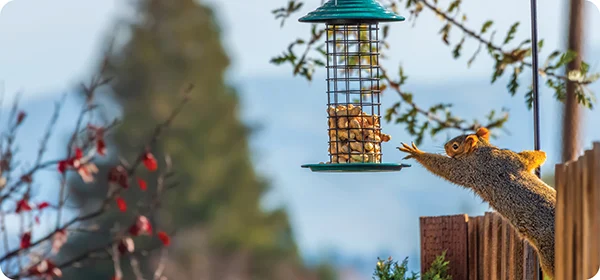
For millions of households across North America, backyard bird feeding serves as a peaceful daily ritual, a hobby that bridges the gap between human urban environments and local wildlife. However, this peaceful coexistence is frequently tested by an influx of clever mammalian and avian interlopers. From acrobatic squirrels to sweeping flocks of dominant bird species, backyard feeding stations often transform from a sanctuary for songbirds into a chaotic, high-stakes buffet. While wildlife experts note that animals are simply capitalizing on an abundant and reliable food source, the financial strain on homeowners and the displacement of target species have turned backyard critter management into a science. To restore harmony, ornithologists and backyard nature specialists recommend a multifaceted approach involving strategic hardware, thoughtful seed selection, and environmental design.
The Evolution of Backyard Wildlife Conflict
The phenomenon of backyard bird feeding has grown exponentially over the past several decades into a multibillion-dollar hobby. As suburban sprawl increasingly intersects with natural wildlife habitats, backyard feeding stations have become crucial supplemental feeding grounds for local fauna. Historically, bird feeding was viewed as a simple matter of tossing seed onto the ground or hanging a rudimentary wooden tray from a low tree branch. As the hobby matured, so did the ingenuity of local wildlife.
Squirrels, raccoons, and larger corvids or blackbirds quickly adapted to these human-provided resources. By the late 20th century, the demand for effective deterrents birthed an entire sector of wildlife-exclusion hardware. Industry data from specialty nature retailers indicates that wildlife interference is consistently cited by 80 percent of backyard bird enthusiasts as their primary frustration, often leading novices to abandon the hobby altogether. Recognizing this, experts have shifted from eradication methods to humane, physics-based exclusion techniques designed to outsmart rather than harm visiting critters.
Understanding the Mammalian Challenge: The Squirrel Dilemma
Among all backyard visitors, squirrels remain the undisputed champions of persistence. Possessing an uncanny combination of athletic agility, spatial problem-solving skills, and a high metabolic rate, these rodents can deplete a standard tube feeder in a matter of hours. Beyond the economic impact of lost seed, squirrels frequently damage expensive wooden and plastic feeders through chewing and scratching.
To combat this, modern pest-exclusion methodology relies heavily on physics and spatial geometry. Wildlife specialists emphasize that pole-mounted systems offer the highest success rate for squirrel-proofing, provided they are installed with precise clearances. The integration of stovepipe baffles—smooth, cylindrical metal guards—creates an impassable barrier when mounted correctly. For a pole system to function as intended, the top of the baffle must sit at least five feet above ground level, preventing a squirrel from jumping upward and gaining a grip. Furthermore, the entire pole assembly must be situated a minimum of ten feet away from any launchpad, including overhanging tree branches, porch railings, fences, or tall garden shrubs. Squirrels are capable of remarkable horizontal leaps, making the ten-foot perimeter rule non-negotiable for effective defense.
When property layouts do not permit a freestanding pole system, homeowners typically resort to tree-hung feeders. In these scenarios, gravity and overhead protection are the primary defenses. Standard tube or hopper feeders suspended by wire or chain require domed squirrel baffles positioned directly above the feeding port. These domed polycarbonate shields tilt or block animals attempting to slide down the hanging apparatus from above. Alternatively, many homeowners retrofit their existing equipment with steel exclusion cages. These wire meshes permit smaller, desired songbirds to slip between the bars while completely blocking larger squirrels and bulky nuisance birds.
Redefining the Avian Hierarchy: Managing Nuisance Birds

While mammals generate significant frustration, avian competition can be equally disruptive. The term “nuisance bird” within ornithological and backyard feeding circles does not refer to an officially recognized biological classification, but rather a behavioral designation. Nuisance birds are defined as species that congregate in such high volumes and aggressive numbers that they monopolize feeding stations, entirely pushing out preferred species like finches, chickadees, and titmice while draining seed supplies in record time.
Common culprits often include larger blackbirds, starlings, grackles, and house sparrows. Rather than relying on physical exclusion alone, wildlife specialists advocate for a dietary shift. The choice of birdseed acts as a chemical and biological filter for backyard visitors. Many commercially packaged, low-cost seed blends contain high proportions of cracked corn, milo, and white proso millet. These grains are universally palatable to invasive and aggressive flocking birds, acting as an open invitation to unwanted species.
To alter the demographic of backyard visitors, experts recommend transitioning to specialized, single-ingredient offerings. Safflower seed, for instance, is famously disliked by blackbirds, grackles, and squirrels due to its hard shell and slightly bitter taste profile. However, it is readily consumed by favored backyard birds such as cardinals, grosbeaks, titmice, and doves. Similarly, offering pure, high-grade suet cakes rather than rendered fat blends mixed with cheap grains will deter starlings while satisfying the high-energy nutritional requirements of woodpeckers, nuthatches, and wrens.
Engineering Solutions in Feeder Design
In tandem with dietary modifications, manufacturers have engineered advanced feeder mechanisms tailored to biological and weight disparities among bird species. Weight-sensitive mechanisms represent a major technological advancement in the hobby. These spring-loaded or balanced perches can be calibrated so that the weight of a heavy bird—such as a pigeon, grackle, or mourning dove—triggers the port to close, physically sealing off access to the seed. When a lighter songbird lands on the perch, the port remains open, allowing undisturbed feeding.
Other designs focus on posture and accessibility. Clinging birds, such as woodpeckers and chickadees, easily navigate vertical wire mesh feeders or designs with minimal perches. Conversely, larger nuisance species that require stable perching platforms find these setups frustrating and eventually abandon the station in search of easier foraging grounds.
Expert Guidance and Industry Insights
Navigating the vast array of baffles, cages, specialized seeds, and engineered feeders can quickly overwhelm beginning and intermediate nature enthusiasts. Industry leaders emphasize that localized environmental factors dictate which strategies will yield the highest success. Variables such as regional wildlife populations, local flora, and seasonal migration patterns mean that a solution effective in a wooded northeastern suburb may require modification in an arid southwestern environment.
Certified bird-feeding specialists and wildlife educators continue to advocate for a holistic, observation-based approach. Organizations within the nature specialty sector, such as Wild Birds Unlimited—the largest franchise system of backyard bird feeding and nature specialty stores in North America—regularly host educational seminars and provide localized consultations. Through platforms like the Nature Centered podcast, industry experts break down seasonal behavioral shifts in backyard wildlife, offering actionable advice to help enthusiasts reclaim their outdoor spaces without harming local fauna.
Broader Ecological Implications and Future Outlook

The effort to manage backyard wildlife is not merely a matter of human convenience or financial thrift; it carries broader ecological implications. Urban and suburban green spaces play a vital role in supporting migratory bird populations facing habitat loss and climate pressures. When backyard feeding stations are dominated entirely by aggressive generalist species, specialized and declining songbird populations lose a crucial supplemental lifeline.
By implementing targeted exclusion strategies, utilizing species-specific diets, and investing in thoughtfully engineered hardware, homeowners can foster a more balanced local ecosystem. Providing a welcoming environment for a diverse array of native birds while humanely deterring overpopulated generalists ensures that backyard habitats remain vibrant, educational, and sustainable for generations to come. As urban sprawl continues to interface with wild animal territories, the intersection of backyard stewardship and wildlife management will remain an essential component of modern environmental engagement.
